
Last updated October 9, 2026
Whole-system duct and dryer vent check with before-and-after photos - you see exactly what came out of your vents
That "$99 whole-house special" is a bait ad - the real number appears once they are in your hallway, or the "clean" is a shop-vac at the register. We photograph the inside of your ducts before and after instead.
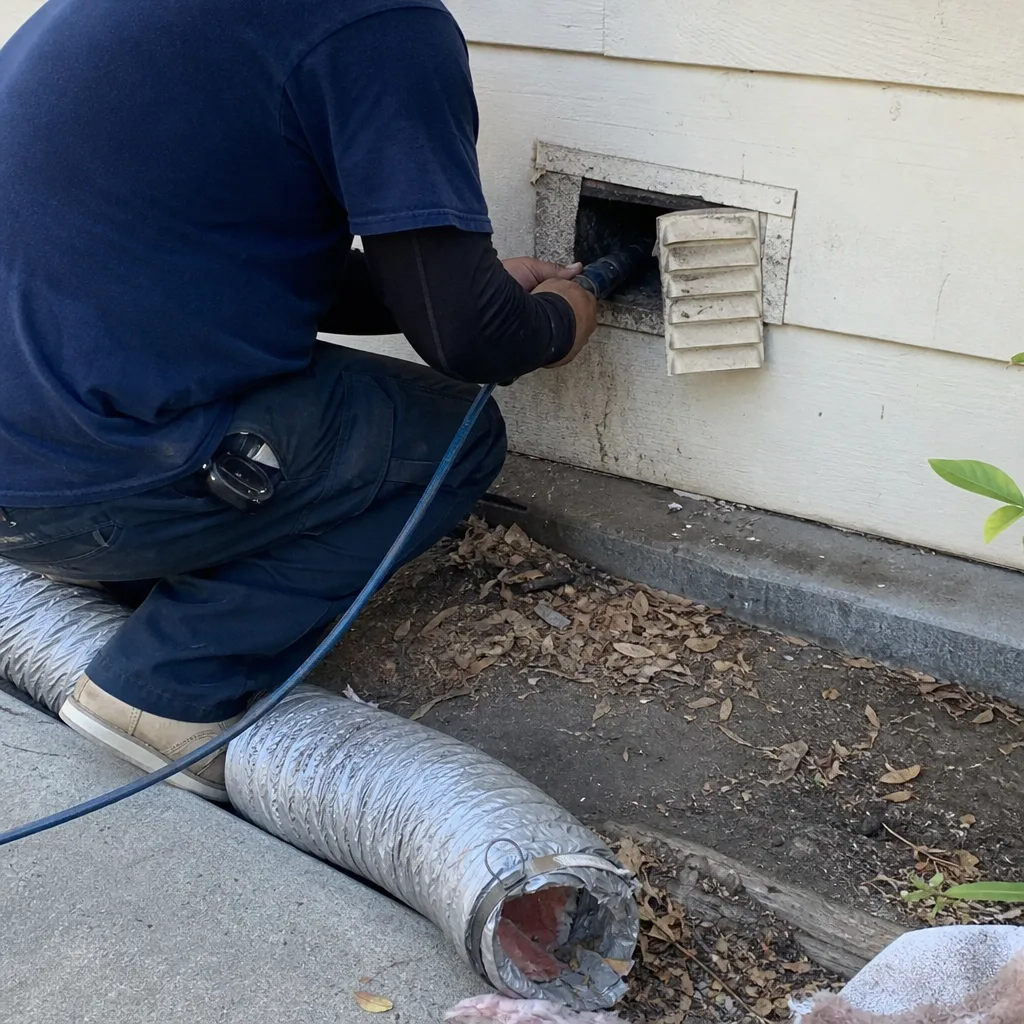 Before
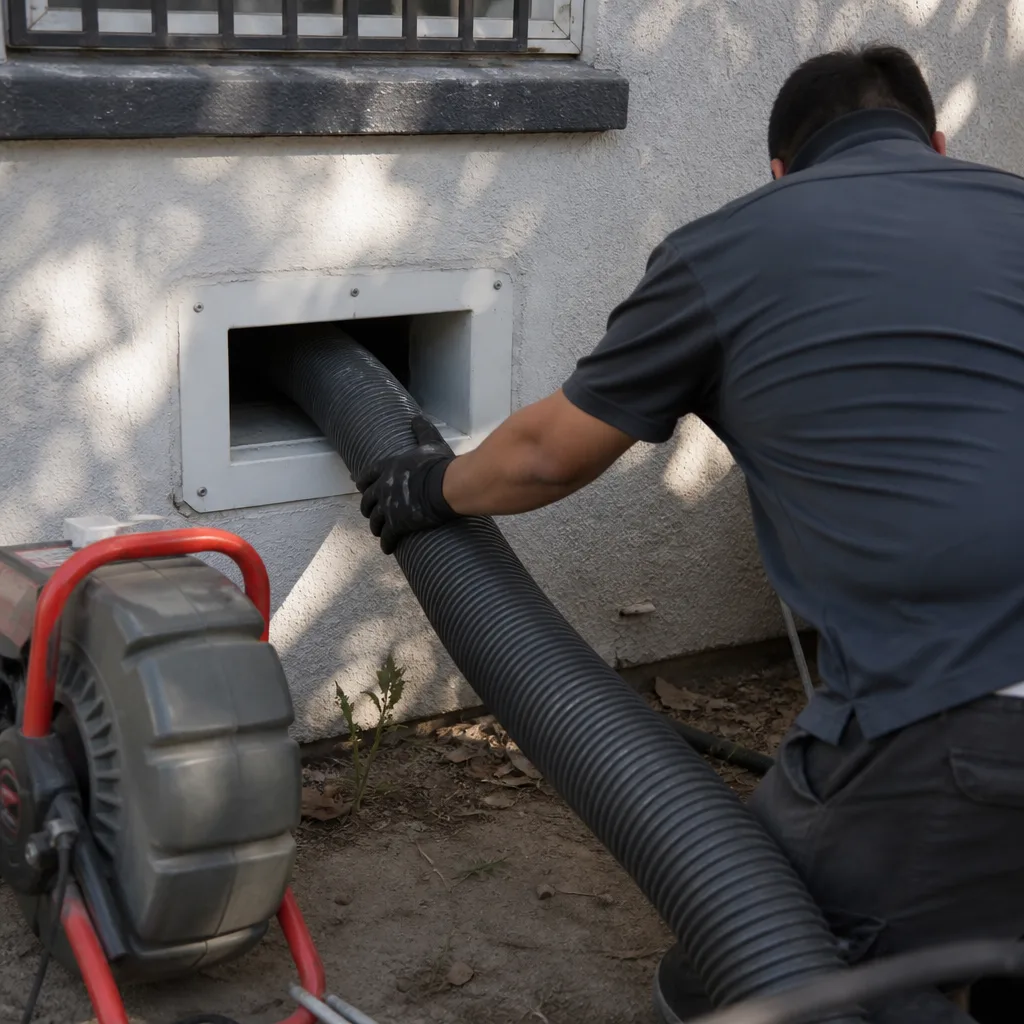 After
After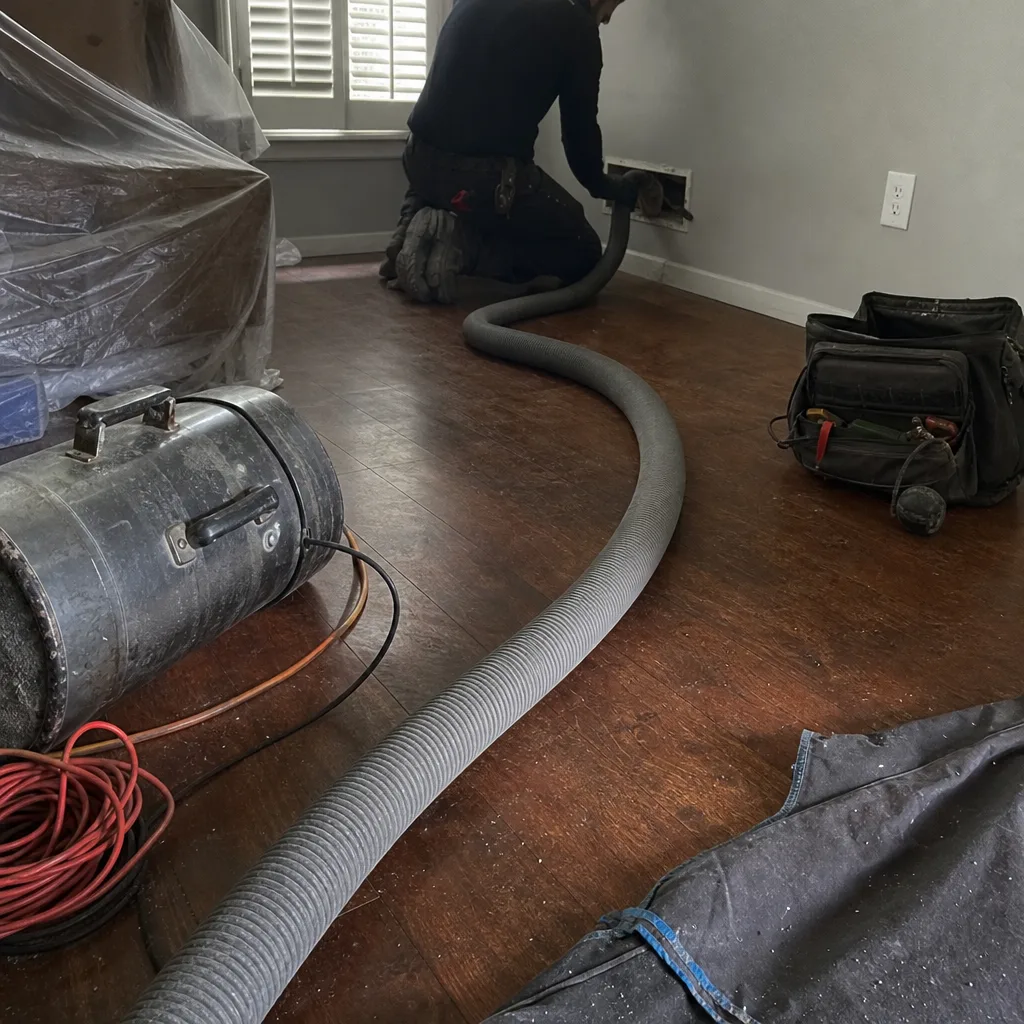 Before
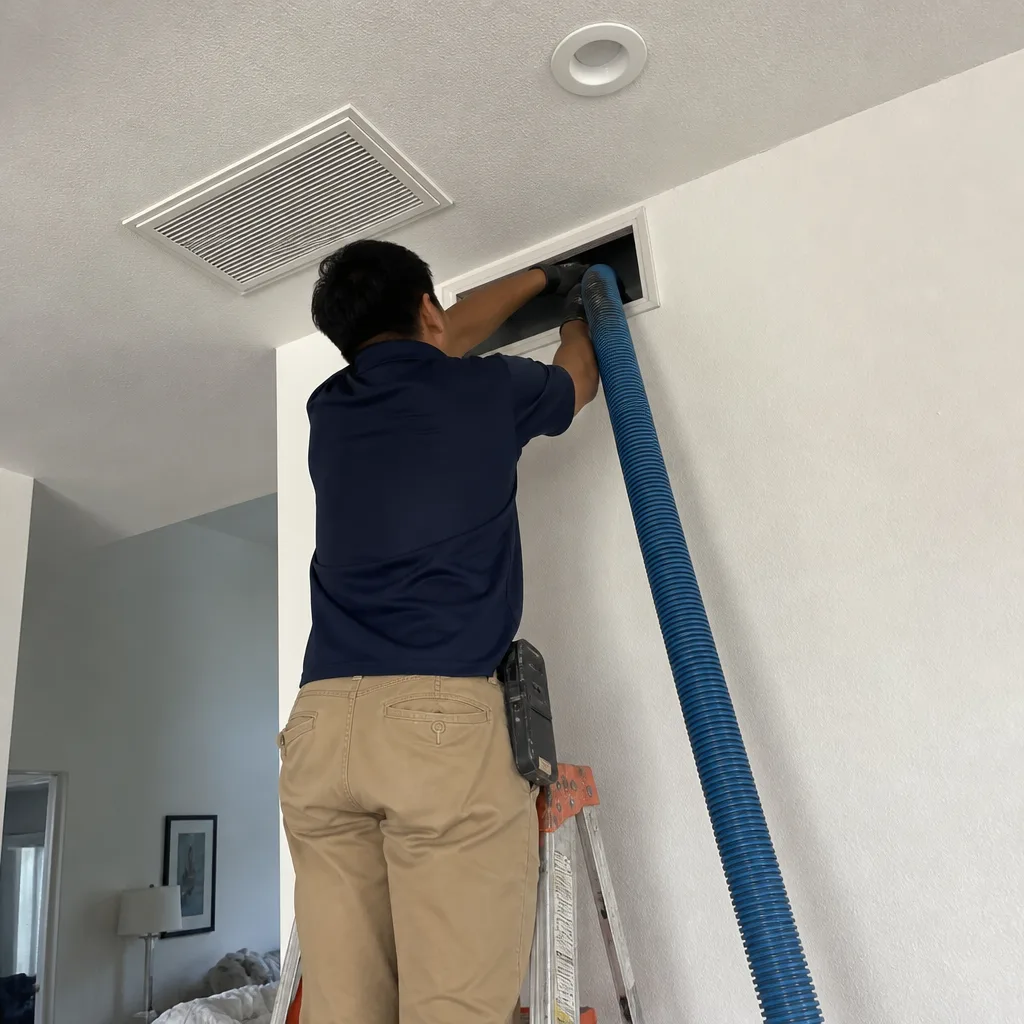 After
After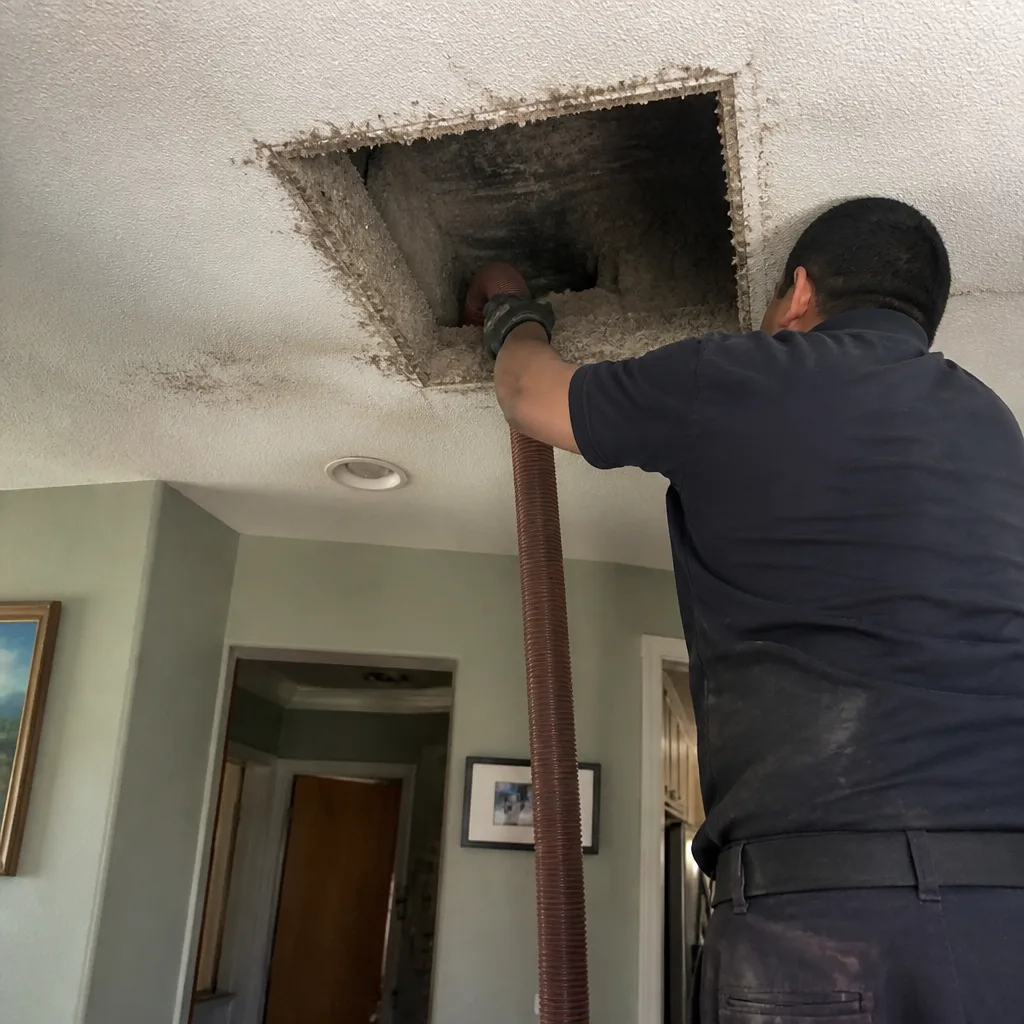 Before
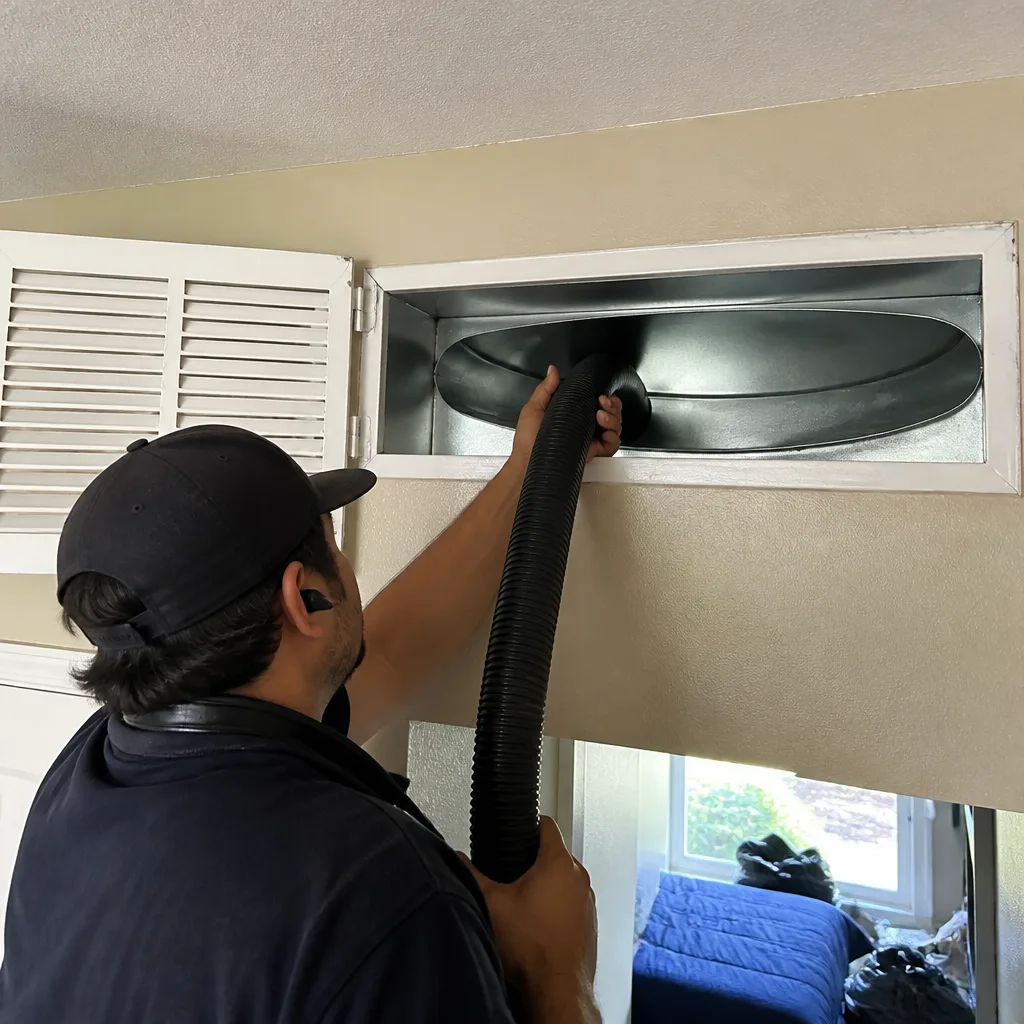 After
AfterHow Long Does Air Duct Cleaning Take? Timelines and What to Expect
A 2,200 square foot home in Los Angeles with 25 vents should take a trained crew roughly 2.5 to 3 hours to clean properly. If a company quotes you 45 minutes, something is getting skipped. Most homeowners fixate on square footage because that’s how the quote is framed, but the real driver of time is vent count, followed by system configuration and access. In this guide, we’ll break down the actual formula professionals use, what each phase of the work looks like, and how to spot a rushed job before the truck leaves your driveway. For how long HVAC cleaning takes, with timelines and what to expect, see our dedicated breakdown. You’ll learn what adds time, what shouldn’t, and why the extra 15 minutes of photo documentation matters more than most Los Angeles homeowners realize.
Quick Answer
Air duct cleaning typically takes 2 to 4 hours for a standard single-family home. The decisive variable is not square footage but the number of supply and return vents – roughly 5 to 7 minutes per vent for a complete clean, including setup, agitation, negative-pressure extraction, and post-inspection. Larger homes with 30 or more vents, zoned HVAC systems, or difficult access points can stretch to 5 hours or more.
Table of Contents
- Why Vent Count, Not Square Footage, Drives the Timeline
- Phase-by-Phase: What the 2 to 4 Hours Actually Looks Like
- Time Ranges by Home Size and Vent Count
- What Adds Time: Two-Story Homes, Zoned Systems, and Access Issues
- Red Flags of a Rushed Job: What Skipping Looks Like
- Why Before-and-After Photos Add Minutes and Why That’s Worth It
- How Long a DIY “Check” Takes vs. a Professional Clean
- Common Mistakes to Avoid
- When to Call a Professional
- Frequently Asked Questions
- The Bottom Line
Why Vent Count, Not Square Footage, Drives the Timeline
Here’s the formula pros actually use: count every supply register (the vents that push conditioned air into your rooms) and every return grille (the larger vents that pull air back to the furnace). Multiply that total by roughly 5 to 7 minutes. That’s your baseline. A 1,800 sq ft Los Angeles condo with 12 vents runs about 60 to 85 minutes of active cleaning time before setup and breakdown. A 3,500 sq ft home in Brentwood with 35 vents runs 3 to 4 hours. Same company, same equipment, completely different clock.
Square footage is a rough proxy, but it falls apart in practice. Two homes can have identical floor plans and wildly different duct layouts. A 2,000 sq ft mid-century ranch in the Valley might have 14 vents because the original builder routed long trunk lines through an accessible crawlspace. A newer 2,000 sq ft two-story in Culver City could have 28 vents because modern HVAC design favors shorter, more numerous branch runs. If the company quotes by square footage alone, they’re guessing at the workload – and the guess usually works against you, either in price or in corners cut.
When we train technicians at Cardinal Air Duct Cleaning, vent count is the first number we look at. It tells us how many access points need removal, how many register openings need sealing, and how long the rotary brush needs to work. It’s the honest metric.
Phase-by-Phase: What the 2 to 4 Hours Actually Looks Like
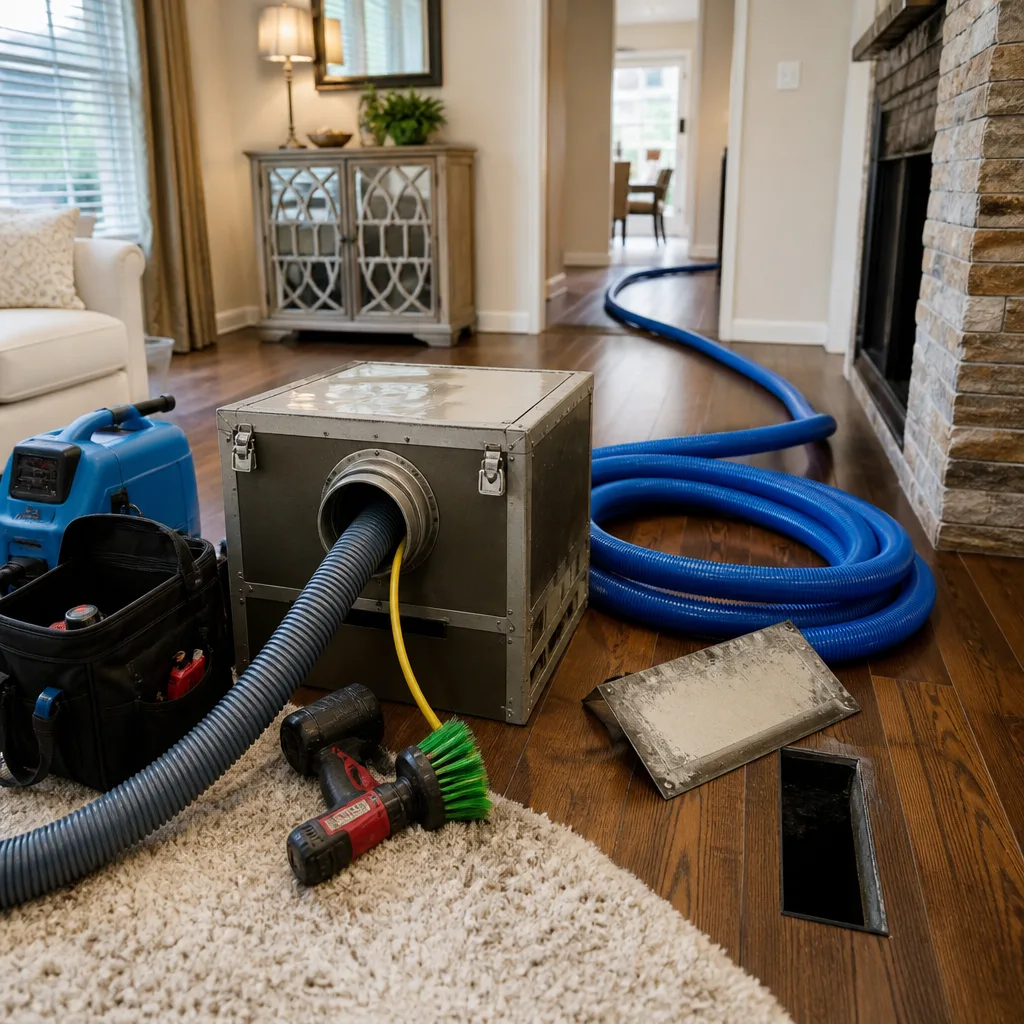
Every professional air duct cleaning in Los Angeles follows the same structural sequence. What separates a thorough job from a rushed one is how much time gets spent on each phase, particularly containment and agitation. Here’s the breakdown, using the equipment we run – Rotobrush rotary brush systems for agitation and Nikro HEPA-rated vacuums for negative-pressure extraction.
- Setup and containment (20 to 35 minutes). Technicians lay drop cloths from the entry to the furnace closet, inspect the system, identify every register and return, and set up containment. Containment means sealing off the work area so dust and debris don’t migrate into living spaces. Abatement Technologies containment units are the standard for this. If a crew walks in with a shop vac and no drop cloths, the setup phase just got cut from 30 minutes to 5 – and you’ll be dusting your furniture for a week.
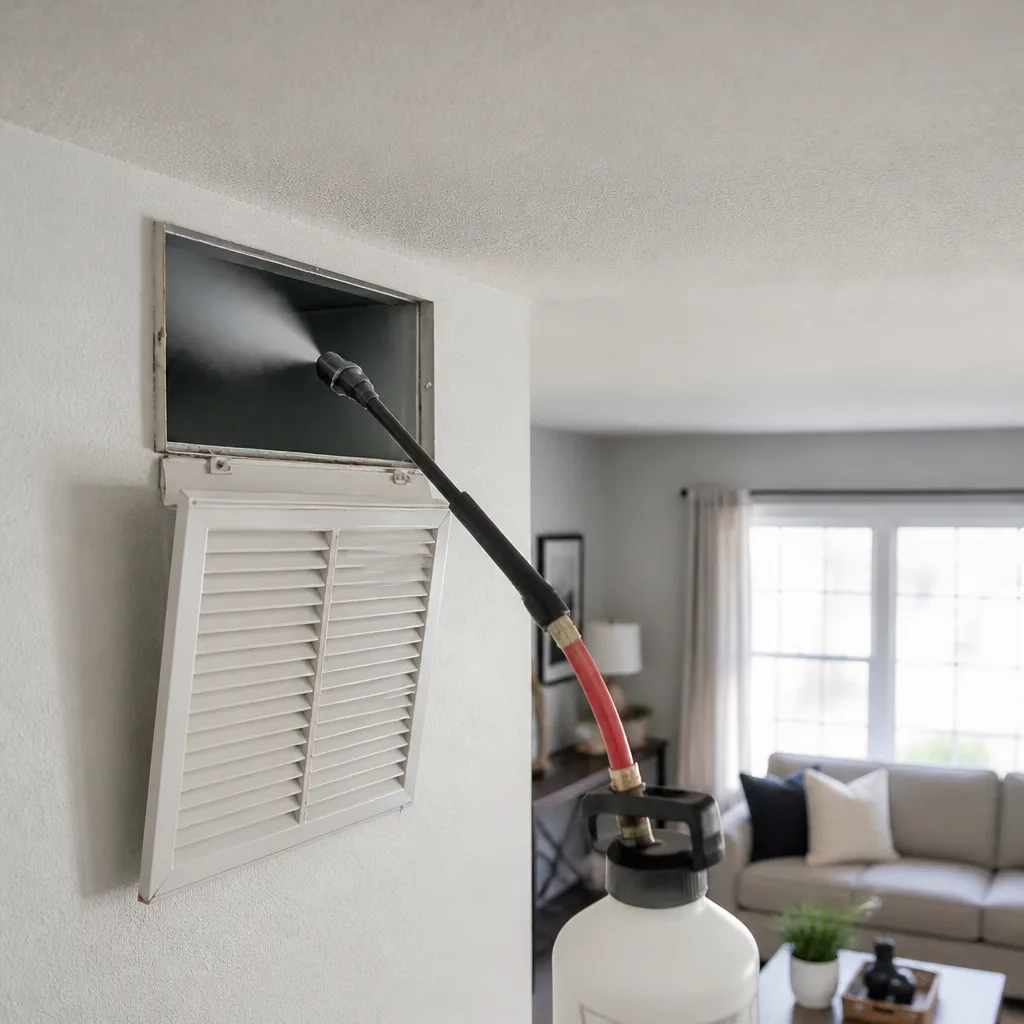
- Register removal and sealing (15 to 25 minutes). Every supply register is removed, cleaned, and set aside. Each opening is sealed to create negative pressure inside the duct system. This is the step that keeps loosened debris moving toward the vacuum instead of puffing back into your bedroom. Skipping it is the single most common shortcut in the industry.
- Agitation with rotary brush (45 to 90 minutes). This is the core of the work. A Rotobrush-style rotary brush snakes through each duct run, physically scrubbing the walls to break loose caked dust, pet hair, and debris. The brush must traverse every branch line from the main trunk to each register opening. More vents means more branch lines means more time. This phase is non-negotiable – a vacuum alone cannot remove adhered debris.
- Negative-pressure extraction (30 to 60 minutes). As the brush works, the Nikro HEPA vacuum pulls continuous negative pressure through the system. That means the loosened debris goes straight into the vacuum’s filtration, not back into your living room. The vacuum runs throughout the agitation phase, but final extraction passes ensure nothing is left sitting in the trunk line.
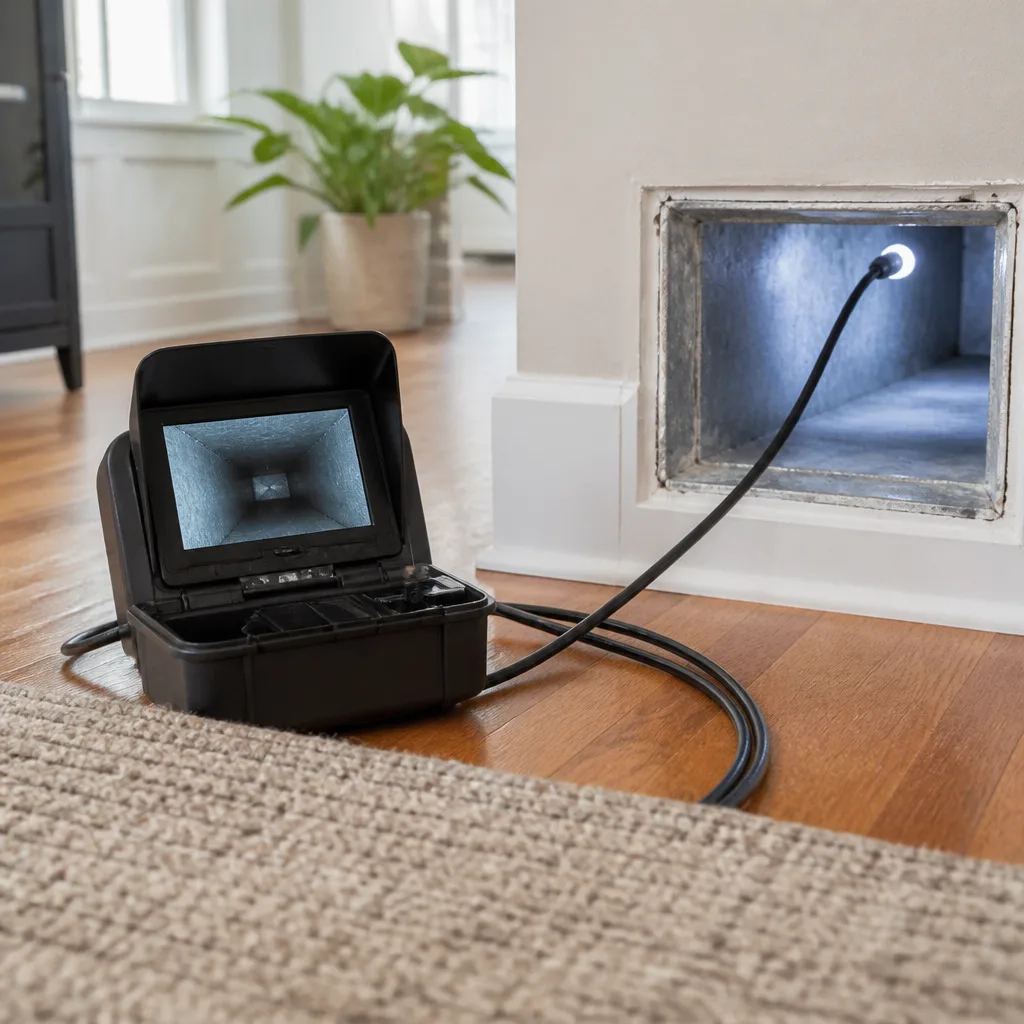
- Post-inspection and photo documentation (15 to 25 minutes). A camera scope goes back through the main trunk and representative branch lines. The technician walks you through what was removed and what the ducts look like now. At Cardinal, we photograph before and after at every access point and register. You get the images. If the job is done right, this final phase proves it.
Time Ranges by Home Size and Vent Count
Here’s a practical reference table for Los Angeles homes. These ranges assume standard access and a single HVAC system. Use your vent count as the primary reference – count your registers and grilles before you call for quotes.
Standard Air Duct Cleaning Time Ranges
- Condos and apartments (under 1,200 sq ft, 8 to 12 vents): 1.5 to 2 hours.
- Small single-family homes (1,200 to 1,800 sq ft, 12 to 18 vents): 2 to 2.5 hours.
- Mid-size homes (1,800 to 2,800 sq ft, 18 to 28 vents): 2.5 to 3.5 hours.
- Large homes (2,800 to 4,000 sq ft, 28 to 40 vents): 3.5 to 5 hours.
- Very large or multi-zone homes (4,000+ sq ft, 40+ vents, multiple systems): 5 to 8 hours, often split across two visits.
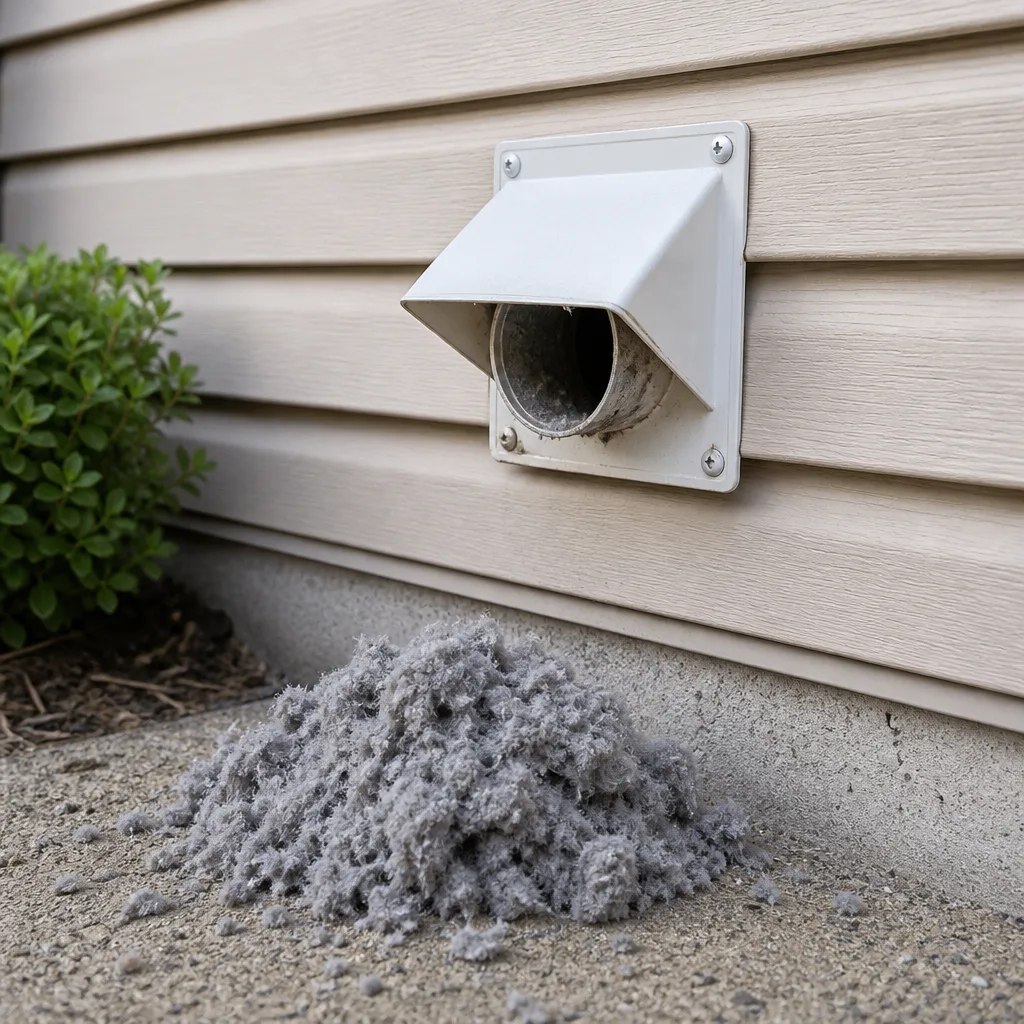
Dryer vent cleaning is a separate service with a much shorter timeline, usually 30 to 60 minutes for a standard run. Our dryer vent cleaning in Los Angeles page covers that process in detail. HVAC cleaning, which includes the blower motor, evaporator coil, and air handler, adds another 60 to 90 minutes to the duct timeline when bundled.
What Adds Time: Two-Story Homes, Zoned Systems, and Access Issues
Not every home is a straightforward single-story with an attic-mounted air handler. Los Angeles housing stock runs from 1920s Spanish bungalows in Echo Park to glass-walled moderns in the Hollywood Hills, and each comes with its own time multipliers.
Two-story homes add 30 to 60 minutes. Duct runs are longer, branch lines travel vertically through chases, and the tech is working from a ladder for every ceiling register on the first floor. There’s also more walking – equipment moves room to room, floor to floor.
Zoned HVAC systems add 20 to 40 minutes per zone. Zoned systems use motorized dampers inside the ductwork to direct air to different parts of the house. Each damper is an access point that must be located, opened, cleaned, and resealed. A three-zone system in a Los Angeles home with a separate upstairs and downstairs unit essentially doubles the workload.
Access problems are the wild card. A furnace in a tight closet, an air handler in a low-clearance attic, a crawlspace with 18 inches of clearance – all of it adds time. So does old ductwork. Houses built before 1980 often have rigid metal ducts with sharp elbows that slow brush traversal. Flex duct, common in newer construction, moves faster but tears more easily, so the technician has to work carefully.
In our experience, homes in Los Angeles beach communities like Playa del Rey and Marina del Rey tend to have additional rust and corrosion inside ductwork from salt air – that corrosion takes longer to agitate effectively than standard dust buildup.
Red Flags of a Rushed Job: What Skipping Looks Like
If a technician quotes you 45 minutes for a whole-house duct cleaning, they are not doing the work. They are doing a version of it that fits their schedule. Here’s what gets cut when the clock is short.
- Registers not removed or sealed. A fast crew may leave registers in place and “clean around them.” Debris keeps falling back into the ducts. If you watch the setup and don’t see register removal within the first 20 minutes, ask why.
- Access panel not opened. The main trunk line behind the furnace access panel is where the heaviest debris accumulates. Skipping it is like vacuuming your living room but never under the sofa. A proper job includes removing the access panel and cleaning the trunk directly.
- No containment. If there are no drop cloths, no sealing at registers, and no negative-pressure setup, the crew is running a brush and hoping for the best. Los Angeles homes with older ductwork will push dust through every unsealed opening.
- One pass with the brush. Proper agitation requires multiple passes through each branch line, particularly in ducts with visible debris buildup. One pass is a visual, not a clean.
- No post-inspection. The technician should show you what came out and what the ducts look like after. A crew that packs up without showing you the results is avoiding the evidence.
Why Before-and-After Photos Add Minutes and Why That’s Worth It
Photo documentation adds 15 to 25 minutes to the job. Some companies skip it because they can. We don’t, because it’s the only way to prove the work was actually done. Every Cardinal Air Duct Cleaning job includes before-and-after photography at each access point and representative register openings. The photos are yours.
This matters for two reasons. First, ducts are hidden. You cannot see the inside of your own ductwork without a camera scope. Without photos, you’re taking the technician’s word that the ducts were dirty in the first place and clean when they left. Second, photos create accountability. If a section was missed, the photo record catches it. If the work was done right, you have proof for your records, your landlord, or a future home sale.
The Relay Standard, which governs every independently owned Cardinal location, makes this non-negotiable. We hand you a written price before any work starts, give you a live trackable arrival window, and document the results. The extra minutes photo documentation takes are the minutes that make the rest of the job honest.
How Long a DIY “Check” Takes vs. a Professional Clean
You can do a basic visual inspection of your ducts in about 20 minutes. Remove a few supply registers, shine a flashlight into the branch line, and look at the return grilles. You’re checking for visible dust accumulation, pet hair matting, mold spots, or debris. This is a useful check, not a cleaning.
Actually cleaning the ducts yourself is a different proposition. You’d need to access the entire duct network, physically agitate the walls of every branch line, and create genuine negative pressure to extract loosened debris. A shop vac attached to a single register does not create system-wide negative pressure – it pulls from one opening while the rest of the system is open to the house. You’d spend 6 to 10 hours, and the result would be materially worse than what a professional crew achieves in 2 to 4 hours with rotary brush agitation and HEPA-rated extraction. For a comparison, see our guide on how long dryer vent cleaning takes, with timelines and what to expect.
The honest answer: inspect it yourself, but leave the cleaning to a crew with the right equipment. The cost of a professional clean in Los Angeles runs $450 to $900 for a typical single-family home, depending on vent count and system configuration. That price should include the full sequence – setup, containment, agitation, extraction, documentation – not a brush-and-dash.
Common Mistakes to Avoid
- Trusting a quote that’s 50% below every other bid. Cheap duct cleaning in Los Angeles usually means a partial job. Low-ball crews depend on you not knowing what a complete job looks like. If the price is dramatically lower, ask what phases get cut.
- Not counting vents before you call. The vent count is your leverage. You can’t evaluate a quote without knowing your own number. Walk your home, count supply registers and return grilles, write it down. A 25-vent home quoted at 90 minutes is a red flag you can spot before the crew arrives.
- Booking based on square footage alone. Square footage shapes the quote, but vent count shapes the work. Ask the company whether their estimate accounts for vent count and system configuration. If they can’t answer, they’re not thinking about your actual house.
- Skipping the photo documentation. If the company doesn’t offer before-and-after photos, you lose the only objective evidence the job was done. Insist on documentation or choose a company that provides it by default.
- Ignoring the dryer vent. Dryer vent cleaning is often overlooked when homeowners schedule duct cleaning. The dryer vent is a separate run from the HVAC system and clogs independently. Bundle it while the crew is already at your home – it adds 30 to 60 minutes and prevents a lint fire risk.
- Accepting a “no-containment” explanation. Some crews in Los Angeles will tell you containment is unnecessary for “light dust.” That’s not a thing. Proper negative-pressure setup is the difference between dust staying in the ducts and dust spreading through your home. Walk away from anyone who dismisses it.
When to Call a Professional
Call a professional when you can see visible dust on register covers, when you find dust accumulating on furniture within days of cleaning, when allergy symptoms worsen at home, when there’s been water damage or a mold smell from the vents, or when you’ve moved into a home and can’t verify the last time the ducts were cleaned. Pet owners with multiple animals should be especially proactive – pet dander and hair create matting that a DIY inspection will miss. Cardinal Air Duct Cleaning offers free estimates in Los Angeles – call (737) 727-2314 and a live person answers, day or night.
Frequently Asked Questions
For a typical Los Angeles single-family home with 18 to 25 vents, air duct cleaning takes 2.5 to 3.5 hours. Smaller condos run 1.5 to 2 hours; larger homes with 30 or more vents run 4 to 5 hours. The vent count is the primary driver, not square footage. Call (737) 727-2314 for an exact timeline based on your home’s vent count and system configuration.
Standard air duct cleaning in Los Angeles runs $450 to $900 for a typical single-family home. The range reflects vent count, system size, and access difficulty. Condos start around $300; large multi-zone homes can exceed $1,200. Beware quotes under $300 – at that price, the crew is cutting corners on containment, agitation, or both. Get a written price before any work starts, and confirm it won’t change at the door.
Cheaper quotes usually mean fewer phases. A $99 whole-house special typically skips containment, uses a single pass with the brush, or never opens the access panel. Some companies run a vacuum-only service that cannot remove adhered debris. The price difference is the difference between a complete job and a visual once-over. Ask any low-bid company exactly which phases are included before you book.
You need before-and-after photo documentation from inside the ducts at the access panel and representative registers. Without photos, you’re trusting an invisible result. Cardinal Air Duct Cleaning photographs every job and delivers the images with your digital invoice. If a company refuses to provide photo proof, choose someone else.
Every 3 to 5 years for most Los Angeles homes. Homes with multiple pets, recent renovation work, or residents with allergies should consider every 2 to 3 years. Homes near busy roads or wildfire-prone areas may accumulate particulate faster. If you’ve never had it done and the home is over 10 years old, schedule an inspection. Call (737) 727-2314 and we’ll help you determine whether it’s time based on what we see, not a calendar.
Yes. Pre-1980 homes in Los Angeles often have rigid metal ductwork with sharp elbows, narrow crawlspace access, and decades of accumulated debris. Corrosion from coastal salt air in beach neighborhoods adds additional agitation time. A 1920s bungalow in Echo Park with 15 vents can take as long as a 2020 build in Santa Monica with 25 vents. The timeline depends on the ductwork itself, not just the vent count.
The Bottom Line
Air duct cleaning takes 2 to 4 hours for most homes, driven by vent count – roughly 5 to 7 minutes per supply and return. For more guides & resources on maintaining your system, visit our blog. Two-story layouts, zoned systems, and poor access add time. The warning signs of a rushed job are visible early: no register sealing, no containment, no access panel removal. Photographic documentation is the only way to verify the work, and it’s worth the extra 20 minutes. If you’re in Los Angeles and want a written price, a live trackable arrival window, and photo proof of the work, call (737) 727-2314.
Written by Omar Haddad, Owner at Cardinal Air Duct Cleaning, serving Los Angeles since 2005.