
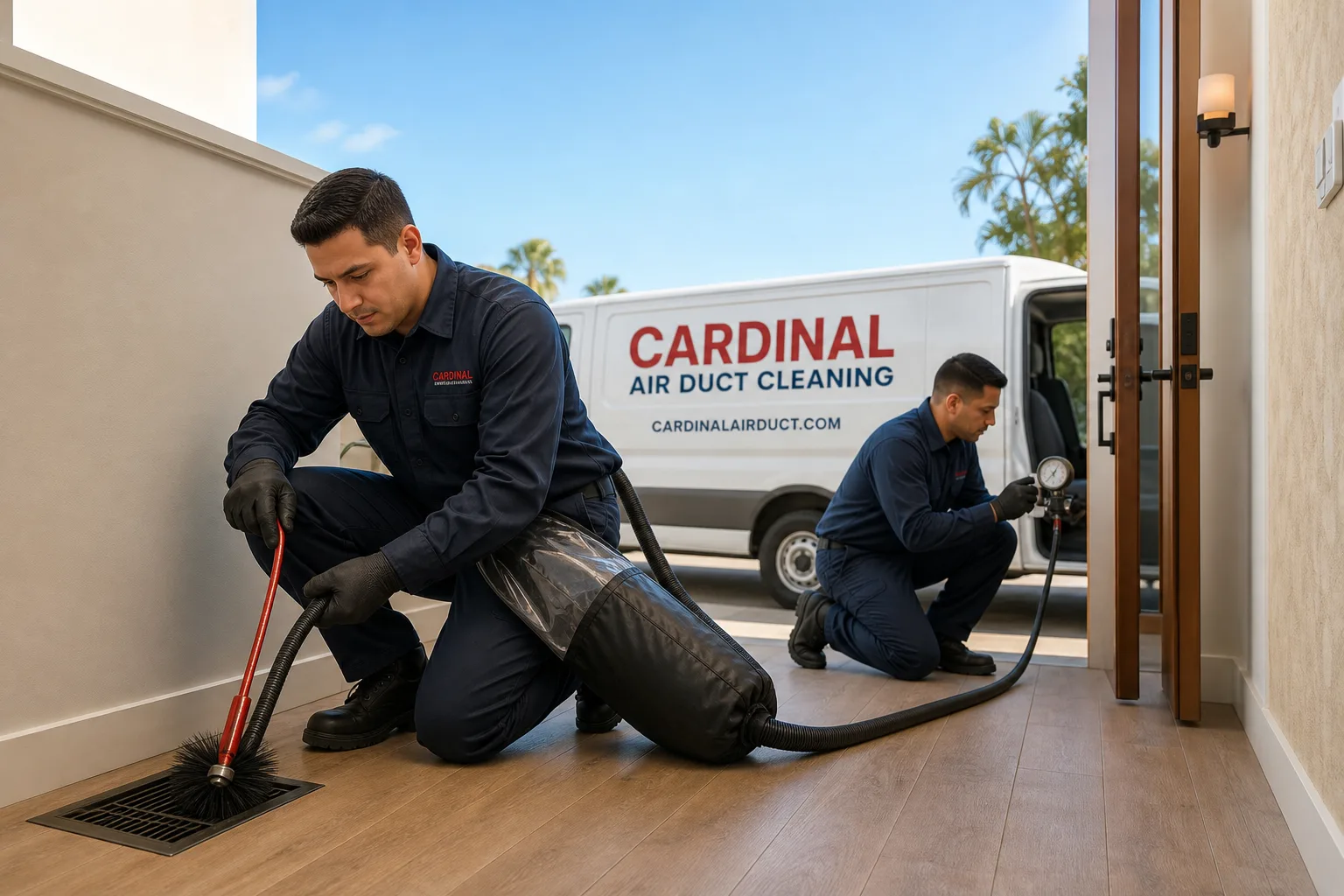
Whole-system duct and dryer vent check with before-and-after photos - you see exactly what came out of your vents
That "$99 whole-house special" is a bait ad - the real number appears once they are in your hallway, or the "clean" is a shop-vac at the register. We photograph the inside of your ducts before and after instead.
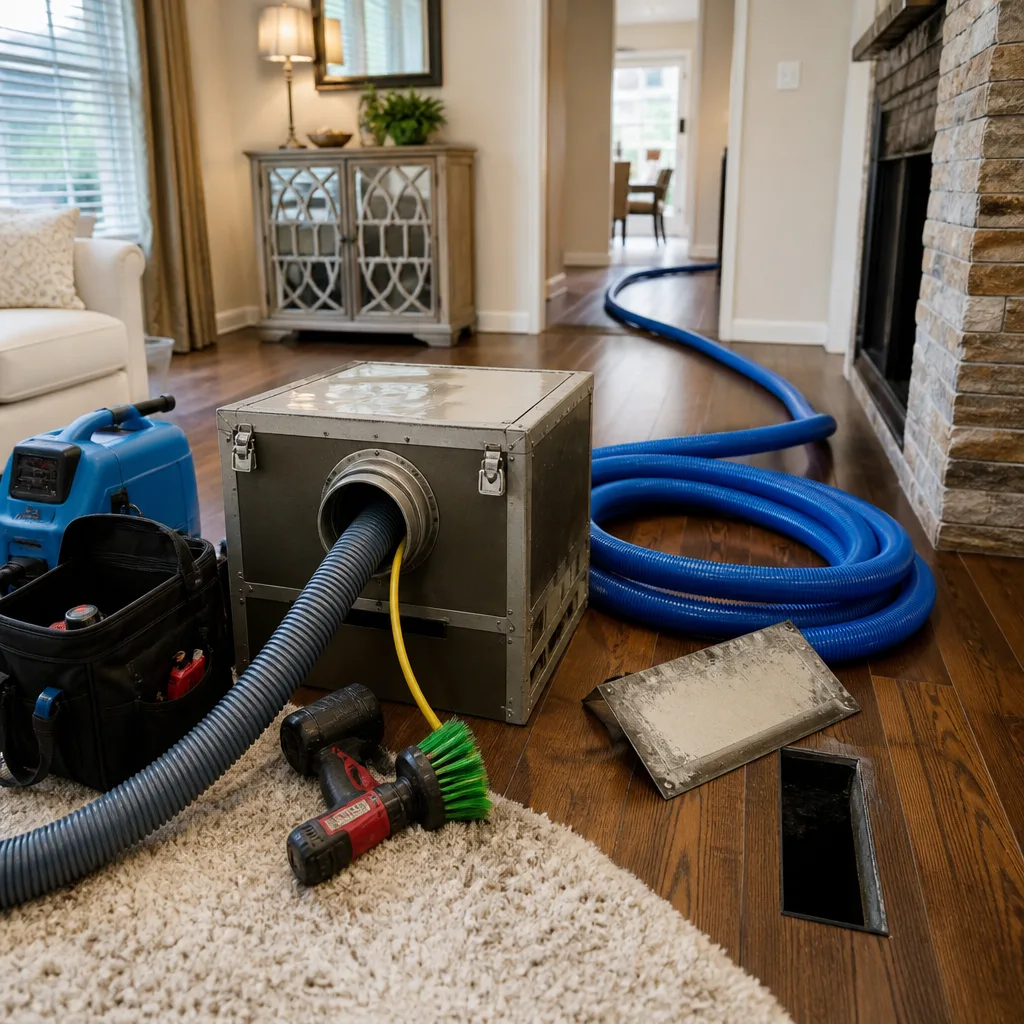
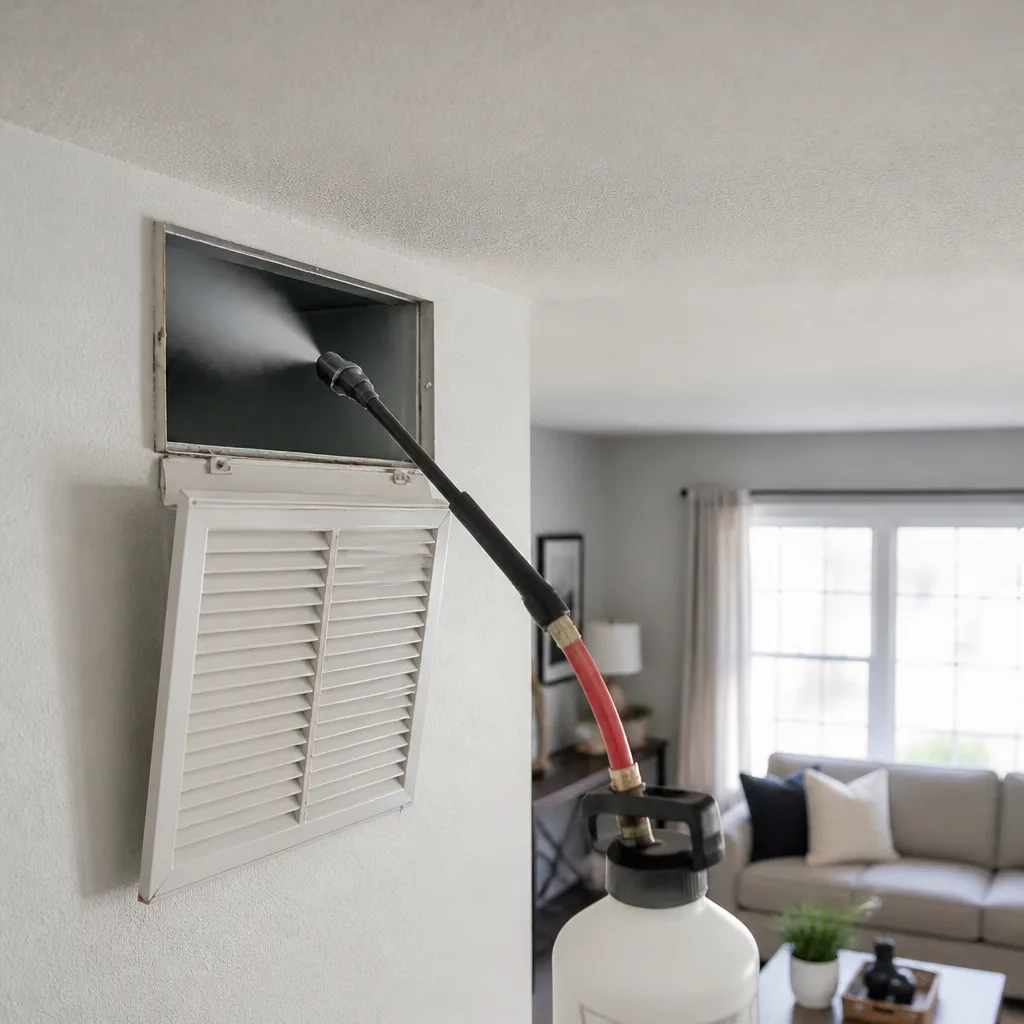
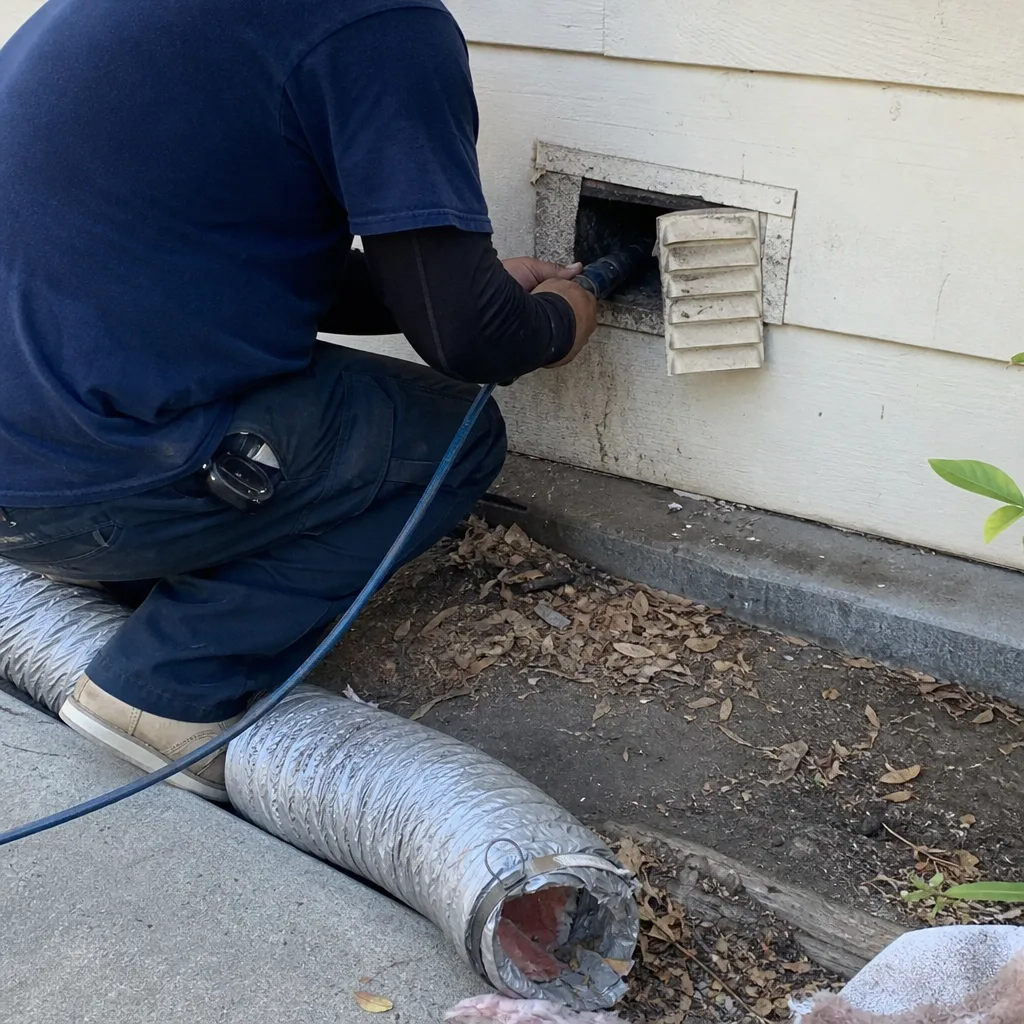 Before
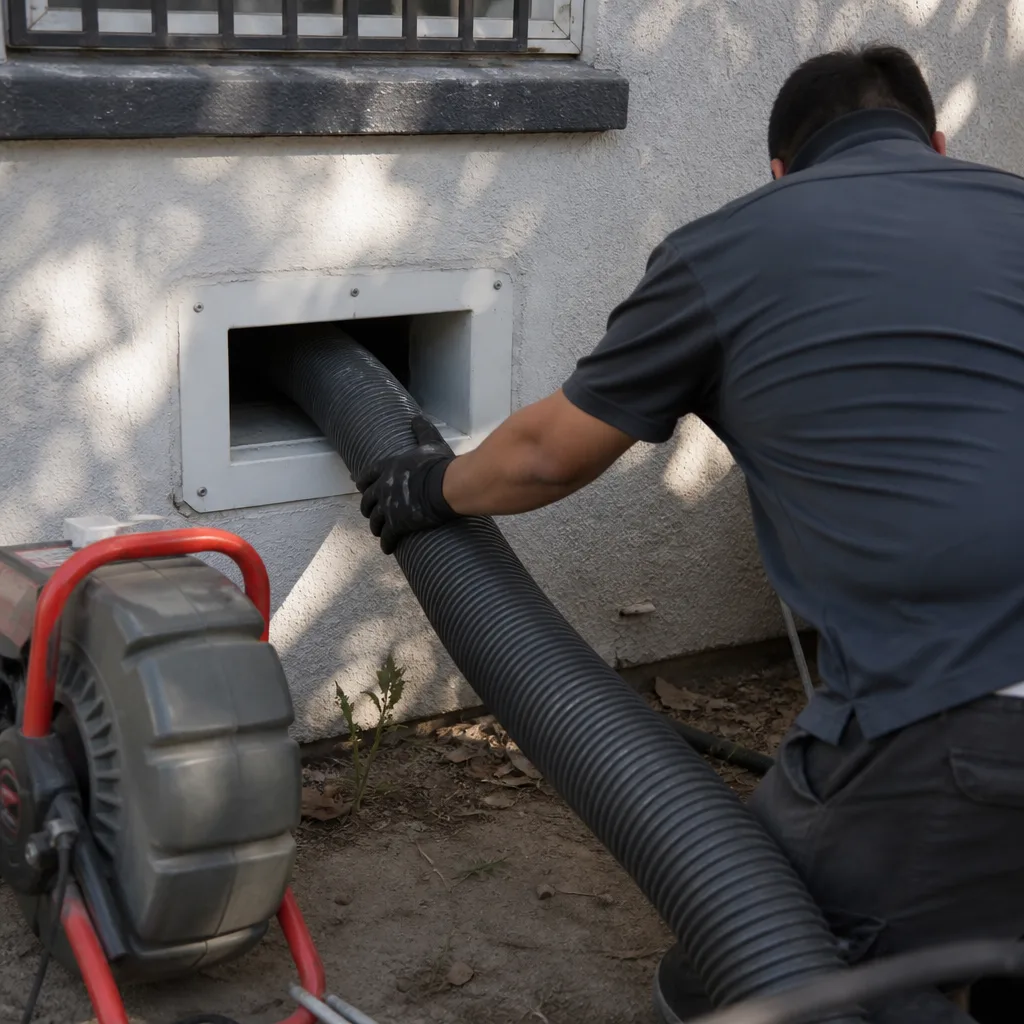 After
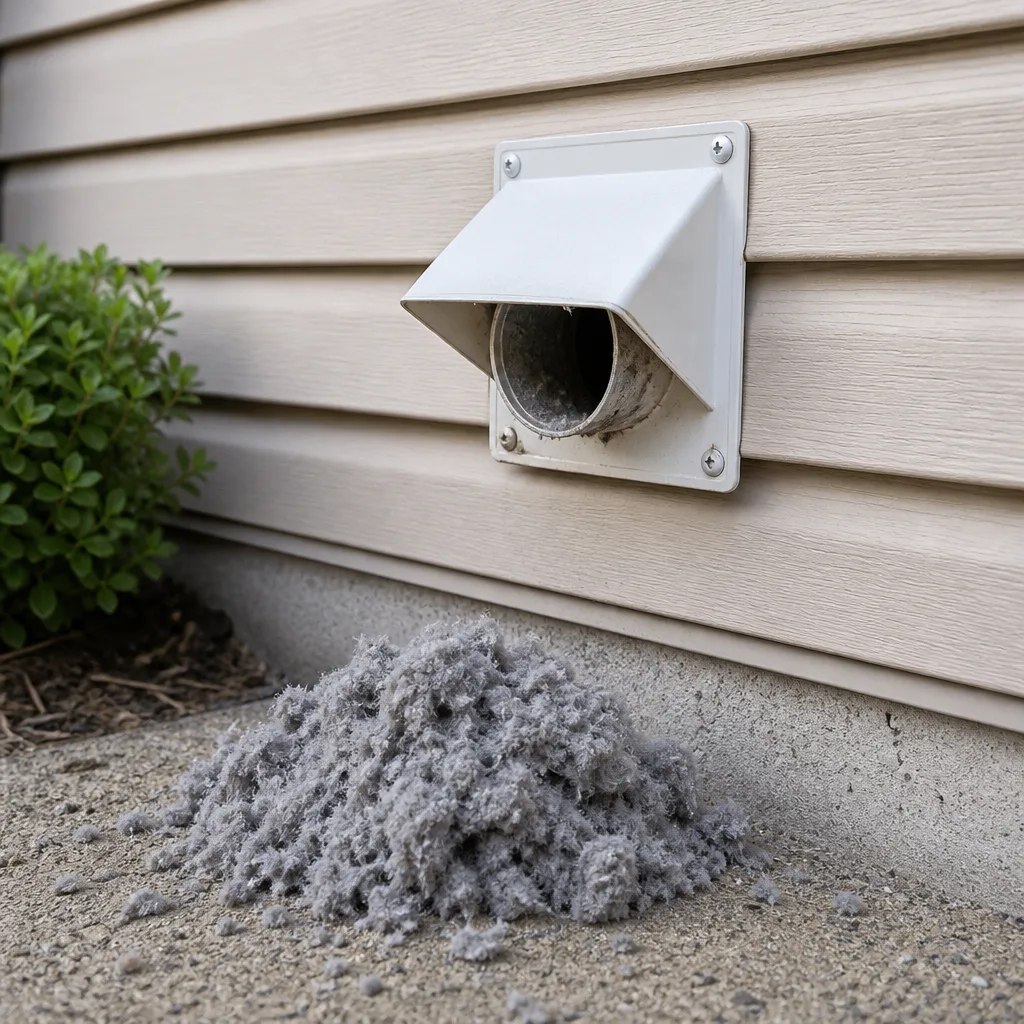
After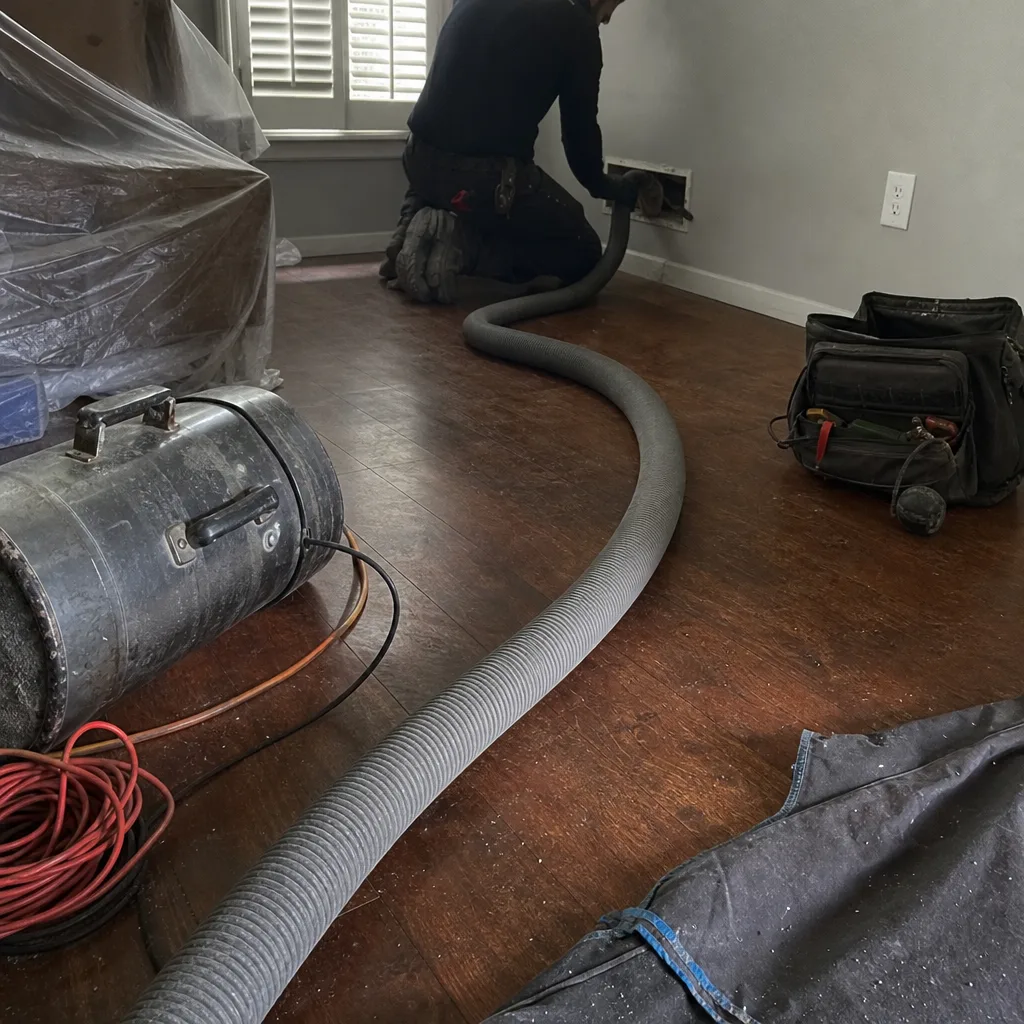 Before
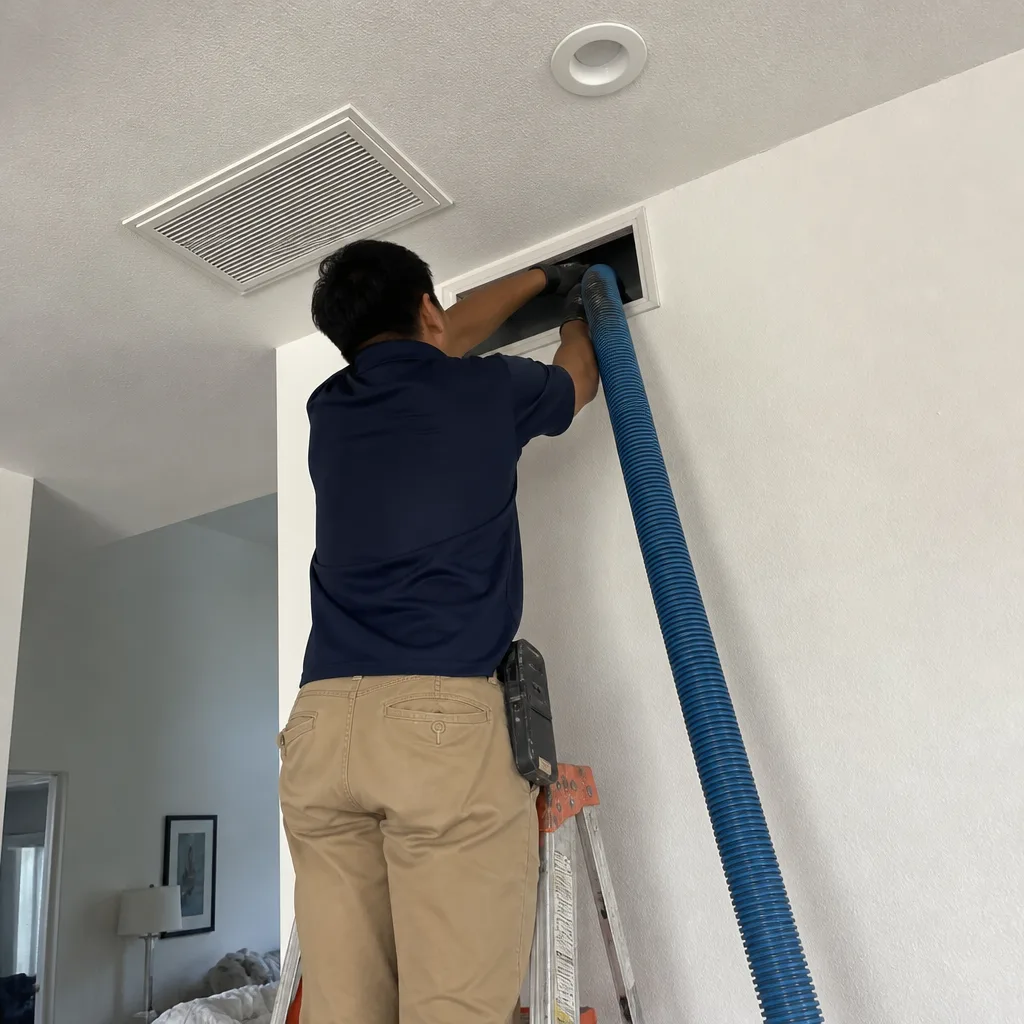 After
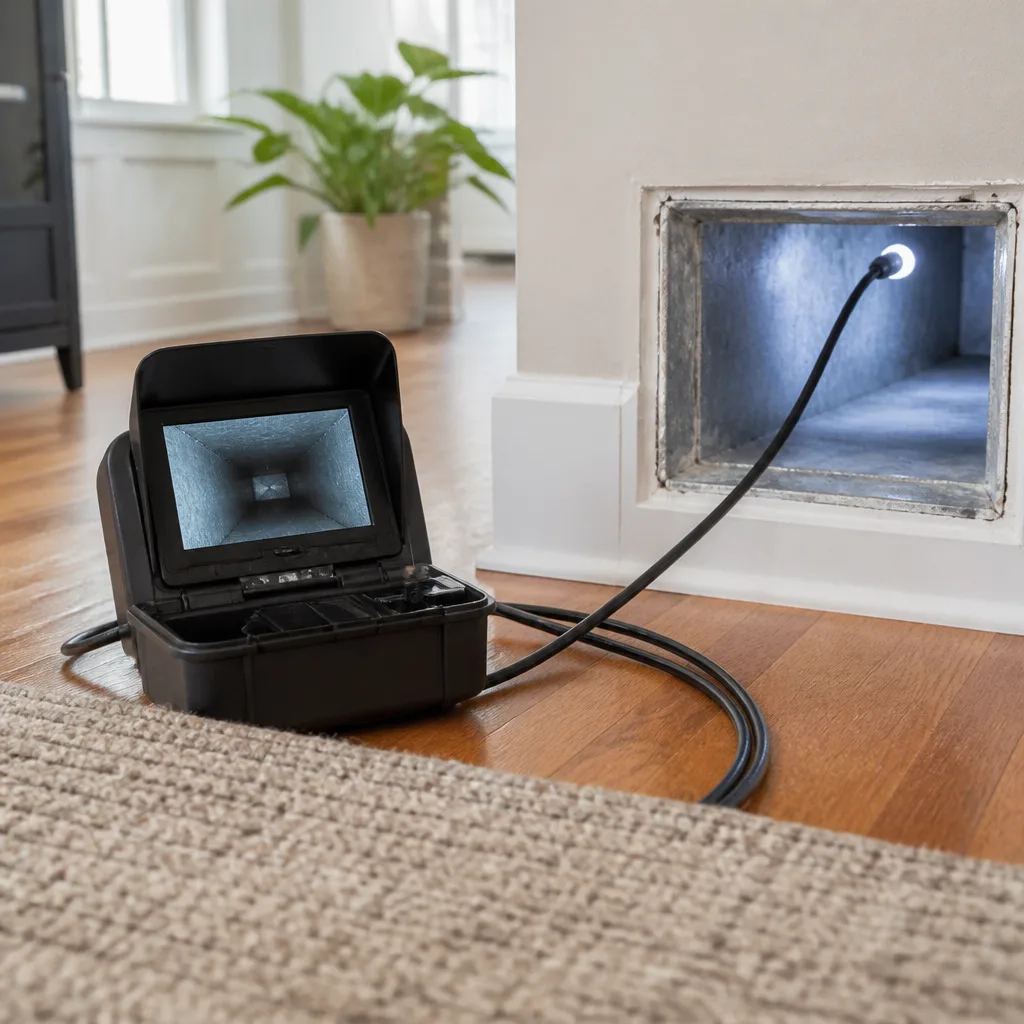
After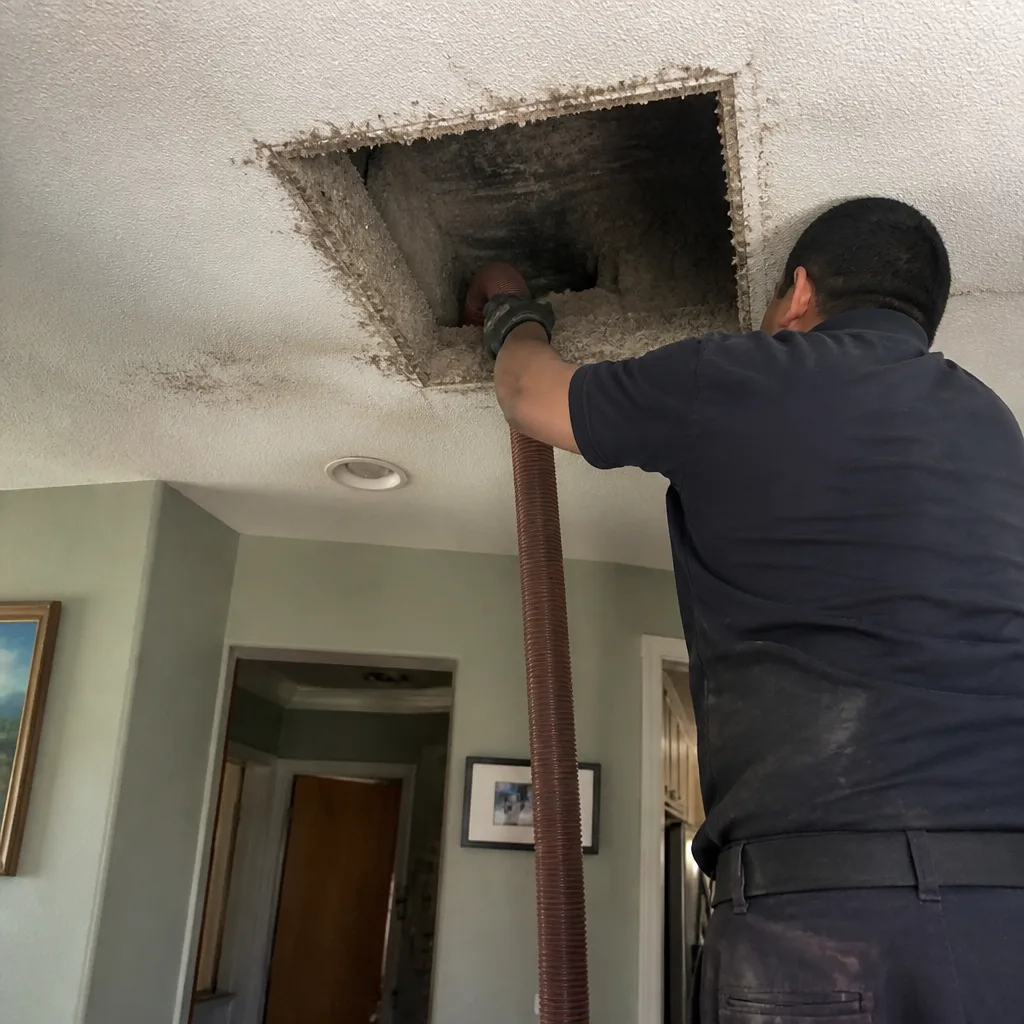 Before
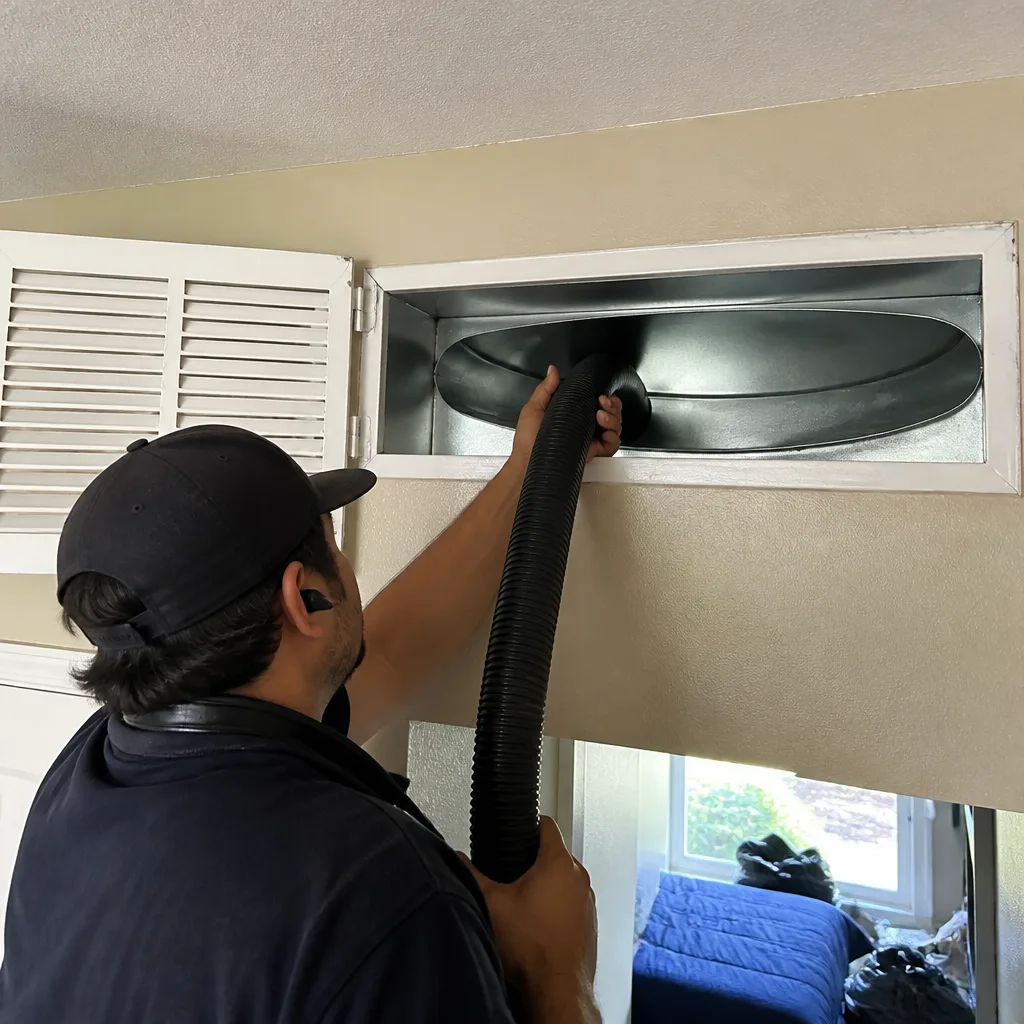 After
AfterMusty smell from the vents
What’s Happening
A musty smell coming from your vents almost always means mold, mildew, or accumulated biological debris has taken hold somewhere in your duct system or on your HVAC equipment. It’s not a faint odor you should ignore – once you can smell it at the register, the source is usually well established. A professional air duct cleaning, and in many cases an HVAC cleaning, is the fix that actually removes the source rather than masking it.
Your duct system is dark, often humid, and rarely disturbed. That combination is exactly what mold spores need to settle and spread. When your system kicks on, conditioned air picks up whatever is growing in there and carries it into every room in the house. The smell is the visible warning – the spores are already moving. What you’re noticing at the vent is a symptom of something upstream, and running the system keeps circulating it until the source is gone.
Why It Happens
Moisture in the duct work
This is the most common cause by a wide margin. Condensation forms inside metal ducts when warm, humid air meets a cold duct wall – exactly what happens during cooling season if duct insulation is failing or if there’s a gap in the duct run. You can sometimes spot the sign of this without any tools: flex duct that looks dark, discolored, or slightly collapsed near a connection point is a strong indicator. If the smell is worst right when the air conditioning starts up and then fades slightly, moisture in the ducts is the likely culprit.
A dirty evaporator coil or drain pan
The evaporator coil sits inside your air handler and pulls heat and humidity out of the air. Over time, dust, debris, and condensation combine on the coil surface to create a film that mold loves. The drain pan underneath it collects the water that drips off – if that pan is slow to drain or sitting stagnant, it becomes a growth pool. The giveaway: the musty smell is present constantly, not just at startup, and gets noticeably worse in humid weather.
A clogged or forgotten air filter
A filter that’s been in place too long gets saturated with dust and organic particles. At that point it stops filtering and starts decomposing. The smell from a badly overdue filter is slightly different from full-scale mold – more stale than earthy – but it often gets confused. Pull your filter and look at it. If it’s gray, matted, and you can’t see light through it, that’s your first fix. If swapping it out doesn’t resolve the smell within a day or two of running the system, the problem is deeper.
Standing water or a duct breach near a crawl space or attic
Ducts that run through unconditioned crawl spaces or attics are vulnerable to actual water intrusion – from a roof leak, a pest entry point, or ground moisture wicking up into flex duct that’s resting on a damp surface. This type usually produces the strongest, most unpleasant smell, often closer to rot than mildew. If you have access to a crawl space and can look at the duct runs safely from below, check for flex duct that’s lying in moisture, kinked, or shows dark staining on the exterior.
What to Do Right Now
- Change or check your air filter first. Pull it out and hold it up to a light source. A filter you can’t see through needs replacing before anything else happens. Note the size printed on the frame – you’ll want to tell the technician when you call.
- Stop running the system in recirculate mode. If your thermostat has a “fan on” setting that keeps air moving continuously, switch it to “auto” so the system only runs on a call for heating or cooling. This slows down how much of the contaminated air is being pushed through the house while you wait.
- Look at your floor and ceiling registers. Shine a flashlight into two or three of them. Dark streaking, visible dust mats, or any fuzzy growth on the metal louvers tells you the contamination is right at the register, not just buried deep in the main trunk. Photograph what you see – your technician will want to know what the worst registers look like.
- Check your condensate drain line access point if you can find it. It’s usually a short white PVC pipe near the air handler with a cap or a small opening. If water is backed up or there’s standing water in the drain pan visible through the access panel, that’s confirmation the drain is slow or blocked. Do not try to flush it yourself with chemicals without knowing whether your system uses a condensate pump – call and let a technician handle the drain side.
- Do not spray deodorizers or foggers into your ducts. It masks the smell for a few hours and can leave a chemical residue on the interior duct surfaces that complicates the cleaning. What’s in there needs to come out, not get covered up.
How We Fix It
When your local Cardinal Air Duct Cleaning team arrives, the technician does a full system inspection before any equipment is set up. That means checking the air handler, the visible coil condition, the drain pan, and pulling a register or two to assess the interior duct walls. Nothing starts until you have a written price in hand – that’s not optional, it’s how every Cardinal job works.
The cleaning itself uses Rotobrush rotary brush systems to mechanically agitate debris from duct walls and Nikro HEPA-rated vacuums to extract it under negative pressure, so nothing re-enters the living space during the process. Abatement Technologies containment units isolate the work area. For jobs where the coil or drain pan is the source, that becomes part of the HVAC cleaning scope discussed before work begins.
Most residential jobs run two to four hours depending on system size and what the inspection turns up. Every job is covered by the 365-Day Done Right Promise: if something isn’t right, your local team comes back and makes it right, at no cost to you. That window is a full year, and it applies to every booking without exception.
Frequently Asked Questions
It can be, depending on the type of mold present and how long it’s been circulating. Most musty-smelling duct systems have common mold and mildew rather than anything exotic, but the consistent inhalation of any mold spores is a problem for people with allergies, asthma, or compromised immune systems. Don’t wait to see if it gets worse on its own – it almost never does. Call (737) 727-2314 and get a technician to assess it.
Every day you run the system, you’re pushing contaminated air through every room. If anyone in the house is already showing symptoms – congestion, headaches, eye irritation – the urgency is higher. If the smell appeared suddenly after a period of heavy rain or flooding near the home, treat it as urgent because water intrusion into a duct system spreads quickly. Call (737) 727-2314 – the inspection will tell you exactly what you’re dealing with.
Cardinal doesn’t quote a price before a technician has seen your system, because the scope genuinely varies: duct layout, system size, coil condition, and whether the issue is isolated or widespread all affect what the job involves. What we can promise is that you’ll have a written price before any work starts – and that price doesn’t change at the door. Call (737) 727-2314 or book online and your local team will give you a free written estimate after the inspection.
Your local Cardinal Air Duct Cleaning team handles scheduling directly and can walk you through availability when you call. We keep calls answered by a live person, 24/7 – no voicemail loop, no next-business-day callback. When you do book, you get a live arrival window you can track, not a four-hour guess. Call (737) 727-2314 and a real person will pick up.
Get It Fixed
Call (737) 727-2314 or book online. A live person answers 24/7, your local Cardinal Air Duct Cleaning team handles the rest. You’ll have a written price before anything starts and a full year of coverage behind every job.
Written by Omar Haddad, Owner & Lead Technician at Cardinal Air Duct Cleaning, part of the Relay Home Co. family serving communities across the country since 2005.
What Our Customers Say
"Booked a slot in the app, got a reminder text, and watched the crew's van on the map as it came. Cleaned all the vents and the main trunk. Easy from start to finish."
- Rob J."Cleaning plus HVAC coil clean. Tech texted when he was ten minutes away. No surprises on the price."
- Evan S."Dryer vent fix fixed the burning smell. The clog was behind the elbow and the whole laundry room smells normal now."
- Dennis K.