
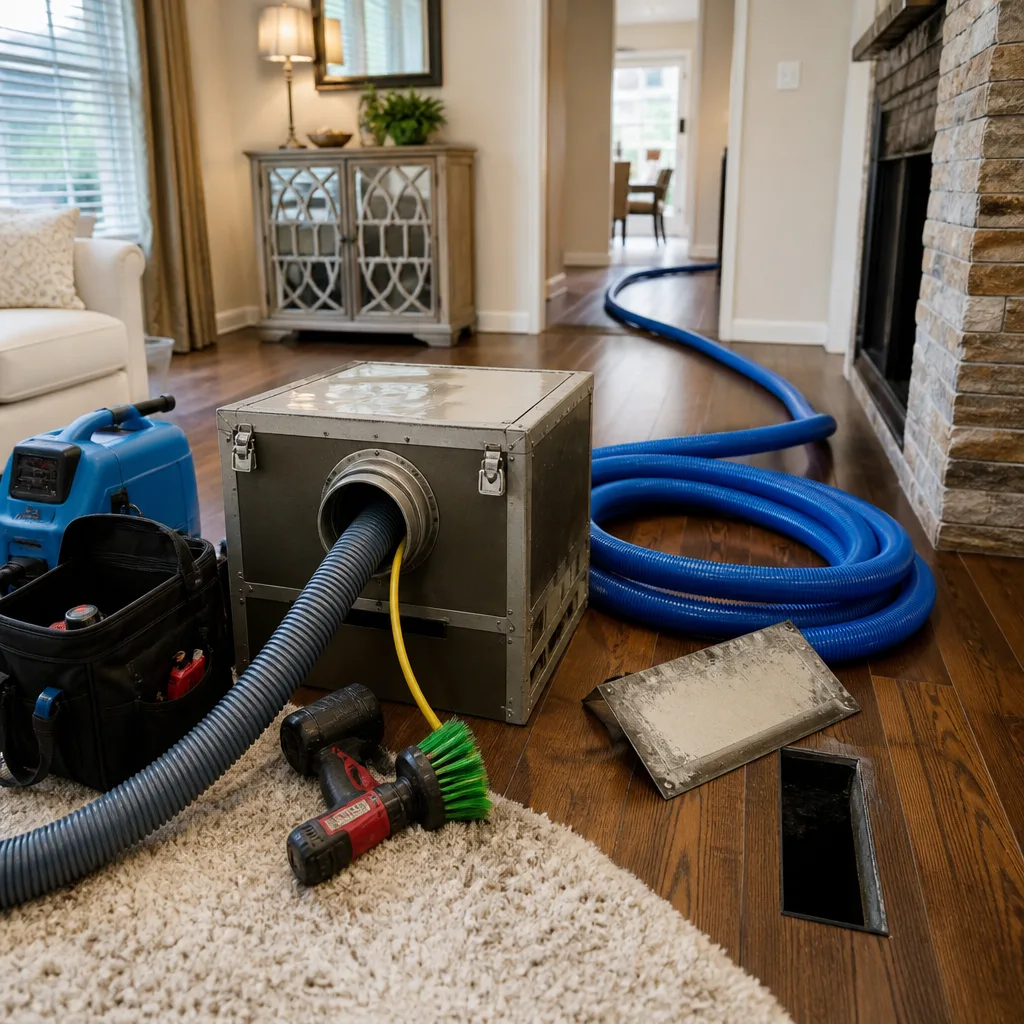
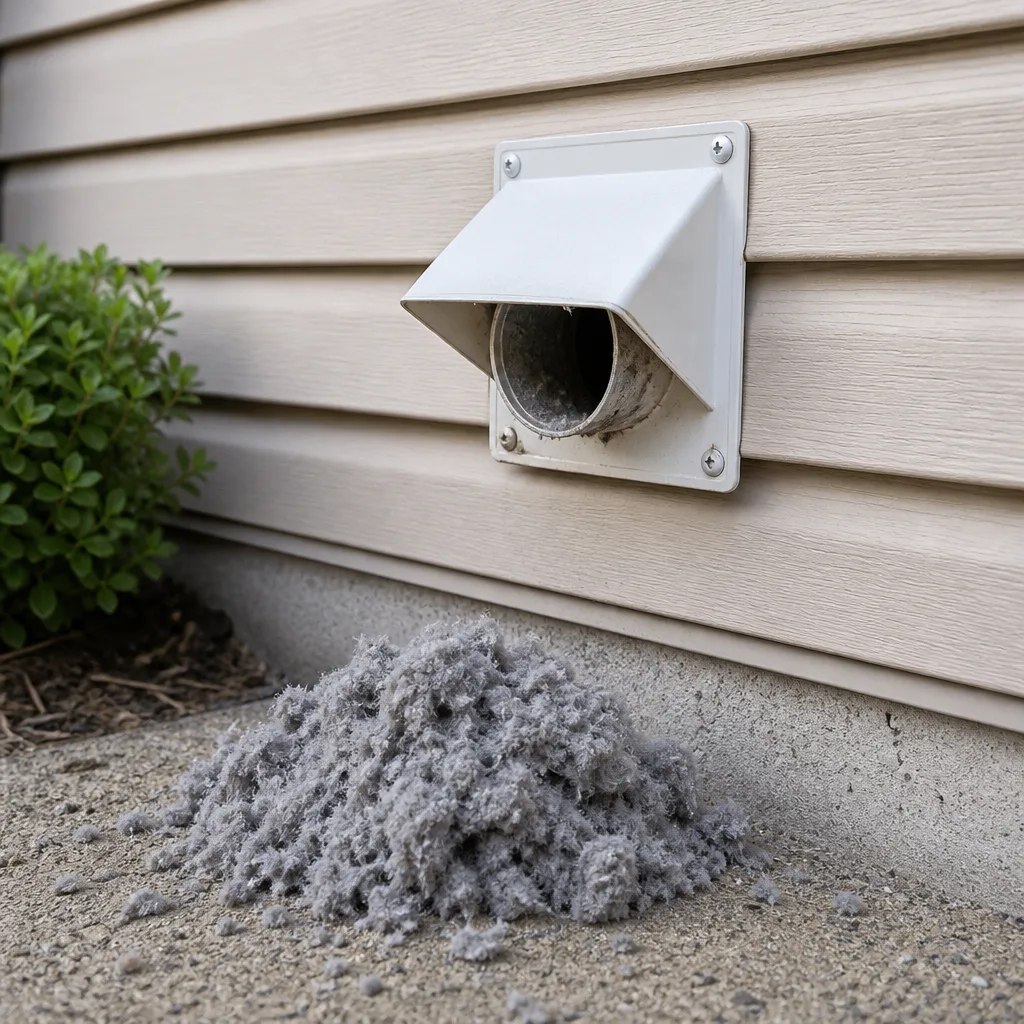
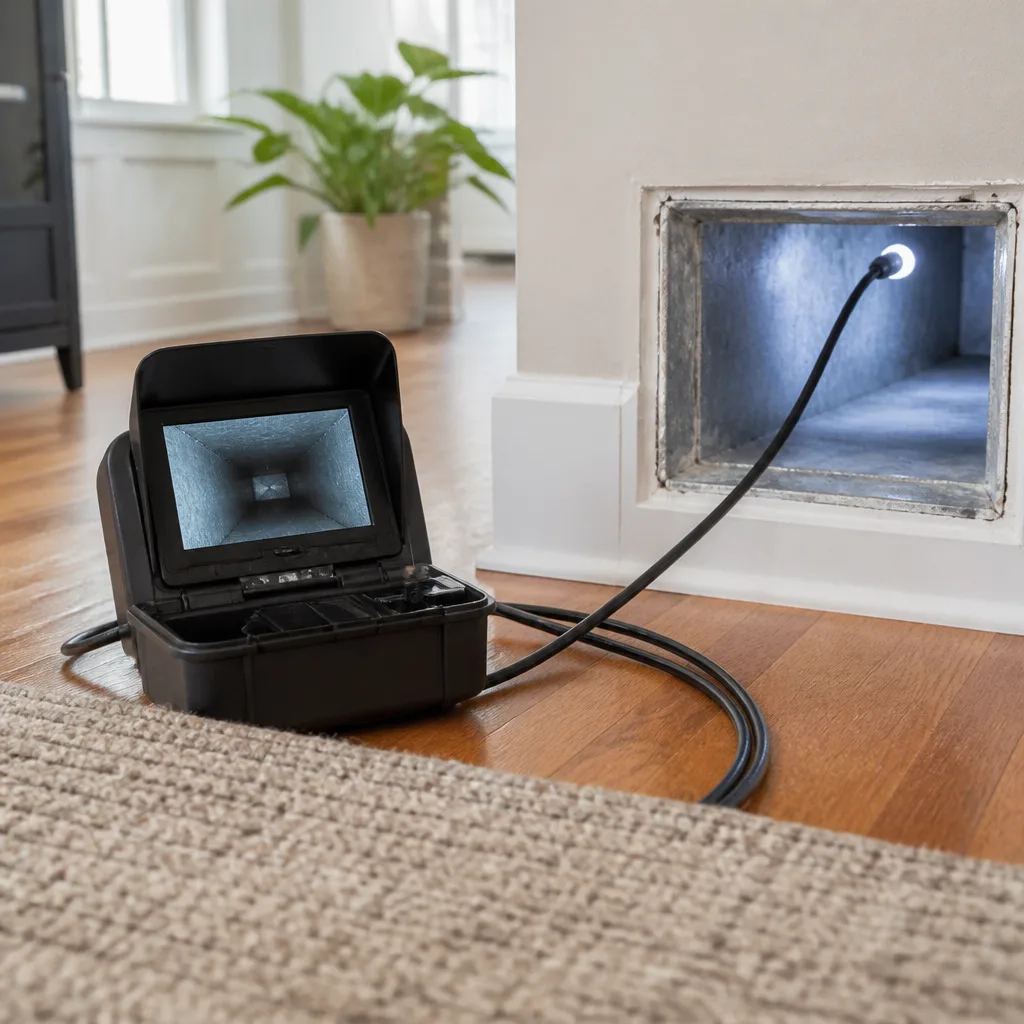
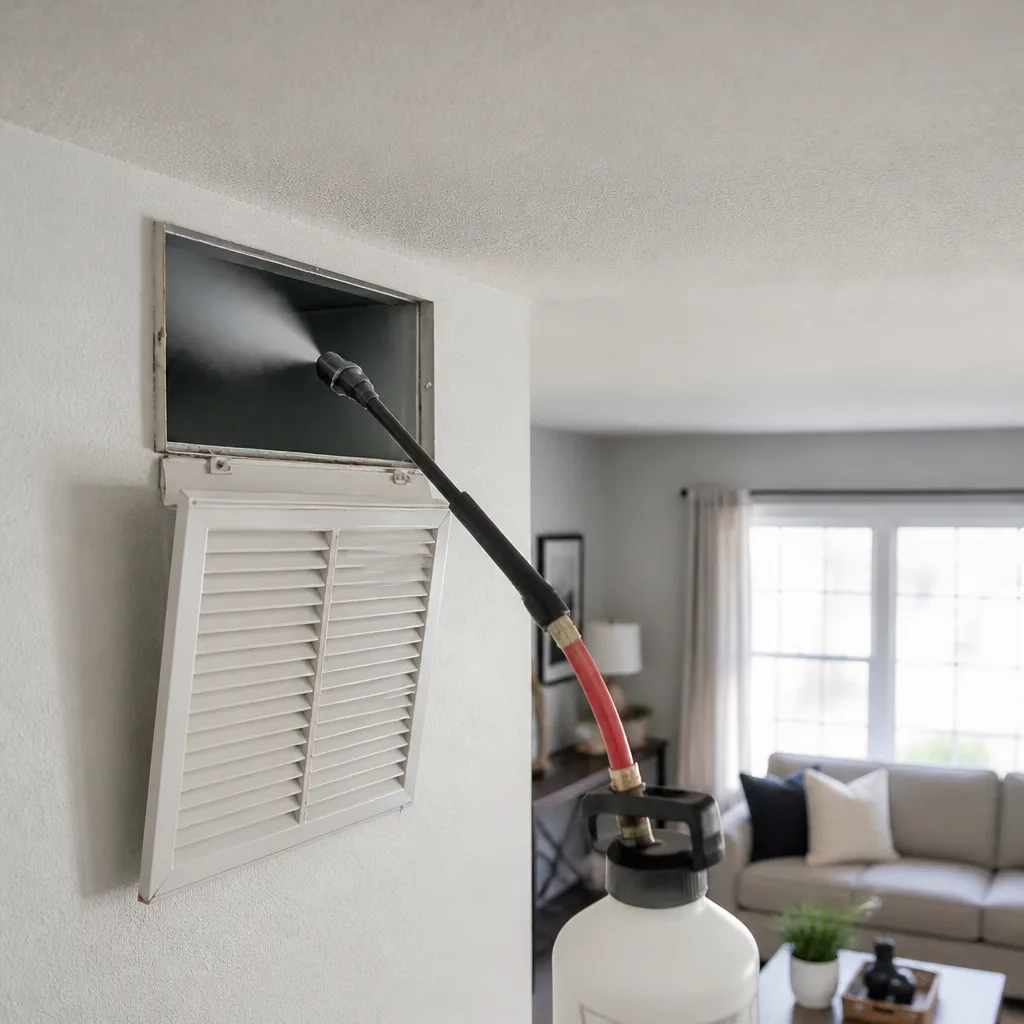
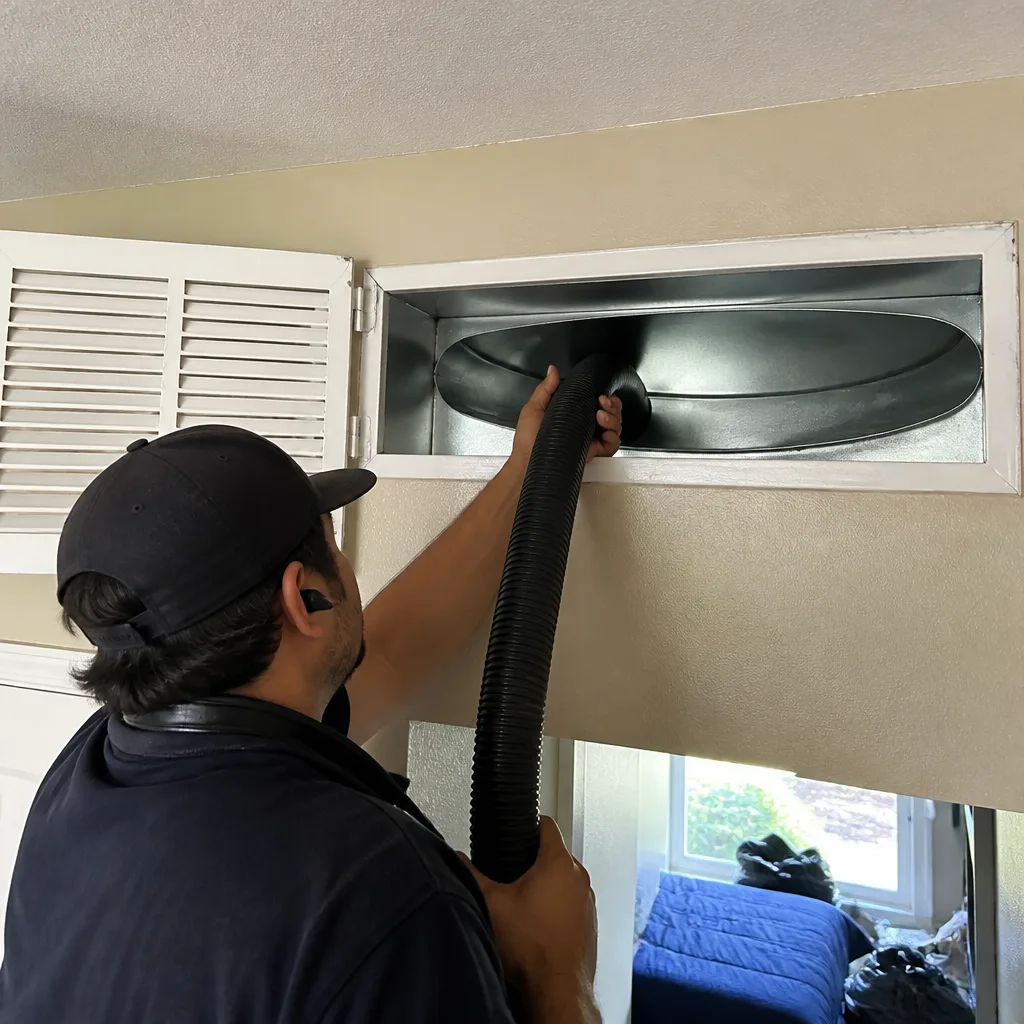
Whole-system duct and dryer vent check with before-and-after photos - you see exactly what came out of your vents
That "$99 whole-house special" is a bait ad - the real number appears once they are in your hallway, or the "clean" is a shop-vac at the register. We photograph the inside of your ducts before and after instead.
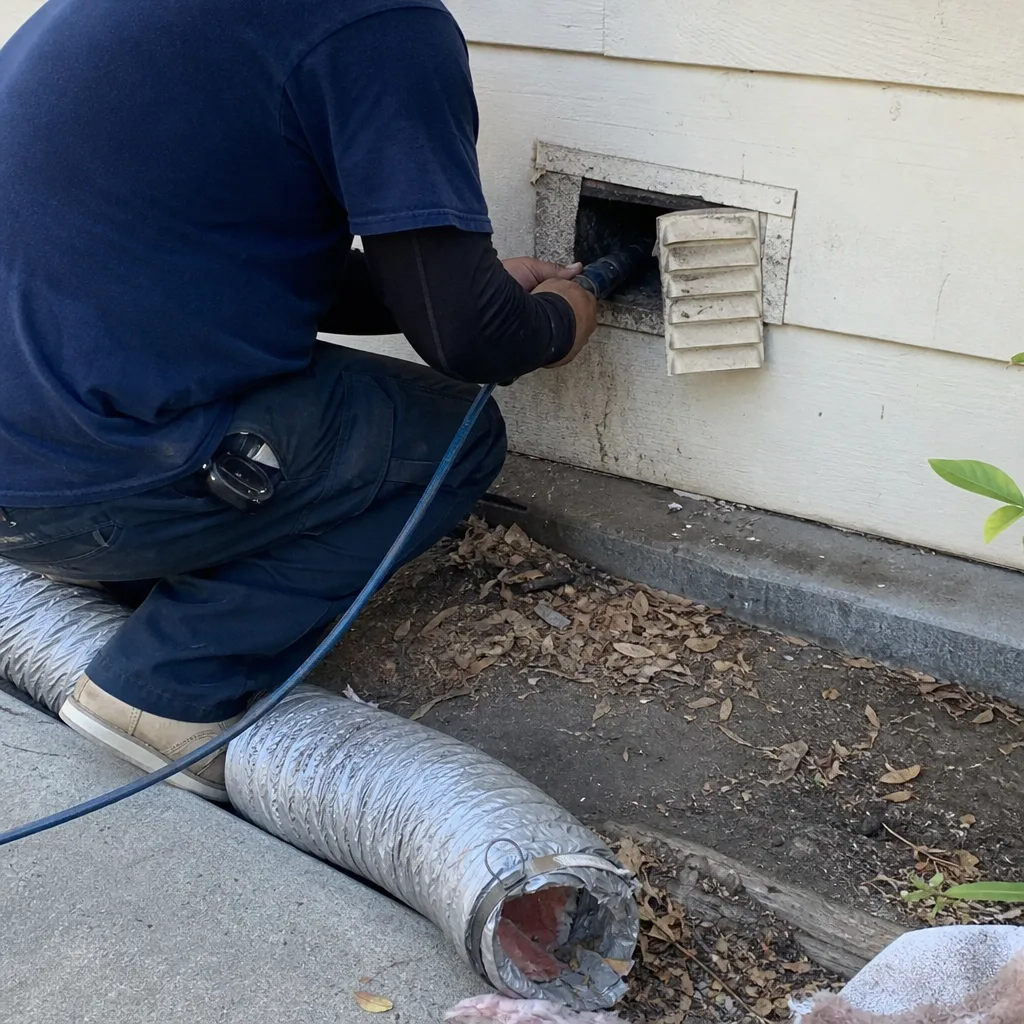 Before
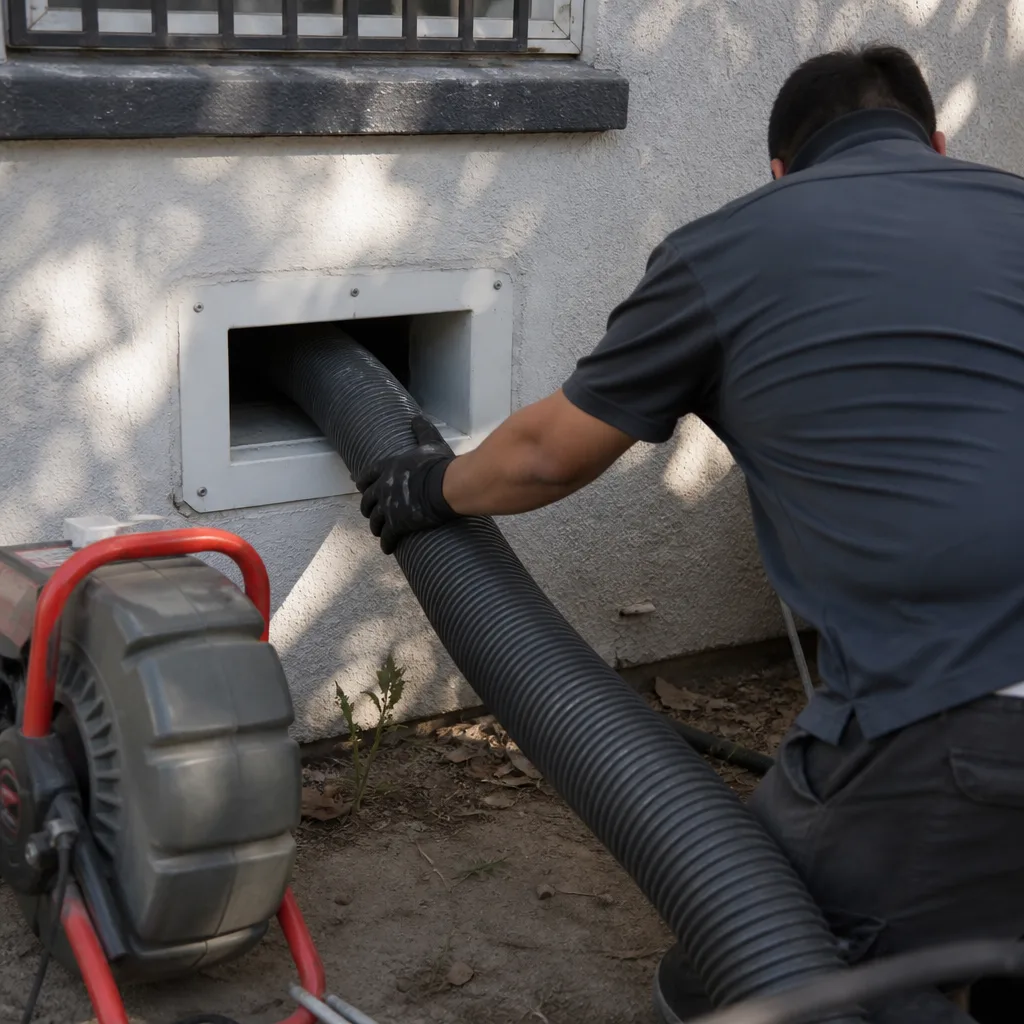 After
After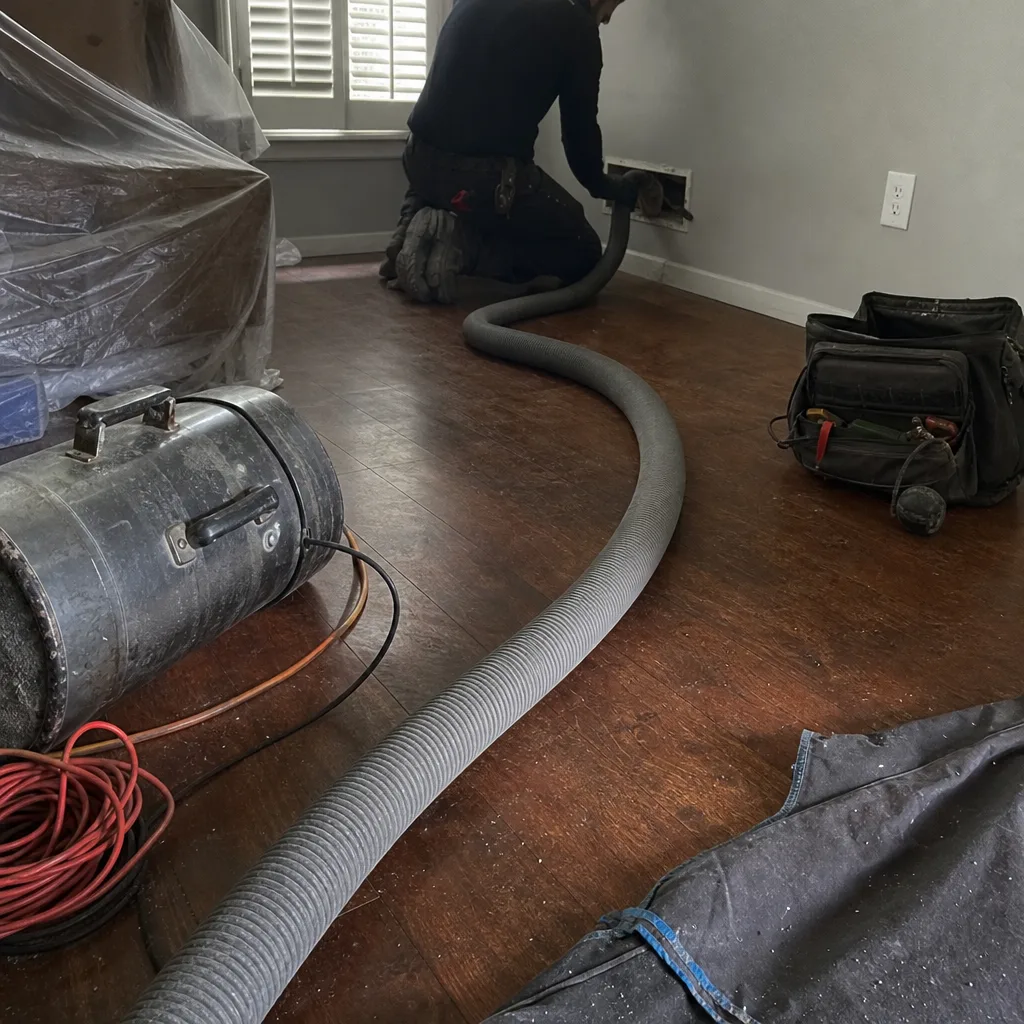 Before
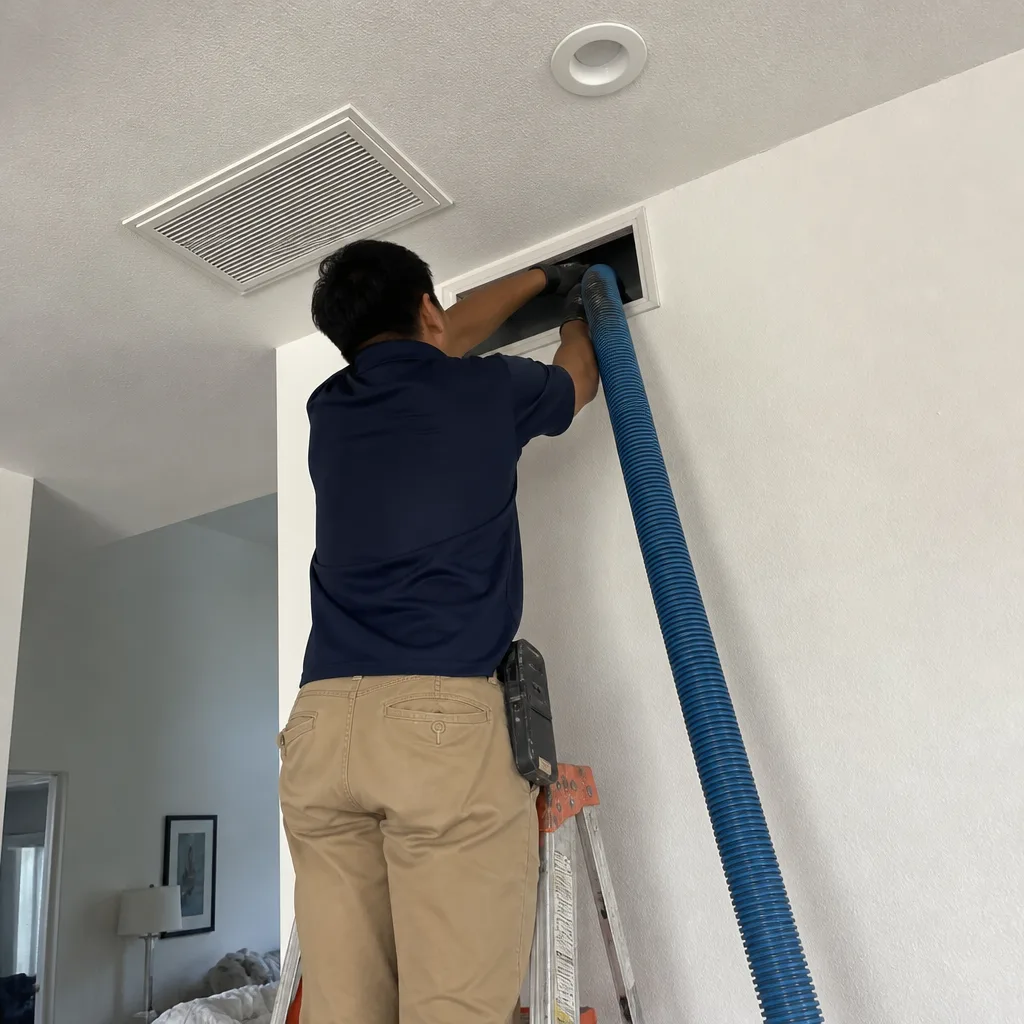 After
After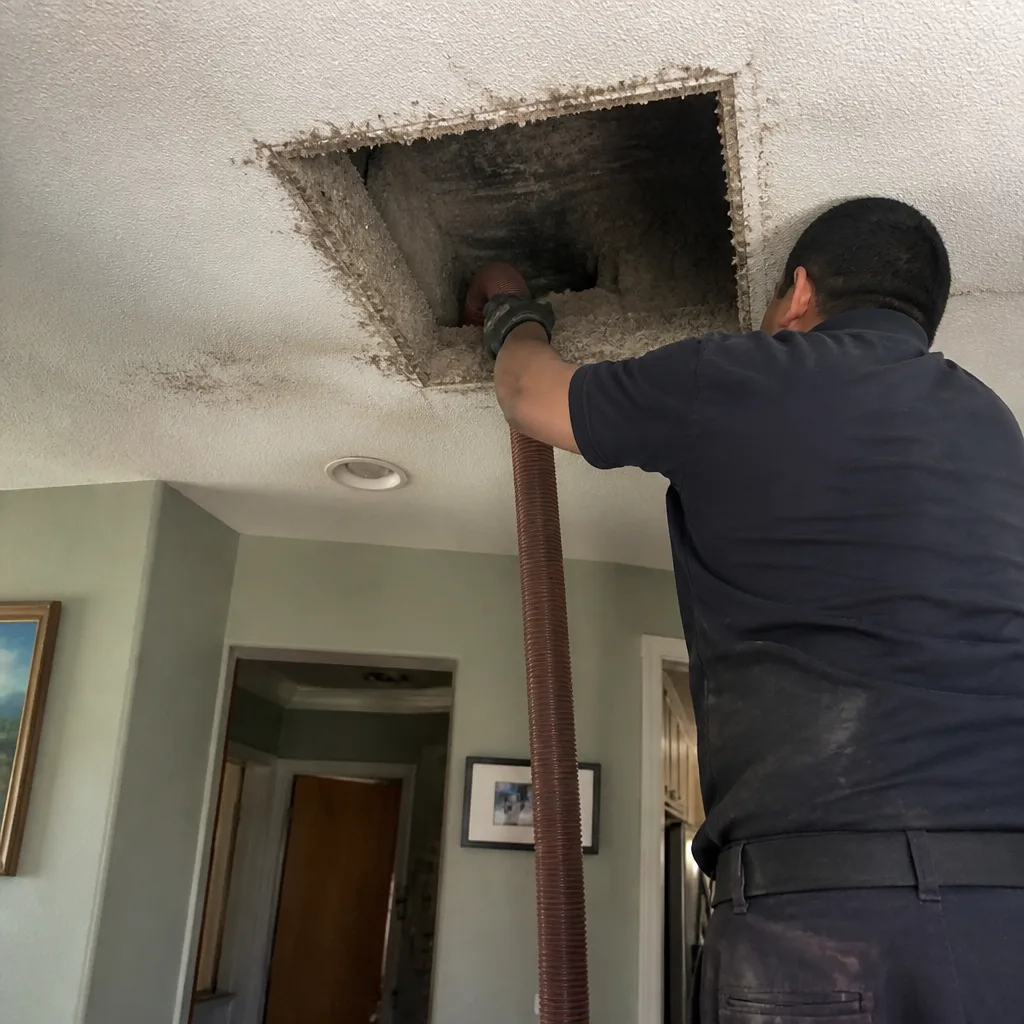 Before
 After
AfterNikro Duct Sealing & Repair: The Los Angeles Owner’s Guide
Duct sealing and repair on Nikro negative-air and HEPA vacuum systems in Los Angeles typically runs $245 – $690 installed, depending on whether we’re replacing gaskets and seals, repairing cracked manifold housings, or rebuilding the filter chamber. We stock the most common Nikro seal kits, gasket sets, and clamp assemblies on our trucks, so we can usually complete the repair in one visit. Most owners discover a seal failure when the vac stops pulling proper suction mid-job, or when fine dust starts blowing out of a seam that used to be tight.
If you’ve ever run a Nikro vac on a crawlspace or attic job and noticed dust escaping where it shouldn’t, you already know the feeling. The machine is working hard, but the system isn’t sealed. That’s where we come in. We carry Nikro-compatible replacement parts, know which series they fit, and get the job sealed and pulling hard again. Poor suction on a duct project isn’t just frustrating, it can reduce the quality of the cleaning and put unnecessary strain on the motor.
And here’s the thing: a leaking Nikro filter chamber isn’t just a performance issue. It can also mean your HEPA filtration isn’t capturing what it should, which is exactly the kind of problem that matters on a jobsite where air quality is the entire point.
Need a repair today? Call (737) 727-2314 and we’ll get you sorted.
Which Nikro Models This Applies To
If you’re running a Nikro HEPA-filtered negative air machine, an air scrubber, or one of their vacuum systems, there’s a good chance we can match the seal or gasket. The parts we work with most often fit the Nikro VAC-NEG series, the HEPA 500/1000/2000 air filtration units, and their portable HEPA vacuum line. Each of these uses a slightly different seal configuration: some use compression gaskets around the filter cartridge, others use flat foam seals on the access doors, and a few rely on cam-lock clamps with rubber ring seals that degrade over time.
Before you order anything, do this: check the serial plate on the back or side of the unit. You’re looking for the model number and series letter. Then check the filter access panel. If the gasket looks flattened, cracked, or if you see fine dust streaks radiating from any seam, you’ve found your leak. When you call us, we can ask you a few targeted questions and confirm the right seal kit for your specific Nikro unit before we even arrive.
One compatibility gotcha: Nikro has changed gasket material over the years from open-cell foam to closed-cell silicone on many models. If you have an older unit and you replace the seal with the wrong material, the access door may not compress properly, and you’ll chase leaks forever. We know which series used which material, so you avoid that whole headache.
On the OEM vs. aftermarket question for Nikro specifically: OEM gaskets are great, but they can be expensive and, on some older units, trickier to source in Los Angeles without a long wait. We carry quality aftermarket seal kits that meet or exceed the OEM spec, and we’ll tell you upfront which parts we’re using and why. Our repair work is also covered by a Written Guarantee on every repair, with a free second visit if the repair fails within the 365-Day Done Right Promise. That’s how we stand behind our work.
We also stock select parts for Lennox, Trane, and Carrier systems when a duct repair calls for them, but for Nikro-specific sealing, this is what we do every day.
Signs Your Nikro Duct Sealing & Repair Is Failing
Over time, seals harden, gaskets compress, and clamps lose tension. It happens slowly, then all at once. Here are the most common failure signs we see on Nikro units across Los Angeles:
- Reduced suction or airflow at the intake. The motor is running, but the pull isn’t as strong as it was when the unit was new. This usually points to air bypassing around a worn filter gasket or a loose access door seal.
- Visible dust escaping from seams or joints. If you see fine dust puffing from anywhere other than the exhaust, you have a seal breach. This is the clearest sign and the easiest one to spot during a job.
- Higher-pitched motor whine under load. When the motor has to work harder to maintain pressure against a leaking seal, it often sounds strained. The pitch changes before the seal fails completely.
- Gasket material that flakes or sticks to your fingers. Open-cell foam gaskets degrade with heat, ozone, and age. In Los Angeles garages and truck beds, where summer temperatures routinely exceed 100°F, gasket degradation happens faster than in cooler climates.
- Filter loading faster than expected. A leaking seal can pull unfiltered air through the chamber, which loads the filter unevenly and shortens its useful life. If your filters are clogging quicker than they used to, check the seals before you blame the filter media.
If any of these ring a bell, give us a call. We can often diagnose the exact seal or gasket over the phone based on what you’re describing.
Replacement Cost & What’s Included
Here’s what we charge in Los Angeles for Nikro duct sealing and repair, parts and labor included:
| Repair Type | Typical Installed Price | What’s Included |
|---|---|---|
| Single gasket replacement | $245 – $360 | Parts, labor, seal inspection |
| Full seal kit replacement | $340 – $520 | All door and filter seals, clamp adjustment, system test |
| Manifold repair or filter chamber rebuild | $480 – $690 | Housing repair, new seals, vacuum test, filter inspection |
What drives the range: the age and condition of the unit, the number of seals being replaced, and whether the housing itself has cracked or just the gasket has worn. Los Angeles heat and the wear from constant transport in work vehicles both take a toll, especially on older units.
Here’s what we promise, in writing, before we start: the price we give you is the price you pay. No bait-and-switch, no “we found more problems once we opened it up” upcharge without your explicit approval. You get a written price before any work begins, and the repair is covered by our 365-Day Done Right Promise. If the seal fails within a year, we come back and fix it at no charge. That’s the standard on every job we do.
Call (737) 727-2314 for an exact quote on your Nikro unit. Estimates are free.
DIY or Call Us?
There’s an honest middle ground here. You can absolutely do a visual inspection: check the gaskets for cracks, flats, or flakes; run your hand along the seams while the unit is on to feel for air leaks; and check the clamps for tension. That’ll tell you if a seal is gone and, often, which one.
Where DIY goes wrong on Nikro units is in the details. Removing an access door improperly can bend the door frame, which guarantees a leak no gasket will fix. Using the wrong gasket material on older units means redoing the work. And over-tightening cam-lock clamps to “fix” a worn seal usually makes it worse by warping the clamp ring. These are all mistakes we see regularly, and they always cost more to correct than the original repair would have.
One more thing: if the unit has been used for mold remediation, lead dust, or asbestos abatement, don’t open it yourself. The contamination inside that filter chamber isn’t something to handle casually. We have the proper PPE and disposal procedures for that kind of job. In those cases, call us. It’s not worth the risk.
For everything else, if you’d rather watch us fix it right and get back to work, we’re at (737) 727-2314.
FAQs
In Los Angeles conditions, most Nikro gaskets last 3 – 6 years, depending on use and storage conditions. Units stored in unshaded trucks or garages with high summer heat see faster degradation, while units kept in climate-controlled shops last longer. If you use your Nikro daily or weekly for commercial work, plan on replacing door seals every 2 – 3 years.
In most cases, no. Once a gasket has compressed, cracked, or lost its resilience, there’s no reliable way to restore it. We’ve seen people try silicone caulk and weatherstripping tape as fix-ups, but those create more problems than they solve. The right move is replacement with the correct gasket material for your model. Call (737) 727-2314 and we’ll make sure you get the right one.
A standard single-gasket replacement takes 45 – 90 minutes. A full seal kit on a larger HEPA unit can take two to three hours, including clamp adjustment and system testing. We can usually schedule your repair within a day or two, and we always confirm the time window before we arrive.
We carry the most common Nikro seal kits, gaskets, and clamp assemblies on our trucks, and our Los Angeles parts supplier stocks the rest. That means most repairs happen in one visit, not two. If you have an uncommon model, we can source the right part quickly and get you scheduled.
Clean ducts aren’t a luxury – in an L.A. summer, they’re just how your system breathes.
Written by Omar Haddad, Owner & Lead Technician, Cardinal Air Duct Cleaning at Cardinal Air Duct Cleaning, serving Los Angeles and nearby areas.