
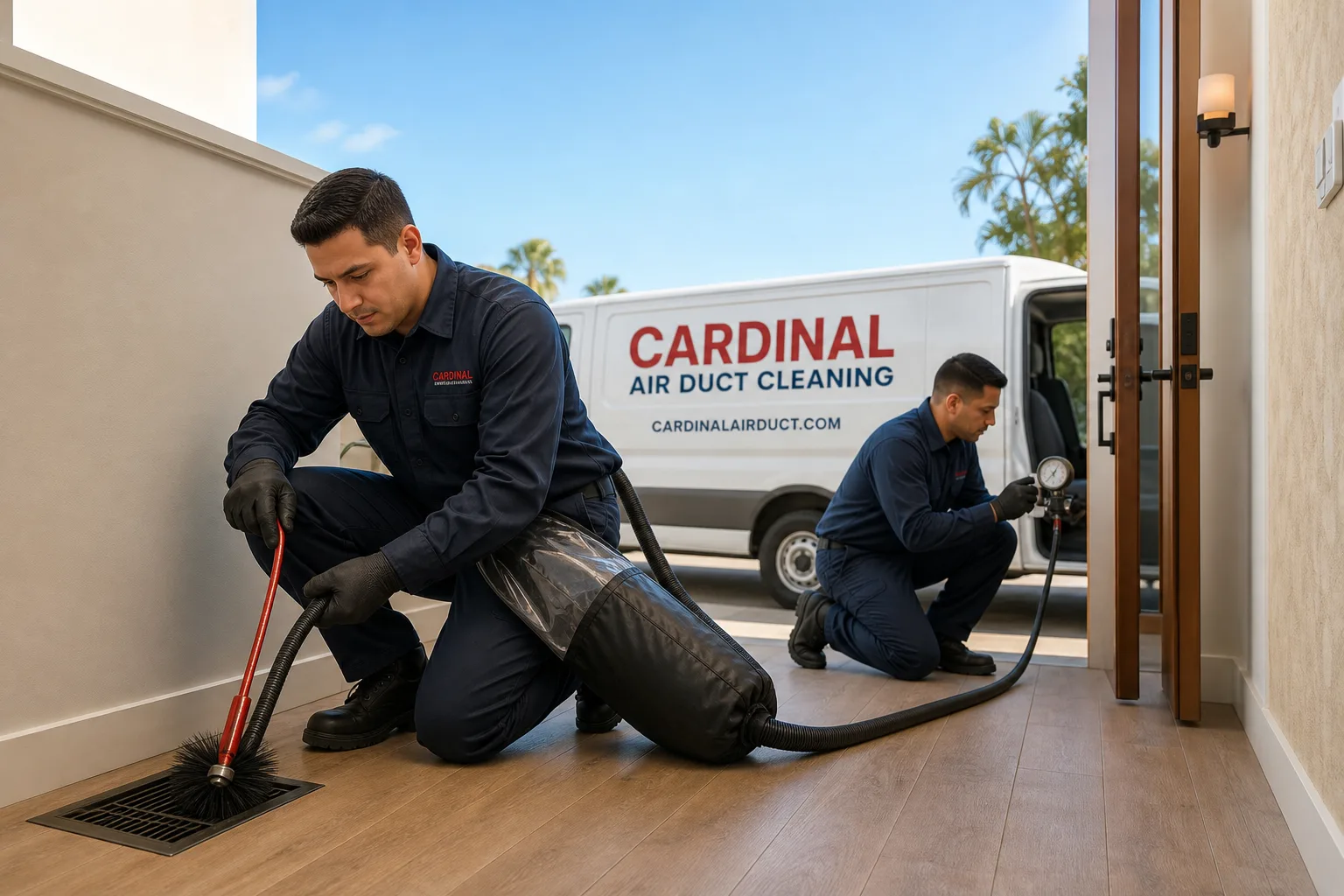
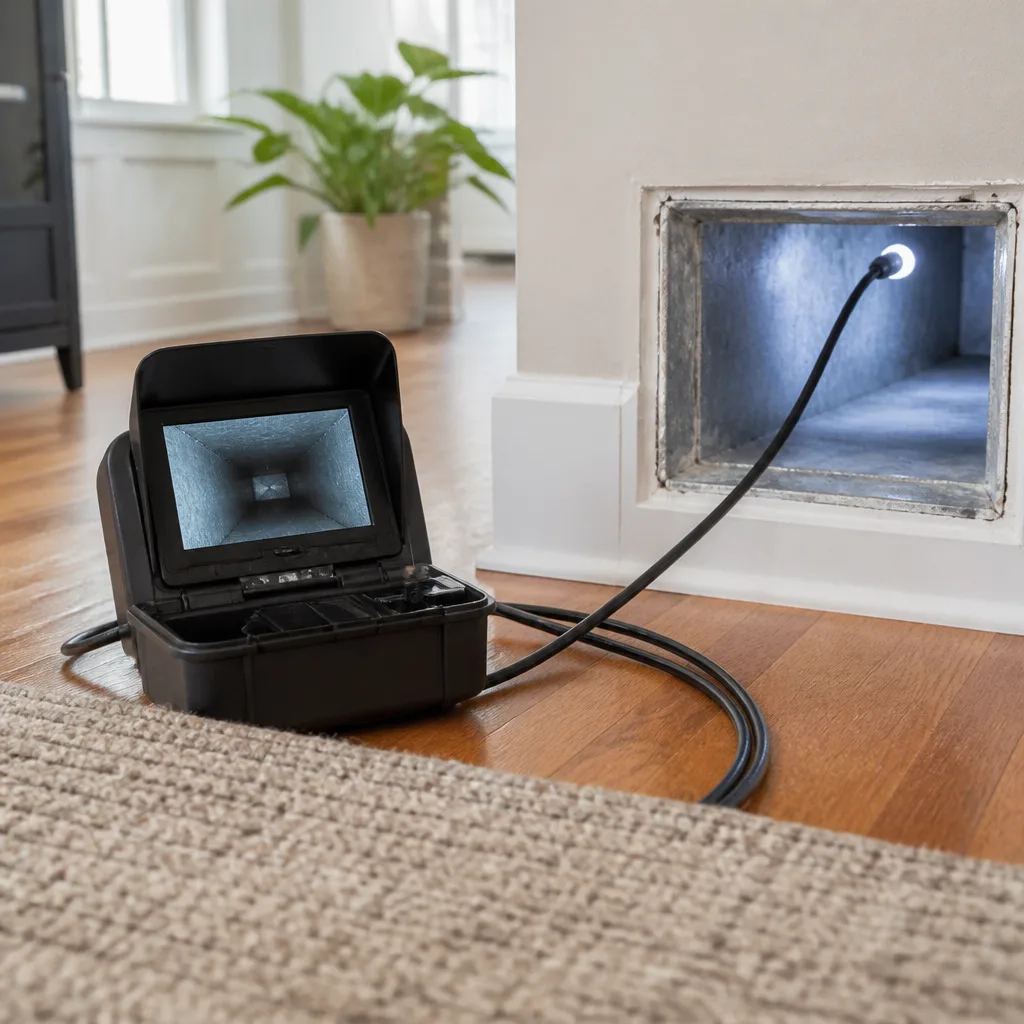
Whole-system duct and dryer vent check with before-and-after photos - you see exactly what came out of your vents
That "$99 whole-house special" is a bait ad - the real number appears once they are in your hallway, or the "clean" is a shop-vac at the register. We photograph the inside of your ducts before and after instead.
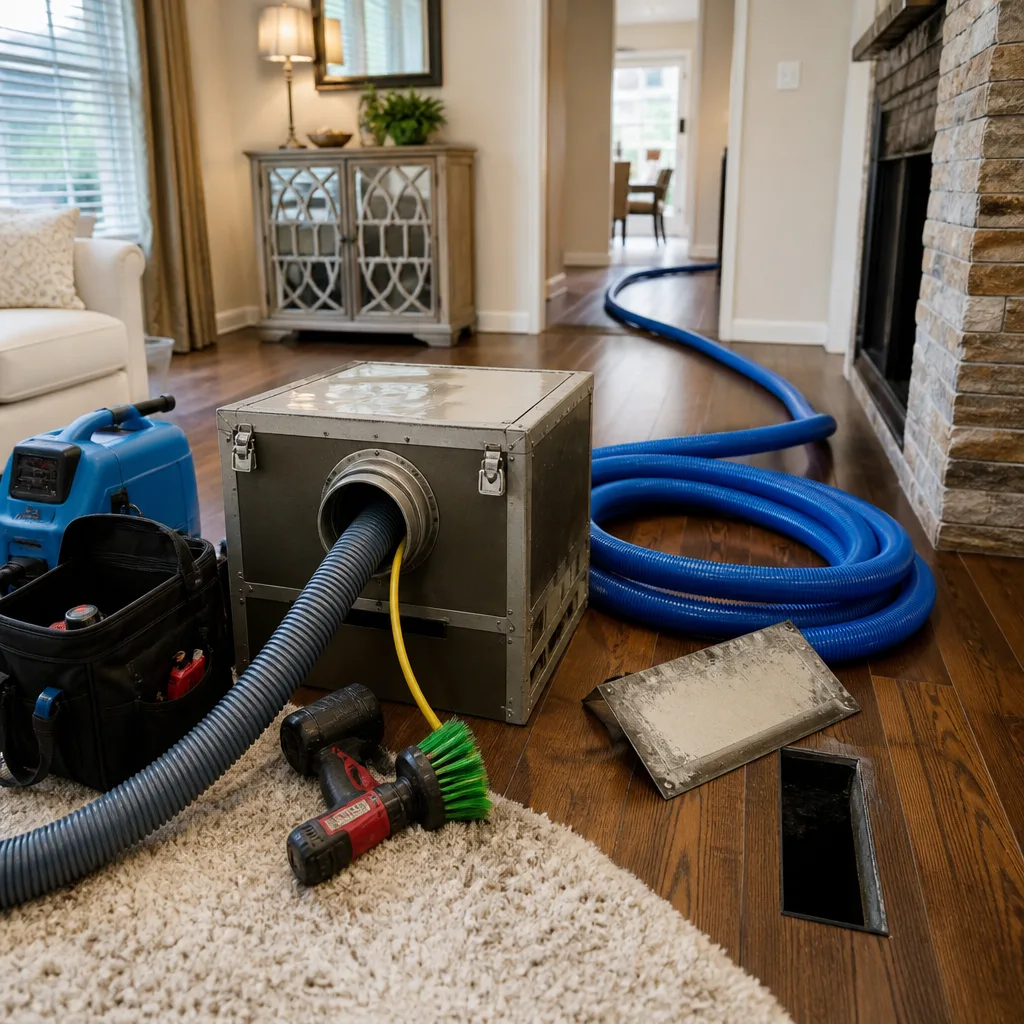
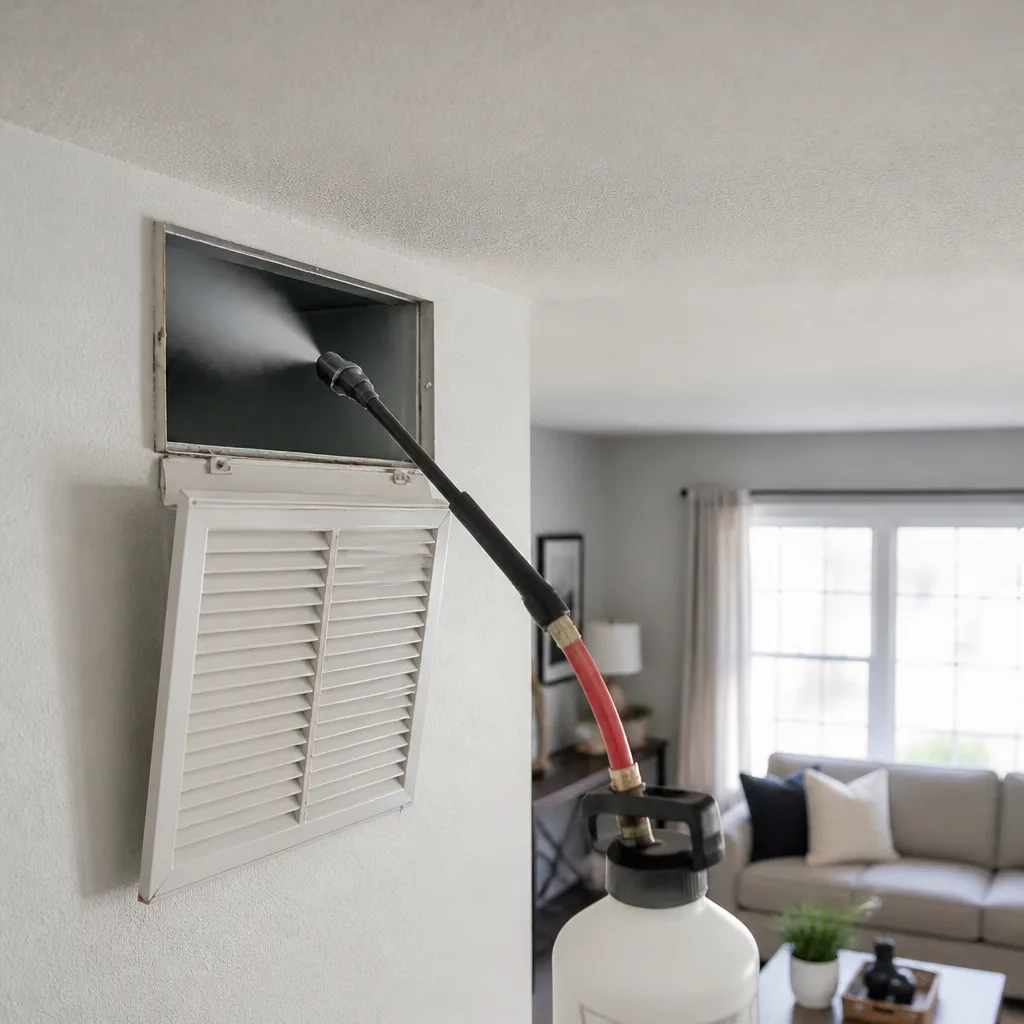
 Before
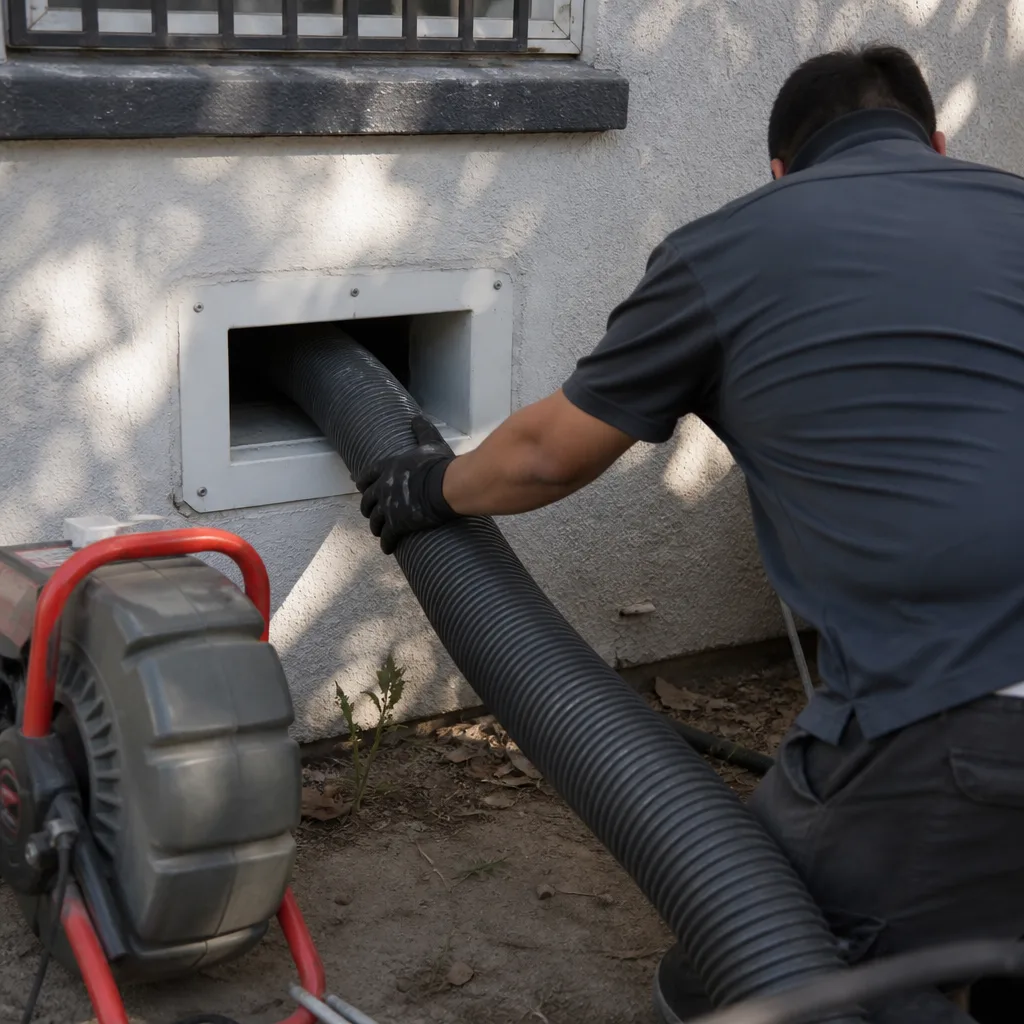 After
After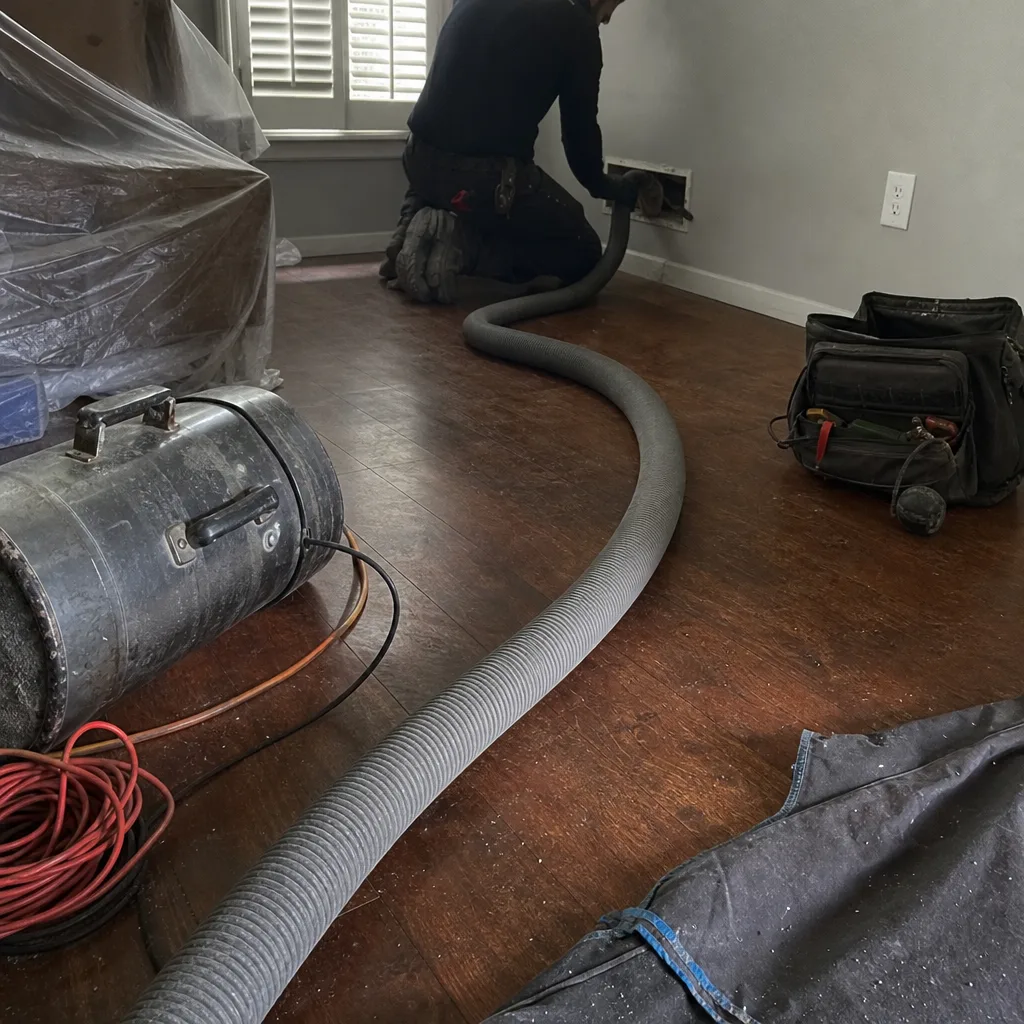 Before
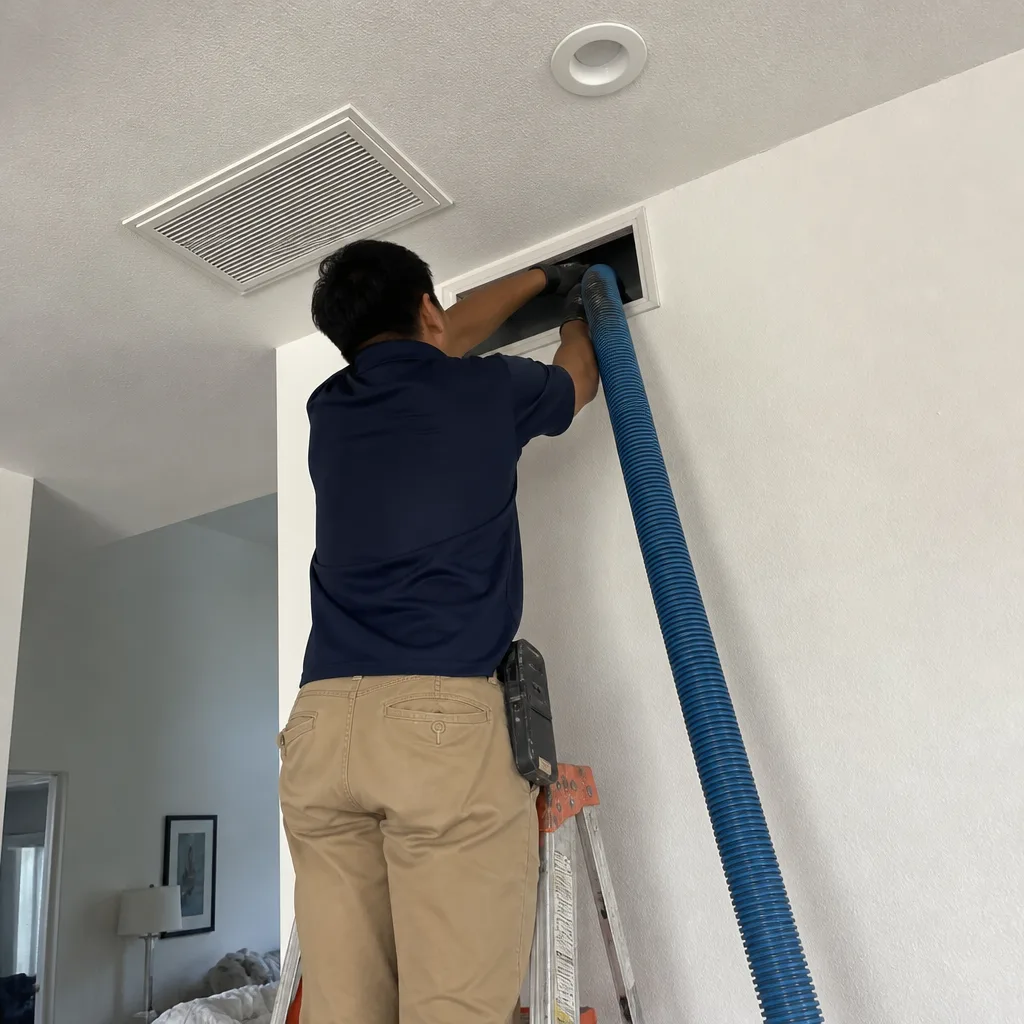 After
After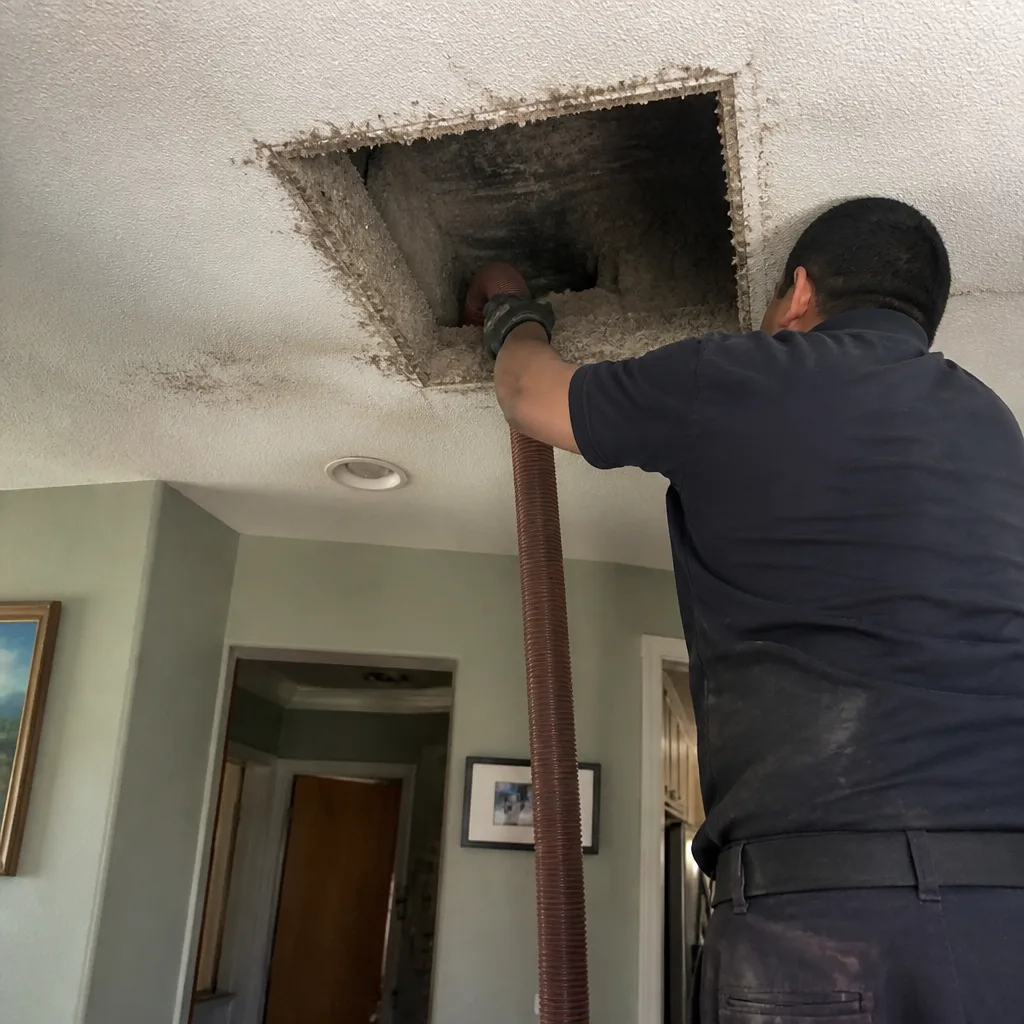 Before
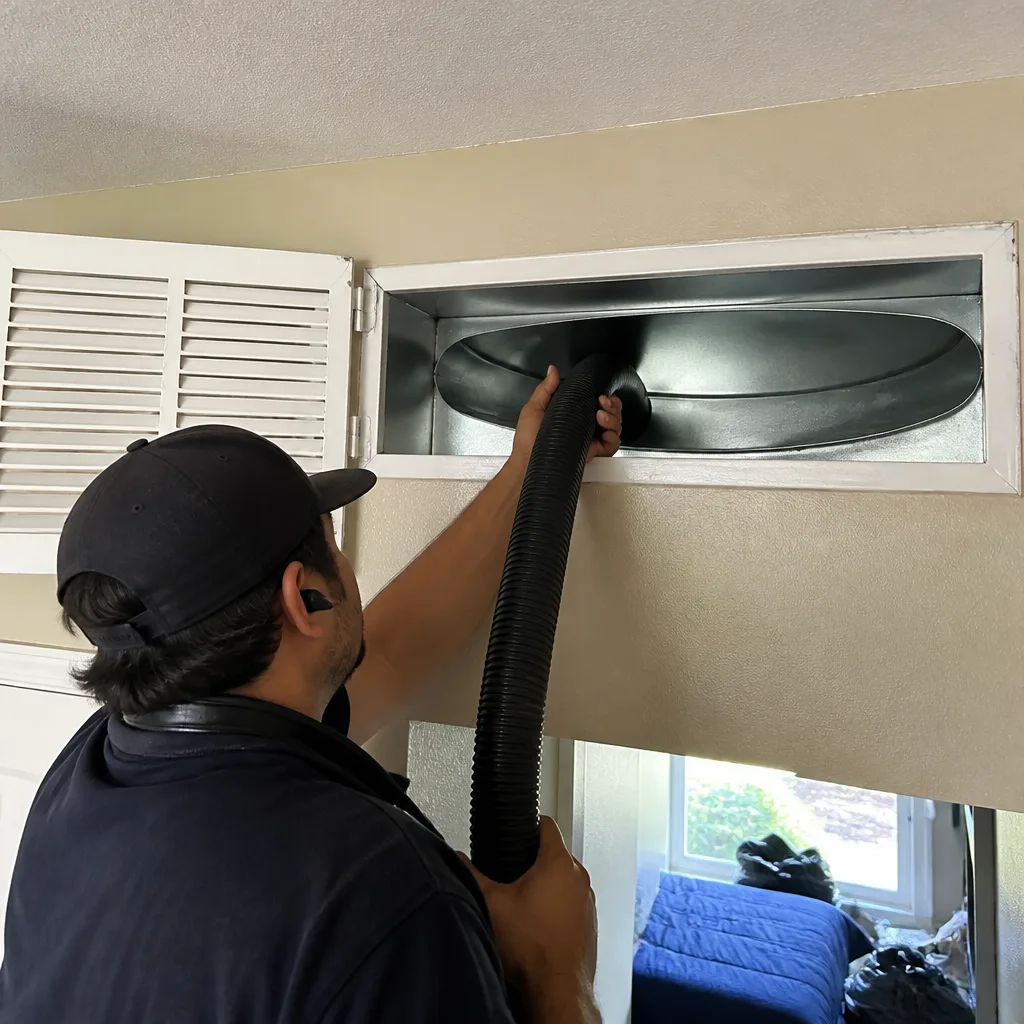 After
AfterBurning smell when the dryer runs
What’s Happening
A burning smell coming from your dryer is almost always a blocked dryer vent. Lint has built up inside the exhaust duct, and the heat from the dryer is scorching that material instead of pushing it safely outside. Stop the dryer, leave it off, and read the rest of this page before running another cycle.
The dryer exhaust duct is a duct just like any other in your home – it can accumulate years of compressed lint, fabric softener residue, and debris from small items that slip past the lint screen. When airflow gets restricted, heat has nowhere to go. The dryer runs hotter than it was designed to, the trapped lint starts to superheat, and that’s when you smell it. Left alone, this is one of the leading causes of house fires in residential laundry areas. The fix is not complicated, but it is urgent.
Why It Happens
Lint blockage in the exhaust duct
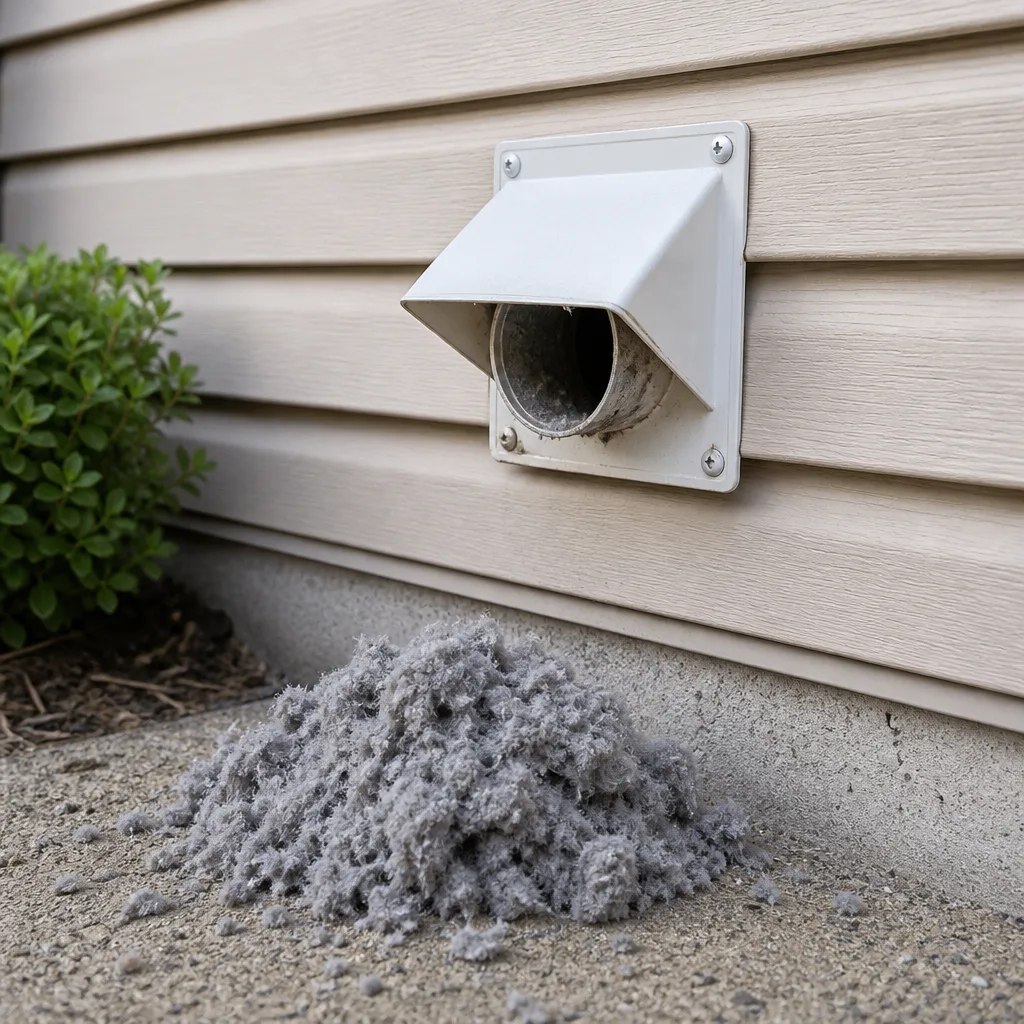
This is the cause in the majority of cases. The duct that runs from the back of your dryer to the exterior vent cap collects lint with every single load – even when you clean the lint screen faithfully. Over time, lint compresses into a dense layer along the duct walls and inside elbows and bends. You can often spot the early warning: clothes taking two cycles to dry, the dryer cabinet feeling unusually hot to the touch, or the exhaust flap on the outside of your home barely moving when the dryer runs.
A crushed, kinked, or too-long duct run
Flexible foil or plastic duct gets pinched when the dryer is pushed back against the wall. A kinked duct traps heat and lint at the bend and the burning smell can be quite concentrated near that spot. Pull the dryer slightly away from the wall and look at the first few inches of duct – if it’s flattened, accordion-folded tight, or has a sharp bend, that’s likely where things are cooking. Rigid metal duct runs that exceed the manufacturer’s maximum length create the same restriction problem further down the line.
Lint on or near the heating element
Small amounts of lint that slip past the screen can accumulate inside the dryer cabinet itself, near the heating element or drum area. When the element cycles on, that lint scorches. This smell tends to hit hardest right when the dryer first starts and then fades slightly – which is a useful clue. Do not attempt to access the heating element yourself. It carries electrical current and the housing components can be sharp. A technician handles this kind of internal inspection safely.
A blocked or sealed exterior vent cap
The flap on the outside of your home is supposed to open when the dryer runs and close when it stops. Pest nests, paint, ice in cold weather, and simple age can all seal it shut. When the cap won’t open, exhaust backs up through the whole duct. Go outside while someone runs the dryer for thirty seconds and watch the cap – if the flap isn’t moving, you’ve likely found the problem.
What to Do Right Now
- Stop using the dryer immediately. A burning smell from a dryer is a fire warning. Don’t run another load until the cause is found and cleared.
- Check the exterior vent cap. Go outside and look at where the duct exhausts through the wall or roof. If the flap is stuck shut, covered, or blocked by a nest, note it and photograph it – this is useful information for the technician.
- Look at the duct connection behind the dryer. Pull the dryer a foot or so forward and inspect the flexible section of duct. If it’s kinked, crushed, or partially detached, do not reconnect it yourself and do not run the dryer. Note what you see.
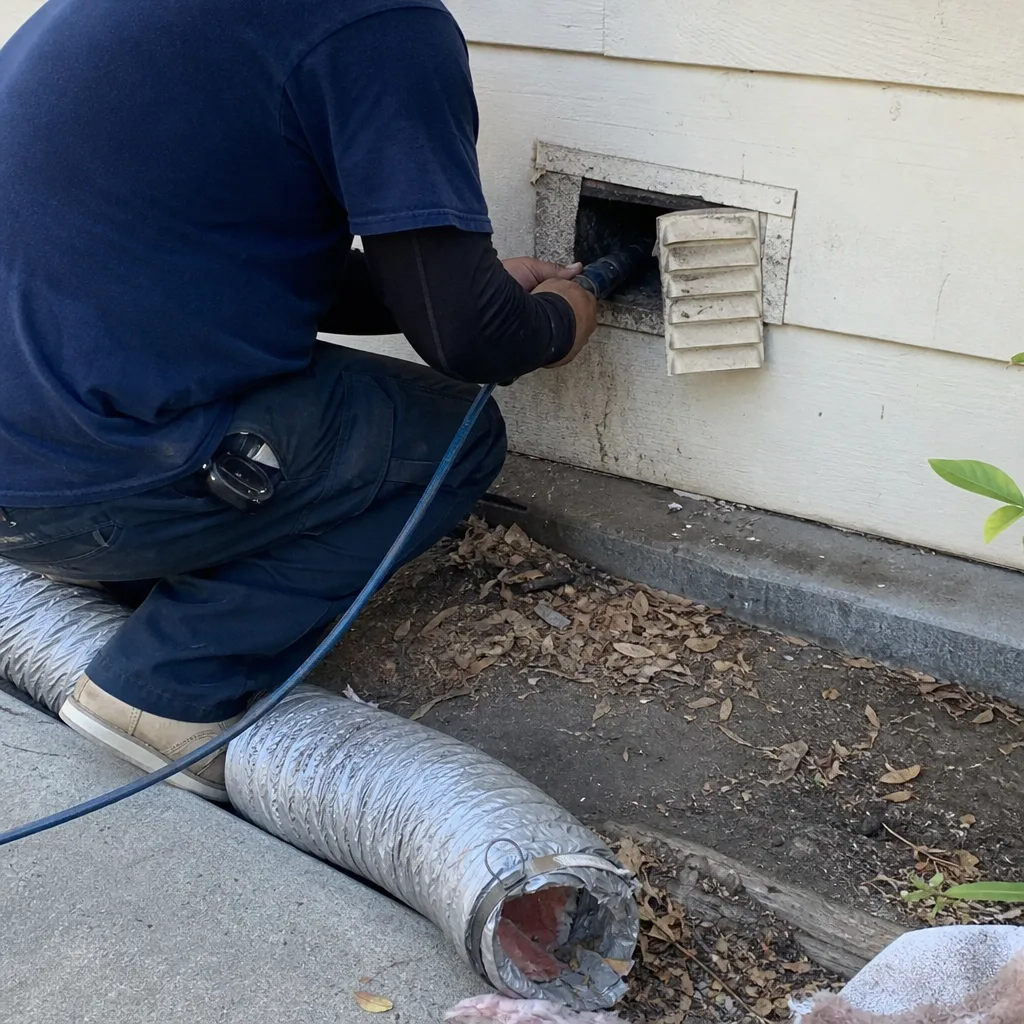
- Do not attempt to clear a duct obstruction with a vacuum or a stick. Pushing a blockage further down a long duct run, or dislodging a large plug of compressed lint into a heated space, creates more risk. Professional equipment – a rotary brush system paired with a HEPA-rated vacuum – clears the duct properly from both ends.
- If you smell anything beyond a dusty or fabric smell – something sharper, acrid, or chemical – get everyone out and call 911 first. A burning smell that has turned into visible smoke is not an appliance service call. Once the home is clear and the fire department has checked it, then call us.
How We Fix It
When your local Cardinal Air Duct Cleaning team arrives, the technician – background-checked, in uniform, and someone you’ll know by name before you open the door – starts with a visual inspection of the full duct run: the connection at the dryer, every accessible section in between, and the exterior cap. Before anything is disconnected or cleaned, you get a written price. It doesn’t change once work starts. That’s not a courtesy – it’s the commitment behind every job we take.
The actual cleaning is done with a Rotobrush rotary brush system working through the duct while a Nikro HEPA-rated vacuum pulls the dislodged material out under negative pressure. Nothing gets pushed back into your home. The exterior cap is cleared and checked for proper operation. The whole job typically runs under two hours for a standard residential duct run. If the duct itself has been damaged or is the wrong type, we’ll tell you that in writing too – and what it would take to correct it. Every repair includes a written guarantee, and if a repair fails, we come back at no charge. That’s the 365-Day Done Right Promise, and it covers this job the same as every other one we do.
Frequently Asked Questions
It is genuinely dangerous and should not wait. A dryer vent clogged with lint is one of the most common causes of residential fires, and a burning smell means the lint is already being exposed to enough heat to scorch. Stop using the dryer now. Call (737) 727-2314 and let your local Cardinal team get out to look at it – this isn’t a call to push off.
Call (737) 727-2314 and a live person will answer – no voicemail, no callback queue. They’ll tell you what availability looks like in your area and get you a confirmed arrival window you can track, not a vague four-hour range. We can’t promise a specific time on this page, but we can promise you’ll talk to a person right now who can.
The lint screen catches a large percentage of lint, but not all of it. Fine particles pass through and coat the interior of the duct over time, especially at bends and elbows where airflow slows. A clean lint screen does not mean a clear duct. Most duct runs need professional cleaning every one to three years depending on household size, the type of laundry, and how long the duct run is.
We don’t quote prices by the foot or publish a number that changes once someone is at your door – that’s the kind of bait-and-switch this industry is known for, and it’s not how we work. Your local Cardinal team will give you a written price for your specific job before anything starts, and that price doesn’t move. Call (737) 727-2314 to get your free written estimate – the call is free and the quote is free.
Get It Fixed
A burning dryer smell means stop now, not later. Call (737) 727-2314 – a live person answers around the clock – or book online and your local Cardinal Air Duct Cleaning team will handle it with a written price, before-and-after photos, and the 365-Day Done Right Promise behind every job.
Written by Omar Haddad, Owner and Lead Technician at Cardinal Air Duct Cleaning, part of the Relay Home Co. family serving communities nationwide since 2005.
What Our Customers Say
"Booked a slot in the app, got a reminder text, and watched the crew's van on the map as it came. Cleaned all the vents and the main trunk. Easy from start to finish."
- Rob J."Cleaning plus HVAC coil clean. Tech texted when he was ten minutes away. No surprises on the price."
- Evan S."Dryer vent fix fixed the burning smell. The clog was behind the elbow and the whole laundry room smells normal now."
- Dennis K.