
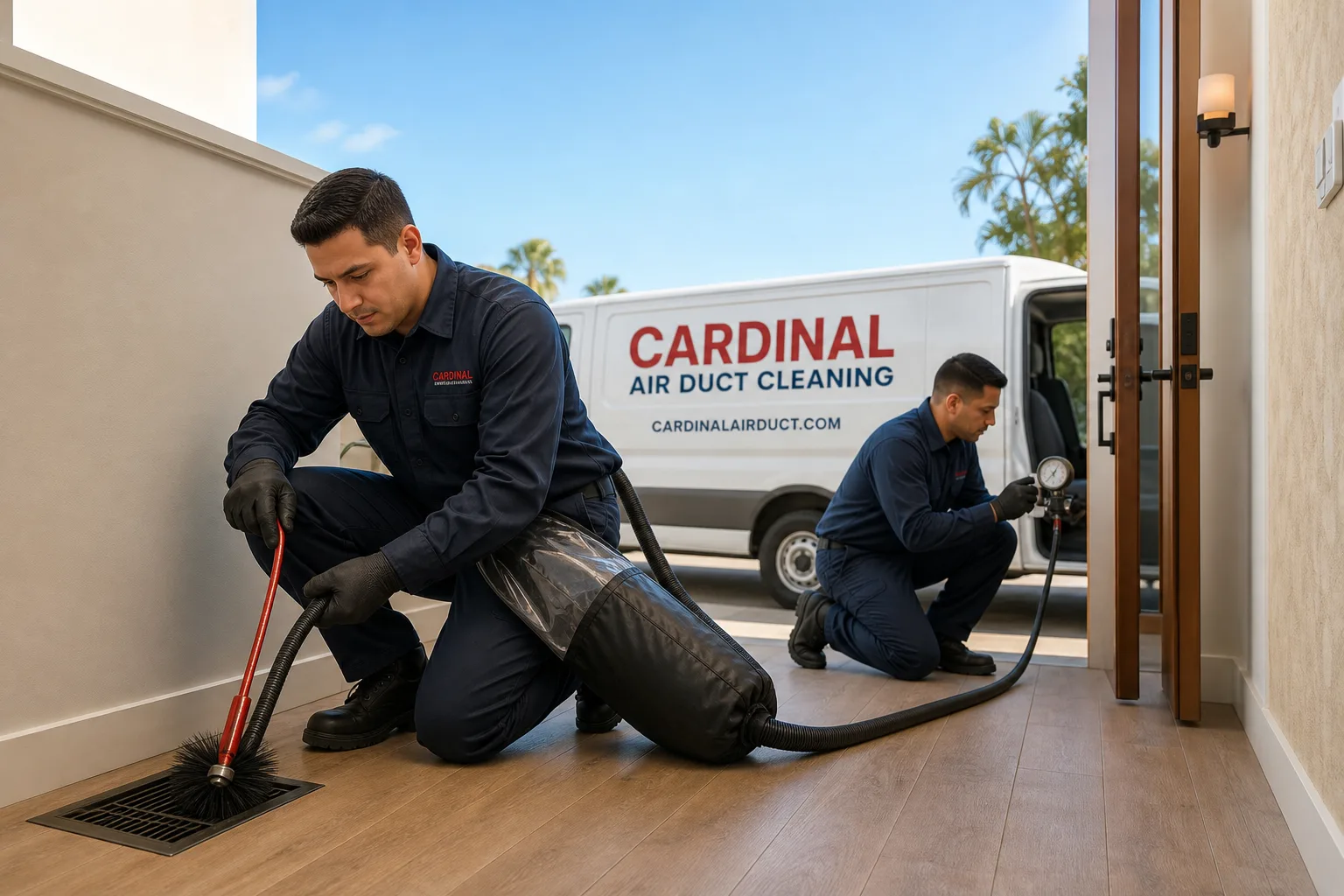
Whole-system duct and dryer vent check with before-and-after photos - you see exactly what came out of your vents
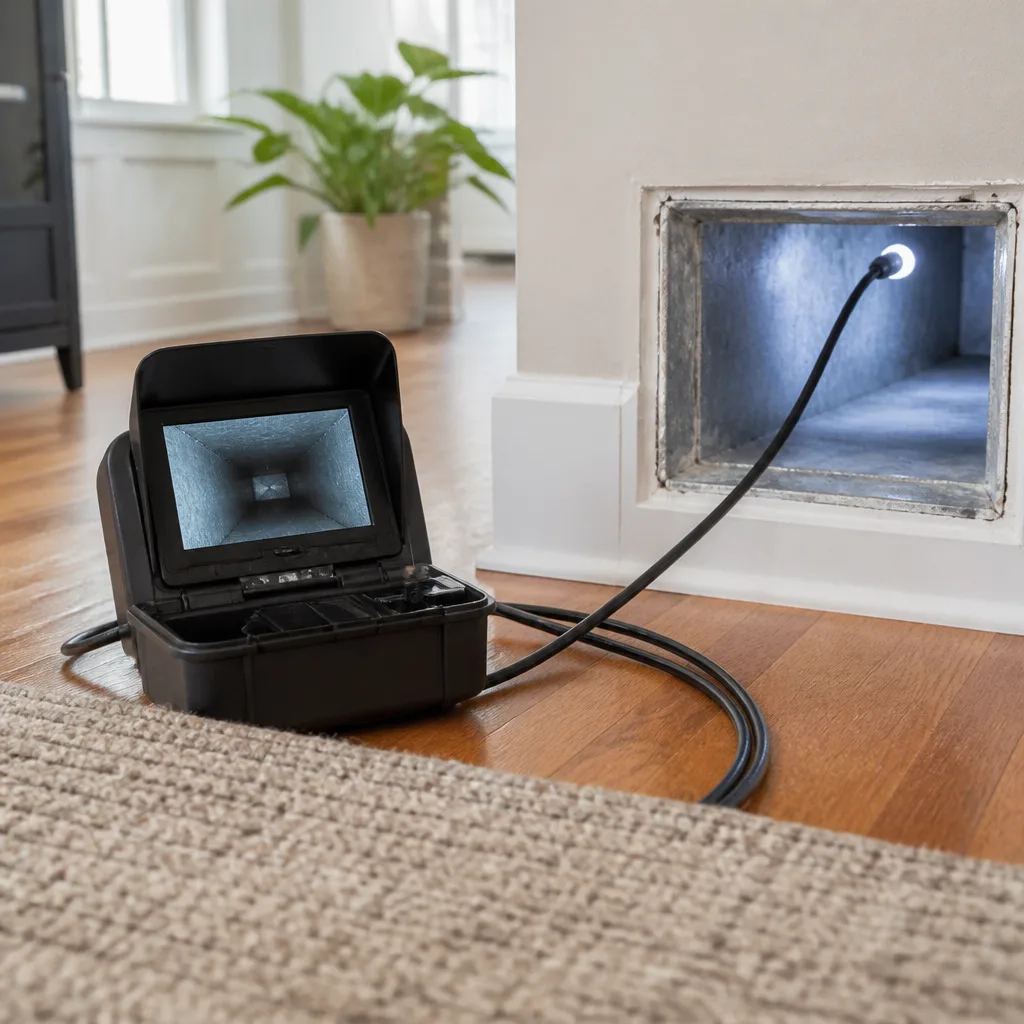
That "$99 whole-house special" is a bait ad - the real number appears once they are in your hallway, or the "clean" is a shop-vac at the register. We photograph the inside of your ducts before and after instead.
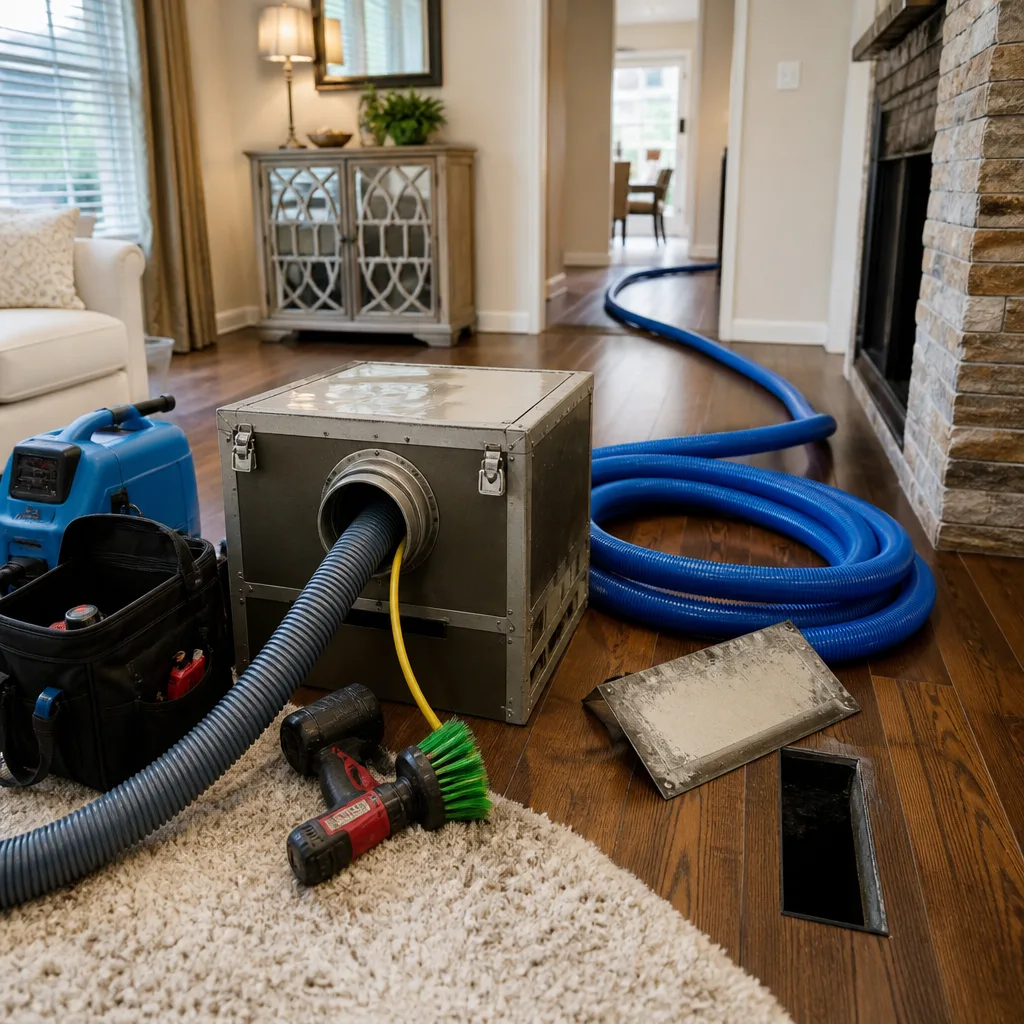
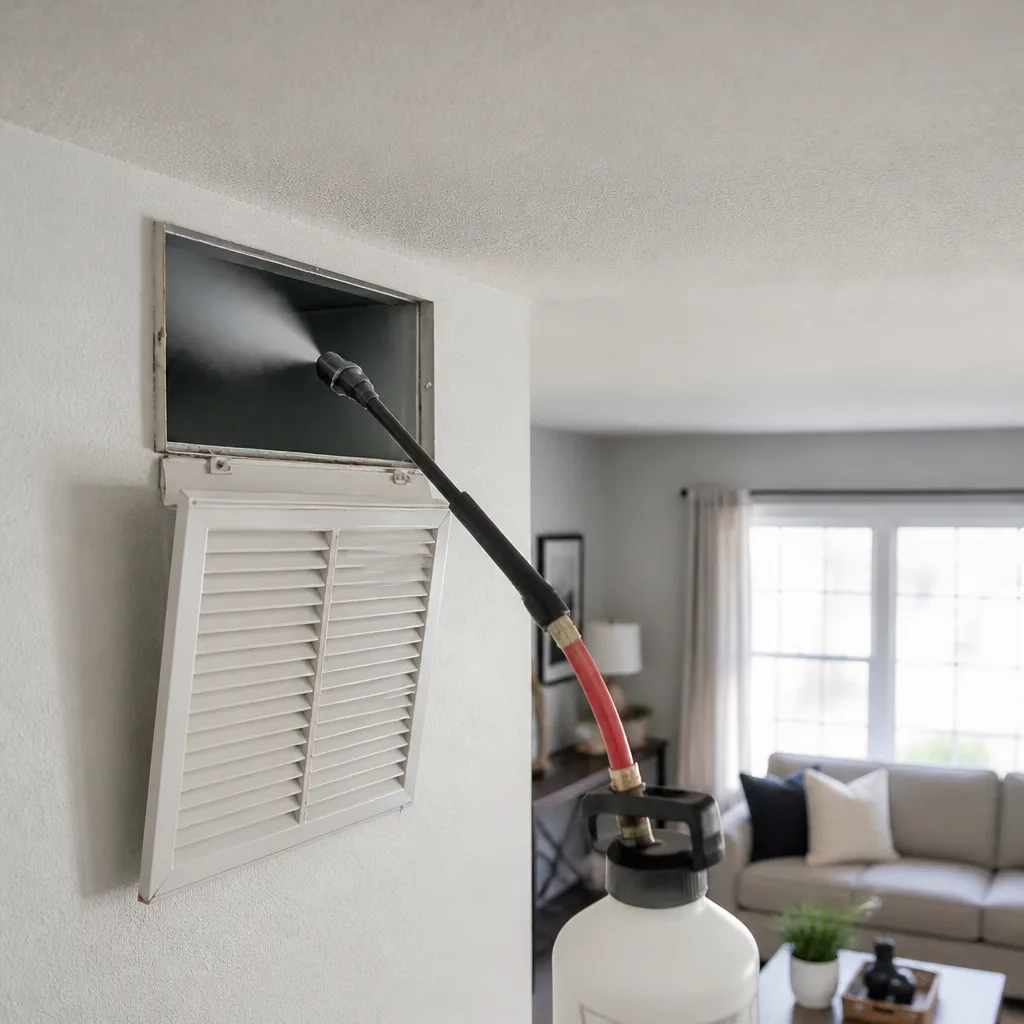
 Before
 After
After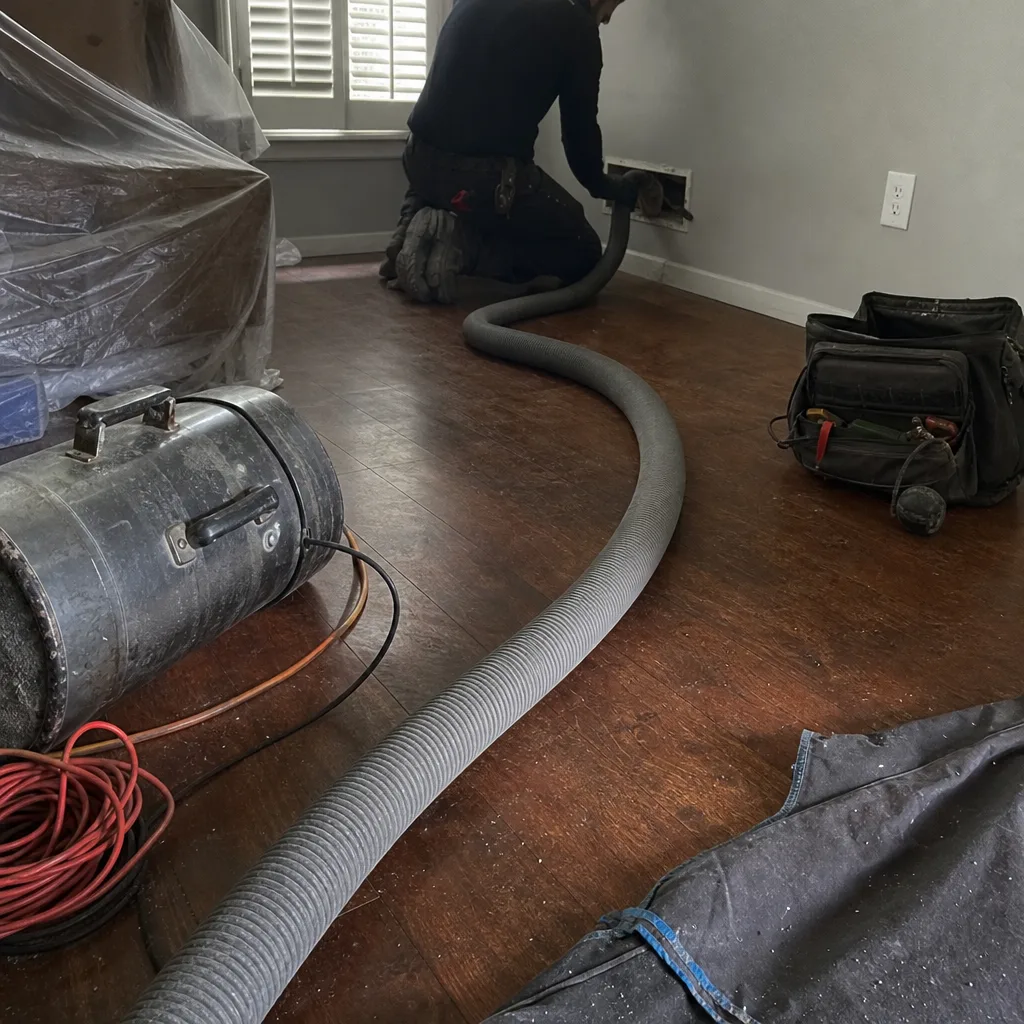 Before
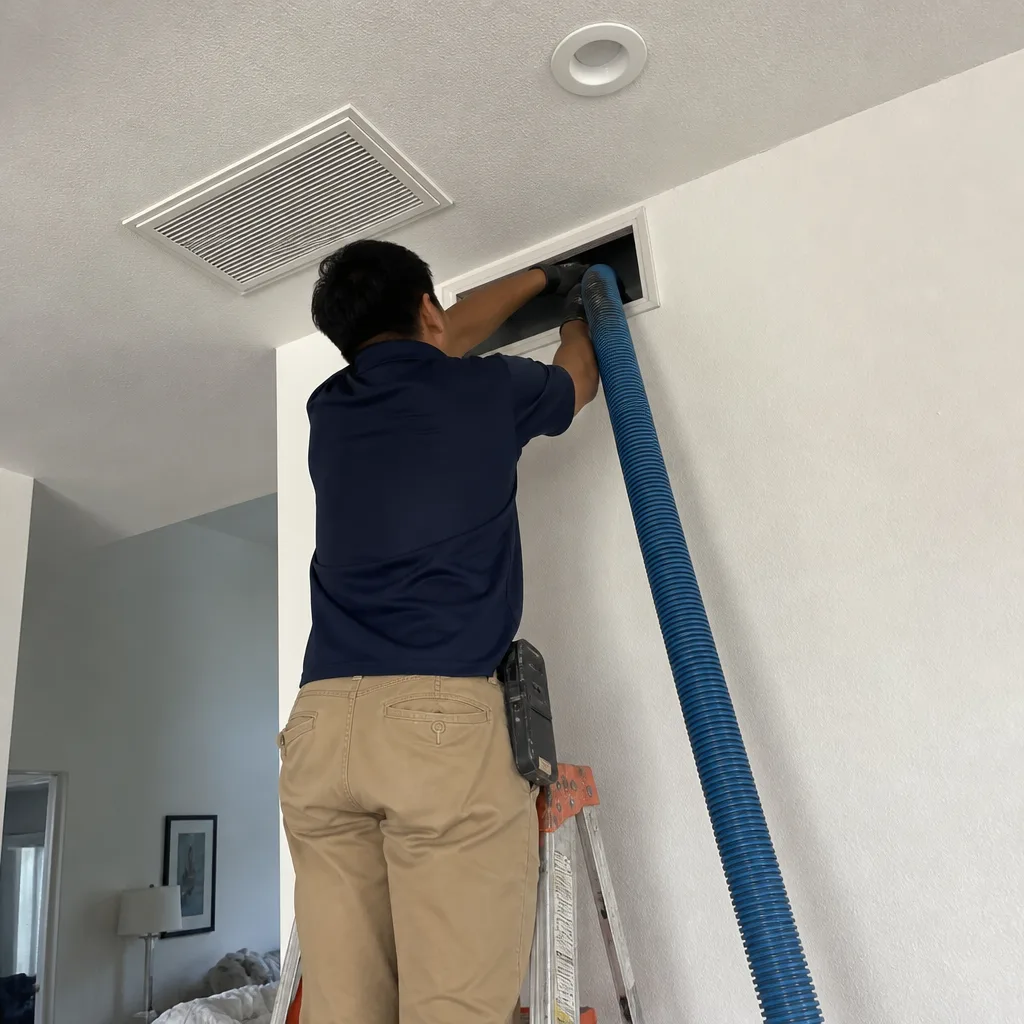 After
After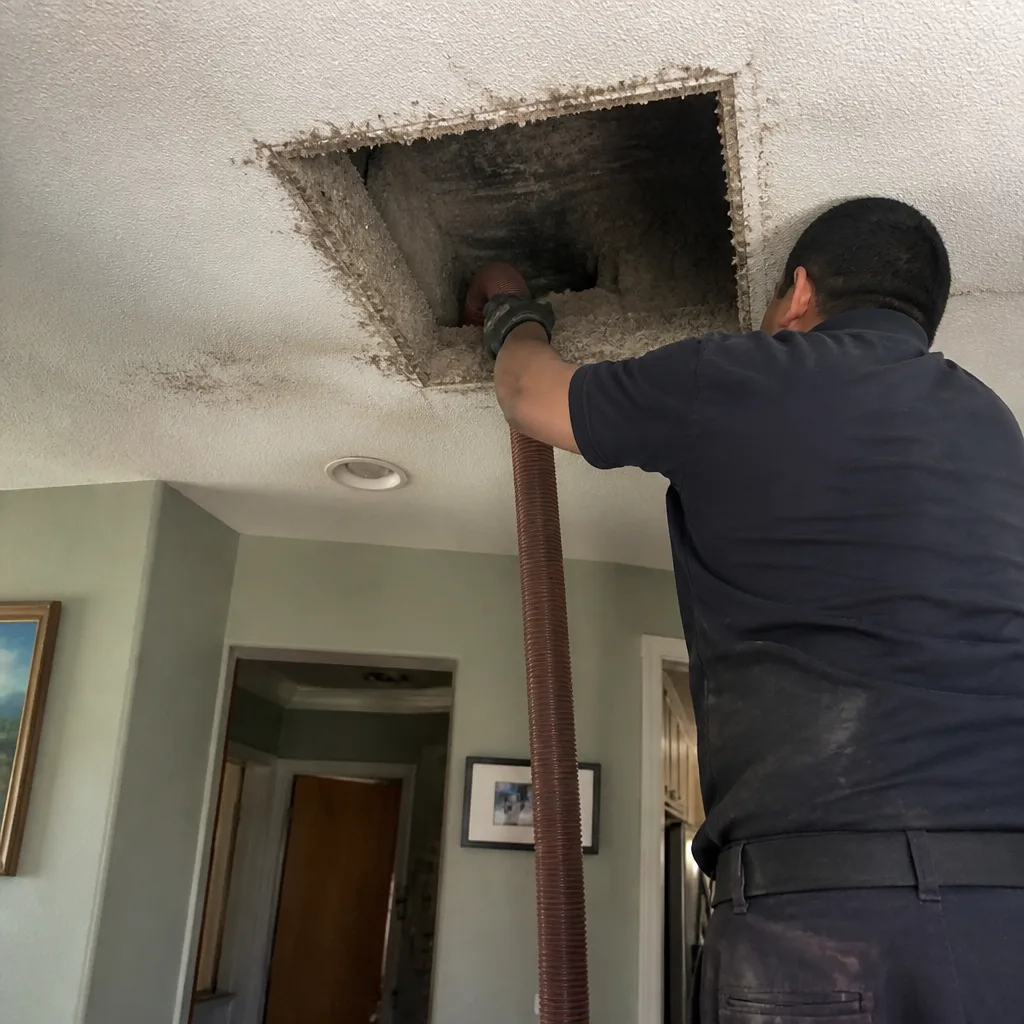 Before
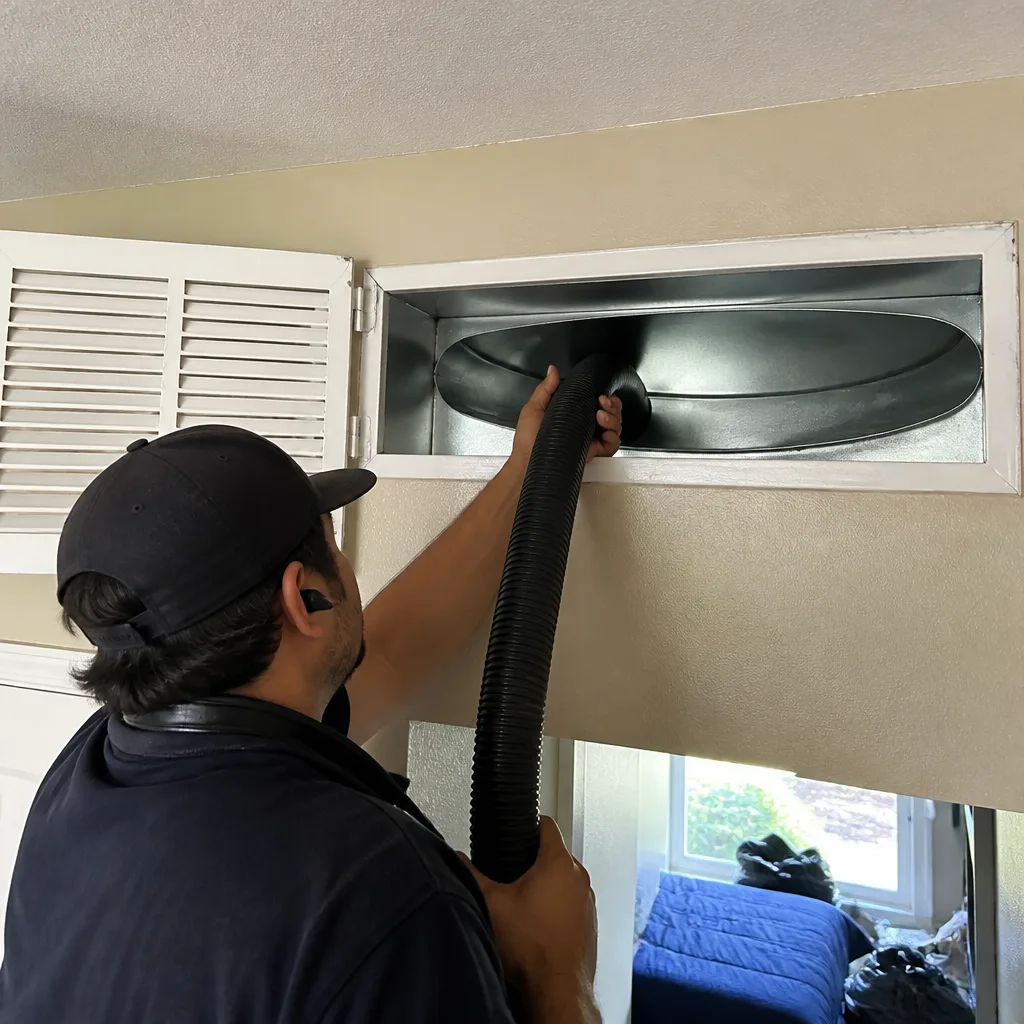 After
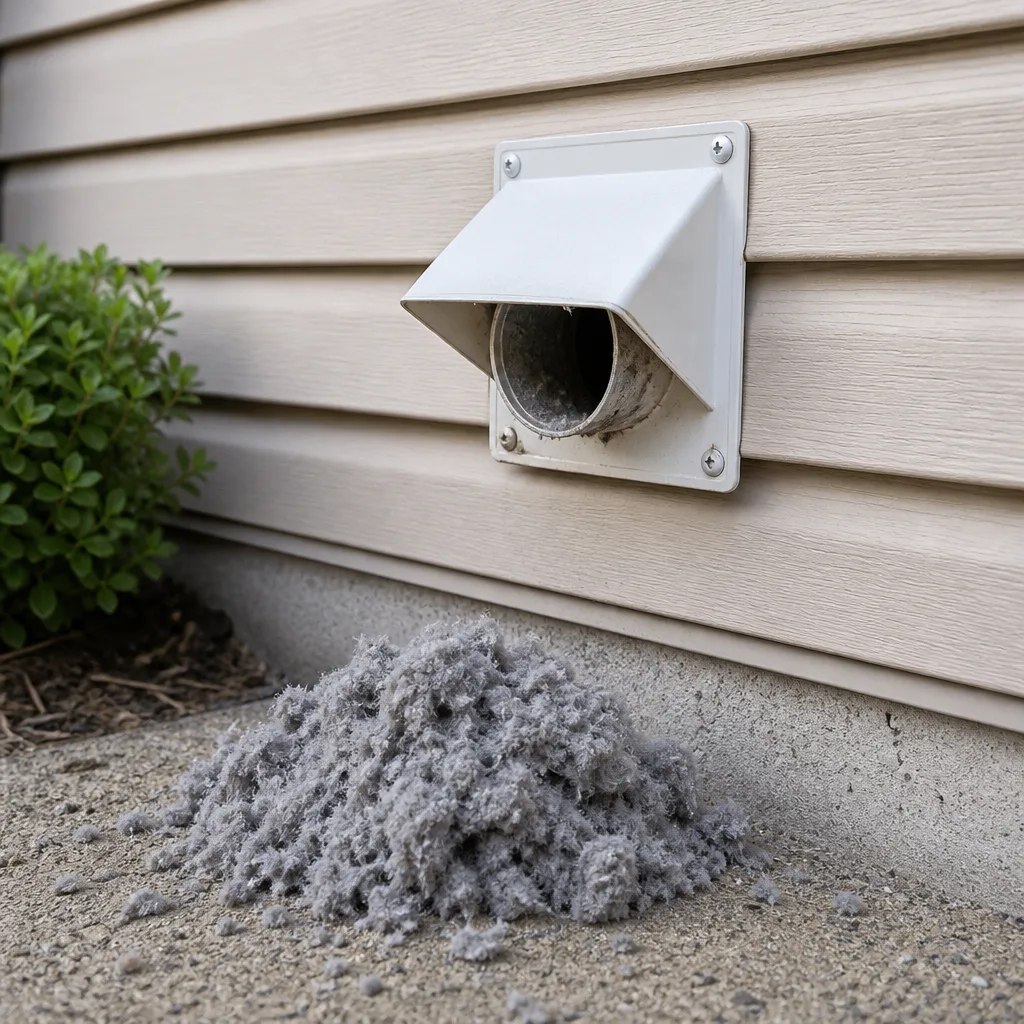
AfterLint Building Up Around the Outside Vent
What’s Happening
Lint collecting around your exterior dryer vent almost always means the vent duct is clogged and cannot push exhaust air through fast enough. Lint that should exit your home is backing up and spilling out at the edges instead. This is a dryer vent cleaning problem, and it needs attention soon.
Your dryer pushes hot, humid air out through a duct that runs from the back of the machine to an exterior wall cap. Every load sheds a small amount of lint. Most of it gets caught by your lint trap, but a fine layer still travels with the exhaust air and sticks to the duct walls over time. When that buildup gets thick enough, airflow slows. Lint that can’t get out has to go somewhere, and you’re seeing exactly where it went. The more buildup inside the duct, the hotter and slower each cycle runs, and the greater the fire risk becomes.
Why It Happens
Partial or full blockage inside the duct
The most common cause is a simple accumulation of lint that was never cleaned out. It builds up over months and years, narrowing the duct from the inside until airflow is almost nothing. You’ll usually notice your clothes taking longer to dry, the dryer running hotter than usual, or the laundry room feeling humid after a cycle. If those signs sound familiar alongside the lint you’re seeing outside, a blocked duct is the likely culprit.
A damaged or stuck exterior vent flap
Most exterior vent caps have a hinged flap that opens when the dryer runs and closes when it stops. If that flap is broken, stuck open, or stuck shut, lint and debris collect around the opening quickly. Walk outside and look at the cap while your dryer is running. The flap should swing fully open and you should feel a strong, steady airflow. If it barely moves or stays closed, the flap itself may need replacing, and lint will keep building up until it does.
A duct that’s too long or has too many bends
Dryer ducts have limits. Building codes specify a maximum equivalent run length, and every elbow or bend reduces how far air can travel effectively. If your laundry room is far from an exterior wall, or if the duct makes several sharp turns to get there, air slows down before it exits and lint drops out before it can leave the duct. You may not see this from the outside, but a technician with a camera or an airflow meter can spot it quickly.
Wrong duct material – flexible foil or plastic accordion hose
Some older installations use flexible plastic or thin foil accordion duct instead of rigid metal pipe. The ridged interior of that material catches lint far faster than smooth metal, and it can sag and kink under its own weight, which makes blockages worse. If you look behind your dryer and see a silvery corrugated hose, that’s likely part of the problem. It isn’t up to current safety standards, and replacing it with smooth rigid metal duct is part of the fix.
What to Do Right Now
- Stop using the dryer. A blocked dryer vent is a genuine fire hazard. Lint inside a hot duct can ignite. Don’t run another load until the duct has been cleared and inspected.
- Check your lint trap. Pull it out and look at how loaded it is. A trap that’s densely packed after every cycle is a sign that the full ventilation path – trap, duct, and cap – needs attention.
- Look at the exterior vent cap. Find it on the outside wall or near the dryer’s exhaust path. Note whether the flap is stuck, visibly damaged, packed with lint, or blocked by a nest. Take a photo – it helps the technician know what they’re walking into before they arrive.
- Do not attempt to clear the duct yourself with a vacuum hose or a makeshift brush. It’s easy to push a compacted clog deeper into the line or to disconnect a flex joint behind the dryer without realizing it. A partial cleaning can create a blockage point that’s harder to reach than the original one.
- Photograph the lint buildup you can see. A clear picture of the exterior vent and any lint on the floor or wall nearby gives your technician a useful starting point and documents the condition before service begins.
How We Fix It
When your local Cardinal Air Duct Cleaning technician arrives, they’ll start with a full inspection of the dryer vent system from the interior connection at the back of the dryer to the exterior cap. Before anything else, they’ll hand you a written price for the job. That price doesn’t change once work starts.
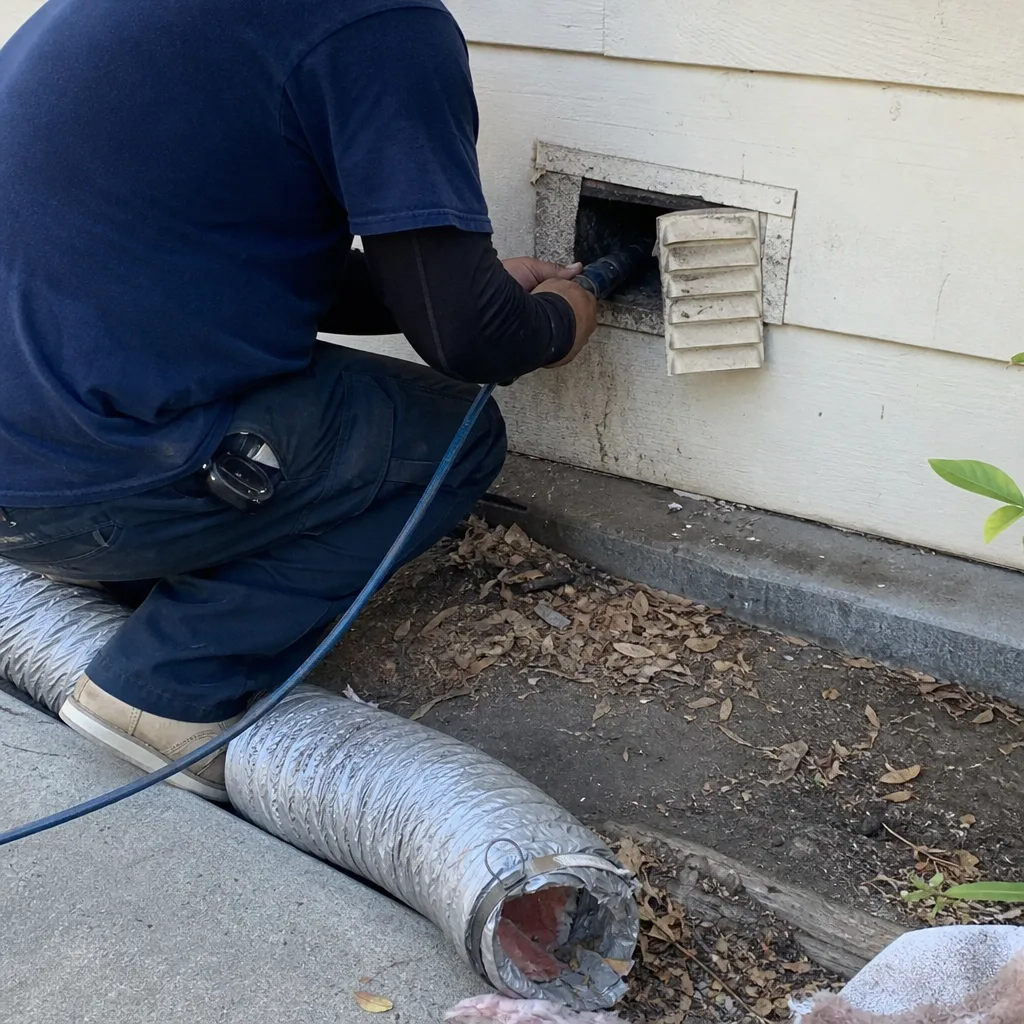
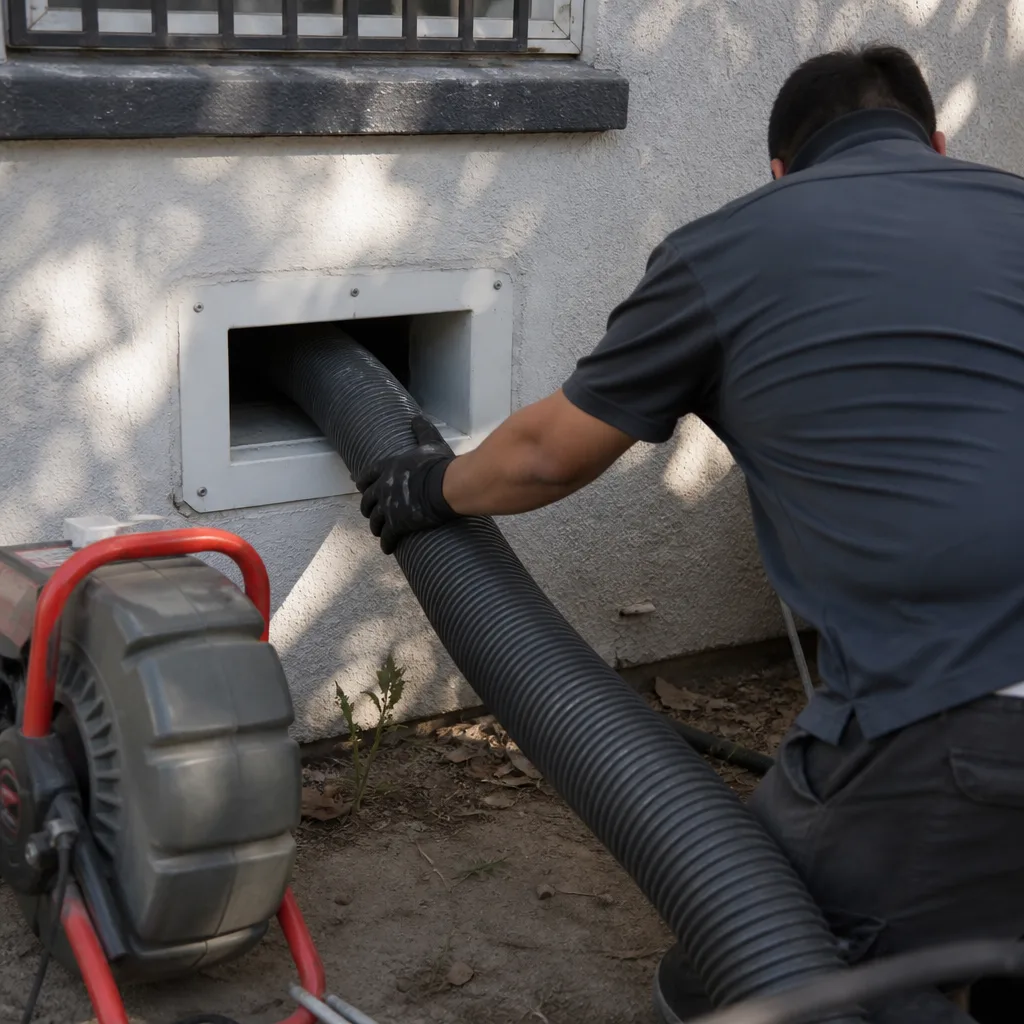
The cleaning itself uses a Rotobrush rotary brush system to break up compacted lint along the duct walls, followed by a Nikro HEPA-rated vacuum to extract it. If the exterior flap is damaged or the existing flex hose needs to be swapped for rigid metal duct, that gets quoted and approved before any parts are touched. Most dryer vent cleaning visits wrap up in under an hour. When the work is done, you’ll receive before-and-after photos through The Relay Visibility Guarantee, and a digital invoice you can pay from your phone. The job is also covered by the 365-Day Done Right Promise: if something isn’t right, we come back and make it right, no argument, no charge.
Frequently Asked Questions
It’s genuinely dangerous and it shouldn’t wait. A blocked dryer vent is one of the leading causes of residential fires, and visible lint at the exterior cap is a sign that the duct is already full enough to back up. Every load you run with the duct in this condition forces hot air and lint through a restricted path. Stop using the dryer and call (737) 727-2314 to get it scheduled – sooner is better here, not eventually.
Call (737) 727-2314 and a live person will answer – no voicemail, no callback queue. Your local Cardinal Air Duct Cleaning team will let you know the earliest available time and give you a trackable arrival window so you don’t sit waiting. Dryer vent jobs are a priority call for us because of the fire risk involved.
Most households need it done once a year. Families who run the dryer heavily – think kids’ sports uniforms, towels every other day – may need it closer to every six months. If you’ve never had it cleaned and your dryer is more than a few years old, treat this as overdue rather than on schedule. The lint you’re seeing outside is telling you the same thing.
Yes, always. A written price is part of every Cardinal Air Duct Cleaning visit before a single tool goes into the duct. That’s not a policy we apply sometimes – it applies to every job, including yours. There’s no number that changes when the van is already in your driveway. Call (737) 727-2314 or book online and we’ll get you a quote before anything starts.
Get It Fixed
Call (737) 727-2314 or book online and your local Cardinal Air Duct Cleaning team will handle it. A live person picks up every call. You’ll get a written price before work starts, a trackable arrival window, and before-and-after photo proof – that’s The Relay Visibility Guarantee on every job.
Written by Omar Haddad, Owner & Lead Technician at Cardinal Air Duct Cleaning, part of the Relay Home Co. family since 2005.
What Our Customers Say
"Booked a slot in the app, got a reminder text, and watched the crew's van on the map as it came. Cleaned all the vents and the main trunk. Easy from start to finish."
- Rob J."Cleaning plus HVAC coil clean. Tech texted when he was ten minutes away. No surprises on the price."
- Evan S."Dryer vent fix fixed the burning smell. The clog was behind the elbow and the whole laundry room smells normal now."
- Dennis K.