
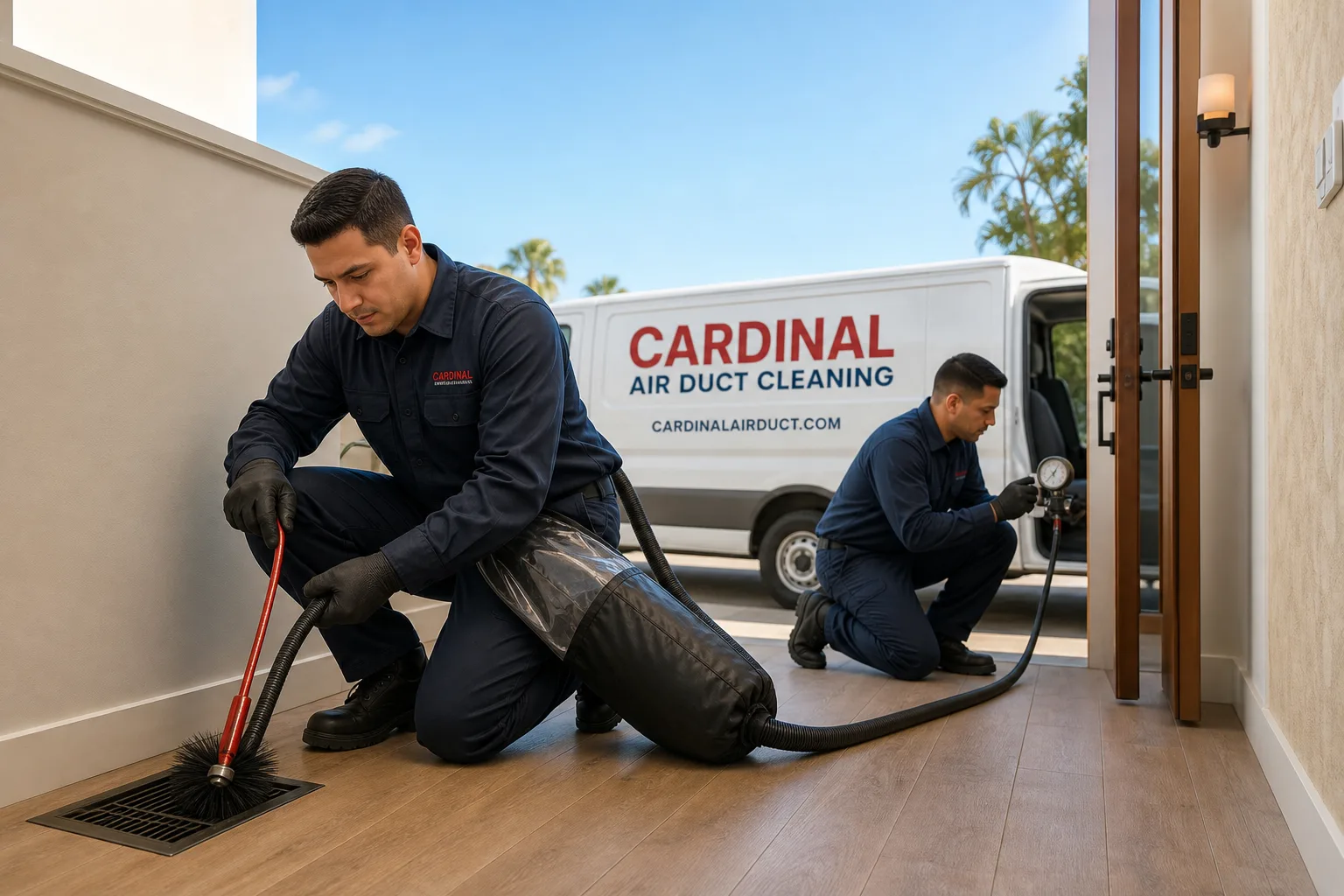
Whole-system duct and dryer vent check with before-and-after photos - you see exactly what came out of your vents
That "$99 whole-house special" is a bait ad - the real number appears once they are in your hallway, or the "clean" is a shop-vac at the register. We photograph the inside of your ducts before and after instead.
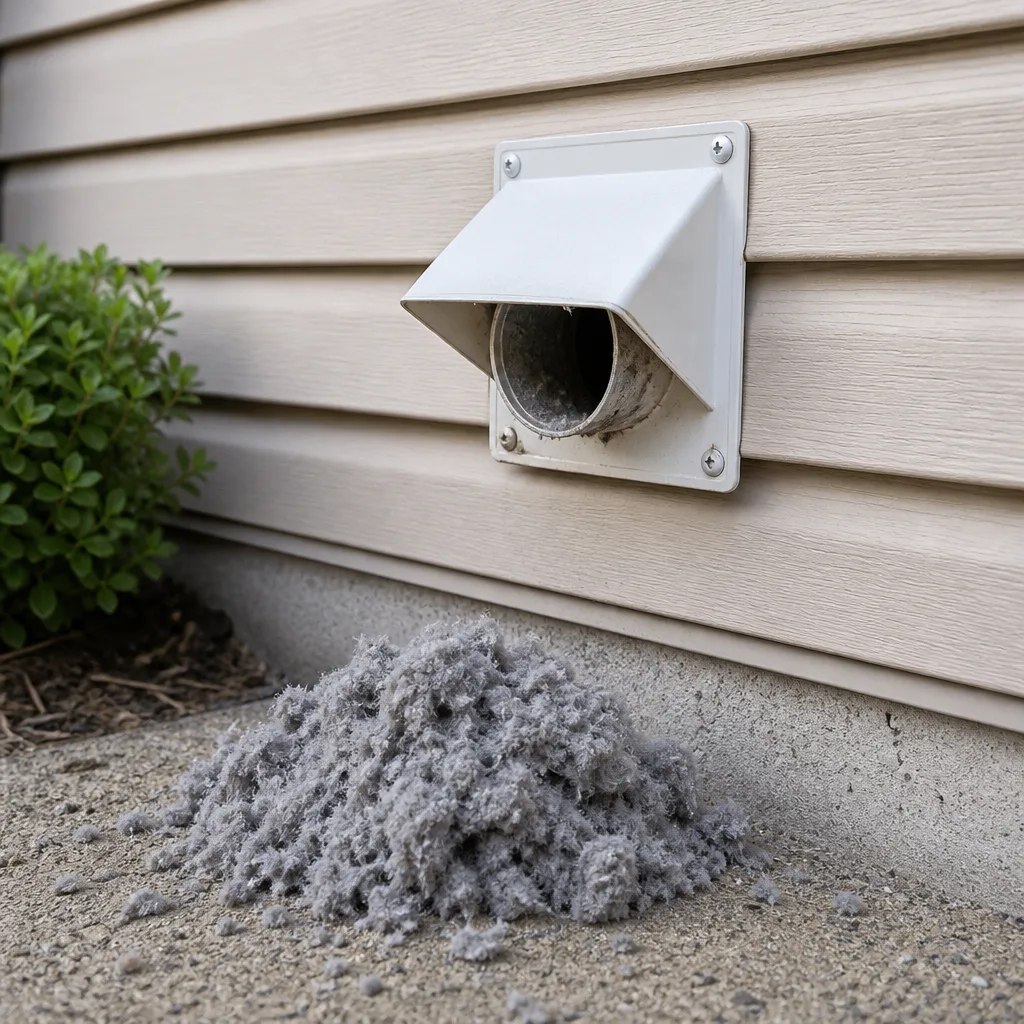
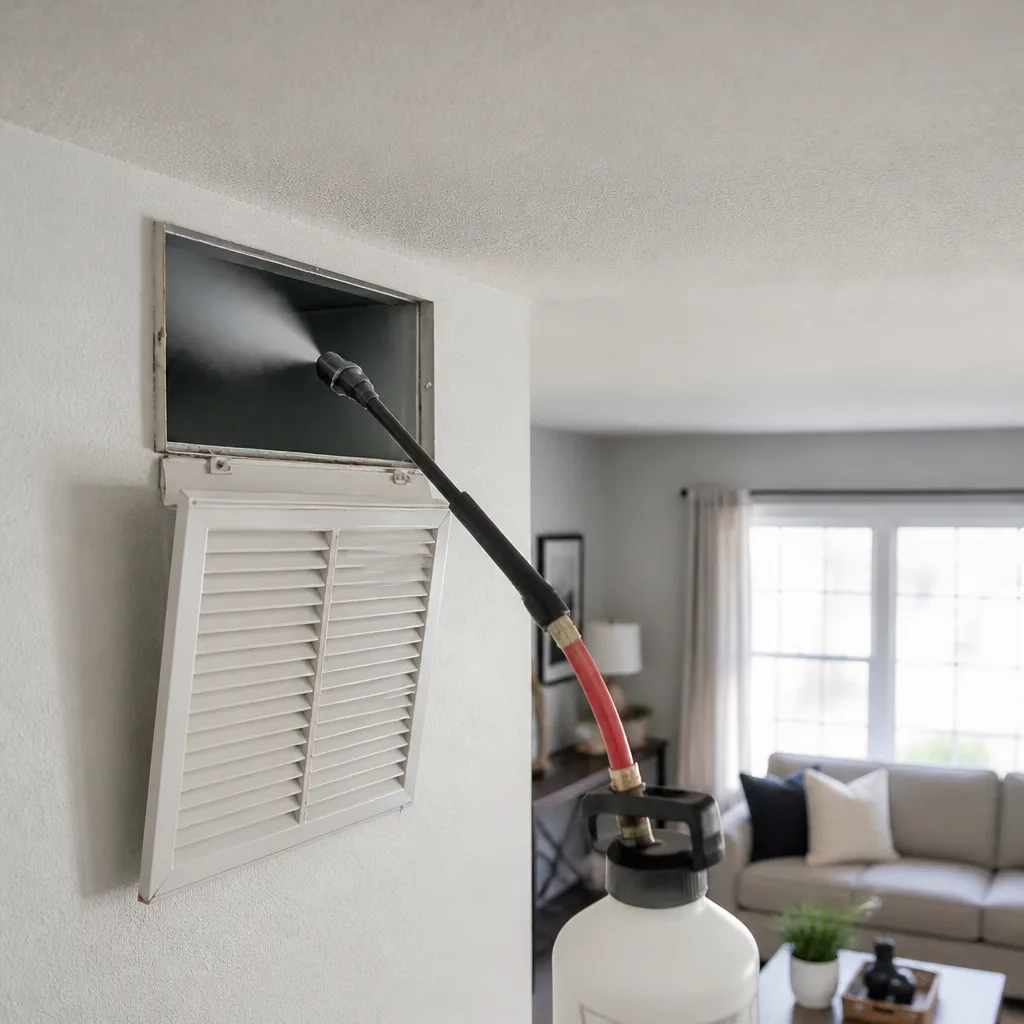
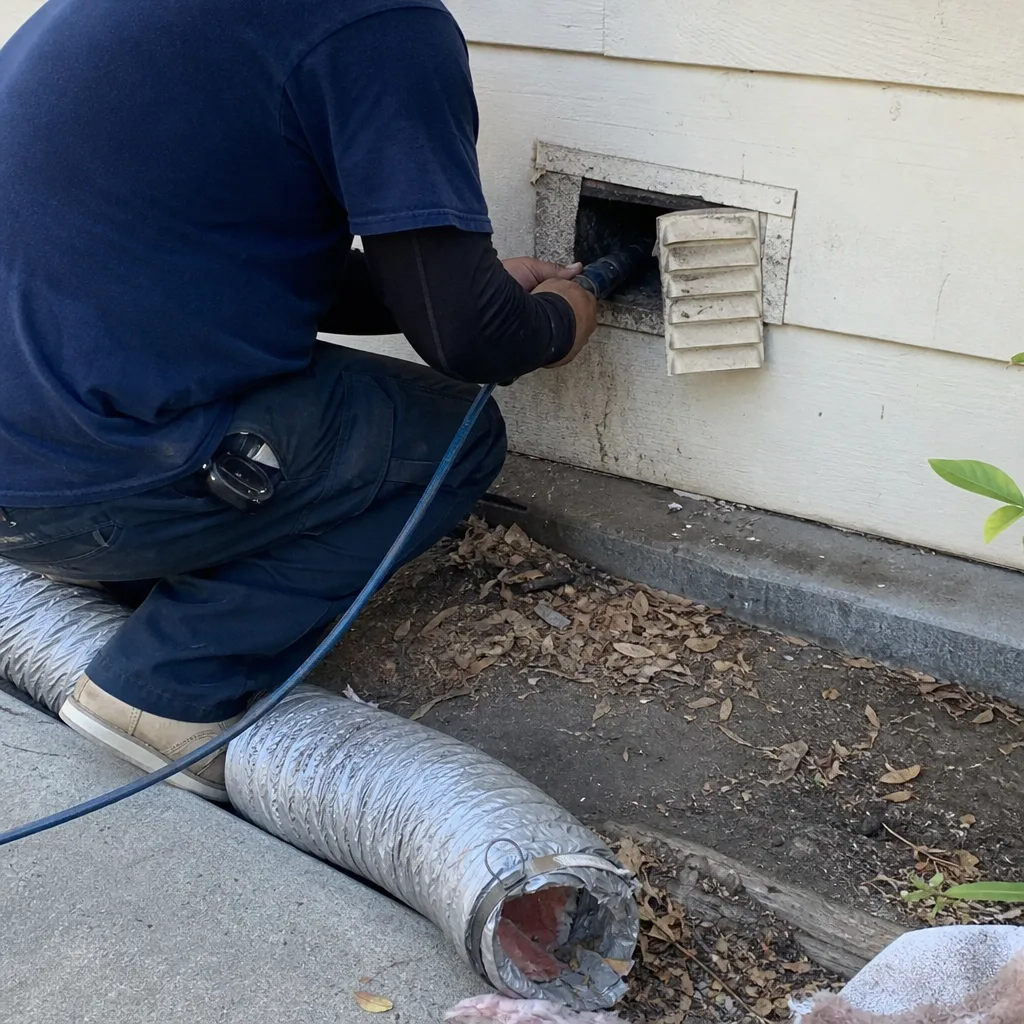 Before
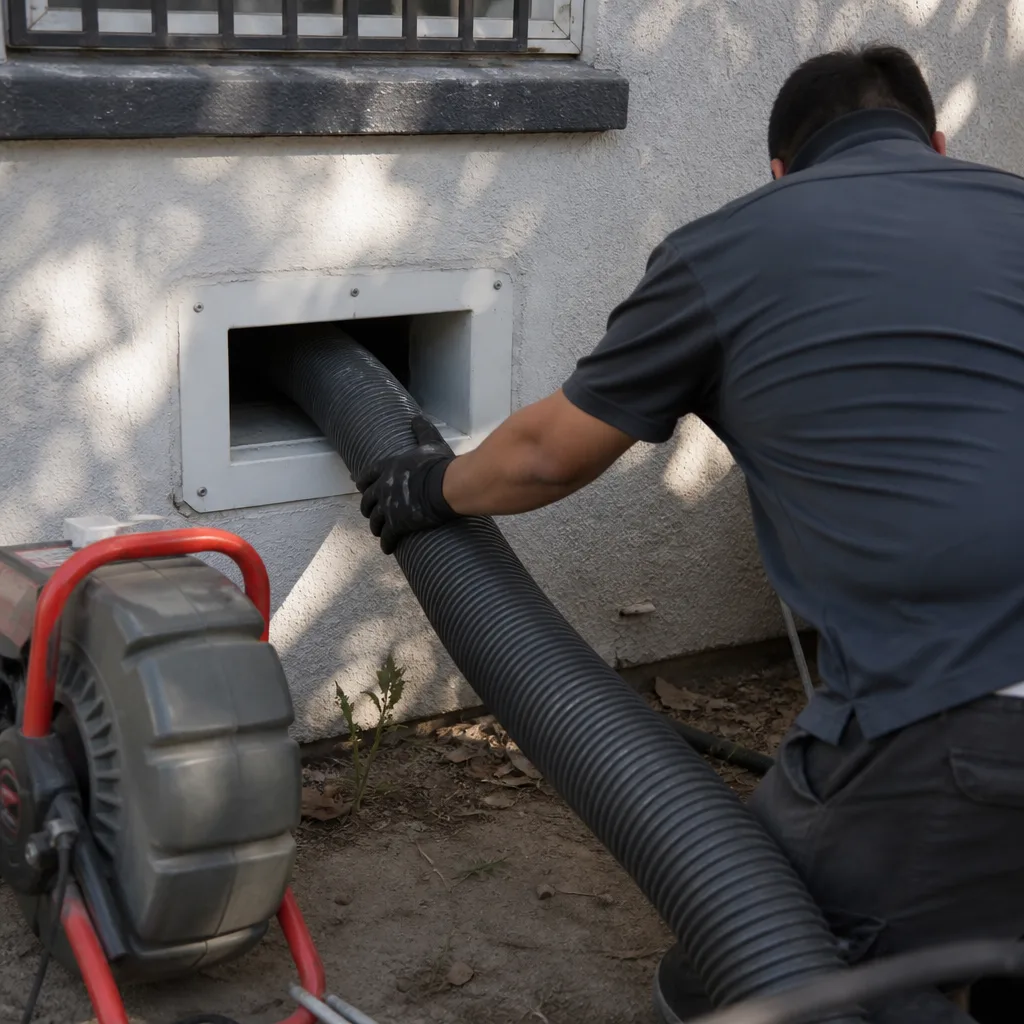 After
After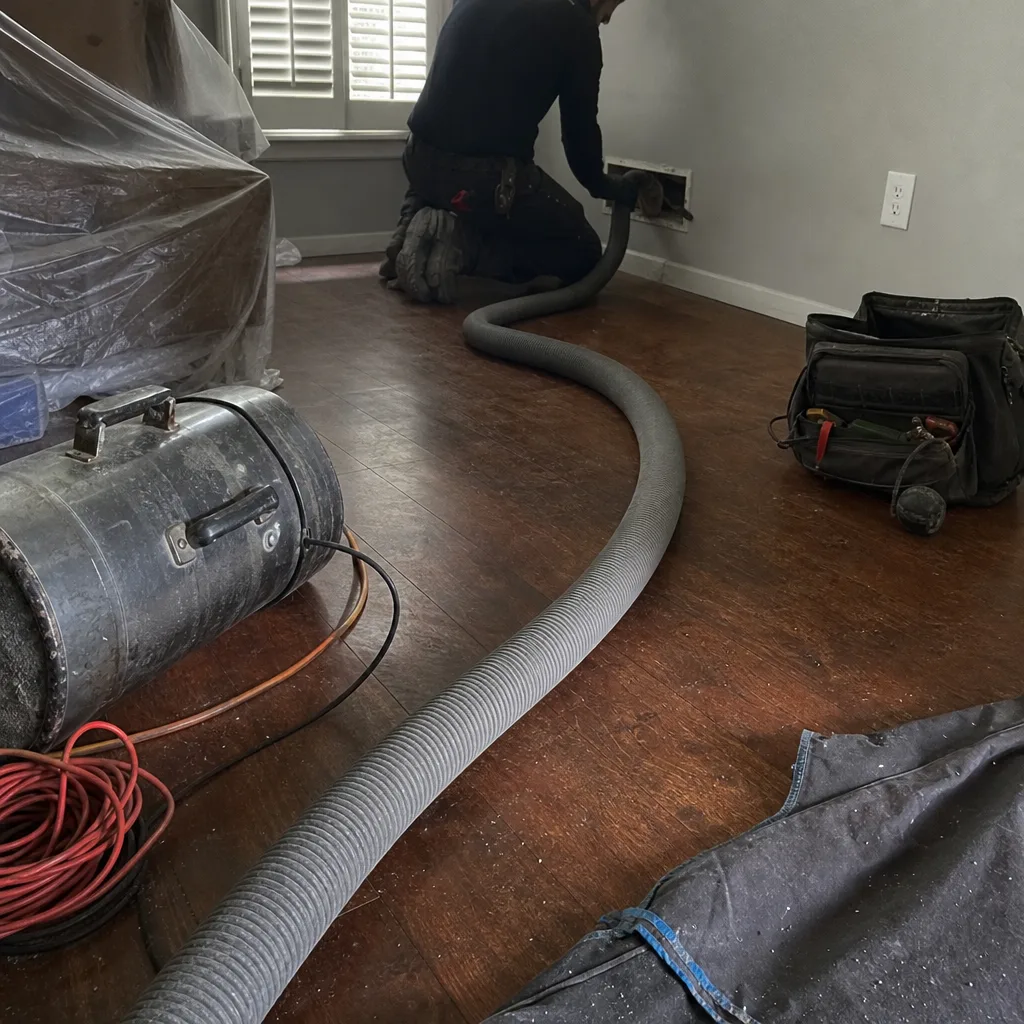 Before
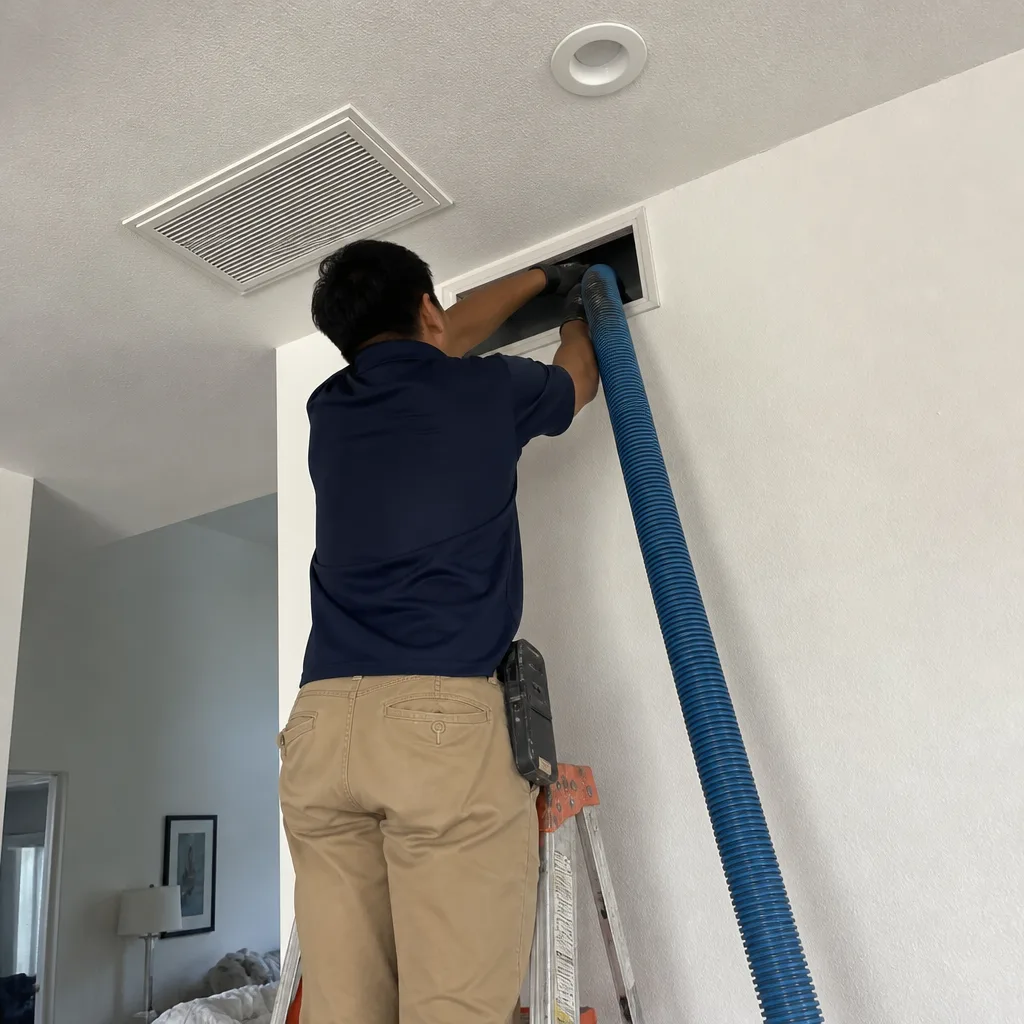 After
After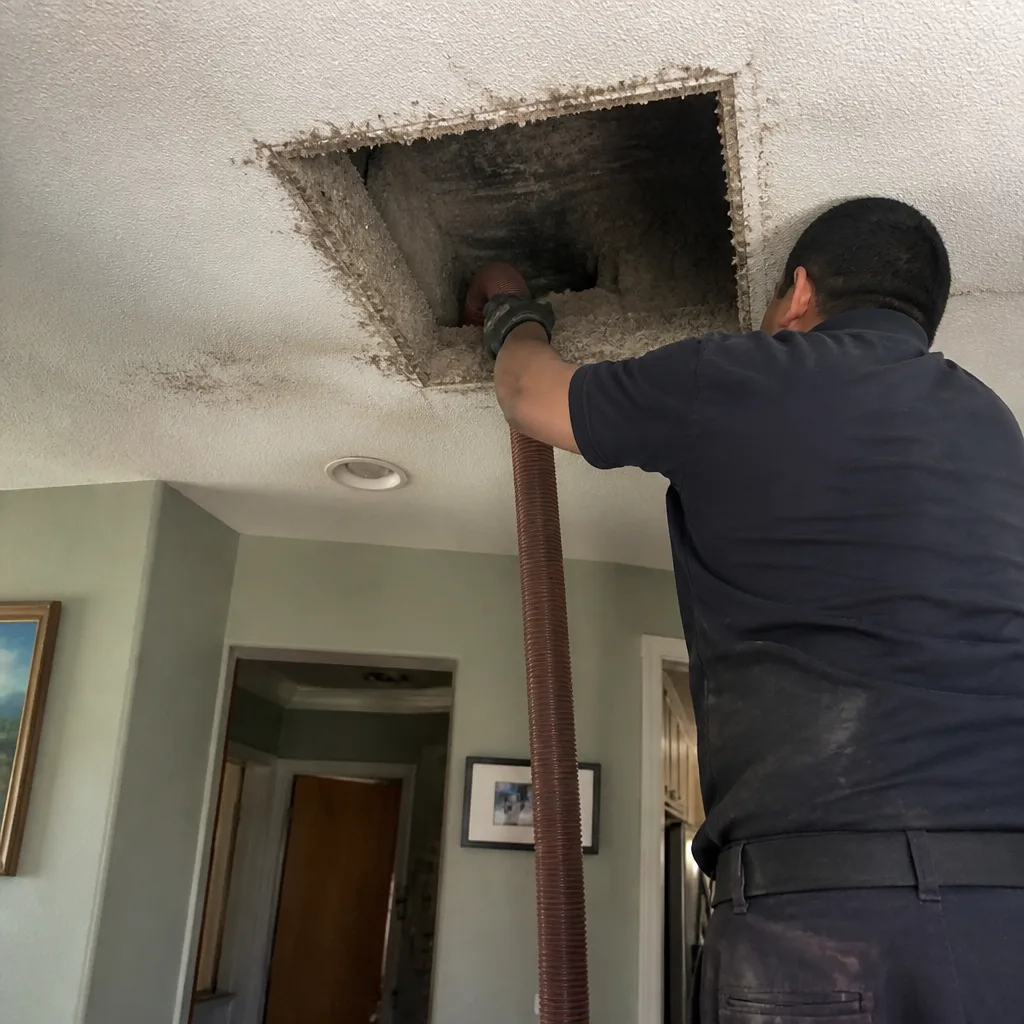 Before
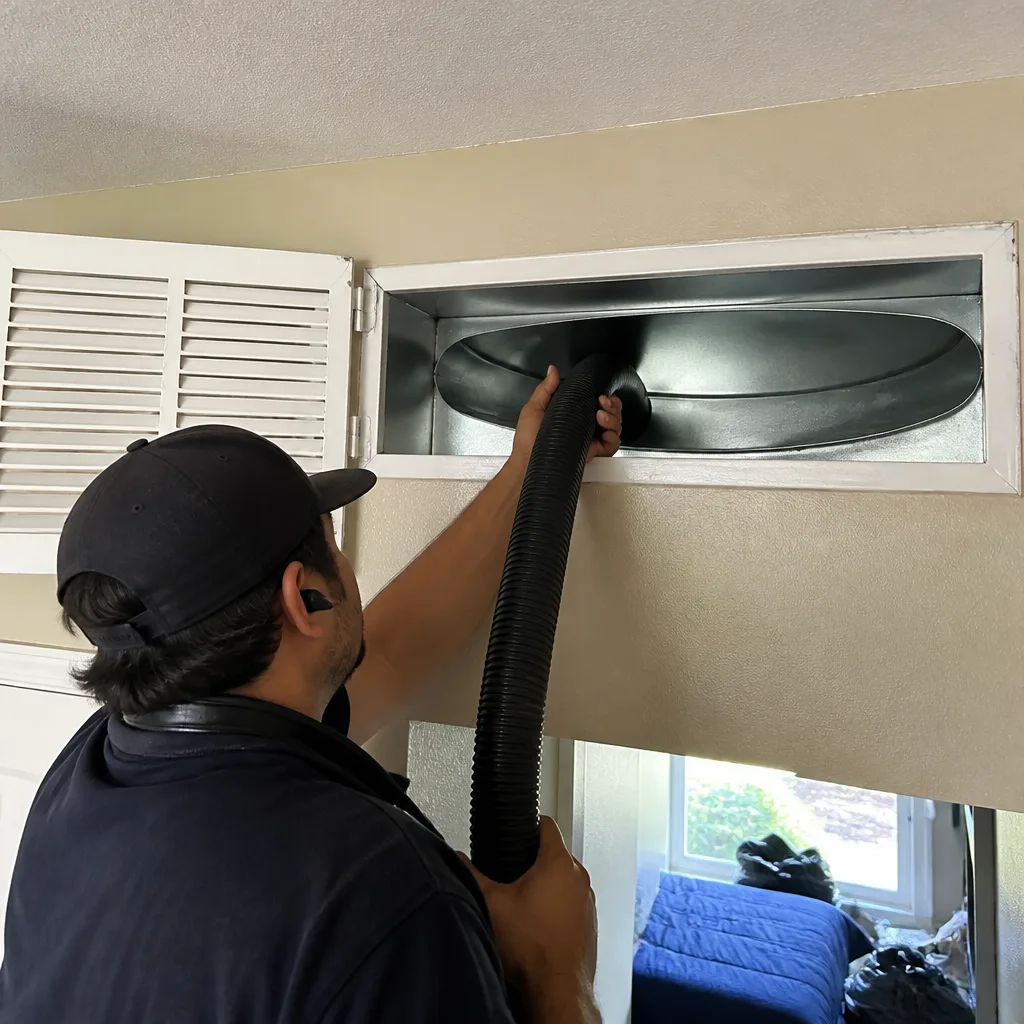 After
AfterUneven Airflow Room to Room
Uneven airflow from room to room almost always points to a blocked, collapsed, or disconnected section of ductwork – sometimes combined with a filter that has not been changed in too long. The air your system produces is the same volume it always was; it just isn’t reaching every room equally anymore. That imbalance makes your HVAC work harder, drives up energy use, and leaves at least one room uncomfortable no matter how you set the thermostat.
The good news is that most causes are diagnosable before anyone even opens a duct. Walk through your house right now and hold your hand near each supply register. Notice which rooms get strong airflow and which feel almost dead. That pattern tells a technician a lot before the first screw is pulled – and it gives you something concrete to describe when you call.
Why It Happens
Clogged or Collapsed Ductwork
Flexible duct (the accordion-style tubing used in most residential systems) can kink, sag, or partially collapse over time – especially in attics and crawlspaces where it gets walked on, bumped by storage, or weakened by heat cycling. When that happens, airflow to the rooms those ducts serve drops noticeably while rooms closer to the air handler still feel fine. If your weak rooms are at the far end of the house or on a different floor, this is the first thing to suspect.
Heavy Debris Buildup Inside the Ducts
Years of dust, pet hair, and construction debris settle inside duct runs and slowly narrow the passage air can move through. This doesn’t happen overnight, so it tends to be invisible until the buildup is thick enough to create real restriction. If your airflow has gotten gradually weaker over months or years – and your filter looks like a shag carpet every time you pull it – debris accumulation is almost certainly a factor.
Closed, Stuck, or Damaged Dampers and Registers
Most duct systems include adjustable dampers inside the ducts themselves, as well as the simple vent registers you can see on the floor, ceiling, or wall. A damper that was manually closed and forgotten, or a register louver that broke and sealed shut, will kill airflow to a specific room while everything else runs normally. Check the visible registers first – look for the small lever or wheel on the grille that opens or closes the slats, and make sure it isn’t pushed to the closed position.
A Dirty or Overloaded Air Filter
A severely clogged filter starves the entire system of return air, which drops static pressure and can make some rooms – usually those farthest from the air handler – feel noticeably weaker than others. Pull your filter right now and hold it up to a light. If you can’t see light through it, restricted airflow across the whole system is partly your fault and partly an easy fix. Replace it, run the system for an hour, and note whether the problem improves – it almost always does at least a little when the filter is the main culprit.
What to Do Right Now
- Check and replace your air filter. Pull it out, hold it up to a window. If it’s visibly packed, swap it for a fresh one before anything else. This takes two minutes and costs a few dollars.
- Walk every room and test the registers by hand. Hold your palm flat about six inches below each supply vent. Note which rooms have strong flow, weak flow, or nothing at all. Write it down or record a voice memo – this information is genuinely useful for the technician.
- Check that every visible vent register is fully open. Look for the small adjustment lever on the grille face. Make sure none have been accidentally closed.
- Do not attempt to reach inside ductwork, reconnect disconnected flex duct, or access ducts in your attic or crawlspace yourself. Attic and crawlspace work involves height, extreme temperatures, and in older homes sometimes asbestos-wrapped duct insulation. If you suspect a disconnected duct run or collapsed flex duct in an inaccessible area, stop and call a professional.
- Take photos of any visible duct damage, staining near registers, or vents that have separated from the wall or ceiling. Before-and-after documentation is part of how your local Cardinal Air Duct Cleaning team confirms the work was actually done – having “before” shots from you helps establish the baseline.
How We Fix It
When your local Cardinal Air Duct Cleaning technician arrives, the first thing they do is an airflow assessment – checking pressure at each register and mapping which rooms are underperforming. That lets them identify whether the problem is a single collapsed run, widespread debris, a damper issue, or a combination of all three.
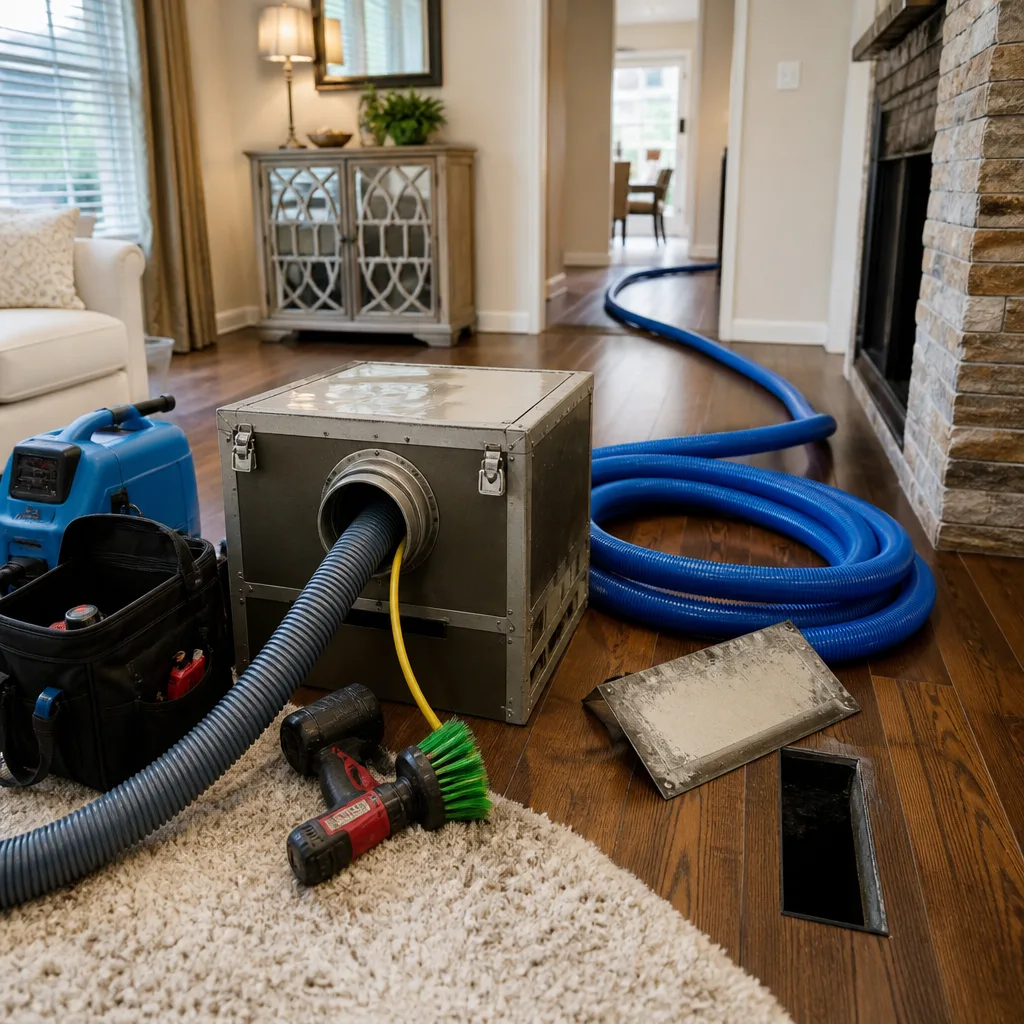
If debris restriction is the cause, the job is a full air duct cleaning using Rotobrush rotary brush systems to break up settled buildup and Nikro HEPA-rated vacuums to pull it out without spreading it through the house. If there’s a disconnected or collapsed duct section, that gets documented with photos before and after the repair.
Before a single tool touches your system, you get a written price. That’s not a soft promise – it’s how every Cardinal job works, every time, under the 365-Day Done Right Promise. If anything isn’t right within a year of the job, we come back and make it right. Most jobs of this type take a few hours. The estimate is free.
Frequently Asked Questions
It can wait a few days without causing immediate danger, but it shouldn’t wait long. An HVAC system straining to compensate for restricted ducts runs longer cycles, uses more energy, and puts extra wear on the blower motor. If one room is significantly hotter or colder than the rest of the house, your system is already working inefficiently – and that inefficiency adds up on every utility bill. Call (737) 727-2314 to get it assessed before the next full heating or cooling season hits.
It could be, but duct issues cause the majority of room-to-room airflow complaints. A thermostat problem usually shows up as the whole house being off, not specific rooms. If some rooms are strong and others are dead, that pattern almost always traces back to the distribution side – the ducts – rather than the equipment side. A technician can tell you which within the first visit.
Call (737) 727-2314 and a live person will pick up – no voicemail, no callback queue. Your local Cardinal team works to The Relay Standard: a live trackable arrival window, not a vague four-hour range. Scheduling depends on your area and current availability, and the person on the phone can tell you exactly what the next open time looks like.
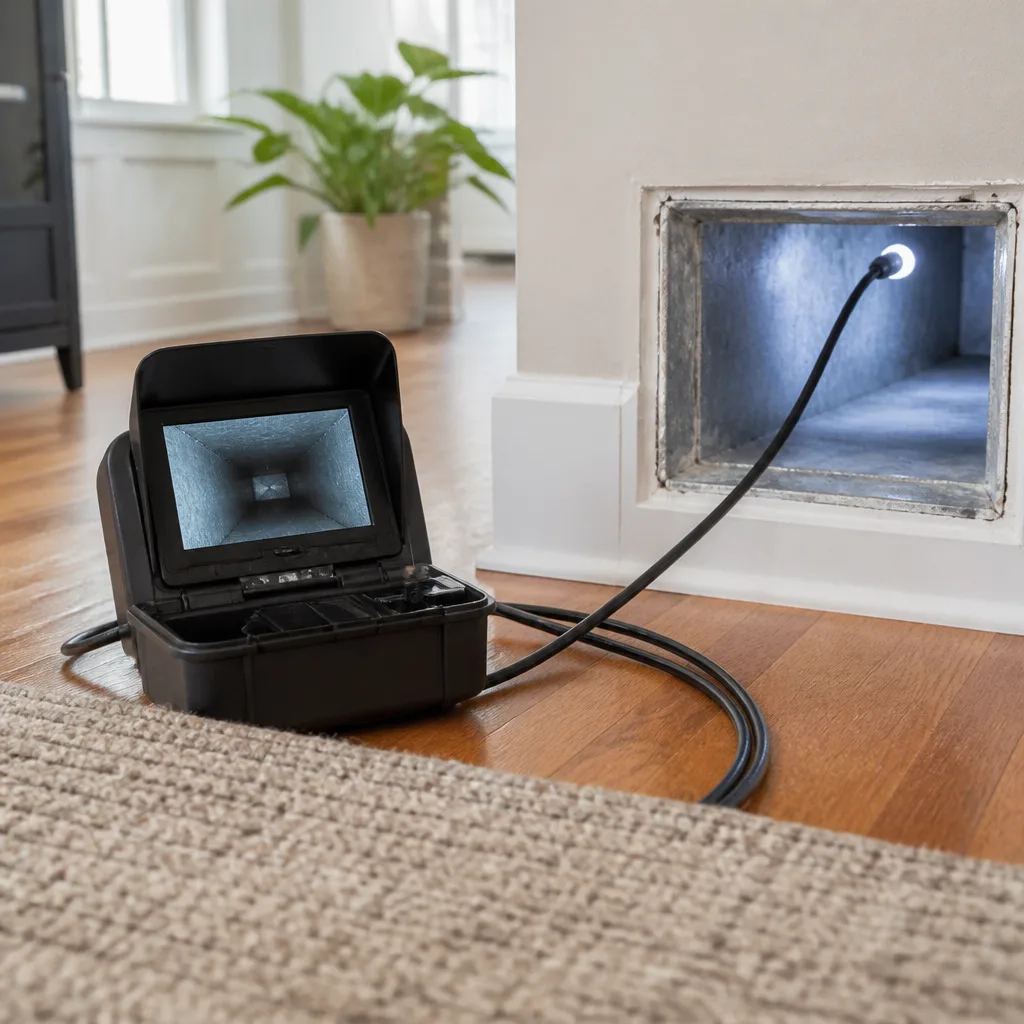
Every Cardinal Air Duct Cleaning job includes before-and-after photos of the duct interior – that’s part of The Relay Visibility Guarantee, not an optional add-on. You’ll see what the inside of your ducts looked like before the technician started and what they looked like when the job was finished. The digital invoice comes to your phone as a link you can pay on the spot. There’s no guessing and no paper invoice that might get lost.
Get It Fixed
Call (737) 727-2314 – a live person answers around the clock, no voicemail. Or book online in a tap. Your local Cardinal Air Duct Cleaning team will send a background-checked, uniformed technician with a written price before anything starts and a 365-Day Done Right Promise behind every job.
Written by Omar Haddad, Owner and Lead Technician, Cardinal Air Duct Cleaning – part of the Relay Home Co. family, serving communities across the country since 2005.
What Our Customers Say
"Booked a slot in the app, got a reminder text, and watched the crew's van on the map as it came. Cleaned all the vents and the main trunk. Easy from start to finish."
- Rob J."Cleaning plus HVAC coil clean. Tech texted when he was ten minutes away. No surprises on the price."
- Evan S."Dryer vent fix fixed the burning smell. The clog was behind the elbow and the whole laundry room smells normal now."
- Dennis K.