
Last updated October 9, 2026
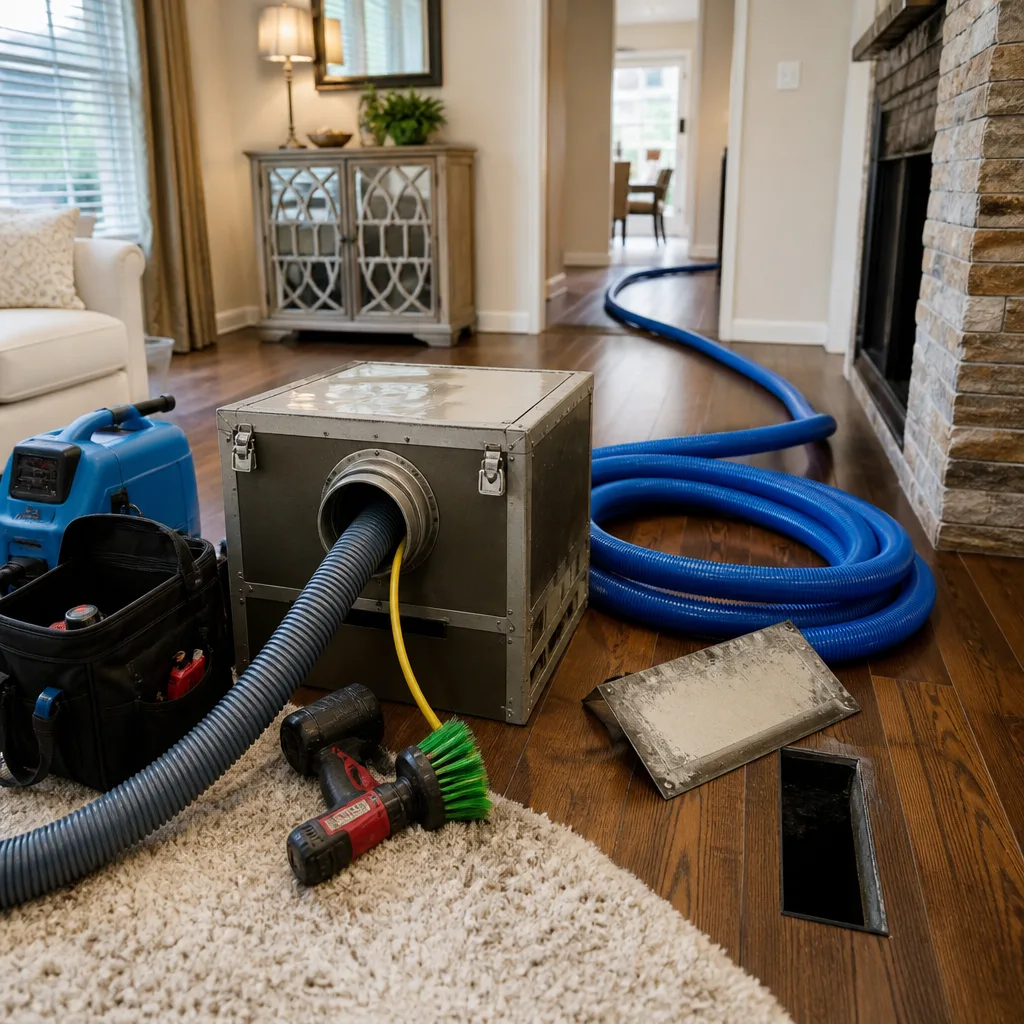
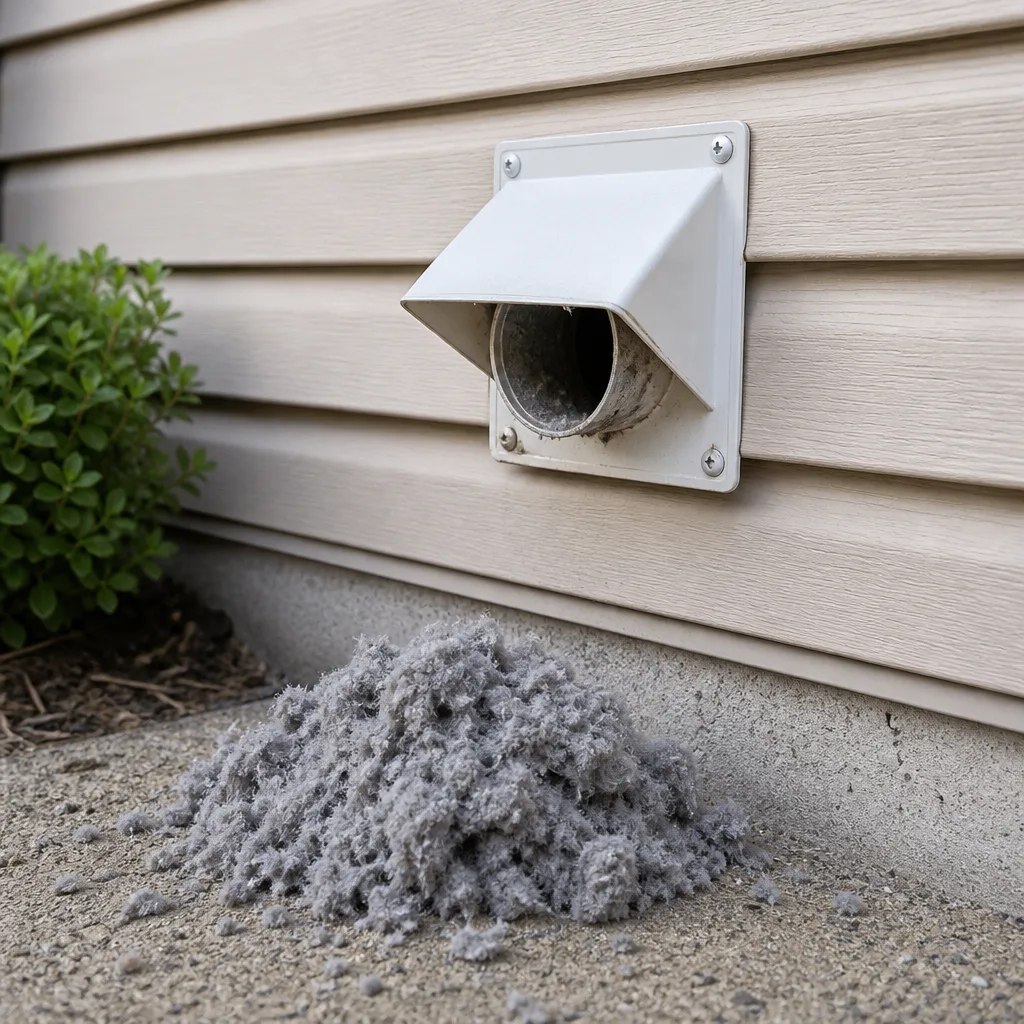
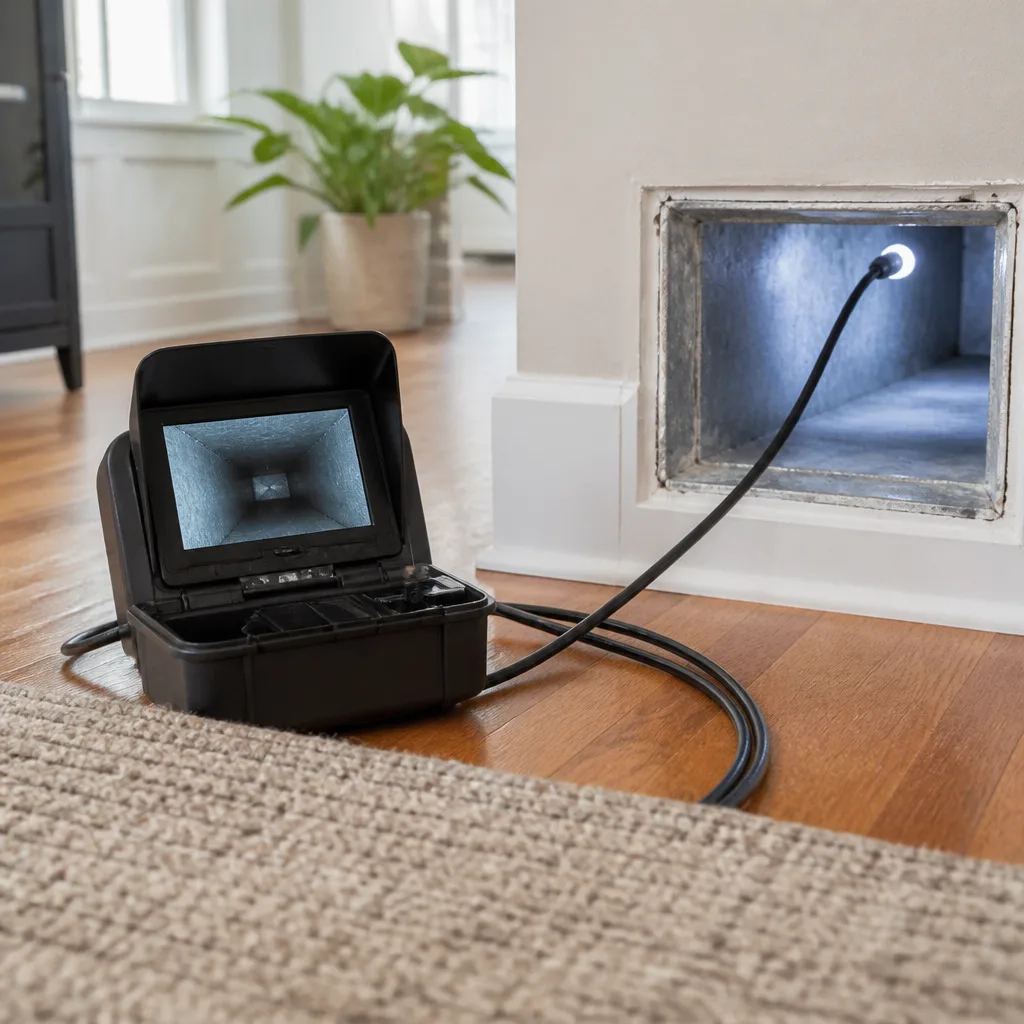
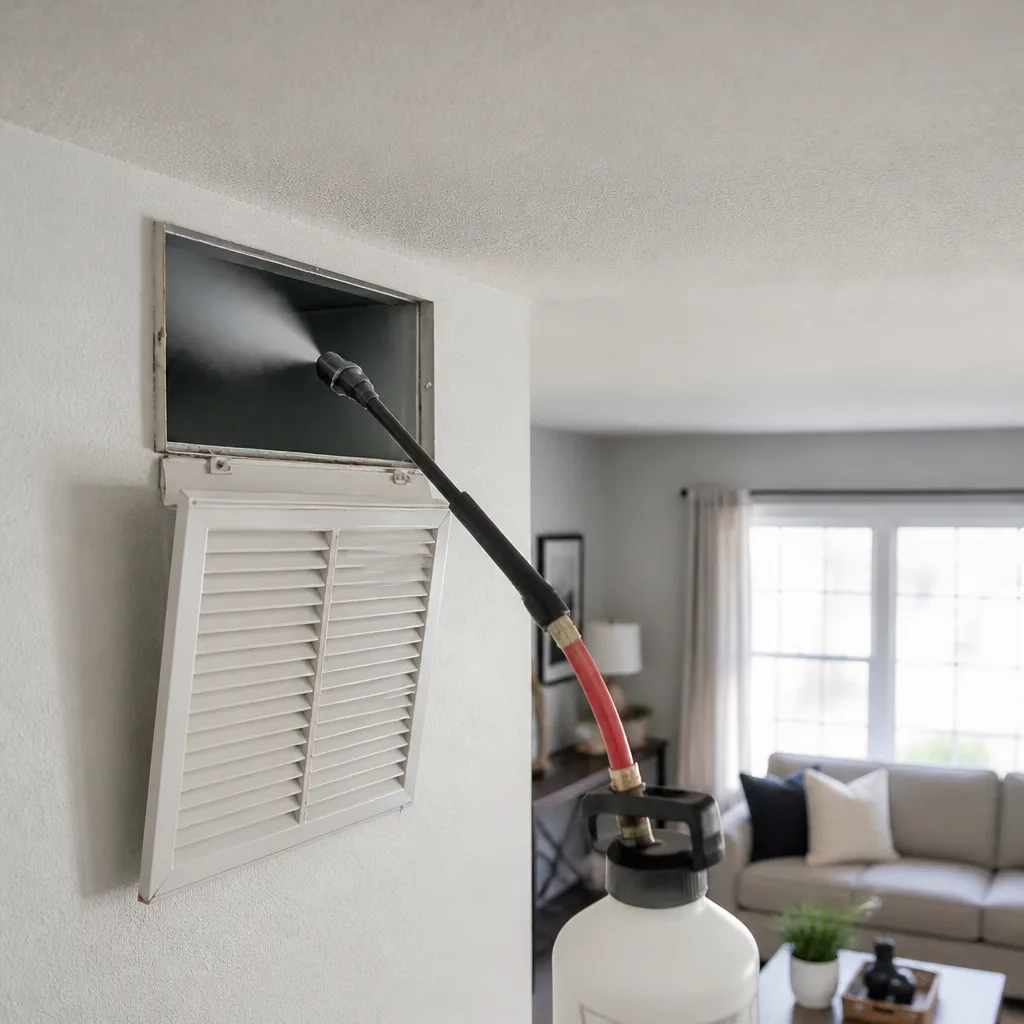
Whole-system duct and dryer vent check with before-and-after photos - you see exactly what came out of your vents
That "$99 whole-house special" is a bait ad - the real number appears once they are in your hallway, or the "clean" is a shop-vac at the register. We photograph the inside of your ducts before and after instead.
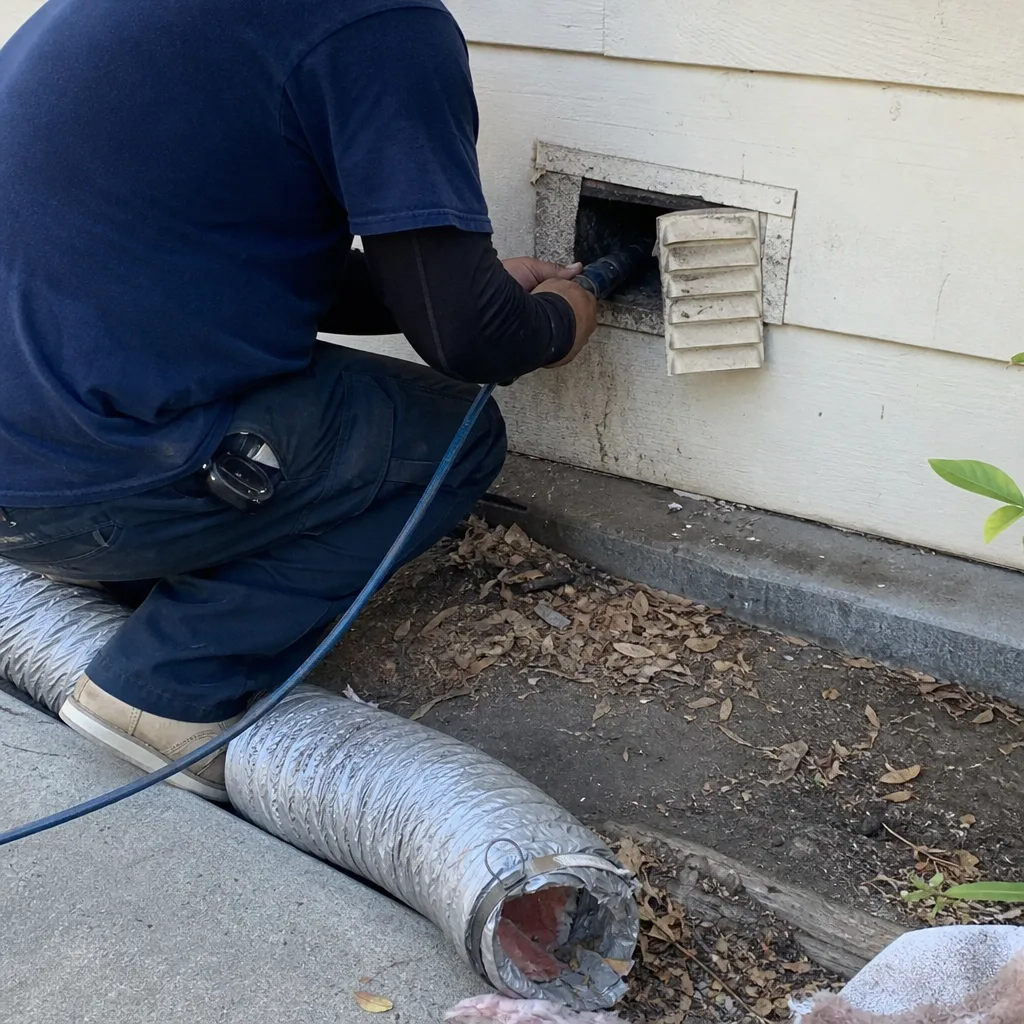 Before
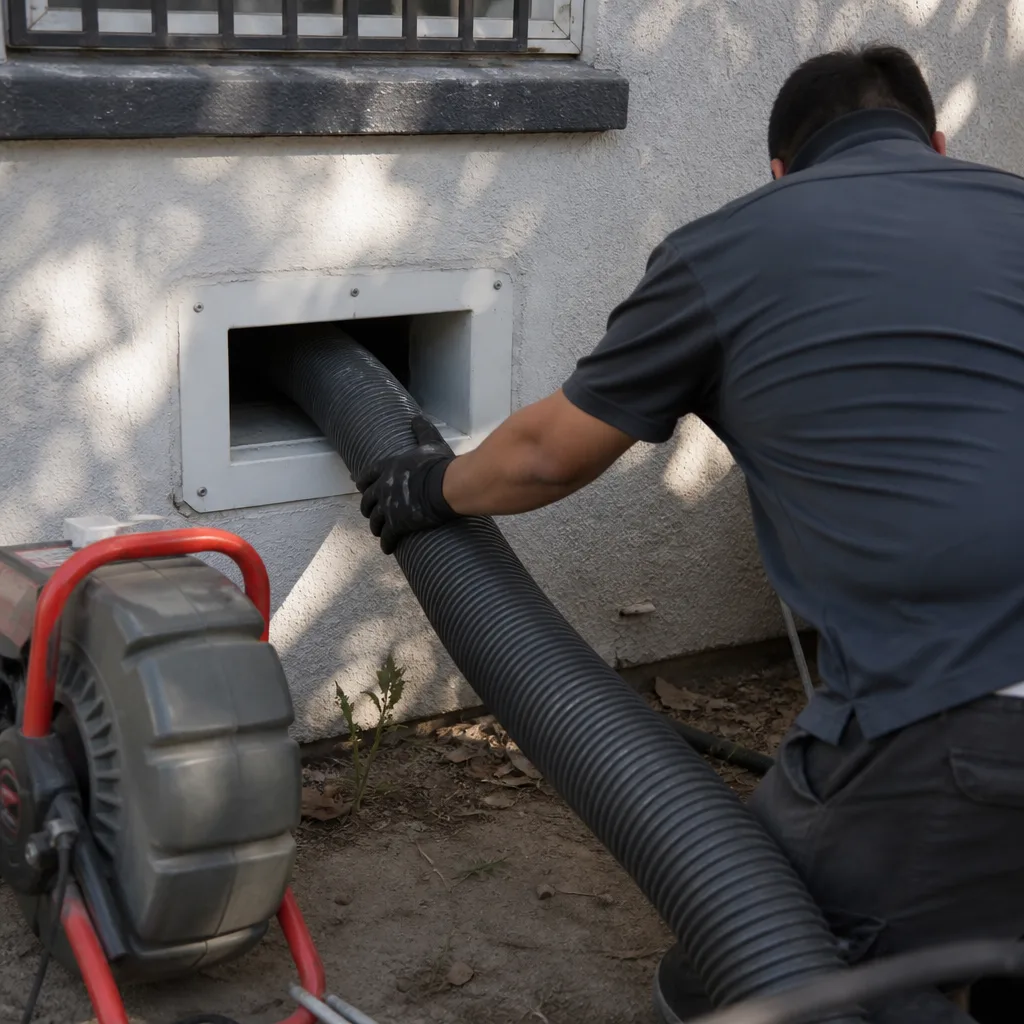 After
After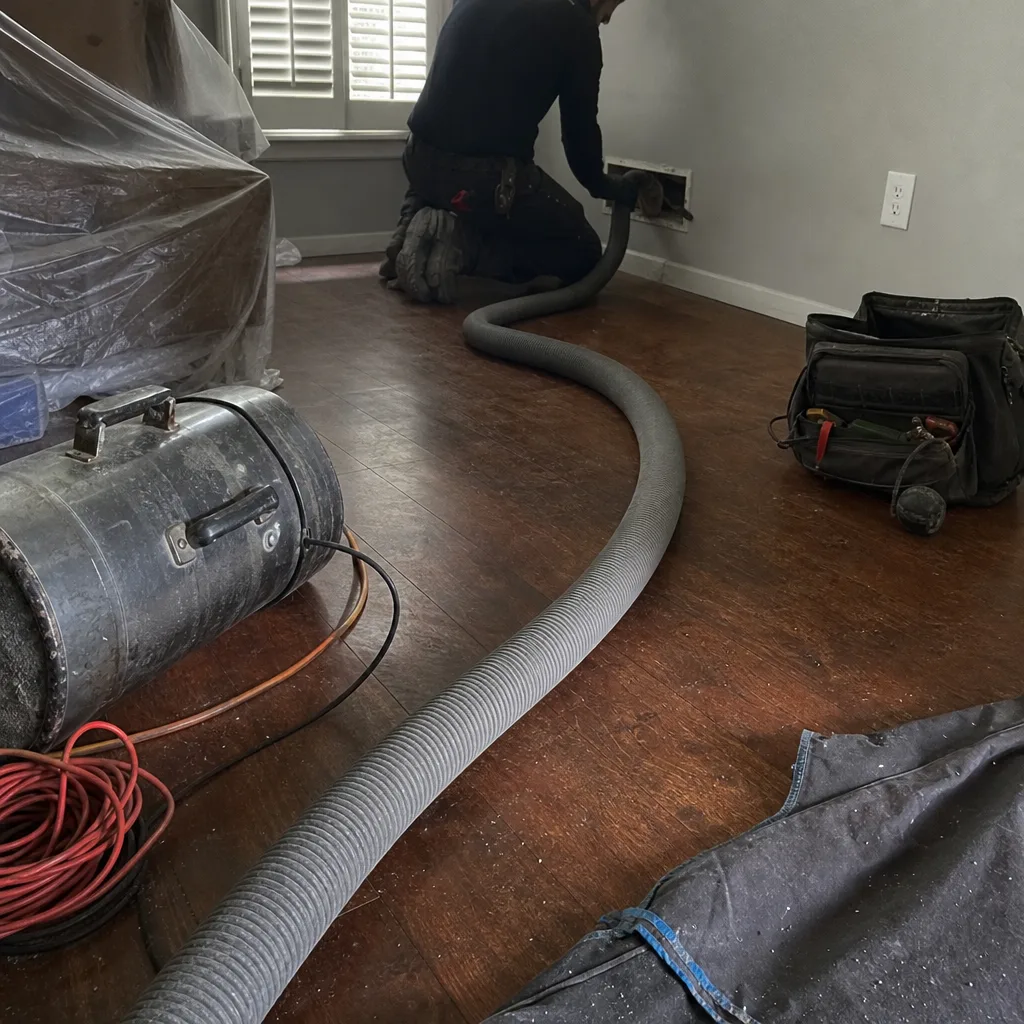 Before
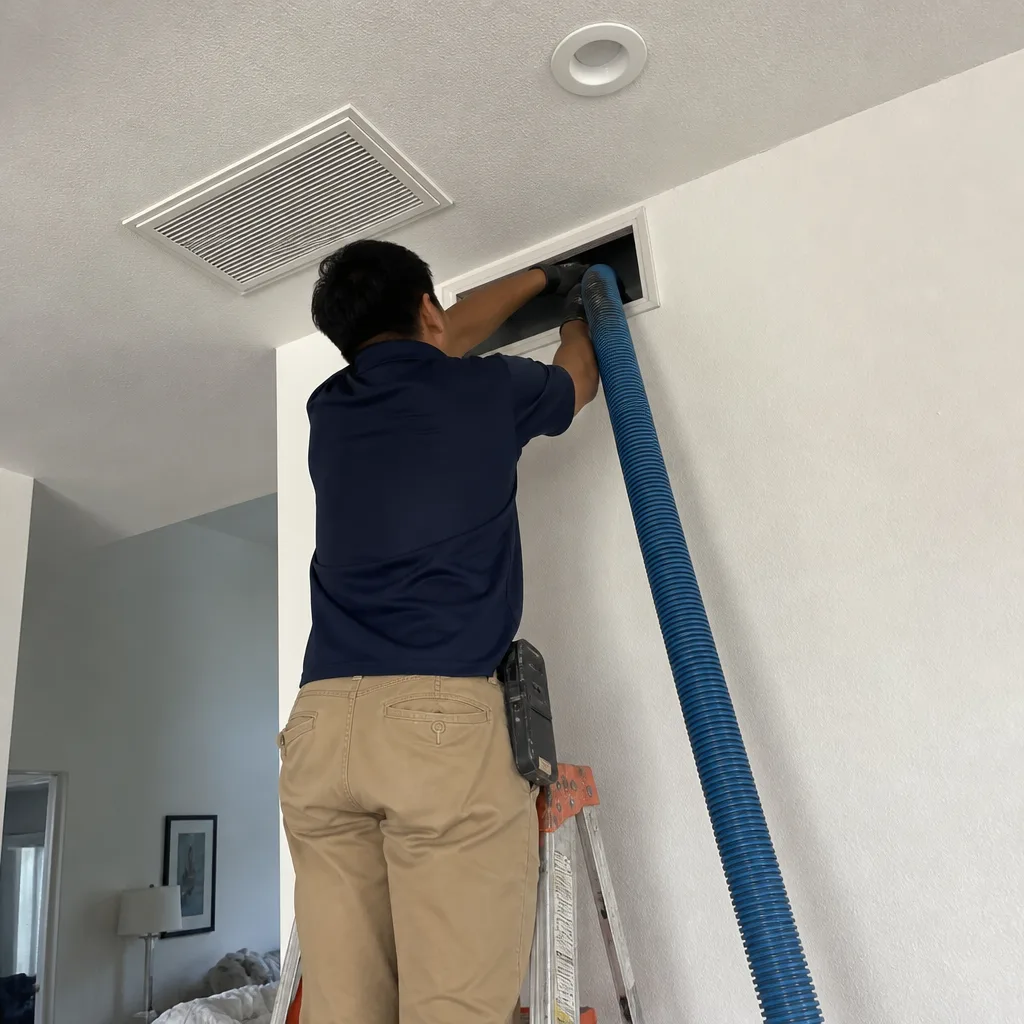 After
After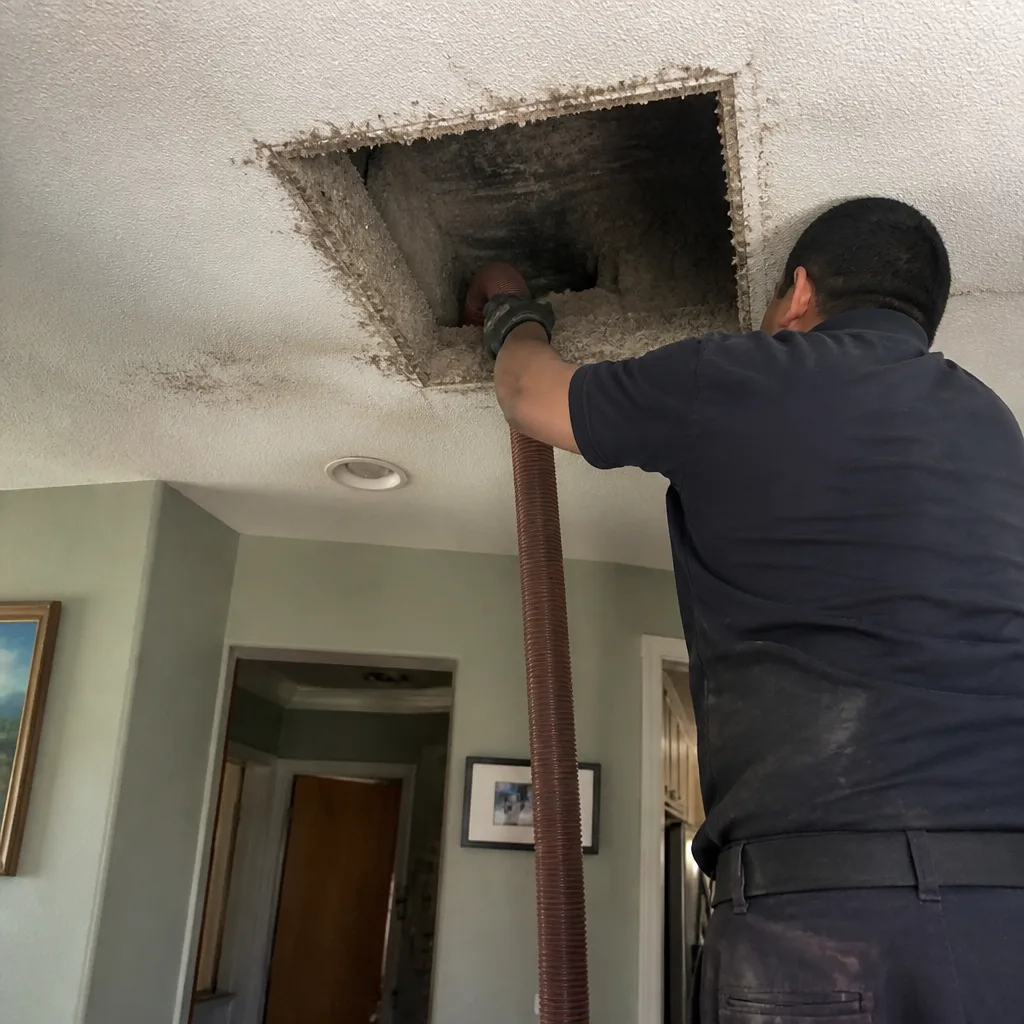 Before
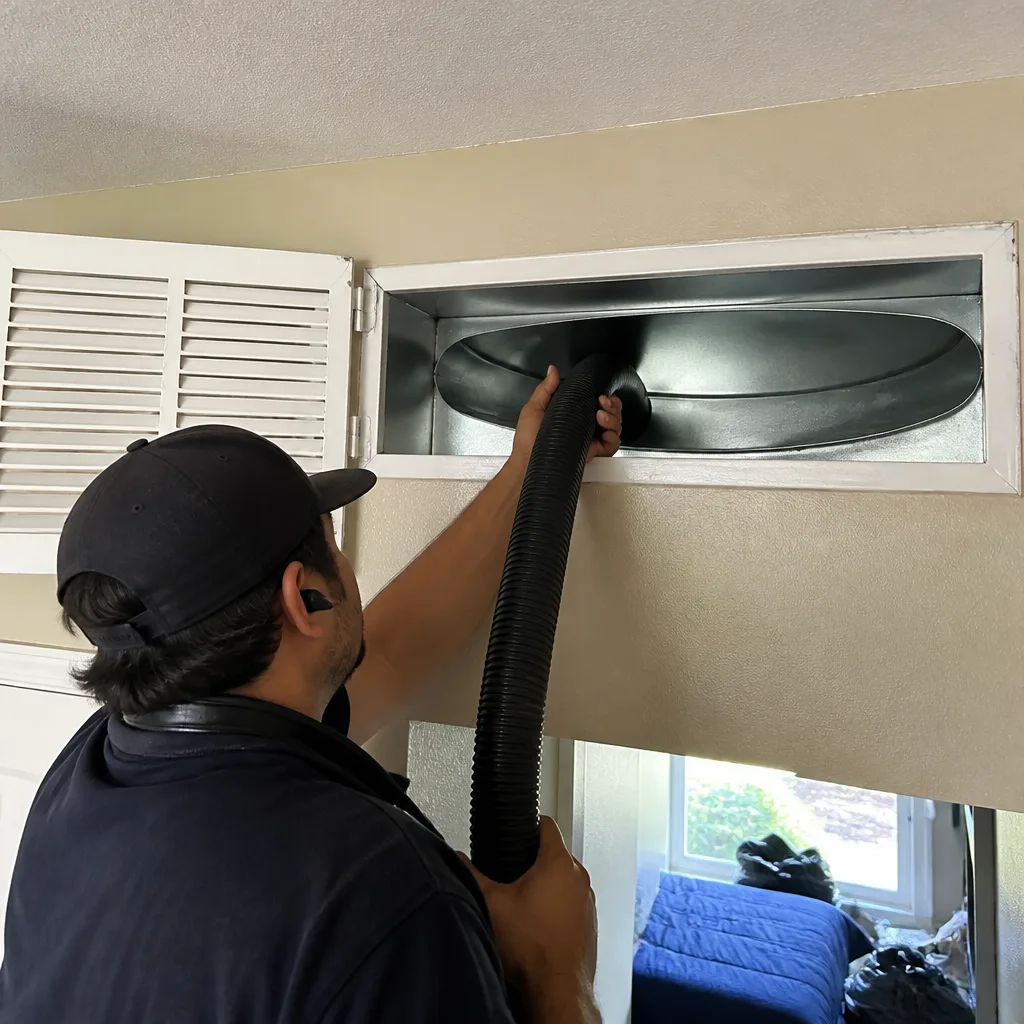 After
AfterSeasonal Air Duct Cleaning Care for Los Angeles: Year-Round Homeowner’s Guide
National advice says clean your air ducts every three to five years. That guidance was written for climates with frozen winters and short cooling seasons, where HVAC systems sit idle for months. Los Angeles runs its HVAC nearly ten months a year, and wildfire smoke can deposit measurable particulate in your ducts in a single week. Every year, we see homeowners in Los Angeles who followed the generic timeline and are now breathing dust that accumulated far faster than any national guideline anticipated. This guide breaks down what actually happens inside LA ductwork across the year, when each season demands attention, and how to keep your system clean without paying for Air Duct Cleaning services you do not need.
Quick Answer
Los Angeles does not have four classic seasons, but it has four distinct HVAC stress cycles: the June marine layer humidity spike, September and October Santa Ana winds, November through February wildfire ash fallout, and the spring pollen surge. Each cycle leaves a different type of debris in your ducts, which means seasonal maintenance should be timed around these events rather than a fixed calendar schedule. A standard whole-home air duct cleaning in Los Angeles typically runs $350 – $650, and the best months to schedule are late spring or early fall, before the heaviest-use periods begin. For detailed pricing information, see our Air Duct Cleaning Cost Breakdown: The Los Angeles Homeowner’s Reference for 2026. Cardinal Air Duct Cleaning offers free estimates so you can get an exact price for your home by calling (737) 727-2314.
Table of Contents
- The LA HVAC Calendar: A Month-by-Month Breakdown
- June Marine Layer: The Humidity Cycle Most Homeowners Ignore
- Santa Ana Season: What Wind-Driven Particulate Does to Ducts
- Post-Wildfire Protocol: What a Legitimate Inspection Actually Covers
- Spring Pollen Surge: Using AQI Data to Time Your Maintenance
- The Seasonal Filter Strategy: What to Buy and Where
- Cheap DIY Tasks That Extend the Gap Between Professional Cleanings
- Common Mistakes to Avoid
- When to Call a Professional
- Frequently Asked Questions
The LA HVAC Calendar: A Month-by-Month Breakdown
Los Angeles homeowners run their systems differently from any other major US city. Most homes here use cooling from April through October, with heating kicking in sporadically from November through March depending on the neighborhood. The result is an HVAC system that rarely gets a true rest, and ductwork that accumulates particulate year-round. Here is what a typical year looks like inside the ducts of a Los Angeles home.
- January – February: Heating season peaks. The blower pushes warm air through ducts that may have been coated with ash from fall wildfires. This is when baked-on particulate gets recirculated, and when homeowners notice dust settling on furniture faster than normal.
- March – April: Transition months. Many systems sit in a low-activity phase as temperatures swing between cool nights and warm afternoons. Pollen from oak, sycamore, and grasses begins entering the system through the return registers.
- May: Cooling season starts in earnest. AC coils pull moisture from the air, and ducts that have been accumulating pollen and dust all spring now handle cold, damp air. This combination accelerates microbial growth inside the duct walls.
- June: The marine layer arrives. Humidity spikes, especially in coastal and canyon neighborhoods like Santa Monica, Brentwood, and Pacific Palisades. Duct interiors become moist enough to support mold and mildew, and odors that were not noticeable in dry months become unmistakable.
- July – August: Peak cooling demand. The system runs nearly continuously, and any debris in the ducts is actively blown into living spaces. This is when homeowners most often notice visible dust around supply registers.
- September – October: Santa Ana winds begin. Dry, gusty air carries fine particulate from the deserts and, in bad years, wildfire smoke. This is the fastest accumulation season for duct debris.
- November – December: Wildfire ash settles. Even without a direct fire nearby, fine ash particles from regional fires find their way into return ducts and settle along the duct walls. This is the material most likely to trigger allergies and respiratory irritation.
We have seen homes in the San Fernando Valley that needed a full cleaning within 18 months of their last one, purely because a bad fire season had followed a heavy Santa Ana year. The three-to-five-year guidance simply does not hold in Los Angeles. A better rule of thumb: inspect your registers and return grilles at the start of every season, and schedule a professional cleaning when visible dust accumulates within two to three weeks of wiping them down.
June Marine Layer: The Humidity Cycle Most Homeowners Ignore
The June marine layer in Los Angeles is not just about cloudy mornings. The humidity spike it brings, often 70 to 85 percent relative humidity in coastal zones, creates conditions inside ductwork that dry climates rarely produce. When humid air passes through cool AC ducts during the early cooling season, condensation forms along the interior surfaces. This moisture, combined with the organic dust and pollen that accumulated during spring, becomes a breeding ground for microbial growth we can actually see during cleanings in June and July.
Homes within five miles of the coast are most affected. Neighborhoods like Venice, Marina del Rey, Playa del Rey, and San Pedro consistently show higher interior duct moisture readings in June than inland areas like Pasadena or Glendale. But the effect reaches surprisingly far inland. The marine layer pushes humidity through the Sepulveda Pass and up into the Valley on many June mornings, and any home running its AC during those hours is pulling damp air through the return system.
The cheapest fix is not a cleaning. It is a filter upgrade. Standard one-inch fiberglass filters, the kind most HVAC contractors install by default, trap larger particles but do little for the fine organic material that feeds microbial growth in humid conditions. Upgrading to a pleated media filter with a MERV 11 rating or higher, such as the Aprilaire 213 or similar models sold at most Los Angeles area hardware stores, addresses the root issue. A media filter with a larger surface area holds more particulate, and its finer filtration captures the pollen and organic dust that would otherwise coat the duct walls and feed mold growth during the June humidity spike.
If you already notice a musty odor coming from your supply registers during June, that is not a normal seasonal smell. It means microbial growth has already begun, and the solution involves more than a filter swap. A professional assessment that includes a visual inspection of the duct interior, and if warranted, an antimicrobial treatment applied during a full cleaning, addresses the issue before it spreads. The key is acting before July, when peak cooling season pushes every bit of that contamination directly into your living space.
Santa Ana Season: What Wind-Driven Particulate Does to Ducts
Santa Ana winds arrive in Los Angeles every September and October, sometimes earlier, and they transform the air quality landscape overnight. These offshore winds push dry, dusty air from the deserts through the mountain passes and into the basin, carrying fine particulate that settles into every exposed surface in a home, including the interior of the duct system. The particle size matters here. Santa Ana dust is extremely fine, often under 10 microns, which means it penetrates standard filters more easily and travels deeper into duct runs before settling.
The result is a specific type of duct contamination we see every fall in Los Angeles: a fine, gritty coating along the bottom of horizontal duct runs, especially in the return trunk line. This material is mineral-based dust, not organic, so it does not create the same microbial growth risk as spring pollen or coastal humidity. But it has two problems of its own. First, it is abrasive. When the blower runs at full speed during a fall heat wave, that fine grit acts like sandpaper inside the ducts, wearing down connections and increasing the likelihood of small air leaks. Second, it is heavy enough to accumulate in large volumes over a single windy month. We have removed pounds of Santa Ana dust from duct systems that were professionally cleaned just the previous spring.
Homeowners in the wind-prone corridors should pay extra attention during these months. The Santa Clarita Valley, Porter Ranch, Granada Hills, and the foothill communities of La Crescenta and Tujunga all see consistently higher duct particulate loads during Santa Ana events than coastal neighborhoods. If you live in one of these areas and you notice a fine dust film on furniture within days of cleaning, your ducts are likely the delivery mechanism, and that points to an accumulation problem worth having assessed.
The practical timing advice: schedule your duct inspection for late October or early November, after the first Santa Ana events of the season. This allows you to assess what actually entered the system during the winds, rather than guessing based on a calendar date.
Post-Wildfire Protocol: What a Legitimate Inspection Actually Covers
Wildfire season in Southern California now runs nearly year-round, but the traditional peak stretches from October through January. After a significant fire event, Los Angeles homeowners are understandably concerned about what is in their ducts. This is also the moment when the difference between a legitimate smoke remediation inspection and a fear-driven upsell becomes most apparent, and it is worth knowing what to look for.
A legitimate post-wildfire duct assessment includes several specific steps, and every one of them produces documentation you can see. Here is what a real inspection should cover:
- Visual inspection of the return side: The technician should remove return grilles and visually inspect the return trunk line. Smoke particulate enters the system primarily through the return side, so this is where it concentrates first.
- Filter assessment: The existing filter should be checked and photographed. A heavily darkened filter after a smoke event is evidence that the filtration system was overwhelmed, not proof that the ducts need a full cleaning.
- Supply-side spot checks: A few supply registers should be opened and inspected with a camera or borescope. This shows whether particulate migrated past the blower and coil into the supply side.
- Duct surface swab or tape-lift sampling: A technician should take a surface sample from the duct interior. This differentiates between normal household dust and actual smoke residue. You should receive the results or at minimum a clear visual finding.
- Written findings with a specific recommendation: The outcome should be a written summary that specifies either no cleaning needed, a targeted cleaning of the return side only, or a full-system cleaning, along with the reasoning.
What a contractor claiming smoke remediation should NOT do is tell you that every post-fire situation requires a full cleaning without ever looking inside the ducts. Smoke particles are small and can travel deep into a system, so in cases where a home was exposed to heavy smoke for days, a full cleaning may genuinely be warranted. For preparation tips, see our Air Duct Cleaning Emergency Preparedness Guide for Los Angeles Homes. But in mild exposure scenarios, which describes most homes in Los Angeles during a typical fire season, a thorough inspection with filter replacement is often the honest answer. The filter did its job, and the fix is replacing it, not disassembling the duct system.
Our approach in Los Angeles is to inspect first and clean only when the evidence is clear. That is not a marketing line; it is what protects the trust that keeps a local business alive in the long run. When a cleaning is warranted after a smoke event, we use HEPA-rated extraction equipment, including Nikro vacuum systems, to capture what the standard truck-mounted units can miss. Fine smoke particulate is exactly the kind of material that cheaper equipment can blow back into the living space if the vacuum seal is not properly maintained.
Spring Pollen Surge: Using AQI Data to Time Your Maintenance
Los Angeles spring pollen is a different problem from what most of the country deals with. The city’s prolonged growing season, combined with its diverse tree canopy, produces pollen from February through June, with the heaviest loads in March and April. Sycamore, oak, olive, and grass pollens dominate, and their particle sizes tend to be larger than the dust that Santa Ana winds carry, typically 20 to 40 microns. That means standard filters actually do a decent job capturing spring pollen, provided they are changed on schedule.
The difficulty is that pollen does not enter the home only through the HVAC system. Open windows, doors, and clothing bring it in directly, and once it is in the living space, the return side of the system pulls it into the ductwork. The pollen that settles inside the ducts then breaks down over time into finer organic particles that become food for dust mites and contribute to the microbial growth picture we discussed in the marine layer section.
The most practical tool for timing your spring maintenance is the Air Quality Index, or AQI, published by the South Coast Air Quality Management District and available on most weather apps. When AQI readings in your area exceed 100 for more than two or three consecutive days during pollen season, especially if the dominant pollutant is PM10 or PM2.5, the amount of particulate entering your home rises measurably. During those stretches, the system is pulling in more material than the filter can handle, and the excess settles in the ducts.
A useful routine for Los Angeles homeowners: track your local AQI reading during March and April. If you see a stretch of days above 100, and you notice increased dust on horizontal surfaces inside the home during that period, note the date. That is your marker. If that dusty interior pattern continues after the AQI returns to normal, the ducts are likely holding accumulated material and recirculating it. If the interior dust settles back down once the outdoor air clears, the system is managing the load effectively, and a professional cleaning may not yet be needed.
This is the kind of information-based maintenance approach that generic national advice never provides. Los Angeles air quality data is freely available and highly localized. Using it to make maintenance decisions costs nothing and prevents both unnecessary cleanings and missed problems.
The Seasonal Filter Strategy: What to Buy and Where
Filters are the first line of defense for your ducts, and the right strategy changes with the Los Angeles season. The easiest mistake is treating a filter as a fixed item that gets replaced on a fixed schedule with whatever product is available at the lowest price. The reality is more useful.
For most of the year, a pleated filter with a MERV 8 rating will capture the larger dust and pollen particles that dominate LA’s particulate profile. These filters are inexpensive, widely available at any Los Angeles hardware store, and they do the job. But they are not enough for two specific seasons. During the spring pollen surge, and again during Santa Ana and wildfire season, upgrading to a MERV 11 or MERV 13 media filter makes a measurable difference. These higher-efficiency filters capture finer particles, including smoke and the tiny mineral dust from Santa Ana winds, before they enter the duct system.
The trade-off is airflow. Higher MERV ratings create more resistance, and some older HVAC systems, particularly those with single-speed blowers and undersized return ducts, can struggle with a MERV 13 filter. If you upgrade and notice reduced airflow at the registers or a new whistling sound, step back down to MERV 11. The goal is to filter the air without straining the blower motor, and a slightly lower MERV rating is better than a system that runs inefficiently.
AprilAire media filters, sold through HVAC supply houses and many home improvement stores throughout Los Angeles, are designed to pair with standard furnace filter slots while providing a larger surface area. That larger surface means less airflow resistance at a given MERV rating, which is the right solution for homes that want the filtration benefit without the pressure drop. Honeywell offers a similar range of media filters that are widely available at retail.
What matters most is consistency. A MERV 8 filter changed every 30 to 45 days beats a MERV 13 filter left in place for six months. During the heaviest Santa Ana weeks, we recommend checking the filter visually every two weeks and replacing it when it shows visible discoloration. In Los Angeles, that can happen in under a month when the winds are severe.
Cheap DIY Tasks That Extend the Gap Between Professional Cleanings
Professional air duct cleaning is not something you should buy more often than necessary. The honest guidance is that a well-maintained system in a Los Angeles home typically needs a professional cleaning every two to four years, depending on location, pets, and local air quality events. What stretches that interval is not expensive equipment; it is a handful of small habits that take minutes.
Here are the DIY tasks that actually work, based on what we observe when we clean systems in Los Angeles homes:
- Keep return grilles clean. The return side is where everything enters the system. A dusty return grille means the filter is pulling already-contaminated air and the ductwork behind it is accumulating material. Wipe return grilles with a damp cloth every month.
- Vacuum supply registers. The registers on the floor or wall where conditioned air exits the system accumulate dust on the outside that eventually gets drawn back into the airflow pattern. A quick vacuum pass with a brush attachment every few weeks keeps this material from cycling back through.
- Swap the filter on schedule, not on memory. Set a phone reminder for every 30 to 45 days. The phone is the right tool for this. Write the install date on the filter frame with a marker so you can see the age at a glance.
- Keep furniture off the registers. Blocked supply registers create back-pressure in the system, which reduces airflow and causes particulate to settle in the ducts rather than being pushed out. A register blocked by a couch or rug is silently shortening the system’s effective life.
- Check visible duct connections in the attic or crawlspace. Look for obvious gaps, kinks, or disconnected sections. A disconnected duct segment fills the system with unfiltered attic air. This is a five-minute visual check twice a year, and it catches the most common cause of sudden indoor dust increases.
None of these tasks replaces professional cleaning. What they do is reduce the rate at which debris accumulates in the first place. The systems we clean in Los Angeles that are best maintained, meaning clean registers, fresh filters, and clear airflow, consistently need professional attention less often than neglected systems. The money you save on cleanings funds the filter upgrades and light maintenance that keep the whole system healthy.
Common Mistakes to Avoid
- Following the 3-to-5-year rule without adjustment. That timeline is national guidance built for climates with real winters. In Los Angeles, where the system runs nearly year-round, ducts accumulate debris at roughly double the national rate. Judge by visible evidence, not the calendar.
- Upgrading the filter without checking compatibility. A MERV 13 filter in a system designed for MERV 8 restricts airflow, strains the blower, and can reduce cooling performance. Match the filter to the system’s airflow capacity, and check for new noise or weak airflow after any upgrade.
- Waiting until the interior is visibly dusty to address the ducts. By the time dust is settling on furniture, the duct accumulation is advanced. The point of maintenance is to catch the problem before it reaches that stage.
- Believing every post-wildfire cleaning recommendation without seeing the evidence. A legitimate assessment includes visual inspection and a clear explanation of findings. If a contractor claims smoke damage without ever looking inside the ducts, get a second opinion.
- Ignoring the return side. Homeowners naturally focus on the vents where air blows out, but the return side pulls air in, and that is where the majority of contamination enters. A cleaning that ignores the return trunk line is not a full cleaning.
- Replacing filters on a fixed 90-day schedule year-round. Los Angeles air quality swings seasonally, and the filter replacement interval should change with it. During Santa Ana and wildfire season, 30 to 45 days is more appropriate.
- Assuming a new home has clean ducts. New construction in Los Angeles often leaves drywall dust and construction debris inside the duct system. A professional cleaning within the first year of moving in is frequently warranted, even in brand-new properties.
When to Call a Professional
Some situations are beyond what a filter swap or a register wipe-down can address. If you notice dust accumulating on surfaces within days of cleaning them, despite fresh filters and clear registers, the duct system is likely holding a significant particulate load and recirculating it. If family members experience allergy-like symptoms that improve when they leave the home, duct contamination is a plausible contributor. If you smell a persistent musty odor from the registers during June and July, that indicates microbial growth inside the ductwork. If you have recently completed a home renovation in Los Angeles, construction dust has almost certainly entered the return system and settled throughout the ducts. San Fernando Valley homes near active wildfire burn scars may also show accelerated accumulation for years after a major fire event. Cardinal Air Duct Cleaning offers free estimates in Los Angeles – call (737) 727-2314 to schedule an inspection if any of these signs are present. Our Cardinal Air Duct Cleaning home page covers what to expect from an assessment.
Frequently Asked Questions
A standard whole-home air duct cleaning in Los Angeles typically runs $350 to $650 for a home with up to about 15 vents, depending on the system’s size, accessibility, and level of contamination. Larger homes or systems with heavy smoke or construction dust may run higher. Cardinal Air Duct Cleaning provides a written price before any work begins, so the figure you approve is the figure you pay. Call (737) 727-2314 for an exact quote for your home.
Low-priced duct cleaning offers typically come from operators using portable shop-vac style equipment rather than professional-grade truck-mounted or HEPA-rated systems, and the job they perform reflects that equipment limitation. Some low-ball offers also exclude the return side or use a per-vent pricing model that multiplies quickly once the technician is on site. A legitimate company names its equipment, states its full-system price, and puts that price in writing before work starts.
You should receive before-and-after photo documentation of the duct interior at the end of the job. This is standard practice with any reputable company, and it is non-negotiable in our own process through The Relay Standard. If a company cannot or will not show you what the inside of your ducts looked like before and after, the job did not happen. Our Air Duct Cleaning in Los Angeles service includes photographic proof of the work performed.
Most Los Angeles homes need a professional duct cleaning every two to four years, with the precise interval depending on location, pets, wildfire exposure, and whether the home has had recent construction. Homes in the San Fernando Valley and foothill corridors typically need more frequent cleaning than coastal homes due to Santa Ana particulate. If you are unsure where your system stands, a free inspection provides an evidence-based answer rather than a calendar-based guess. Call (737) 727-2314 to schedule one.
Not necessarily. In mild exposure scenarios, a high-quality filter may have captured most of the particulate, and replacing it is the appropriate fix. A legitimate post-fire assessment includes a visual inspection of the duct interior to determine whether smoke residue actually penetrated the system. Cardinal Air Duct Cleaning inspects first and cleans only when the evidence is clear, and we use HEPA-rated Nikro extraction equipment when a cleaning is warranted.
They are separate services. Air duct cleaning addresses the HVAC system’s supply and return ductwork, while dryer vent cleaning removes lint buildup from the dryer exhaust line, which is a fire safety issue. Both matter for a healthy home, and many Los Angeles homeowners schedule them together for convenience. Our Dryer Vent Cleaning in Los Angeles service uses professional equipment to clear lint and restore safe airflow to the dryer line.
HVAC cleaning goes beyond the ductwork to address the system components, including the blower motor, evaporator coil, and drain pan. These components accumulate their own debris over time, and their condition directly affects the air quality the system delivers. Our HVAC Cleaning in Los Angeles service covers the full system, not just the duct runs, and includes the same written price and photo documentation as our duct cleaning work.
The Bottom Line
Los Angeles air ducts do not follow national cleaning schedules, and the homeowner who understands that saves money while breathing cleaner air. The city’s four stress cycles, the June marine layer, the fall Santa Ana winds, the wildfire season, and the spring pollen surge, each leave a specific type of debris in the system. Recognizing which cycle your home has just been through tells you whether a filter change is enough or whether a professional cleaning is warranted. The tools are simple: AQI data for timing decisions, the right MERV filter for the season, and a network of small maintenance habits that stretch the interval between professional visits. For more guides & resources on keeping your system healthy, explore our blog. When the evidence does point to a cleaning, insist on a written price before work starts, photo documentation of the work, and a real guarantee backing it. That standard exists in Los Angeles. Use it.
Written by Omar Haddad, Owner at Cardinal Air Duct Cleaning, serving Los Angeles since 2005.