
Last updated October 9, 2026
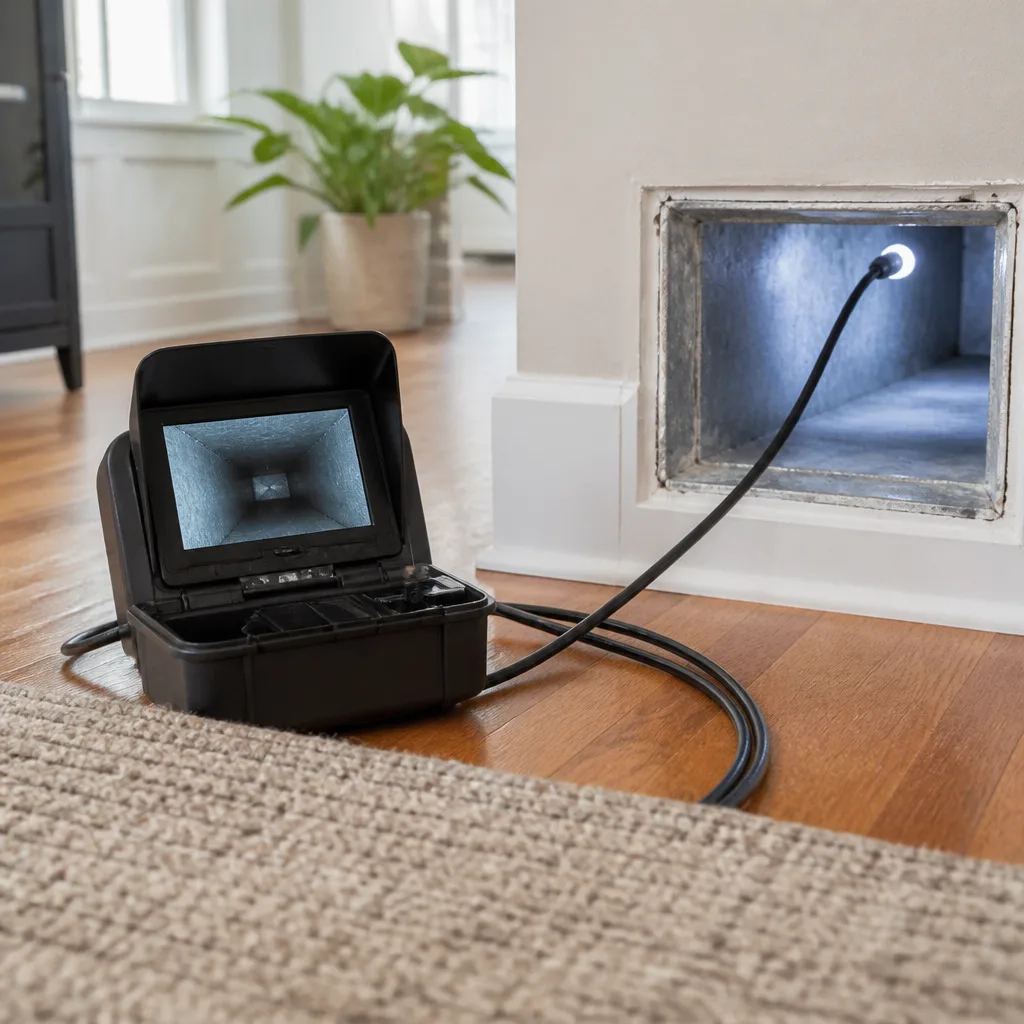
Whole-system duct and dryer vent check with before-and-after photos - you see exactly what came out of your vents
That "$99 whole-house special" is a bait ad - the real number appears once they are in your hallway, or the "clean" is a shop-vac at the register. We photograph the inside of your ducts before and after instead.
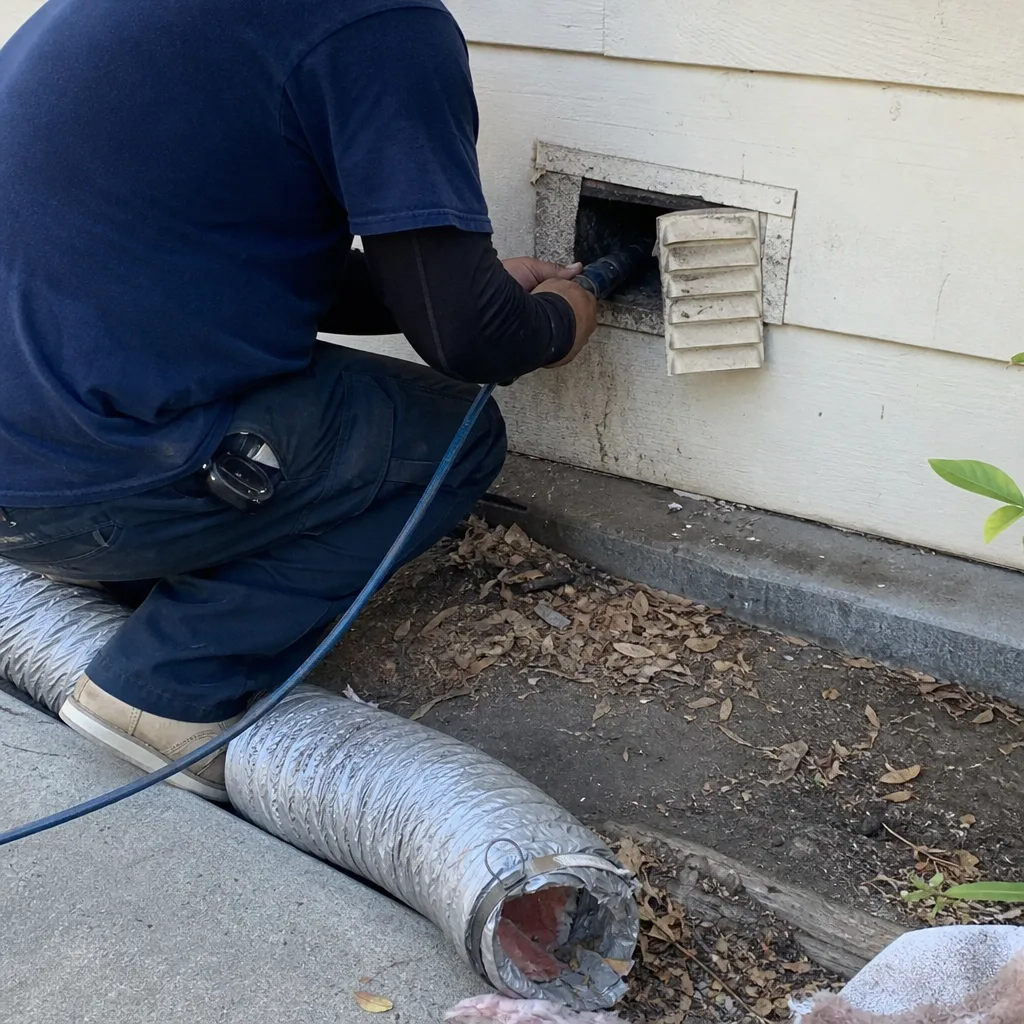 Before
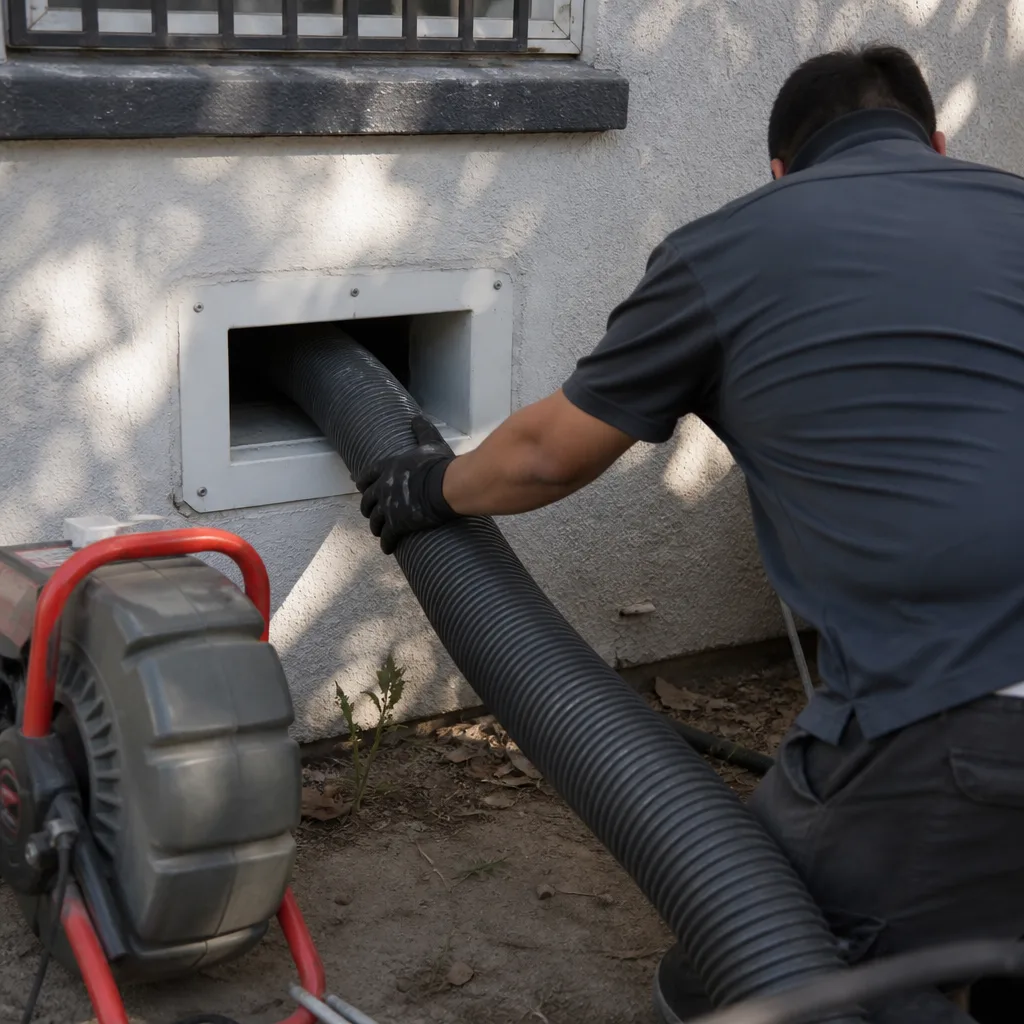 After
After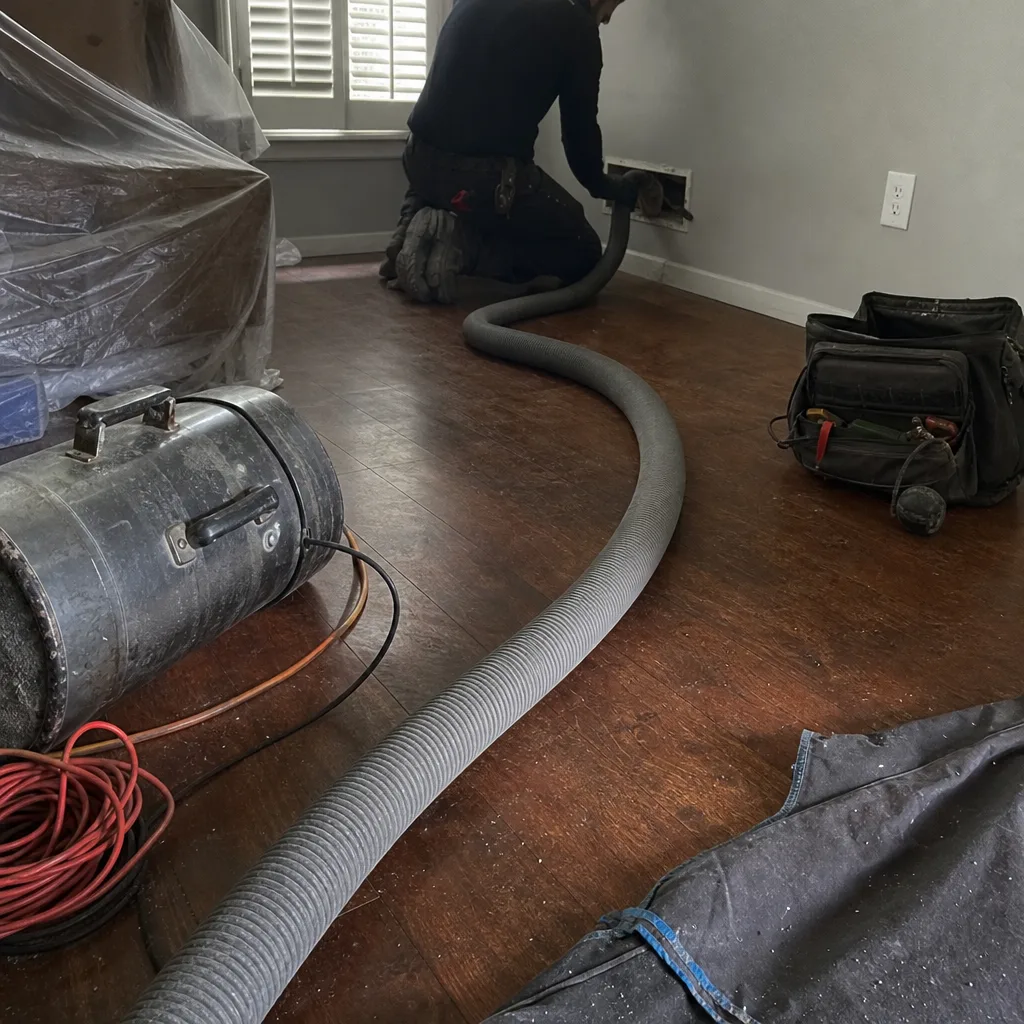 Before
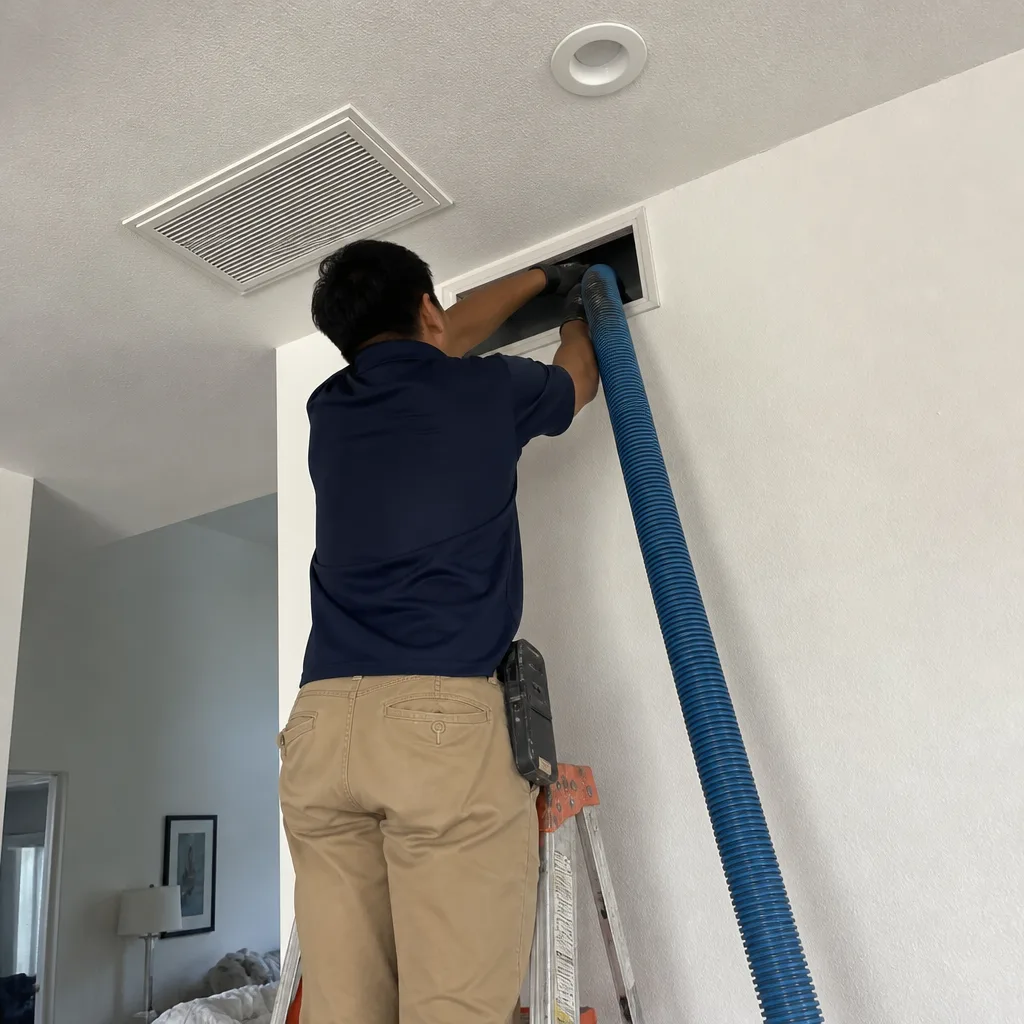 After
After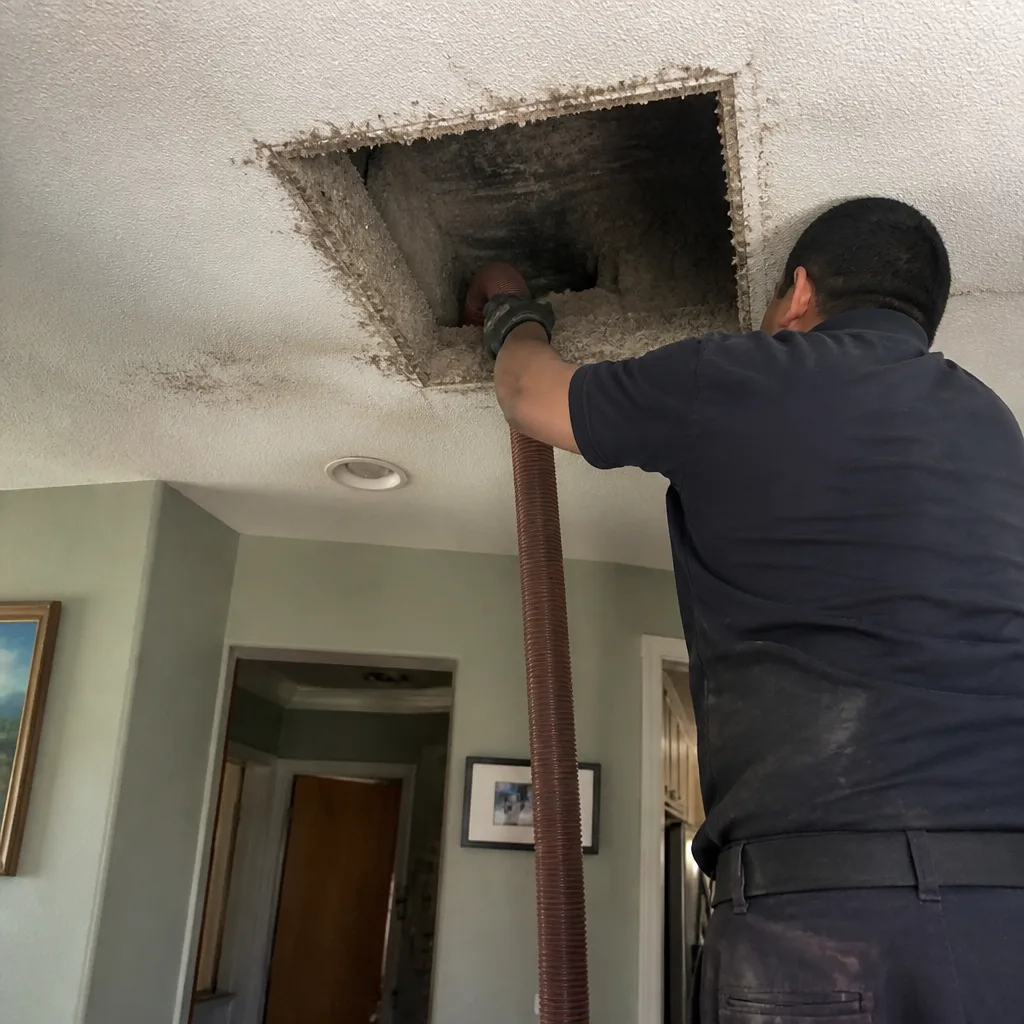 Before
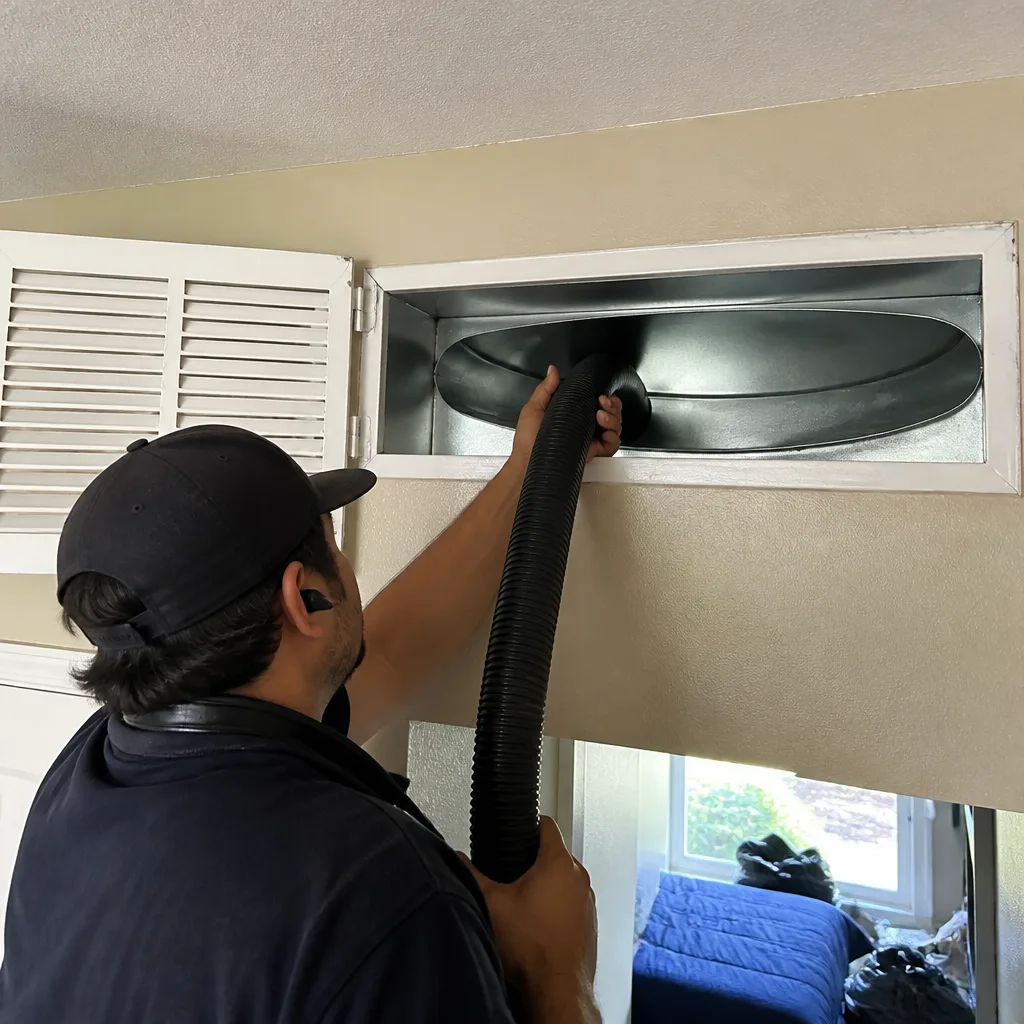 After
AfterAir Duct Cleaning Emergency Preparedness Guide for Los Angeles Homes
After the 2019 Saddleridge Fire, air quality monitors inside San Fernando Valley homes with windows sealed tight measured PM2.5 at hazardous levels for up to 11 straight days. The reason wasn’t gaps in weather stripping or open doors. It was HVAC systems cycling ash-loaded air through ductwork long after the smoke cleared outside. This guide covers what most Los Angeles emergency prep checklists skip entirely: how to protect, inspect, and restore your duct system before and after wildfires, earthquakes, and Santa Ana wind events. You’ll learn the 72-hour post-wildfire protocol, what to check after a quake, how to document damage for insurance, and what belongs in an emergency HVAC kit.
Quick Answer
Air duct cleaning after a wildfire in Los Angeles typically costs $450 to $900 for a standard single-family home, and most homes within 10 miles of a burn zone need it within 30 days to prevent weeks of recirculated ash. Before any cleaning happens, shut your HVAC off during active smoke events, upgrade to a MERV-13 filter, and document duct condition with timestamped photos for any insurance claim. Proper post-event duct cleaning removes the fine particulate that standard filter changes cannot.
Table of Contents
- The 72-Hour Post-Wildfire HVAC Protocol
- How to Pre-Position Your Home Before a Wildfire Watch
- Post-Earthquake Duct Checklist: What Flex Disconnections Look Like
- Documenting Duct Damage for a California Insurance Claim
- Building an Emergency HVAC Kit
- What Professional Duct Cleaning Actually Does After an Event
- Common Mistakes to Avoid
- When to Call a Professional
- Frequently Asked Questions
- The Bottom Line
The 72-Hour Post-Wildfire HVAC Protocol
Wildfire smoke in Los Angeles doesn’t behave like ordinary dust. The particulates are fine enough to pass through standard fiberglass filters, and they carry oils and resins that coat duct interiors. What you do in the first three days after a nearby burn determines whether your system recovers or becomes a long-term distribution network for ash.
Here’s the protocol we recommend for Los Angeles homeowners, based on what we’ve seen across the San Fernando Valley, Santa Clarita, and the foothill communities after major fire events:
- First 24 hours: Shut the system off completely. If you’re within 10 miles of an active burn or visible smoke is present, running your HVAC means pulling ash directly into the return ducts. Close all registers and set the thermostat to “off,” not “auto.”
- 24 to 48 hours: Switch to fan-only mode only if you’ve installed a MERV-13 or higher filter. Fan-only circulation without cooling or heating pulls air across the filter without conditioning it. This helps scrub indoor air, but only works if the filter can actually capture fine particulates. A standard MERV-8 fiberglass filter won’t do much.
- 48 to 72 hours: Inspect before resuming normal operation. Remove the filter and look at the return side. If you see gray or black streaking on the filter frame, the blower motor, or the visible duct interior, that’s ash. Don’t run the system until a professional cleaning is done. If the filter looks clean and outdoor air quality has returned to moderate or better, you can resume normal operation, but plan for a duct inspection within two weeks.
One thing that surprises homeowners: ash settles inside ducts even when the system never runs. Ductwork isn’t airtight, especially in older Los Angeles homes with original 1970s or 1980s sheet metal. Negative pressure in attics pulls ambient air through seam gaps, and when the outdoor air is loaded with smoke, the duct interior gets coated passively. So “we never turned it on” doesn’t mean the ducts are clean.
How to Pre-Position Your Home Before a Wildfire Watch
The best time to deal with wildfire smoke in Los Angeles is before the smoke arrives. When the Santa Anas start blowing and Cal Fire issues a red flag warning, you want three things already in place.
1. A MERV-13 filter installed and ready.
MERV-13 is the minimum rating that captures smoke particulates effectively. Standard pleated filters run MERV-8 to MERV-11, which catch pollen and dust but let fine ash through. A MERV-13 filter costs $18 to $35 for most common sizes and is available at any Los Angeles hardware store. Honeywell makes several MERV-13 options that fit standard 1-inch filter slots without modification. If you have a thicker 4-inch media cabinet, Aprilaire makes MERV-13 and MERV-16 replacements that slide right in.
2. Return-air sealing tape.
Your return registers pull air from living spaces into the duct system. If the register boots aren’t sealed well to the drywall, the return will draw air from wall cavities and attics during smoke events, bypassing the filter entirely. Silver foil tape, not duct tape, is what you want. A $12 roll gives you enough to seal every return register in a typical 2,000 square foot Los Angeles home. This is a 30-minute job that pays off during every fire season.
3. An Aprilaire whole-home air cleaner as a pre-event upgrade.
This is the upgrade we recommend for homeowners in high-exposure zones: Porter Ranch, Sylmar, Tujunga, Sunland, and anywhere in the 210 corridor that catches smoke from the Angeles National Forest. An Aprilaire cabinet-mounted unit installs at the return plenum and handles MERV-16 equivalent filtration without the airflow restriction of a thick filter. Installed cost in Los Angeles runs $850 to $1,400 depending on duct configuration. If you’re in a fire-prone area, it’s the single most effective pre-positioning upgrade available.
Pre-positioning isn’t just about equipment. It’s about having a written shutdown procedure that every household member knows. Tape it next to the thermostat: “If smoke is visible or you smell it inside, set thermostat to OFF. Do not run fan. Close all registers.” That one sheet of paper prevents the most common mistake we see after every LA fire event.
Post-Earthquake Duct Checklist: What Flex Disconnections Look Like
Los Angeles homeowners focus on visible earthquake damage: cracked stucco, broken windows, toppled water heaters. But ductwork takes a beating during significant seismic events, and the damage is almost always hidden in attics and crawlspaces.
The first thing to check after a 4.5 magnitude or higher quake is flex duct connections. Flex duct is the accordion-style, foil-wrapped tubing that connects rigid trunk lines to individual room registers. It’s held in place with plastic zip ties or metal band clamps at each end. During shaking, those connections can slip, tear, or separate entirely.
Here’s the post-earthquake checklist, in order:
- Turn the system off at the breaker. You don’t want the blower pulling debris from a compromised duct run into the rest of the system.
- Do a visual check of accessible ductwork. If you have an attic access hatch, take a flashlight and look at the flex runs. You’re checking for disconnected ends (visible gap between the flex and the metal collar), torn foil (looks like shredded silver material), or collapsed sections where support straps snapped.
- Listen during a test run. After you’ve restored power, run the fan only. A disconnected duct sounds like air rushing where it shouldn’t be, or you’ll feel weak airflow at specific registers while others blow strong.
- Check crawlspace runs before running heat. Disconnected ducts in a crawlspace pull dirt, rodent debris, and moisture directly into the system. If you smell musty air coming from registers after a quake, that’s a likely culprit.
- Document everything you find with photos. Before-and-after documentation matters for insurance. More on that below.
We’ve repaired flex disconnections in every Los Angeles neighborhood we serve after quakes, but the worst cases are consistently in older homes along the 405 corridor where original duct boots were installed with duct tape that failed decades ago and wasn’t caught until a shake finished the job.
Documenting Duct Damage for a California Insurance Claim
California insurers are tightening requirements for smoke and ash damage claims. The days of a vague “smoke damage throughout home” line item are over. Adjusters now want timestamped photo evidence, professional documentation, and itemized scope-of-work reports.
What adjusters actually look for:
- Before-and-after photos of the same duct sections. Timestamped photos of the return side, the filter, and at least three supply registers before cleaning, then the same locations after. A professional duct cleaning company in Los Angeles should provide these as part of the job, not as an add-on. Our technicians capture before-and-after photo proof of every section cleaned, which is what Air Duct Cleaning in Los Angeles should always include.
- Filter condition documentation. The filter is ground zero for ash. Photograph it against a white background to show discoloration. Save the filter in a sealed bag. An adjuster may want to see it.
- A written assessment that ties the damage to the event. “Ducts contained heavy ash accumulation consistent with the Saddleridge Fire smoke event” is a claim-friendly statement. “Ducts were dirty” is not.
- Receipts for pre-event preparation. If you purchased MERV-13 filters or had an Aprilaire unit installed before the fire season, those receipts demonstrate reasonable homeowner diligence, which adjusters view favorably.
What gets denied: claims without photo documentation, claims filed more than 60 days after the event without a documented reason for delay, and claims where the sole evidence is “the ducts look dirty.” California homeowners should also know that standard homeowner policies may limit smoke remediation coverage to specific dollar amounts, typically $5,000 to $25,000 depending on the carrier. Duct cleaning costs are usually covered within that limit when properly documented.
Building an Emergency HVAC Kit
Most Los Angeles emergency kits cover water, food, and batteries. Almost none cover the HVAC system, which is the single largest air filtration system in your home. Add this kit to your earthquake and wildfire supplies:
- Two MERV-13 filters in your system’s exact size. Write the size on the outside of the box in permanent marker. When smoke or ash hits, you don’t want to be reading fine print in a dark garage.
- One roll of silver foil tape. For sealing return registers and temporary duct patches. Not duct tape. Duct tape fails in heat and leaves residue that makes permanent repair harder.
- A written HVAC shutdown procedure. One page, laminated or in a ziplock bag, taped next to the thermostat. It says: how to turn the system off at the thermostat, how to turn it off at the breaker, and when to switch to fan-only mode with the MERV-13 installed.
- A headlamp and a phone with photo capability. For post-event duct inspection in dark attics and crawlspaces. Your phone camera is the single most important insurance documentation tool you own.
- The phone number of your HVAC professional. In a city of 10 million people, the companies that answer live go first. We answer calls 24/7 at (737) 727-2314, no voicemail loops.
This entire kit costs under $75 and takes an afternoon to assemble. Store it with your earthquake supplies, and review the shutdown procedure when you test smoke alarms.
What Professional Duct Cleaning Actually Does After an Event
Air duct cleaning after a wildfire or major dust event is not a filter change. It’s a mechanical removal process that extracts particulate matter from the entire duct system. Understanding what the process involves helps you evaluate whether a Los Angeles duct cleaning company is doing real work.
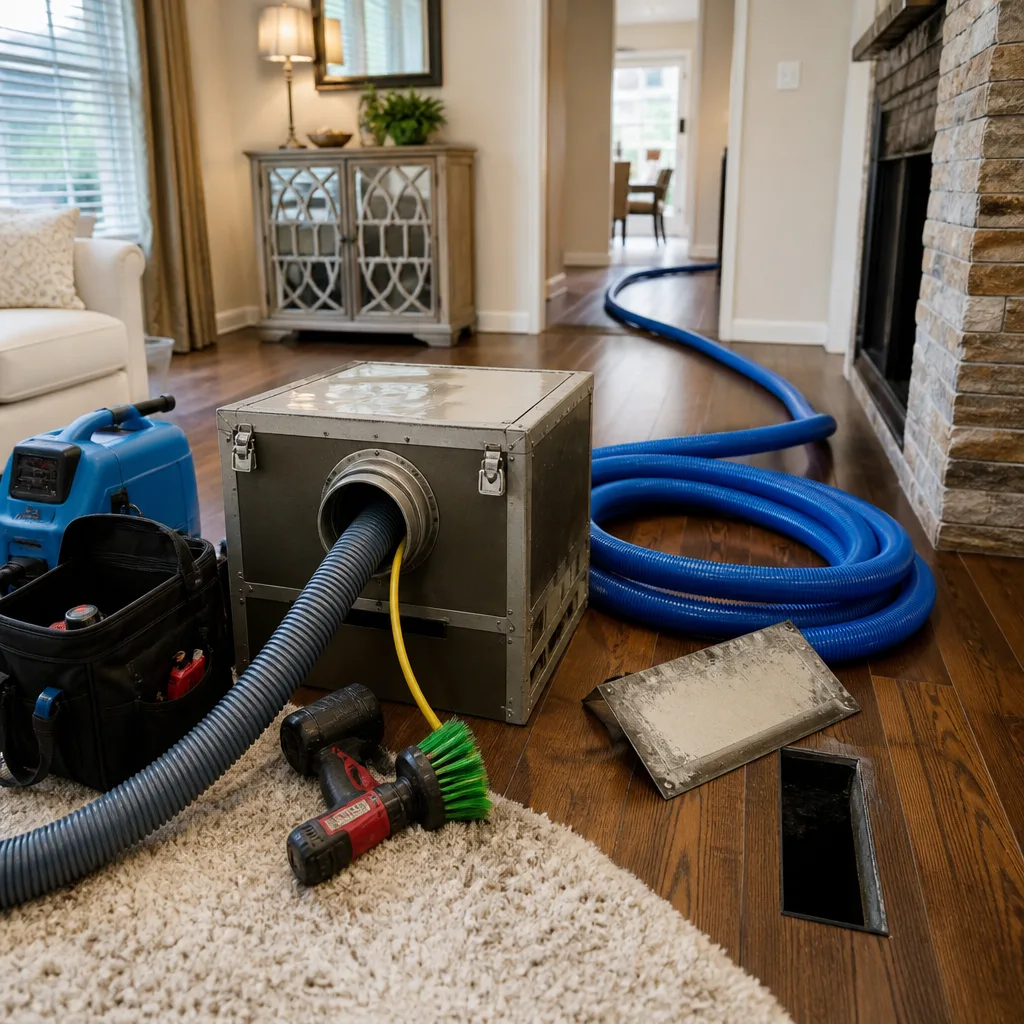
The standard professional approach uses negative-pressure extraction. That means a high-powered vacuum creates suction at the trunk line while rotary brushes agitate the duct walls to loosen debris. The loosened material goes straight into the vacuum, not back into your living room. The brands matter here: Nikro HEPA-rated vacuums filter to 0.3 microns, which is the particle size range where wildfire ash lives. Abatement Technologies containment units create negative air pressure in the work area, which prevents cross-contamination during the cleaning process. Rotobrush rotary brush systems do the mechanical agitation. Cheaper operations use truck-mounted shop vacs with standard filters, which is what you want to avoid.
A full system cleaning in Los Angeles typically runs 3 to 6 hours for a standard home and costs $450 to $900. That range covers the return side, supply side, trunk lines, all branch runs, and the main trunk. It should also include the blower compartment and the evaporator coil if accessible. Every register gets before-and-after documentation.
After the cleaning, the HVAC system should be reassembled and tested for proper airflow at every register. This is also when a good technician will flag disconnected flex runs, crushed ducts, or failing seals that the cleaning exposed.
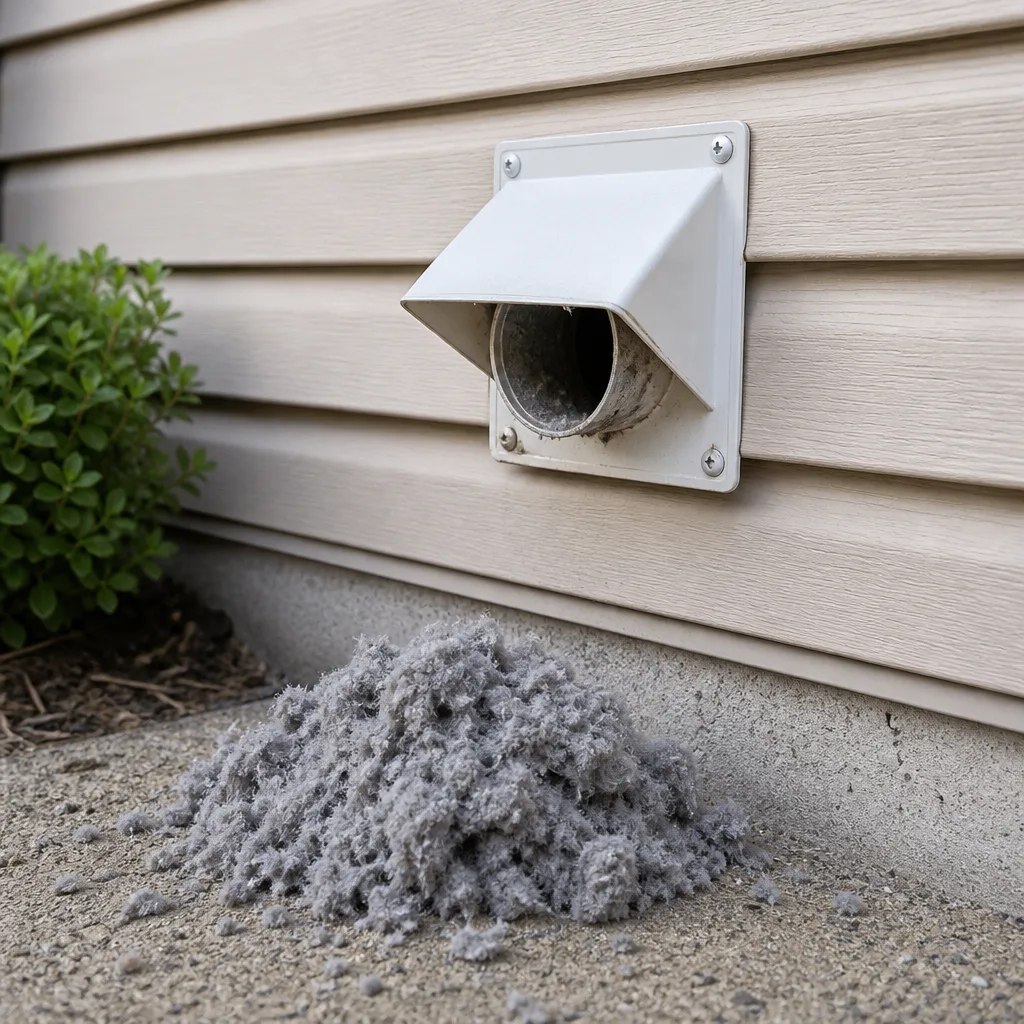
For homes that also need dryer vent attention after an event, we handle Dryer Vent Cleaning in Los Angeles as a separate service because dryer vents require their own tooling and access approach. Similarly, HVAC Cleaning in Los Angeles covers the full mechanical system beyond just the ducts: coils, blower, drain pan, and cabinet interior.
Common Mistakes to Avoid
- Running the system during a smoke event “just to circulate air.” Your HVAC system is a distribution network. Circulating air means circulating ash. Shut it off.
- Relying on a MERV-8 filter during fire season. MERV-8 catches pollen and lint. It does nothing for fine smoke particulates. Upgrade to MERV-13 before the red flag warning, not after.
- Skipping documentation and hoping insurance will “figure it out.” California adjusters deny undocumented smoke claims routinely. Timestamped photos of filter, returns, and registers are worth more than a paragraph of description.
- Ignoring the system after an earthquake because “it seems to work.” Disconnected flex ducts in attics don’t announce themselves. Your system will run fine while pulling in attic air, and you’ll pay for it in energy costs and contamination for months.
- Hiring based on the lowest quote without asking about equipment. A $199 whole-house duct cleaning in Los Angeles means someone is doing a filter change and waving a camera around. Real cleaning takes hours and professional equipment. The per-vent pricing model is a known bait-and-switch. Get a whole-system flat price in writing before work starts.
- Waiting until the smoke clears to schedule a duct inspection. After major LA fire events, the best duct cleaning companies book out 2 to 4 weeks. Pre-scheduling for a post-event inspection when a red flag warning is issued puts you ahead of the rush.
When to Call a Professional
Call a professional if you see visible ash streaking on your filter or return registers after a Los Angeles fire event, if you smell smoke inside your home weeks after outdoor air has cleared, or if you’ve had an earthquake and feel weak airflow at specific registers. Post-event duct cleaning is not a DIY job. The equipment and containment required to do it safely is professional-grade. Cardinal Air Duct Cleaning home services the entire Los Angeles area and provides free estimates. Call (737) 727-2314 and a live person answers, day or night.
Frequently Asked Questions
Post-wildfire air duct cleaning in Los Angeles typically costs $450 to $900 for a standard single-family home, depending on system size, number of registers, and the extent of ash accumulation. This is a whole-system flat price, not a per-vent quote. Call (737) 727-2314 for an exact written estimate specific to your home. Estimates are free.
Cheaper quotes almost always mean a different service: a filter change and a quick blast of compressed air instead of full negative-pressure extraction with rotary brush agitation. The per-vent pricing model is designed to start low and climb once the technician is inside your home. Real cleaning with professional equipment like Nikro HEPA vacuums and Rotobrush systems takes hours and costs accordingly.
You should receive before-and-after photo documentation of every register and the main trunk line, timestamped and reviewable on your phone. At Cardinal Air Duct Cleaning, this is part of The Relay Standard: live trackable arrival, before-and-after photo proof, and a digital invoice you can pay from a link. If a company won’t show you photos of the work, the work didn’t happen.
For Los Angeles homes, every 3 to 5 years is the standard interval, but wildfire smoke events, earthquake-related duct disconnections, and Santa Ana dust storms can justify more frequent cleaning. If you live within 10 miles of a burn zone during a major fire event, schedule a duct inspection within 30 days regardless of your last cleaning.
No. A shop vac cannot generate the negative pressure needed to extract fine particulate from branch runs, and without proper containment, you’ll redistribute dust and ash throughout your home. Duct cleaning requires professional-grade equipment and proper sealing. This is a case where the tool matters as much as the technique.
Most California homeowner policies cover smoke remediation, including duct cleaning, when the damage is properly documented. Timestamped before-and-after photos, a saved ash-loaded filter, and a written professional assessment tying the duct condition to the specific fire event are what adjusters look for. Claims without documentation are routinely denied or reduced.
The Bottom Line
Your HVAC system is the largest air distribution network in your Los Angeles home, and emergency preparedness that ignores it leaves a gap the size of a return register. Pre-position with MERV-13 filters, return sealing, and a written shutdown procedure before fire season. Shut the system off during smoke events, run fan-only mode only with proper filtration, and document everything with timestamped photos. After a quake, check flex duct connections before running the system. When ash has entered the ducts, professional cleaning with negative-pressure extraction removes what filters cannot. See our more guides & resources for year-round HVAC protection. The $450 to $900 cost of post-event cleaning is modest compared to weeks of recirculated ash or a denied insurance claim from missing documentation.
Written by Omar Haddad, Owner at Cardinal Air Duct Cleaning, serving Los Angeles since 2005.