
Last updated October 9, 2026
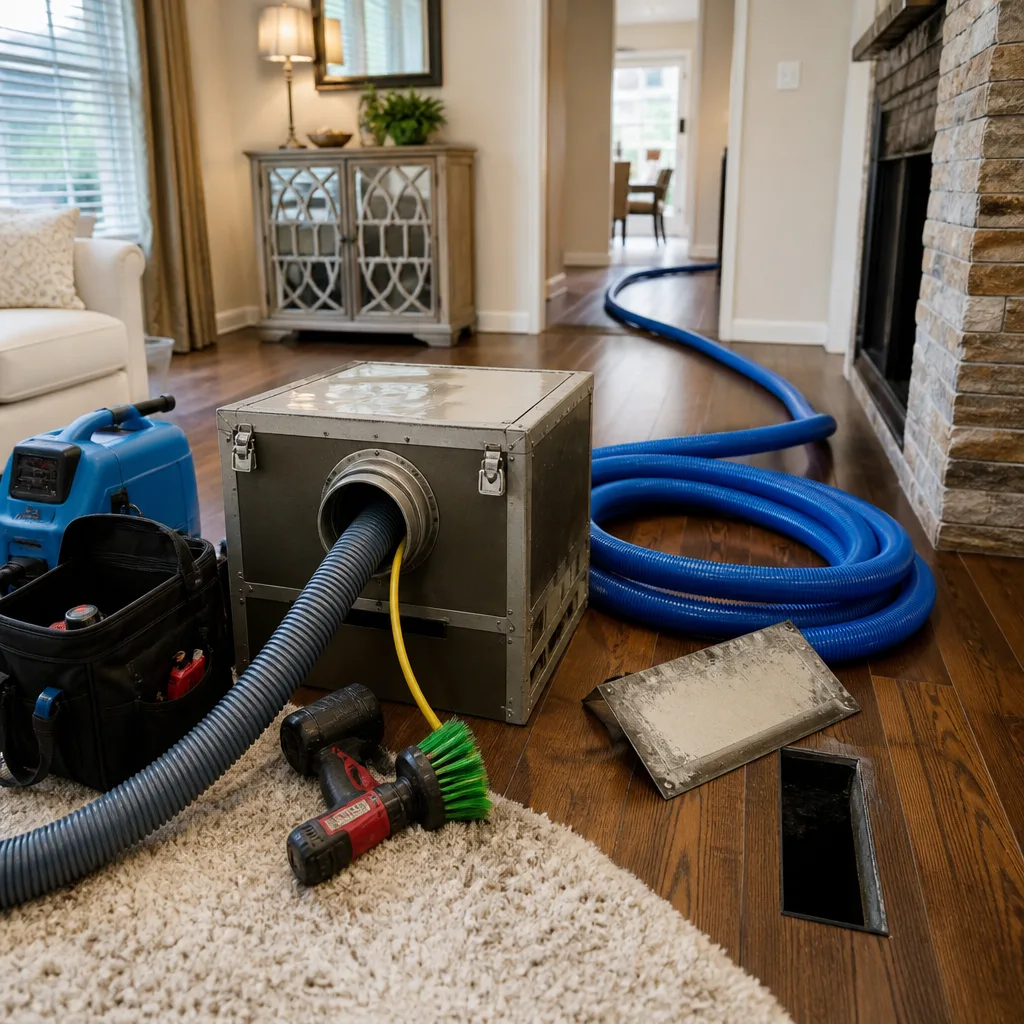
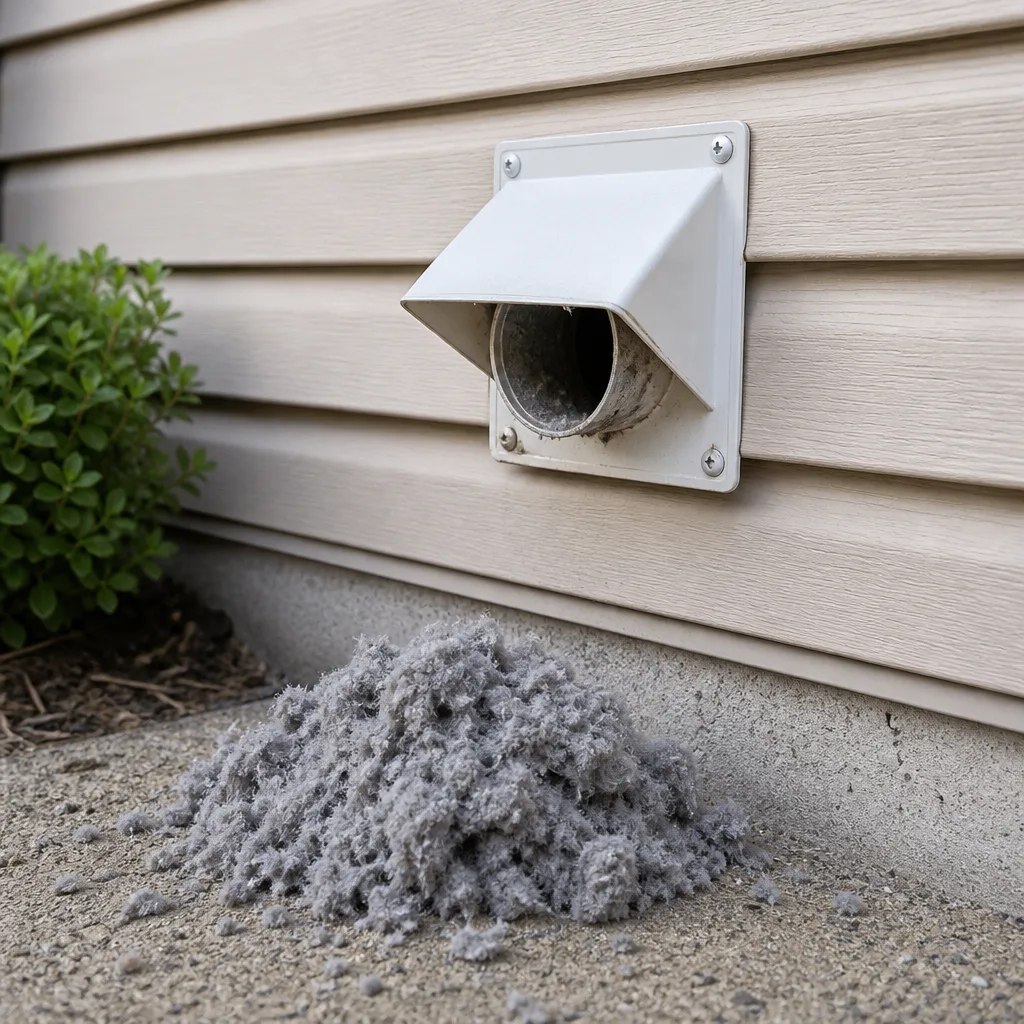
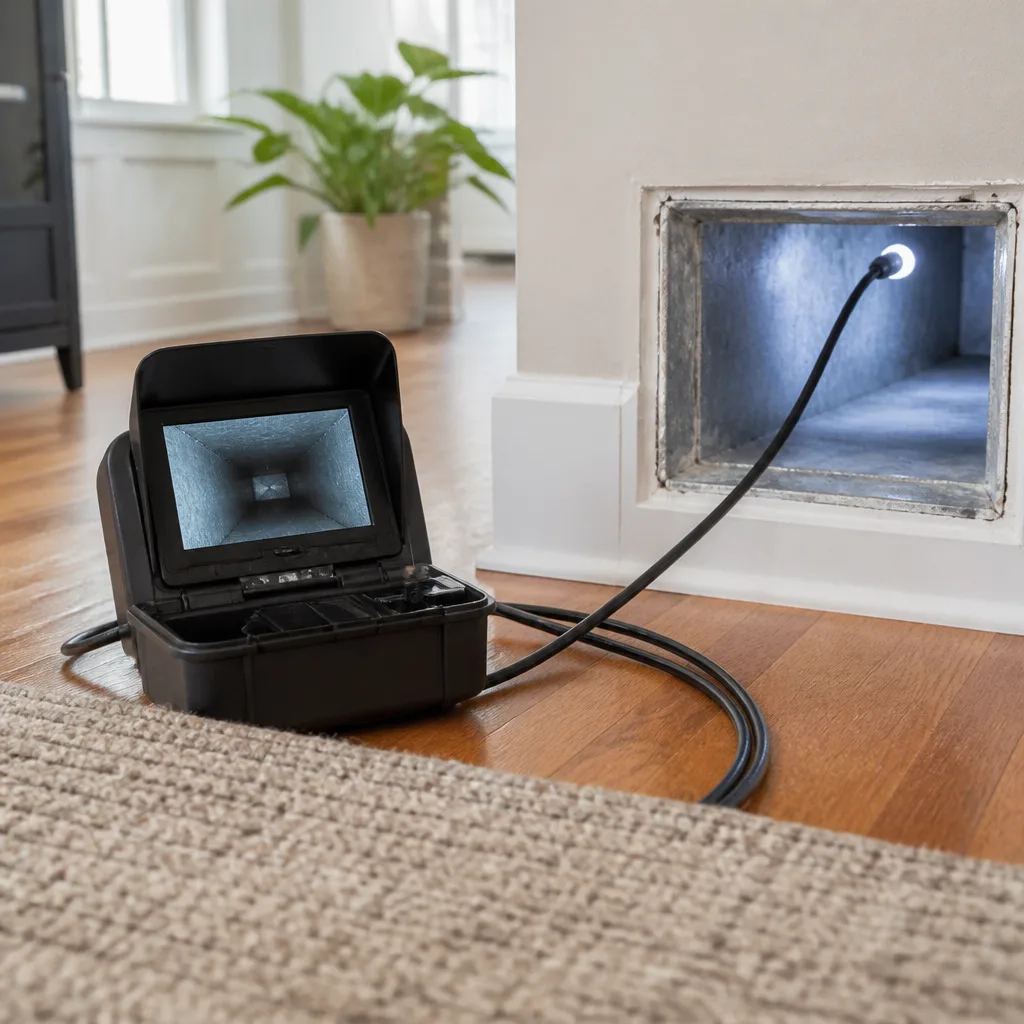
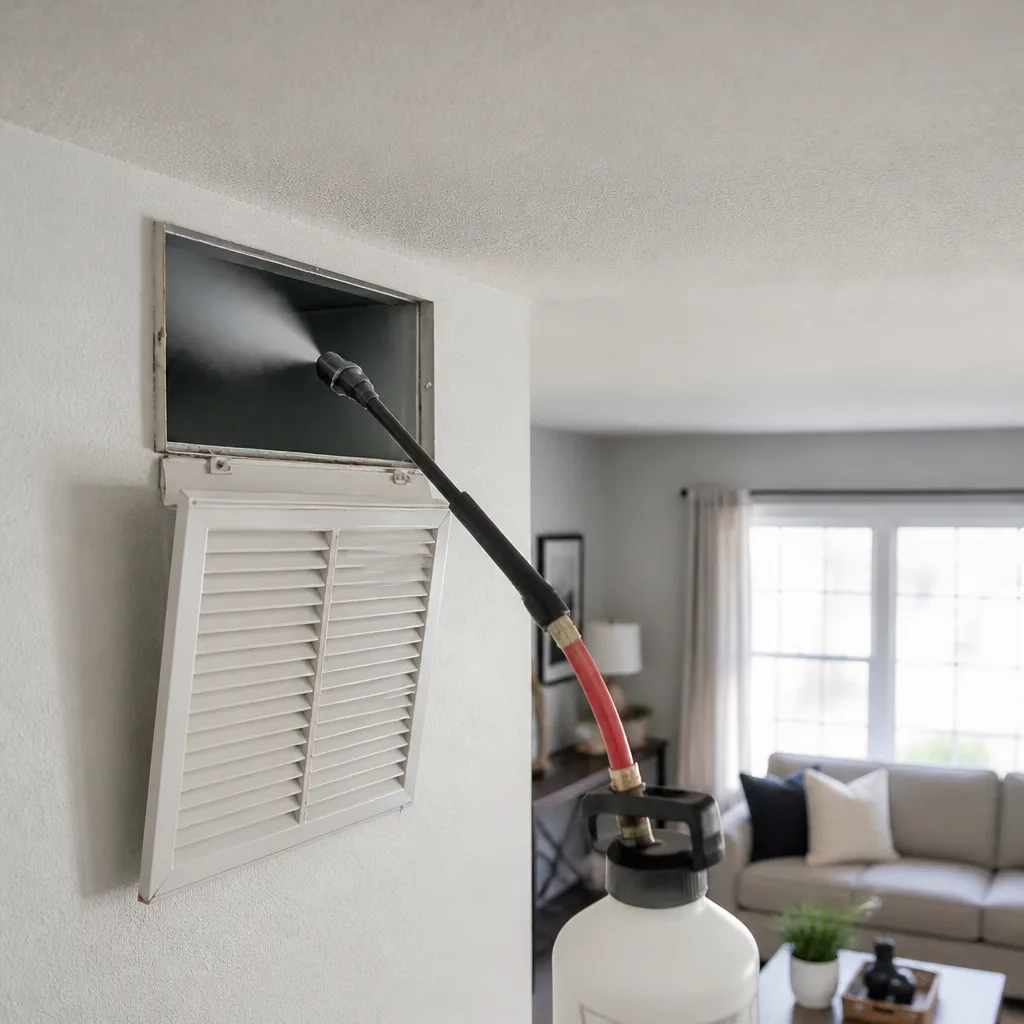
Whole-system duct and dryer vent check with before-and-after photos - you see exactly what came out of your vents
That "$99 whole-house special" is a bait ad - the real number appears once they are in your hallway, or the "clean" is a shop-vac at the register. We photograph the inside of your ducts before and after instead.
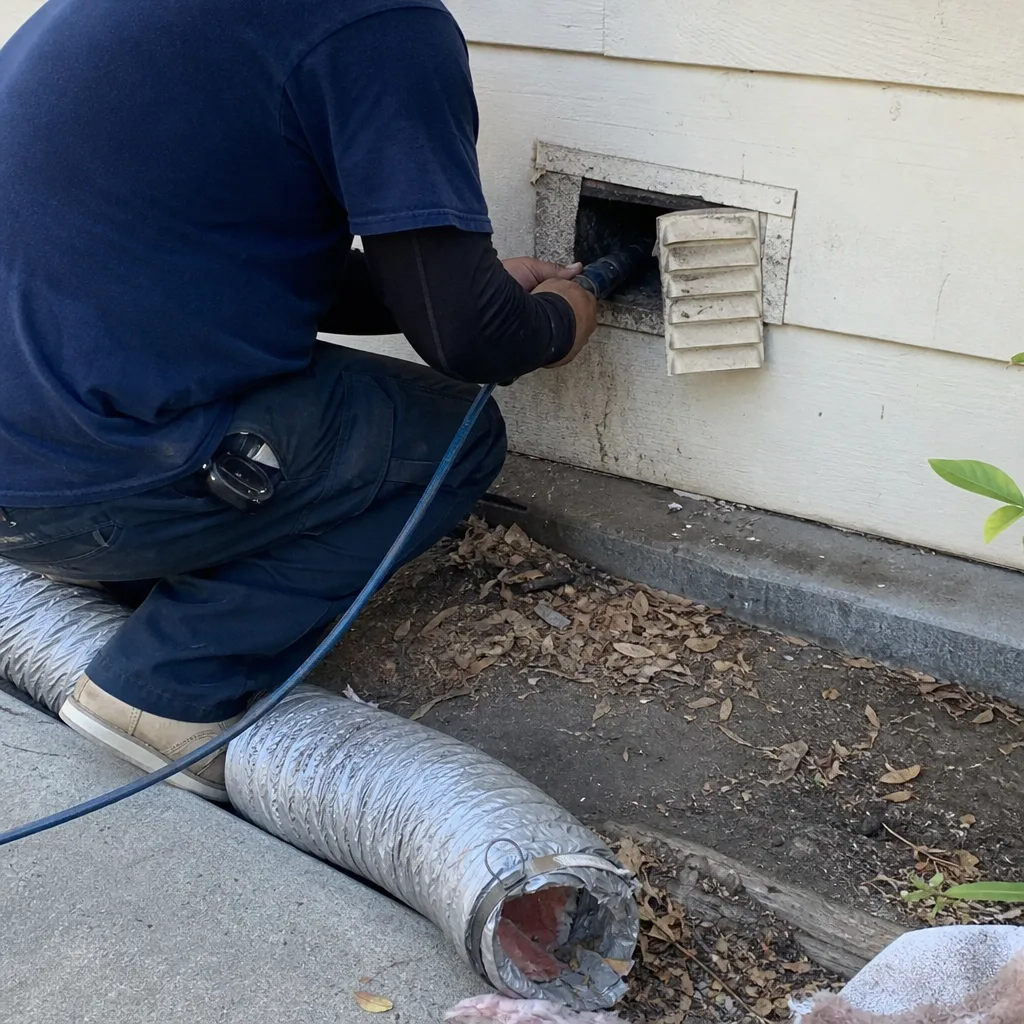 Before
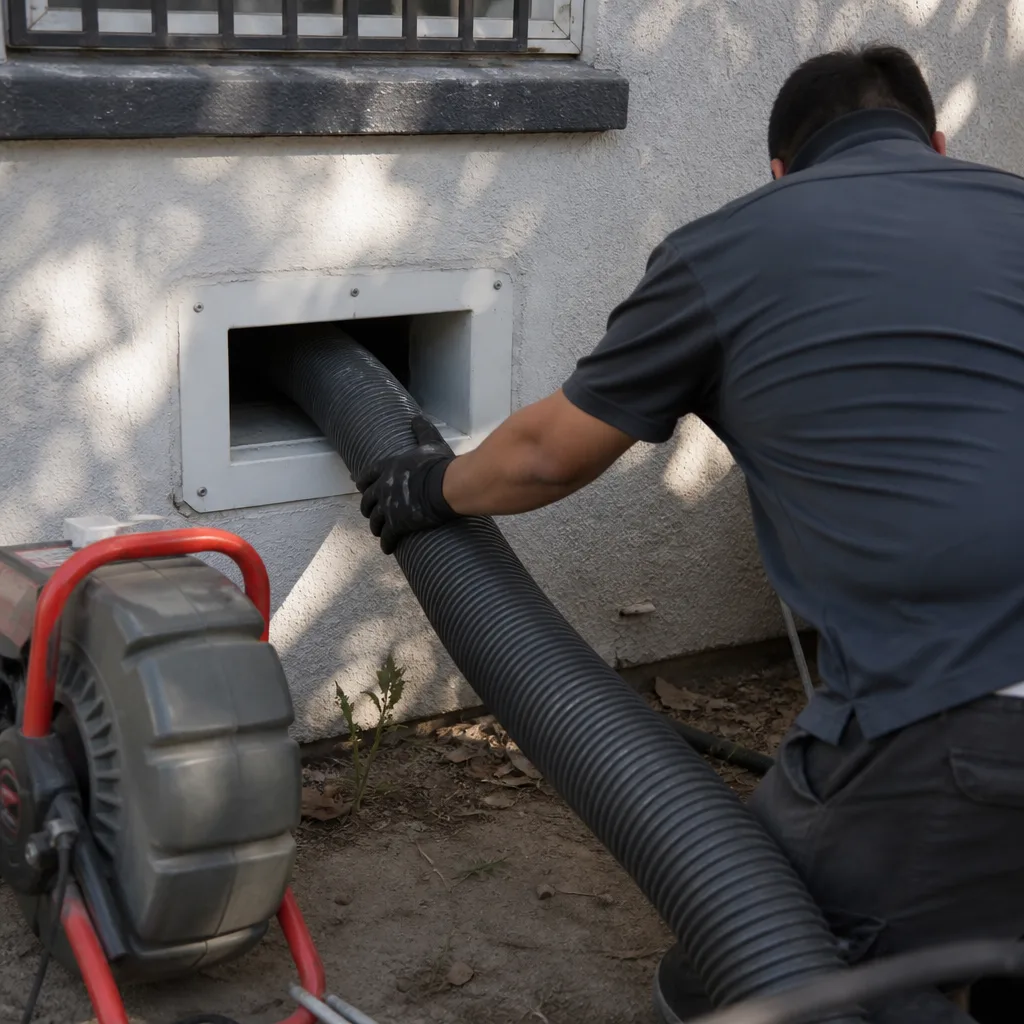 After
After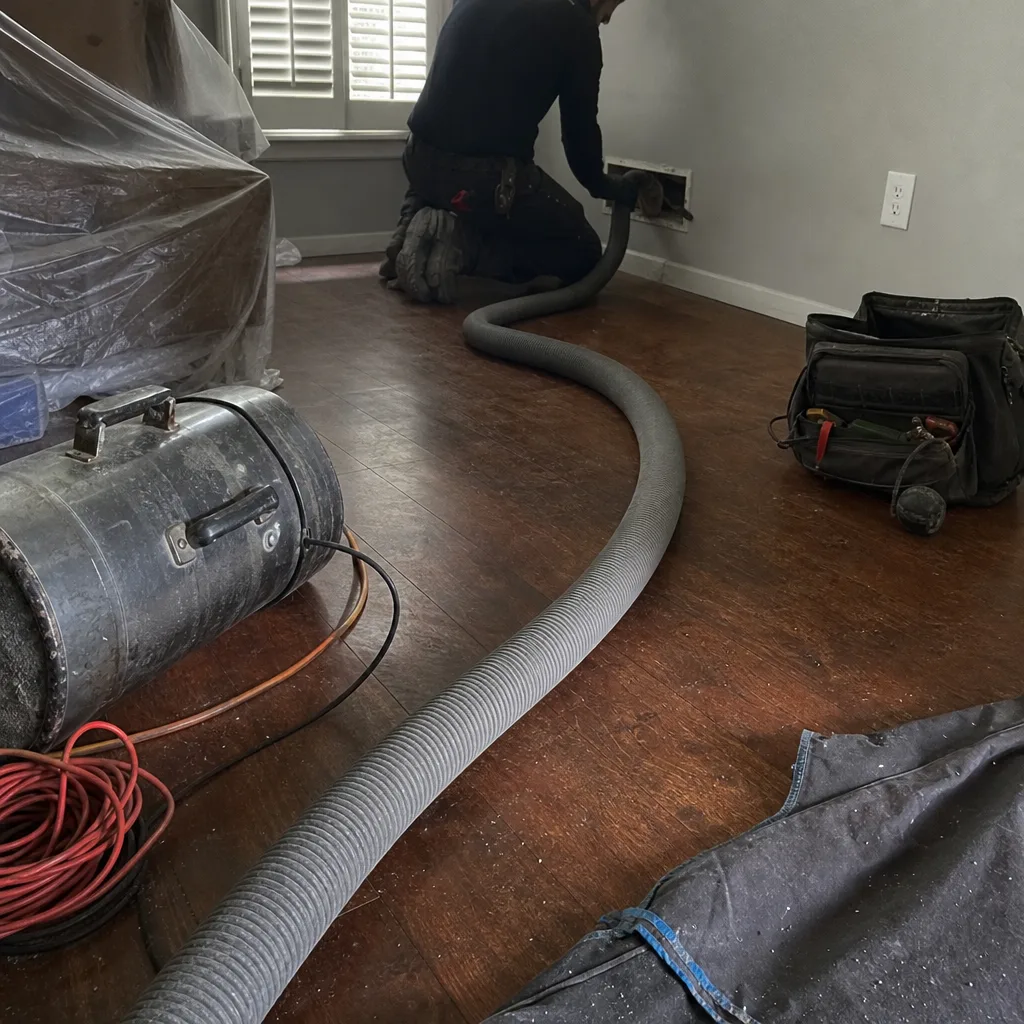 Before
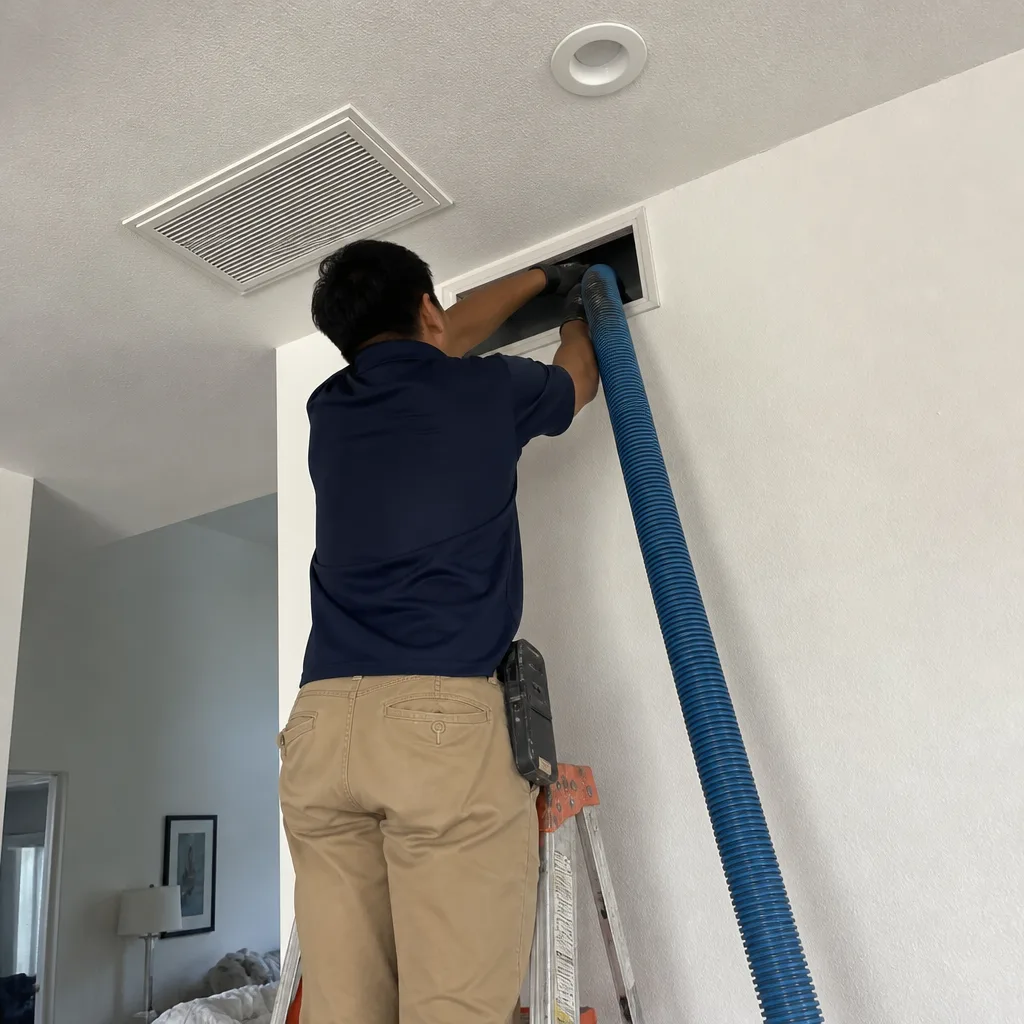 After
After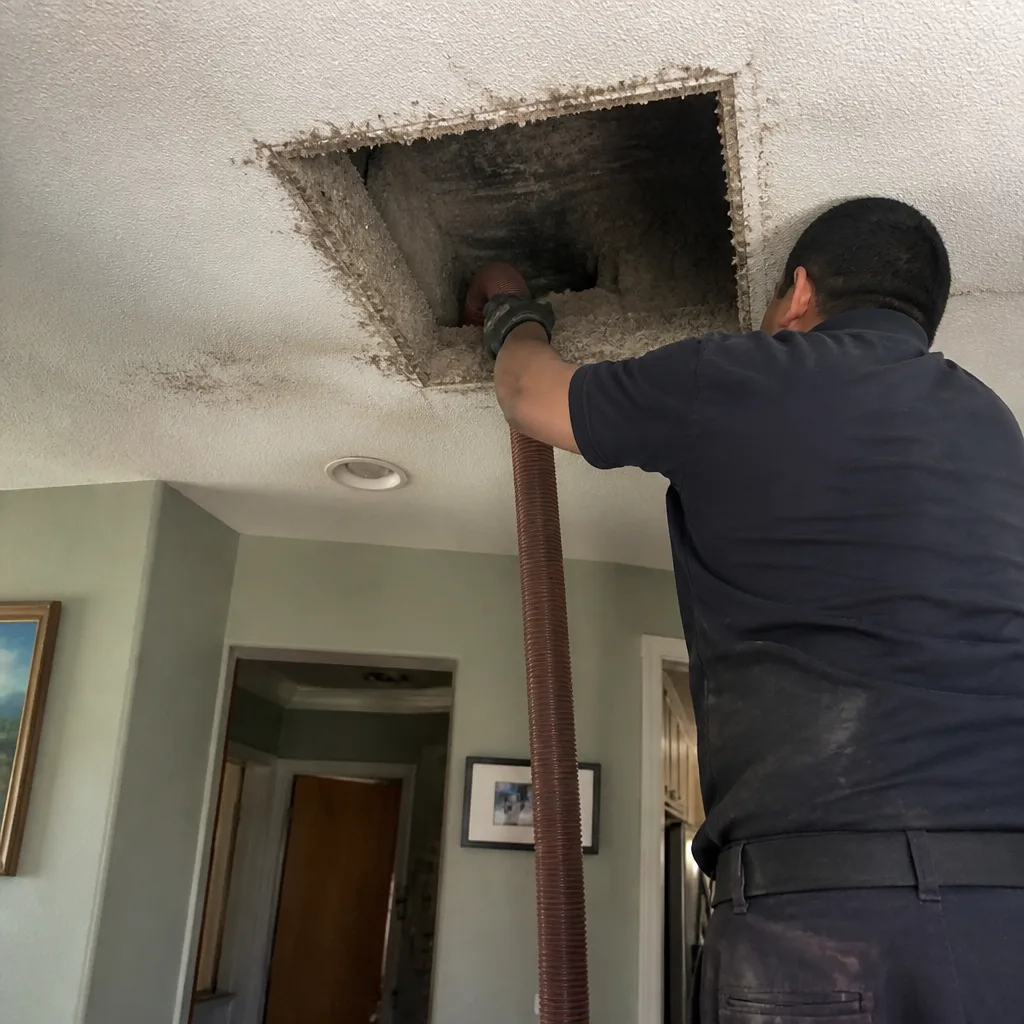 Before
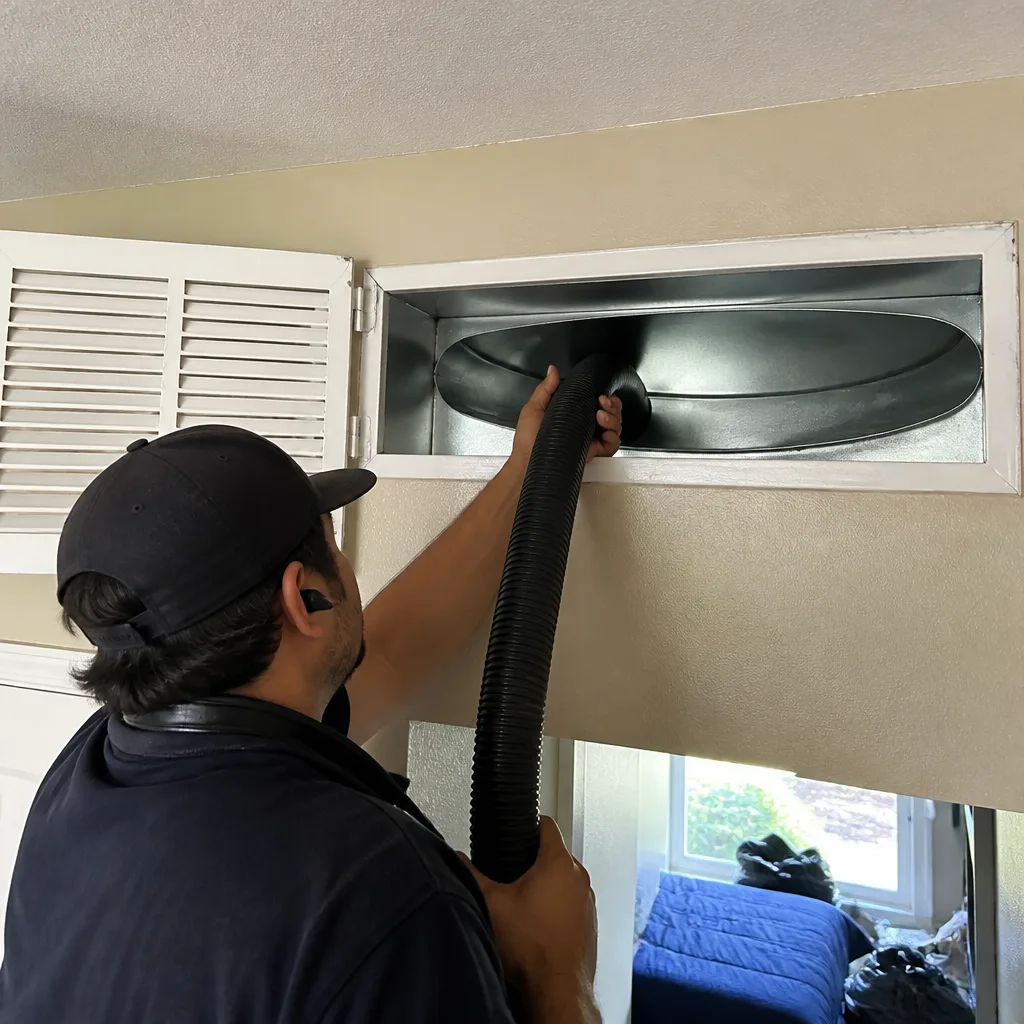 After
AfterAir Duct Cleaning Warning Signs: A Los Angeles Homeowner’s Reference Guide
Here’s a counterintuitive reality about your air ducts: by the time you see something wrong, the problem has usually been building for months. Los Angeles homes cycle their HVAC systems hard from April through October, pulling in a steady mix of desert dust, wildfire particulate, and urban smog. That mix settles, accumulates, and sometimes creates conditions you can actually smell. This guide assigns every common warning sign a severity level so you know exactly what to monitor, what to check yourself, and what warrants a call to a Los Angeles duct professional today.
Quick Answer
The most common air duct cleaning warning signs in Los Angeles homes are visible dust buildup at registers, a musty or burning odor when the HVAC runs, unexplained allergy symptoms indoors, and uneven airflow between rooms. If you see dark oily streaks or white fibrous material at vents, or if anyone in your home has respiratory symptoms that improve when you leave the house, schedule a professional evaluation. Most standard air duct cleanings in Los Angeles run $350 – $650 for a typical single-family home, depending on system size and contamination level.
Key Takeaways
- Not every warning sign means “clean your ducts today” – most fall into a monitor-or-schedule tier, not an emergency tier.
- Wildfire smoke, mold, and dust produce different smells and behave differently; learning to tell them apart saves you from unnecessary work or dangerous delay.
- Allergy symptoms that appear within 15 minutes of HVAC startup and clear when you leave home are the strongest single indicator of duct contamination.
- Visible material at registers carries meaning: dust bunnies differ from oily streaks, which differ from fibrous white growth.
- Older San Fernando Valley homes face a specific risk: popped flex duct connections after seismic movement, common in neighborhoods like Chatsworth, Reseda, and Valley Village.
Table of Contents
- The Three-Tier Triage System: Green, Yellow, Red
- The Smell Test: Wildfire Smoke vs. Mold vs. Dust
- Visible Debris at Registers: What You’re Actually Seeing
- The Allergy Timing Test: Your Body as a Duct Sensor
- Uneven Airflow and Pressure Imbalance
- The LA-Specific Structural Warning Sign: Popped Flex Ducts
- Common Mistakes to Avoid
- When to Call a Professional
- Frequently Asked Questions
- The Bottom Line
The Three-Tier Triage System: Green, Yellow, Red
Most duct cleaning articles hand you a list of eight or ten symptoms and leave you to guess which ones matter. That’s not useful. A thin layer of dust on your register grille is not the same emergency as a mold smell that worsens every time the AC kicks on. Here’s the triage system we use with Los Angeles homeowners, applied thousands of times across the Valley, Westside, and South Bay since 2005.
Green Tier: Monitor and Change Your Filter
Green signals are normal wear-and-tear. They do not justify a duct cleaning on their own, and any company that tells you otherwise is selling fear, not service.
- Light dust accumulation on register grilles. All Los Angeles homes collect dust. If the dust is light gray, powdery, and wipes away easily with a damp cloth, that’s your filter doing its job imperfectly, not a duct emergency.
- A brief dusty smell when the system first starts after months of disuse. The first heat wave of May in Los Angeles always brings this call. Dust settles in supply registers during spring. The first firing of the system blows it out. It clears within a few minutes and does not return.
- Slightly higher energy bill compared to the same month last year. Watch the trend. If your July bill is 8% higher than last July but your usage pattern is identical, that’s a Green flag: note it, check your filter, and monitor. It becomes Yellow if the trend persists for two consecutive months.
Green actions: check your filter every 30 days during peak cooling season, replace or clean it when you can no longer see light through it, and keep an eye on the symptom. That’s it.
Yellow Tier: Schedule Within 30 Days
Yellow signals mean something is accumulating in the duct system at a rate your filter cannot handle. You don’t need to stop running the HVAC today, but you should schedule an evaluation this month before the condition compounds.
- Dust reappears at registers within 48 hours of cleaning them. If you wipe down a register on Sunday and find the same amount of dust by Tuesday, the system is recirculating debris from inside the ductwork, not pulling new dust from outside.
- A persistent musty or stale smell that never quite goes away, even after the system runs for 10 minutes. A brief startup smell is Green. A smell that lingers throughout the cycle is Yellow.
- You find black or gray particles accumulating on the same register, in the same corner, every week. Consistent deposition in the same location suggests a localized accumulation point in the branch line feeding that register.
- Allergy symptoms indoors that respond to antihistamines but never fully clear. See the allergy timing test below for the full picture.
- Visible dust accumulation on the inside of supply vent covers (the side facing into the duct). This means the air moving through the system is carrying enough particulate to deposit on surfaces.
- Document what you’re seeing: take phone photos of the register and the debris.
- Check your filter and replace it if dirty; a clogged filter can mimic several Yellow-tier symptoms.
- Replace the filter, run the system for 24 hours, and re-check the symptom.
- If the symptom persists with a clean filter, schedule a professional evaluation.
Red Tier: Stop Running the HVAC and Call Today
Red signals indicate conditions that can actively harm your health or your equipment. In Los Angeles, where HVAC runs are long and consistent from June through October, a Red signal left unaddressed for a full summer becomes exponentially more expensive and more invasive to the home.
- White, gray, or black fibrous material growing on the inside of registers or visible inside the duct opening. This is not dust. Dust is granular and sits flat. Fibrous growth has structure – it looks like cotton, webbing, or velvet. It indicates active microbial colonization, and you need a professional assessment with containment, not a basic cleaning.
- Dark, oily streaks radiating from register edges. This pattern indicates particulate so fine and so sticky that it is literally being blown onto surfaces and adhering. In Los Angeles, we see this most often in homes near freeways and industrial corridors: the 405, the 110, the 710, and the warehouse districts of Vernon and Commerce. This is a combustion-particle and petroleum-residue signature.
- A smell that triggers respiratory distress, wheezing, or asthma symptoms in anyone in the household. Stop running the system. Open windows if outdoor air quality allows. Call a professional.
- You see rodent droppings or hear activity in the ductwork. This is a Red signal for both duct cleaning and pest remediation. Los Angeles attics are prime rodent territory in winter, and the damage they leave behind inside duct runs is a significant contamination source.
- Water staining or rust on the exterior of the air handler, or standing water in the drain pan. Moisture inside the system is the precursor to every serious mold problem. Fix the moisture source first, then address the duct contamination.
If you’re in the Red tier, do not attempt to clean the contamination yourself. Disturbing fibrous growth without proper negative-pressure containment – that means the loosened debris goes straight into a sealed vacuum, not back into your living room – spreads spores through the entire home. We run Nikro HEPA-rated extraction units and Abatement Technologies containment systems for exactly this reason. A shop vac is not a substitute and can make the problem dramatically worse.
The Smell Test: Wildfire Smoke vs. Mold vs. Dust
Los Angeles homeowners face a unique diagnostic challenge that homeowners in most other cities never encounter: three distinct odor sources that all present as “something smells wrong from my vents.” Here’s how to separate them.
Wildfire Smoke Infiltration
Smell profile: Sharp, acrid, campfire-like. It stings the nose and sometimes the eyes. Think burning wood mixed with a chemical undertone, especially if the fire is burning structures, not just vegetation.
Timing: Appears during active wildfire events in the Los Angeles region. Worsens when outdoor air quality index (AQI) readings spike above 100. Does not correlate with HVAC start or stop times; it is present because outdoor air is contaminated, not because your ducts are dirty.
Vent location: Most intense at return grilles (where air is pulled in), because the return side is drawing smoky outdoor air into the system. The smoke ingresses through the home’s passive ventilation, not through the supply side.
What to do: This is an outdoor air quality problem, not a duct cleaning problem. Upgrade to a MERV-13 filter during fire season, run your system on fan-on mode to filter indoor air continuously, and consider a standalone HEPA purifier for the most-used rooms. Once the smoke clears, if the smell persists for more than a week, then the smoke particulate has settled into the ductwork and a cleaning becomes the right call.
Mold or Microbial Growth
Smell profile: Damp, earthy, stale. Like old carpet that never dried, or a basement that exists in a city with no basements. It is persistent and does not spike; it sits in the air at a constant low level.
Timing: Worsens when the HVAC runs. This is the key differentiator. The smell intensifies within minutes of the system starting and fades slowly when it stops, because the air passing over the contaminated surface is actively volatilizing the microbial compounds.
Vent location: Strongest at the supply registers (where conditioned air blows out), because the contamination is inside the duct system or at the evaporator coil, and the air leaving the system carries the signature with it.
What to do: Yellow or Red tier, depending on severity. Mild, intermittent mustiness with no visible growth is Yellow: schedule within 30 days. Strong smell with visible fibrous material or dark staining is Red: stop running the system and call a professional today. Mold remediation in ducts requires containment. This is not a “spray some bleach in the vent” situation, and anyone who tells you otherwise is giving you advice that will actively make the problem worse.
Simple Dust Odor
Smell profile: Dry, flat, slightly warm. Like the air from an old car heater on the first cold morning of winter. Not sharp, not damp, not chemical.
Timing: Brief. Appears when the system starts and clears within two to five minutes. This is the smell of settled dust being blown off hot surfaces – the heat exchanger or electric coils – after the system has been idle.
Vent location: Noticeable at the supply registers, but faint and diffuse, not concentrated.
What to do: Green tier. Change your filter, and if the smell persists at startup despite a clean filter, a basic duct cleaning removes the accumulated dust that feeds it. Our Air Duct Cleaning in Los Angeles service handles exactly this scenario for thousands of homeowners every year.
Visible Debris at Registers: What You’re Actually Seeing
This is where a surprisingly large number of Los Angeles homeowners misdiagnose their own duct systems. The material you see at a register is diagnostic. It tells you what is in the air and where it came from. Here’s how to read it.
Dust Bunnies (Gray, Fluffy, Stuck to Grille Edges)
Standard household dust: a mix of skin cells, textile fibers from clothing and bedding, pet dander, and outdoor particulate that made it past the filter. In Los Angeles, outdoor particulate is a larger share of the mix than in most cities, because the basin’s geography traps airborne dust against the mountains when inversion layers form.
Indicates: Normal residential duct condition, or a filter that is not performing. If dust bunnies reappear within days of cleaning, the filter is either the wrong size, installed backwards, or overdue for replacement. Most fiberglass panel filters sold at big-box stores capture only 10 – 20% of the particulate that passes through them. A pleated MERV-8 to MERV-11 filter captures dramatically more.
Tier: Green to Yellow, depending on recurrence rate.
Dark Oily Streaks (Black, Smudgy, Radiating from Register Edges)
This pattern is distinctive and important. The dark residue is ultra-fine particulate – combustion byproducts, tire dust, petroleum residue from freeway traffic – that is so small it behaves almost like a gas, carried by the air stream and deposited where the air velocity drops at the register edge.
Indicates: Heavy contamination from the outdoor environment, concentrated by long HVAC run times. We see this most often in Los Angeles homes within half a mile of major freeways: the 101 through the Valley, the 405 through West LA, the 10 through Mid-City, and the 110 through South LA. It also appears in homes with a smoker or regular candle burning.
Tier: Yellow. Schedule a duct cleaning and consider upgrading your filtration. This material is deeply irritating to respiratory systems and cannot be removed by filter upgrades alone once it has accumulated inside the ductwork.
White Fibrous Material (Cotton-like, Velvety, or Webbed)
The material that should stop you in your tracks. White fibrous growth on the inside of a register or visible inside the duct opening is most commonly one of two things: mold (Cladosporium, Aspergillus, or similar indoor species) or fiberglass shedding from disintegrating duct liner or insulation.
How to tell the difference: Fiberglass shedding looks glassy and sparkly under a flashlight, with fine strands that reflect light. Mold looks soft and organic, like cotton or velvet, and does not sparkle. Neither is a DIY fix.
Indicates: Red tier. If it is mold, you need containment and professional remediation, not a basic cleaning. If it is fiberglass shedding, the duct liner is failing and particles are being blown into your living space – a respiratory irritant and a sign that the duct system may need repair or replacement, not just cleaning.
Tier: Red. Stop running the system. Call a professional.
The Allergy Timing Test: Your Body as a Duct Sensor
Los Angeles allergy sufferers live in one of the most confounding pollen environments in the country. Our allergy season starts in January and essentially never ends – grass pollen in spring, weed pollen in summer, and a second flare of everything after the first autumn Santa Anas. Against that backdrop, how do you know whether your symptoms are outdoor pollen or indoor contamination?
The answer is a simple observation protocol we call the timing test. Here’s the step-by-step version.
- Establish a baseline. Note your symptom level right now, before the HVAC cycles on. Rate it 0 – 10 (0 = no symptoms, 10 = severe).
- Note the exact time the HVAC kicks on. If you’re home during the day, you’ll hear the system cycle. If you’re on a consistent schedule, note the time you arrive home and the system starts cooling.
- Watch the 15-minute window. Do symptoms – sneezing, itchy eyes, nasal congestion, cough, headache, throat irritation – appear or worsen within 15 minutes of the system starting? Write down the number.
- Go outside for 10 minutes. If outdoor pollen is the driver, symptoms should stay the same or worsen. If duct contamination is the driver, symptoms should noticeably improve within minutes of leaving the conditioned air.
- Repeat on three separate days. One data point is a fluke. Three consistent data points are a pattern.
The results interpret themselves. Symptoms that appear within 15 minutes of HVAC startup and resolve when you leave the house are strongly duct-related, not outdoor air quality. The indoor air is more contaminated than the outdoor air, which in Los Angeles is a real feat given our AQI. This is the single most reliable do-it-yourself diagnostic for duct contamination, because it uses your own respiratory system as the sensor.
When this test comes back positive, the next step is a professional duct inspection. Our technicians document the condition of the system with before-and-after photos, so you never have to take anyone’s word for what was found. Every HVAC Cleaning in Los Angeles booking includes that documentation as standard practice.
Uneven Airflow and Pressure Imbalance
Airflow imbalance is the warning sign that shows up as a comfort problem before it shows up as a health problem. And Los Angeles homes have a specific vulnerability here that most national guides miss entirely.
Here’s what imbalance looks like in practice: you have one bedroom that is always 5 – 8 degrees warmer than the rest of the house, even though the thermostat reads 72. Or you notice that air barely moves from the register in the upstairs hallway while the living room register blows hard enough to flutter a curtain. Or the door to a bedroom slams shut when the system turns on – a pressure imbalance sign that the air is not circulating properly.
Some of these problems are not duct contamination at all. A damper that is partially closed, a kinked flex run, or an undersized return can produce identical symptoms. But when the imbalance is paired with any of the following, contamination is the likely driver:
- Reduced airflow at every register in the house, not just one or two.
- Reduced airflow that developed gradually over months, not suddenly after a renovation or system change.
- Visible dust accumulation inside the register that corresponds to the low-airflow rooms.
- A filter that loads with debris faster than it should (visibly dirty within 30 days in a low-occupancy home).
In our experience, the most common contamination-related airflow problem in Los Angeles is a partially loaded evaporator coil. The coil sits in the air handler and is the coldest, wettest surface in the system. It is a magnet for dust, pet dander, and microbial growth. As the coil loads, airflow drops across the entire house, energy bills climb, and the system runs longer cycles to hit the same setpoint. The fix is not just cleaning the coil – it is cleaning the duct system that supplied the dirt to the coil in the first place, and checking the filtration that allowed it through.
The LA-Specific Structural Warning Sign: Popped Flex Ducts
Here is a warning sign that practically never appears in national duct cleaning guides, because it is uniquely a Los Angeles and Southern California problem: popped flex duct connections in attic spaces.
Los Angeles sits on the most seismically active urban terrain in the continental United States. We experience dozens of small earthquakes every year, most of them unfelt. But those small quakes, combined with the larger ones every few years, apply repeated shear forces to the attic HVAC infrastructure in tens of thousands of homes.
Flexible duct – the insulated, wire-reinforced, accordion-style tubing used in most Southern California residential systems – is connected to the rigid trunk line and to each register boot with metal band clamps and foil tape. These connections are engineered to hold, but they are not engineered to withstand decades of repeated seismic micro-movement. When a clamp loosens or a connection pops, an entire branch line quietly disconnects from the system.
The result: your HVAC runs, and conditioned air pours into the attic instead of the bedroom. You get all the symptoms of a dirty duct system – poor airflow, higher energy bills, uneven temperatures – but the cause is structural, not particulate.
We see this most frequently in homes built between 1960 and 1990 in the central and western San Fernando Valley: Chatsworth, Reseda, Valley Village, Northridge, Granada Hills. The duct systems in these homes are original to the house in a large share of cases, and four to six decades of seismic movement have taken their toll.
How to spot it from inside the house: a register that blows little or no air, in a room that used to cool fine, with no corresponding dust or debris accumulation. The lack of debris is the tell. Dirty ducts produce reduced airflow with visible particulate. Popped ducts produce reduced airflow without particulate, because the air is being lost after it enters the duct branch.
This condition requires a duct inspection and repair, not just cleaning. If you live in one of the neighborhoods listed above and you have a register that suddenly stopped performing, mention the possibility when you call. A good technician will check the attic connections before recommending any cleaning work.
Common Mistakes to Avoid
- Assuming a musty smell means your ducts are the problem. In Los Angeles, musty odors can also come from crawlspace moisture, a leaking condensate drain, or a bathroom vent that is not properly exhausted. A professional should locate the source before anyone cleans anything. Cleaning ducts that are not the source of the odor wastes your money and leaves the real problem untouched.
- Using a household vacuum or shop vac to clean inside registers. Disturbing years of accumulated dust inside your ducts without negative-pressure extraction sends fine particulate into your living space. The debris you dislodge at the register opening is the tip of the iceberg. Proper Air Duct Cleaning in Los Angeles uses equipment like Rotobrush rotary brush systems paired with Nikro HEPA extraction units to capture debris at the source, not scatter it.
- Believing that a higher-MERV filter will solve an existing contamination problem. Upgrading your filter is a prevention strategy, not a remediation strategy. Once debris is inside the ductwork, a better filter stops more from entering but does nothing about what is already there.
- Ignoring the symptom because the house is new. New Los Angeles construction does not guarantee clean ducts. Construction debris – drywall dust, sawdust, paint overspray, and insulation fragments – is routinely found inside duct systems in homes less than two years old. The builders were not running your HVAC for your health; they were running it for their construction schedule.
- Assuming a low quote is a good deal. Duct cleaning is the classic bait-and-switch trade. A $79 whole-house coupon almost always becomes a $600 invoice once the technician “discovers” that the job requires additional work. At Cardinal Air Duct Cleaning, every job starts with a written price before any work begins, and that price does not change at the door. No exceptions, no fine print, no surprises.
- Neglecting the dryer vent because the air ducts look fine. The Dryer Vent Cleaning in Los Angeles service is not an add-on; it is a separate system with its own contamination pattern, and a clogged dryer vent is a fire hazard that has nothing to do with how clean your HVAC ducts are. Los Angeles homes with long dryer vent runs – common in mid-century construction where the laundry room sits in the center of the house – are especially prone to lint accumulation.
- Waiting until you see visible mold. By the time mold is visible at a register, it has already colonized a large surface area inside the system. The visible portion is a small fraction of the total contamination. If you can see it, you have a Red-tier problem, not a “keep an eye on it” situation.
When to Call a Professional
Call a professional when your symptom falls into the Yellow or Red tier and does not resolve after you have ruled out the simple causes: a dirty filter, a closed damper, or a one-time dust event. Specifically, call if you have persistent musty odor that worsens with HVAC use, visible fibrous material at any register, dark oily streaks that reappear after cleaning, allergy symptoms that track with HVAC runtime, or a register that stopped performing entirely. If you are in the Red tier, stop running the system and call today. Cardinal Air Duct Cleaning offers free estimates in Los Angeles – call (737) 727-2314 and a live person will answer, regardless of the hour.
Frequently Asked Questions
Most standard air duct cleanings in Los Angeles run $350 – $650 for a typical single-family home, depending on system size, number of registers, and contamination level. Larger homes, systems with rodent contamination, and homes requiring mold remediation will run higher. A written price is handed to you before any work begins, and it does not change at the door. Call (737) 727-2314 for an exact quote – estimates are free.
Because the company is planning to upsell you once the technician arrives. The $79 coupon covers a “basic clean” that takes 20 minutes and accomplishes almost nothing. The technician then identifies “additional work required” – coil cleaning, sanitizing, mold treatment, filter upgrades – and the final invoice climbs to five or ten times the advertised price. One flat price per system, agreed before work starts, is the standard we operate by at Cardinal Air Duct Cleaning.
Ask for before-and-after photo documentation. A professional company uses an inspection camera to capture the interior of the ducts before the cleaning begins and again after the work is complete. The photos should show the same duct sections, with identifiable landmarks (a bend, a register boot, a joint), so you can verify the change. Every Cardinal Air Duct Cleaning job includes this documentation as standard – part of The Relay Visibility Guarantee.
For most Los Angeles homes, every 3 to 5 years is sufficient. Homes with pets, smokers, residents with allergies or asthma, or a location near a major freeway may benefit from cleaning every 2 to 3 years. Homes that run the HVAC heavily year-round – which describes most of the San Fernando Valley and Inland Empire-adjacent neighborhoods – are on the shorter end of that range. No home needs annual duct cleaning unless there is a specific contamination source (ongoing construction nearby, a recent pest issue, or a mold event).
Yes. Wildfire smoke carries fine particulate that passes through standard filters and deposits inside the duct system, especially on the evaporator coil and in the branch lines. If a smoky smell persists more than a week after the outdoor air clears, the smoke particulate has settled into the system and will continue to recirculate. Schedule a professional cleaning and upgrade to a MERV-13 filter during fire season to capture more of the particulate before it enters the ducts. If you’re in a wildfire-prone area of Los Angeles, a Honeywell or Aprilaire media filter cabinet is worth considering.
Air duct cleaning addresses the ductwork: the supply and return lines, branch runs, and register boots through which conditioned air travels. HVAC Cleaning in Los Angeles adds the equipment itself: the evaporator coil, blower motor, drain pan, and air handler cabinet. If your system has been running with a dirty or missing filter, or if the coil is visibly loaded, HVAC cleaning is the more complete service. A professional evaluation will tell you which one your home actually needs.
The Bottom Line
Most duct cleaning warning signs in Los Angeles homes fall into a monitor tier, not an emergency tier. Change your filter, watch the symptom, and call if it persists. But the Red-tier signals – fibrous growth, oily streaks, respiratory distress tied to HVAC runtime, and sudden airflow loss in Valley homes with aging flex ducts – demand immediate professional attention. Since 2005, the team at Cardinal Air Duct Cleaning has operated on one consistent standard: written pricing before work starts, documented before-and-after photos of every job, and a 365-day guarantee that brings us back if the work is not right. If you have a warning sign you cannot identify, call (737) 727-2314 and describe what you’re seeing. We’ll help you triage it over the phone, no charge, no pressure.
Written by Omar Haddad, Owner at Cardinal Air Duct Cleaning, serving Los Angeles since 2005.