
Last updated October 9, 2026
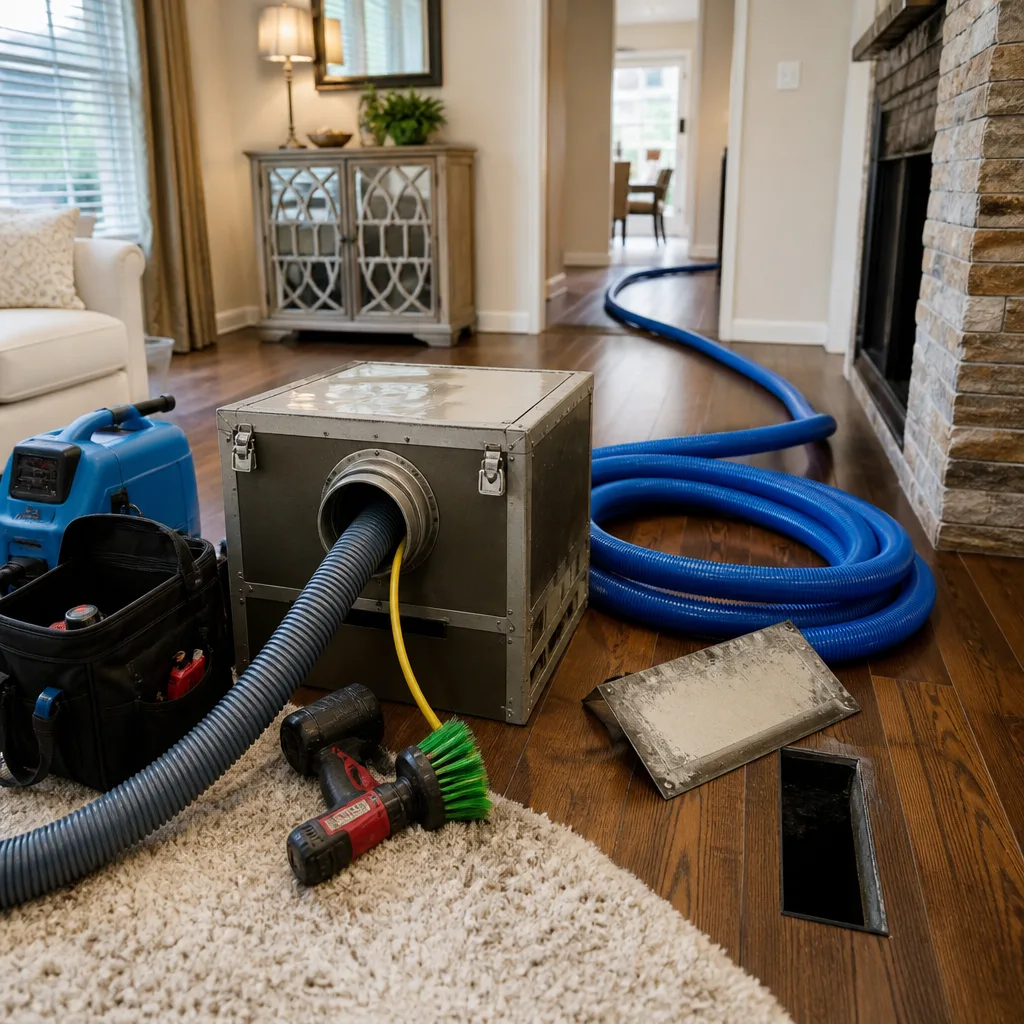
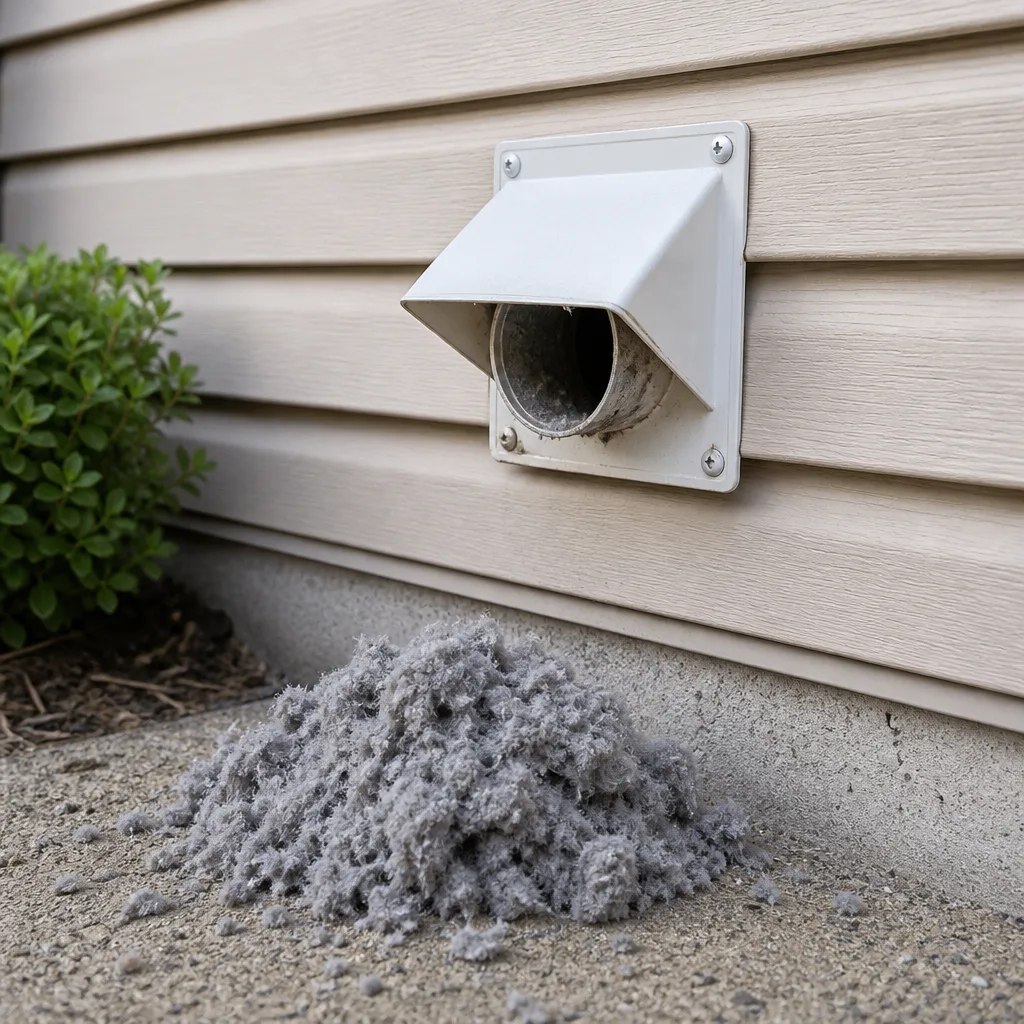
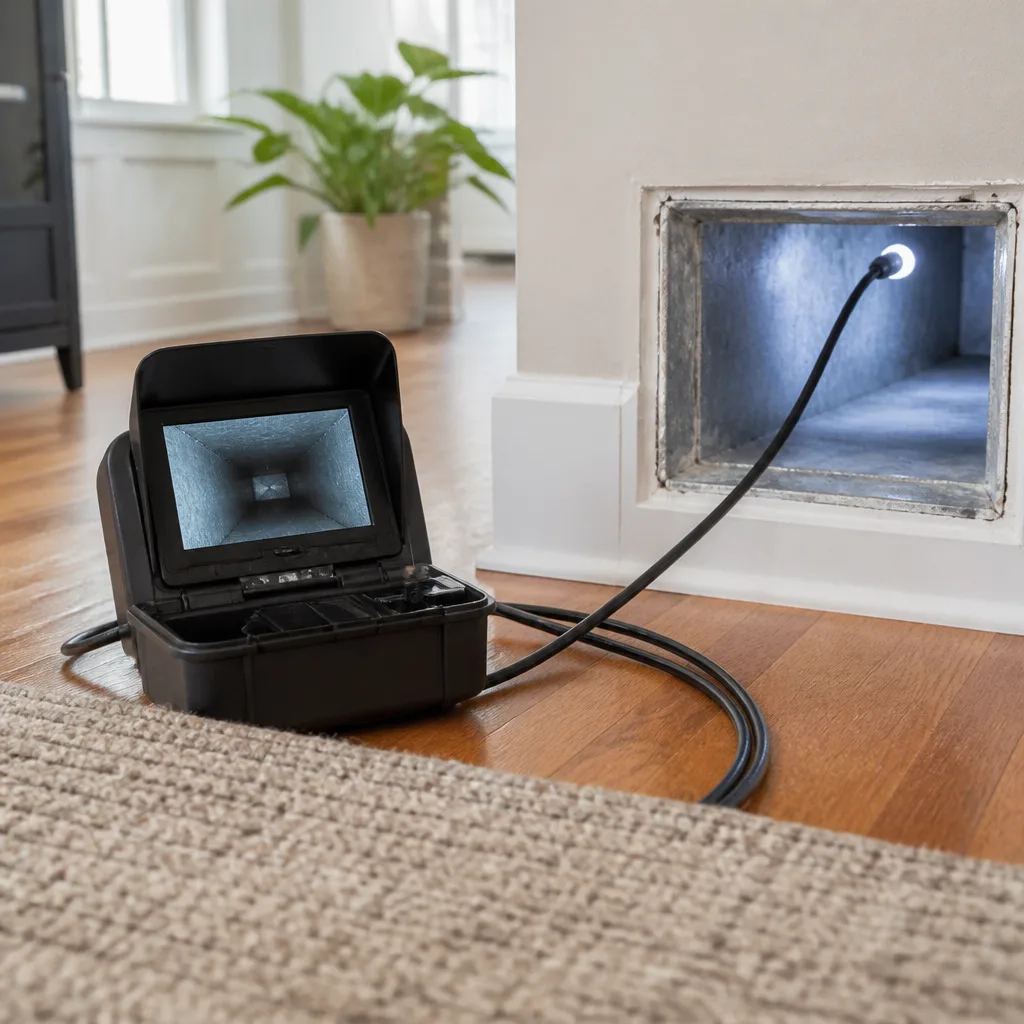
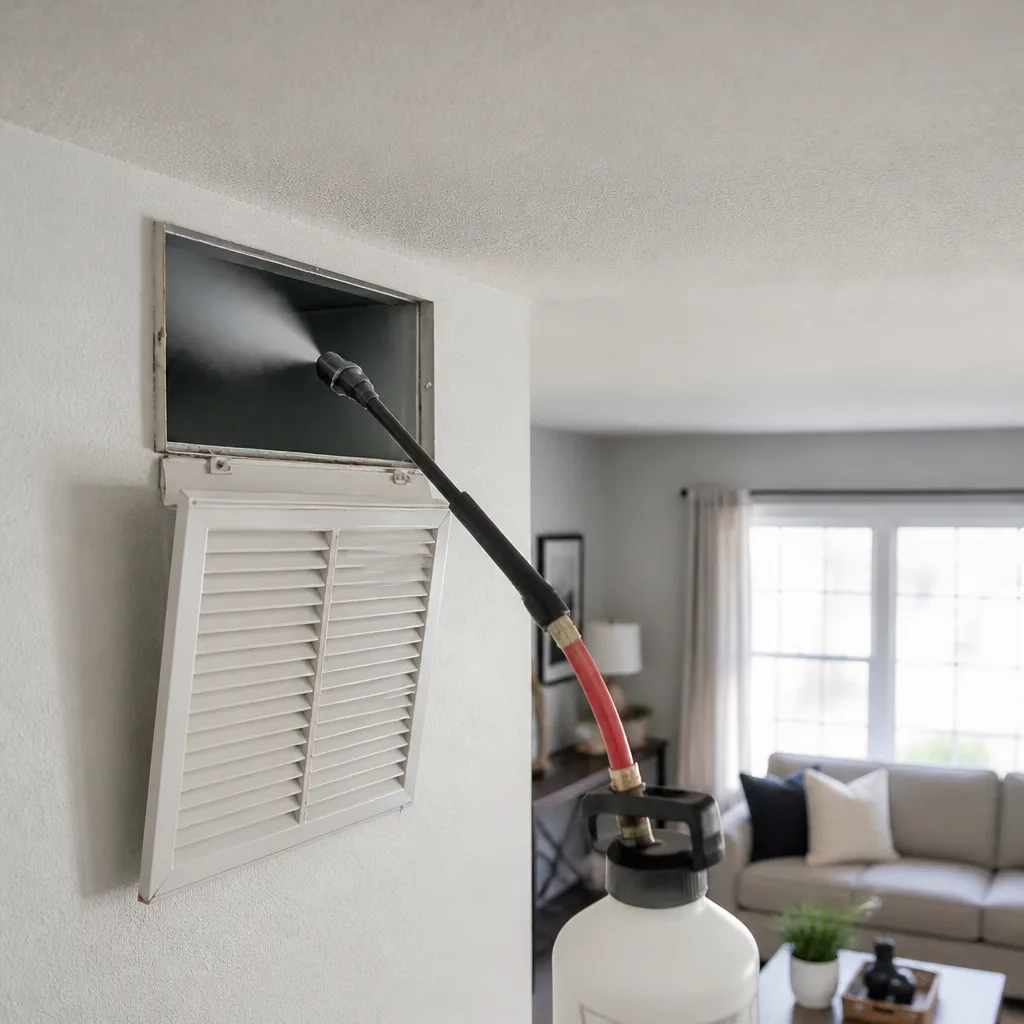
Whole-system duct and dryer vent check with before-and-after photos - you see exactly what came out of your vents
That "$99 whole-house special" is a bait ad - the real number appears once they are in your hallway, or the "clean" is a shop-vac at the register. We photograph the inside of your ducts before and after instead.
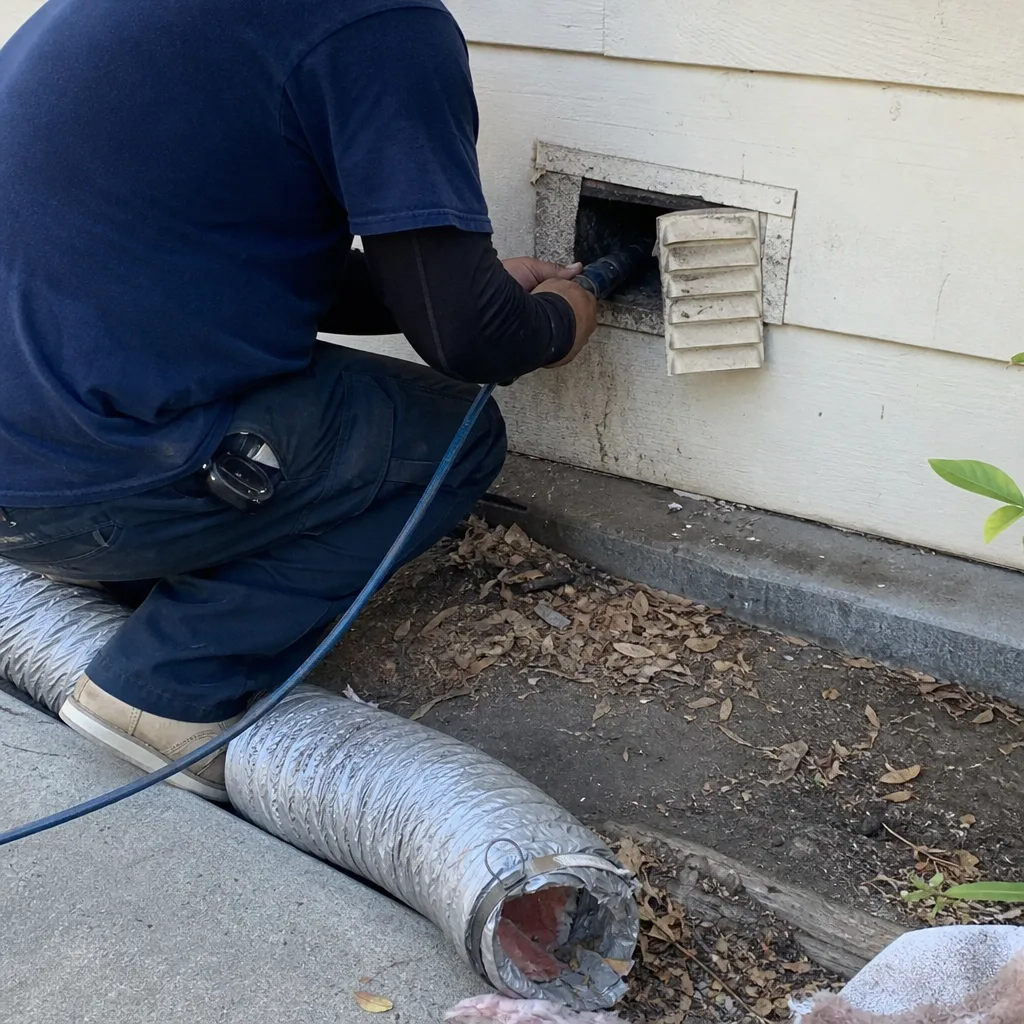 Before
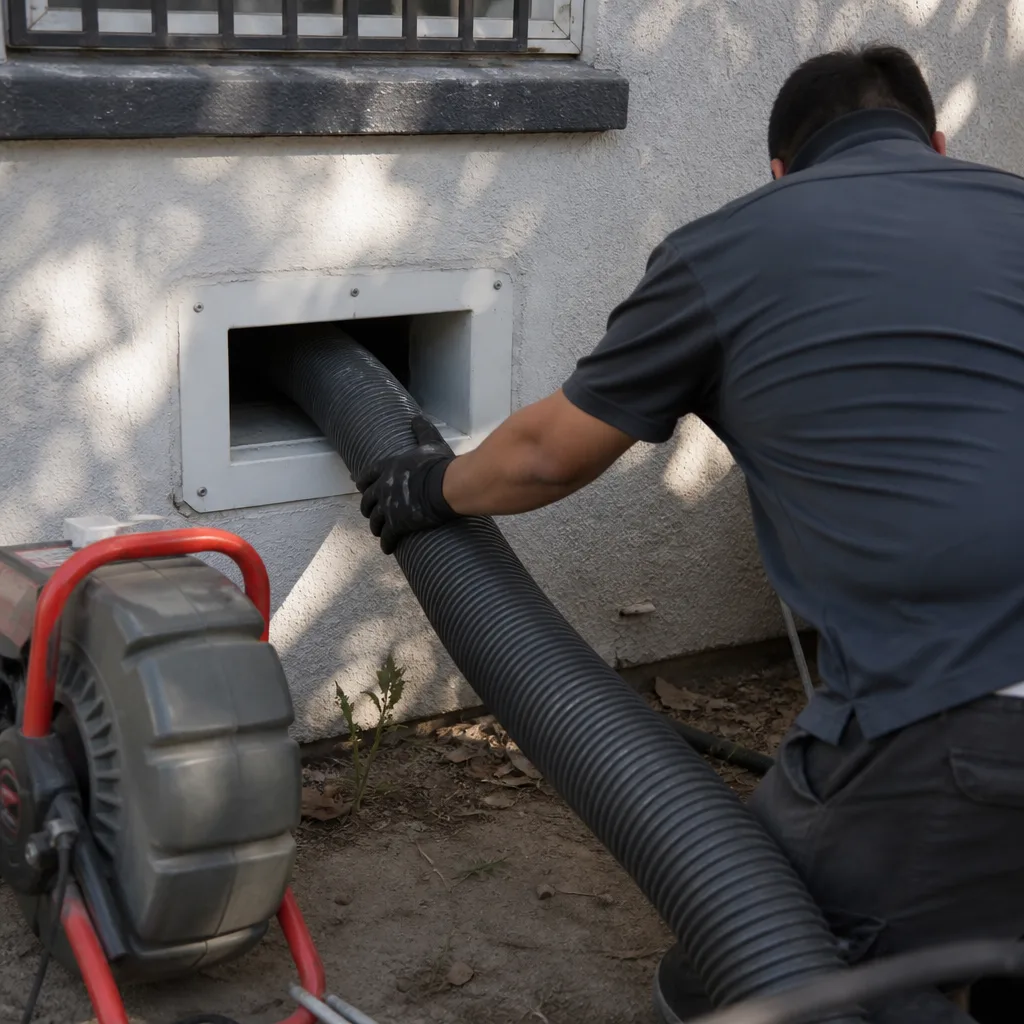 After
After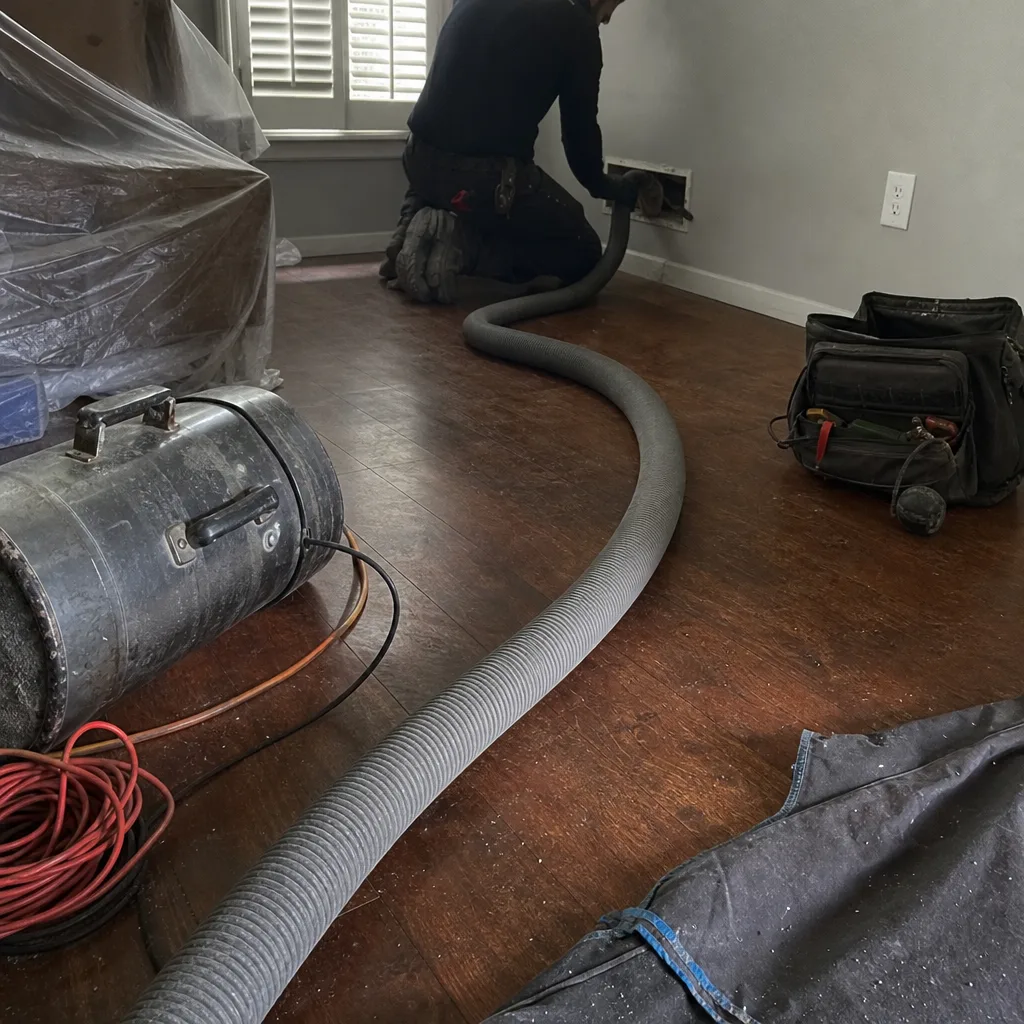 Before
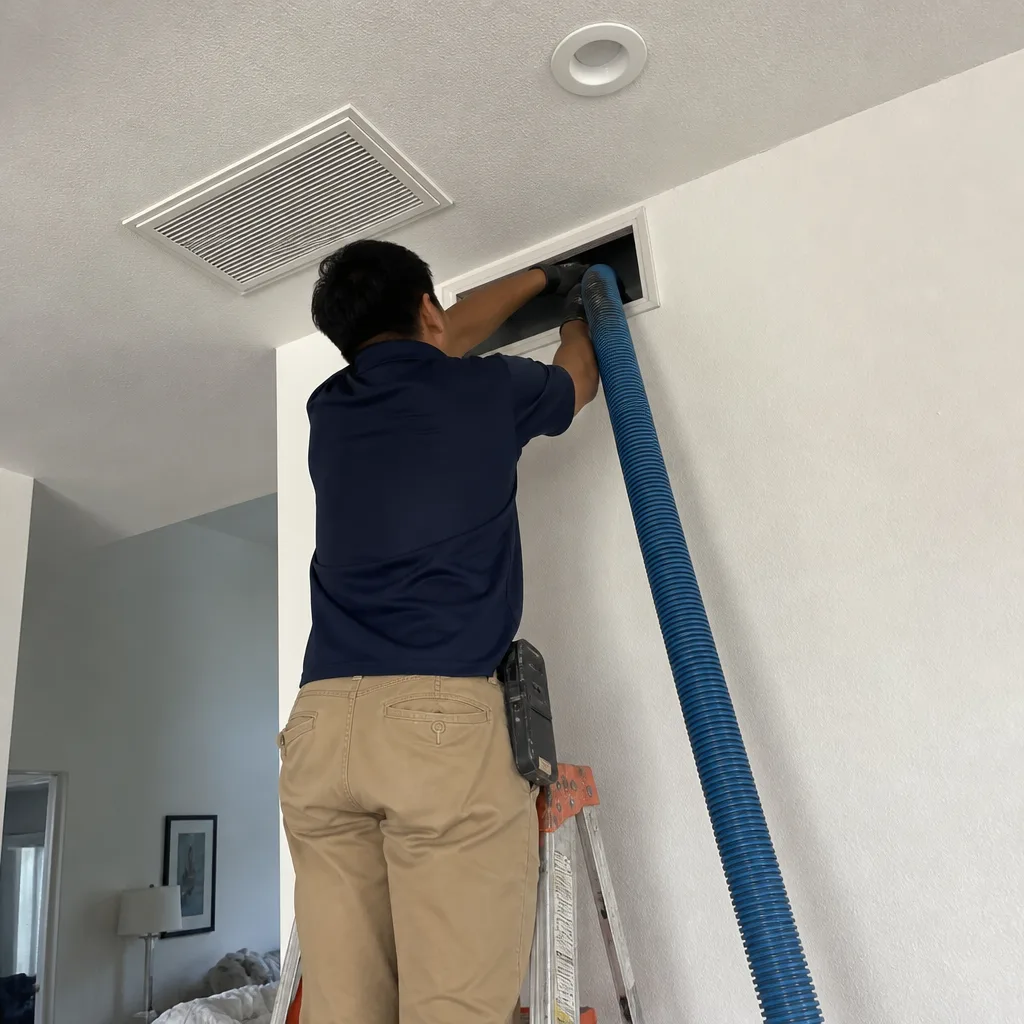 After
After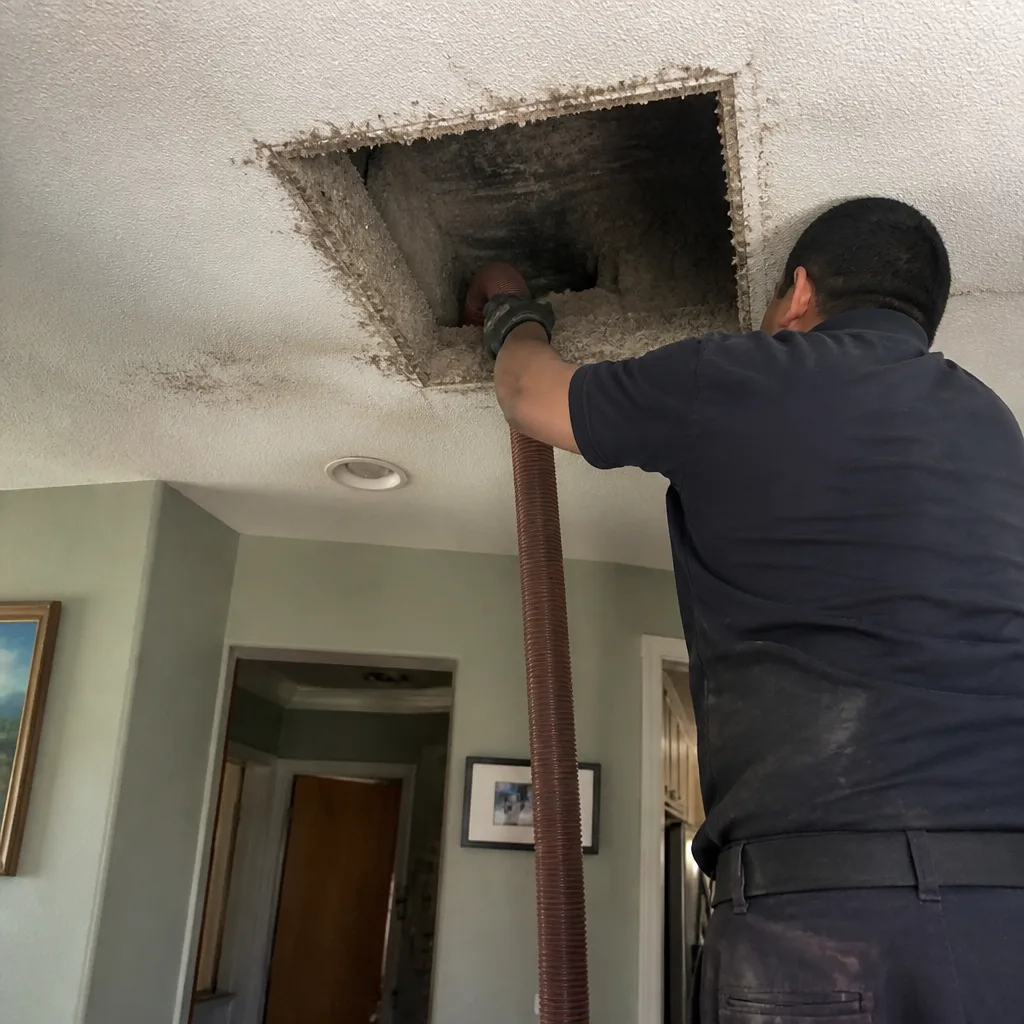 Before
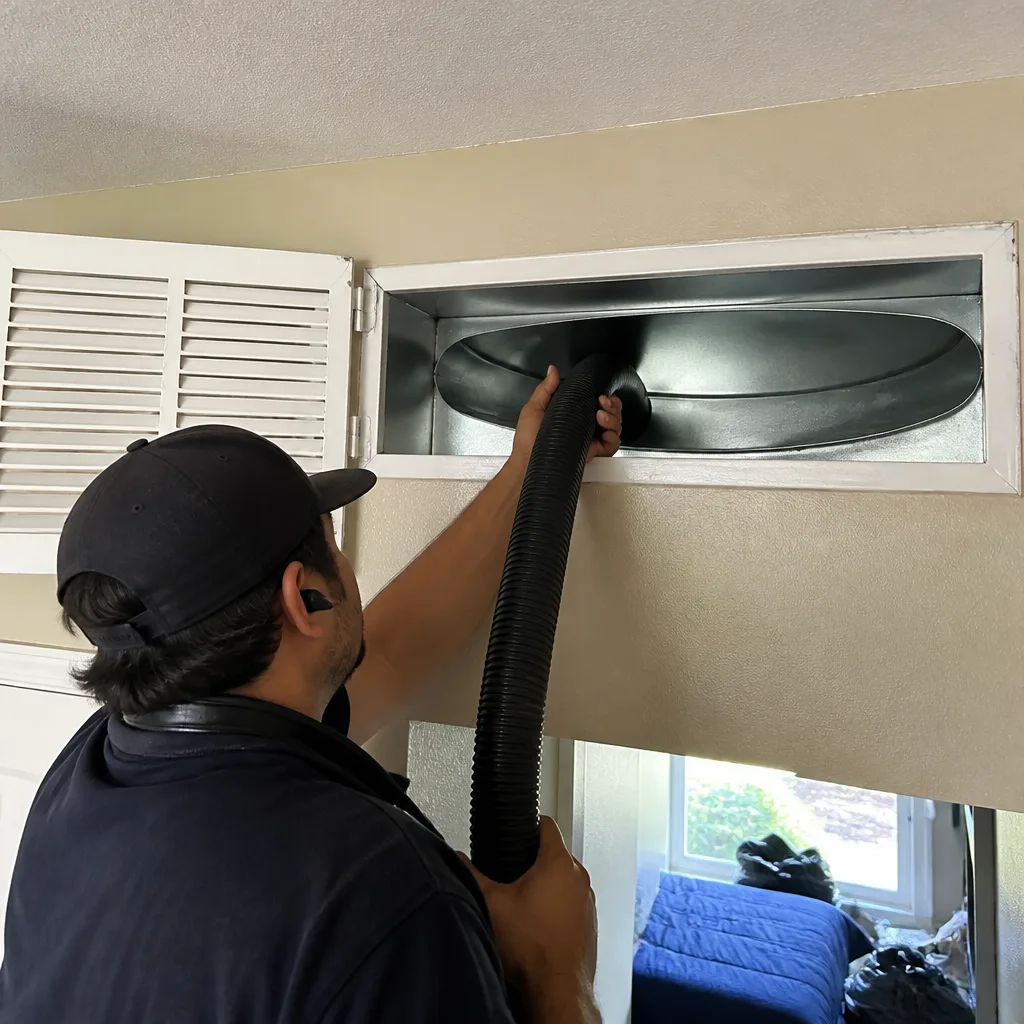 After
AfterThe Complete Air Duct Cleaning Guide for Los Angeles Homeowners
After every major wildfire in the Angeles National Forest or the Santa Monica Mountains, calls to air duct cleaning companies in Los Angeles spike roughly 400%. Homeowners smell smoke inside, see ash on window sills, and assume their ductwork is now a fire hazard. But here’s the counterintuitive part: most of the time, that smoky smell is coming from the air itself, not the ducts. Your HVAC system may have pulled particulate in, or it may simply be recirculating whatever drifted through open windows and door seals. Two completely different problems. Two completely different solutions. By the time you finish The Complete Guide to Air Duct Cleaning in Los Angeles, you’ll know which scenario you’re dealing with, whether cleaning is actually the right call, what a legitimate Los Angeles duct cleaning should cost, and how to avoid the bait-and-switch trap that runs rampant in this city’s home service market.
Quick Answer
Our Air Duct Cleaning services in Los Angeles typically cost between $350 and $650 for a standard single-family home, with larger systems or heavier contamination running higher. The service is worth it when ducts contain visible dust buildup, mold growth, or post-renovation debris, but not when the issue is simply ambient wildfire smoke that never entered the system. A legitimate cleaning uses source removal with rotary brush agitation and HEPA-filtered negative-pressure extraction, not a glorified shop vac.
Table of Contents
- Why the LA Duct Cleaning Decision Is Different Here
- How to Know If Your Ducts Actually Need Cleaning
- What a Legitimate LA Duct Cleaning Actually Includes
- The NADCA Standard, Explained Without the Jargon
- What It Really Costs in Los Angeles
- How to Sequence Duct Cleaning With Other HVAC Work
- How to Spot a Duct Cleaning Scam in LA
- Common Mistakes to Avoid
- When to Call a Professional
- Frequently Asked Questions
- The Bottom Line
Why the LA Duct Cleaning Decision Is Different Here
Most air duct cleaning guides read like they were written for a suburb in Ohio. They talk about pet dander and dust mites and change your filter every 90 days. That advice isn’t wrong, but it misses what actually drives duct contamination in Los Angeles. We’ve cleaned systems in Echo Park bungalows, Sherman Oaks ramblers, and Palos Verdes coastal homes, and the contamination profile changes dramatically by neighborhood.
Three factors make LA unique:
- Wildfire smoke infiltration. When a fire burns in the San Gabriels or the Santa Monicas, PM2.5 particles float for miles. These particles are small enough to pass through a standard MERV-8 filter. If your system ran during a smoke event, those particles coat the blower motor, evaporator coil, and the interior walls of supply ducts. Once there, they release odor every time the system cycles.
- Marine layer humidity. Coastal zip codes from Santa Monica down through Long Beach sit under a nightly marine layer for months each summer. Ductwork in unconditioned attics or crawl spaces develops condensation on the exterior. Over years, that moisture creates the exact conditions mold needs. Homes within two miles of the coast see measurably higher instances of duct mold than Valley homes.
- Aging housing stock. Much of LA’s single-family inventory was built between 1920 and 1975. That means decades of accumulated renovation dust, plaster debris from wall work, and in some cases, original ductwork made from materials that simply weren’t designed for 70 years of service. We regularly find ducts in mid-city homes that haven’t been opened since the Nixon administration.
This is the lens through which every decision in this guide should be viewed. National marketing claims don’t account for Santa Ana wind events pushing ash through open windows in Pasadena. Local conditions do.
How to Know If Your Ducts Actually Need Cleaning
Here’s the honest answer most duct cleaning companies won’t give you: not every home needs its ducts cleaned, and some homes need it far more than a national average would suggest. Before you book anything, run through this checklist.
Signs your ducts likely need cleaning:
- You remove a supply register and see dust caked on the inside walls of the duct, not just a light film. A thin layer of dust is normal. A quarter-inch of gray fuzz is not.
- You’ve completed a renovation. Drywall dust, plaster chunks, and sawdust get pulled into return ducts during any project involving walls, floors, or ceilings. In LA’s older homes, renovations are constant.
- You see mold growth. Not just a musty smell, but visible dark spotting on register surfaces or duct interiors. This is more common in coastal Los Angeles neighborhoods where the marine layer keeps moisture present.
- The previous owners had pets, and the home sat unoccupied for months. Airborne pet dander settles into ducts and becomes part of the system’s recirculation pattern.
- Your home sat through a nearby wildfire with the HVAC running. Smoke particulate drawn through the system leaves a persistent odor that filters alone won’t remove.
Signs your ducts probably don’t need cleaning:
- The house smells smoky after a fire, but the HVAC system was off the entire time and windows were closed. The smell is likely in carpets, curtains, and upholstery, not the ducts.
- You see dust on furniture surfaces. That’s normal ambient dust settling from daily life. It doesn’t mean your ducts are the source.
- A company is running a $49 whole-house special. At that price, they’re not cleaning ducts. They’re running a vacuum wand down each register and leaving. More on how to spot that below.
If you’re in the “maybe” category, better filtration might be the smarter first move. A media cabinet upgrade to an Air Duct Cleaning in Los Angeles system with Aprilaire filtration can capture more particulate before it ever reaches the ductwork. In some homes, that’s the entire fix.
What a Legitimate LA Duct Cleaning Actually Includes
A real duct cleaning is a mechanical process, not a vacuum pass. When you hire Cardinal Air Duct Cleaning, or any company doing proper work, here’s what should happen in sequence.
- System inspection. The technician should inspect the furnace or air handler, the evaporator coil, the return plenum, and several supply runs before any cleaning starts. This tells them what they’re dealing with and where the worst accumulation sits.
- Access point creation. Ducts need to be accessed at strategic points. In most LA homes, that means cutting an 8-inch access hole in the main trunk line. A proper company cuts clean, seals with a metal patch and mastic when done.
- Agitation and source removal. This is the step that separates real cleaning from the $49 special. A rotary brush system like the Rotobrush runs through each duct run, physically dislodging caked-on debris. Without agitation, vacuum pressure alone leaves a significant residue layer behind.
- Negative-pressure extraction. A HEPA-filtered vacuum unit like the Nikro system connects to the duct system, creating negative pressure so loosened debris flows directly into the containment unit rather than back into the living space. That’s the whole point of negative-pressure extraction: the debris leaves the house, not the register.
- Post-cleaning verification. The technician should show you before-and-after photos of each major section cleaned. If they can’t show you what the ducts looked like before, how do you know work was done? They can’t, and you don’t.
A proper cleaning of a typical 1,500 to 2,200 square foot Los Angeles home takes between three and five hours. Anyone who says they can do it in 45 minutes is not doing the work described above.
The NADCA Standard, Explained Without the Jargon
NADCA stands for the National Air Duct Cleaners Association. It’s the industry body that sets the technical standard for what constitutes a legitimate cleaning. When a company says they clean “to NADCA standards,” here’s what that should mean, decoded into plain language.
Source removal is the core principle. That means the goal is to remove the contaminant from the system entirely, not push it around or trap a percentage of it. A shop vac pushed down a duct does not accomplish source removal. It loosens some debris and captures whatever happens to make it back up the hose. The rest redistributes deeper into the system.
Contact vacuum cleaning without agitation is insufficient. You need physical contact, meaning a brush or air whip actually touching the duct walls to break the bond between debris and surface. NADCA specifies that vacuum collection alone, with no mechanical agitation, fails the source removal standard. This matters because a meaningful fraction of LA duct cleaning providers skip agitation entirely to save time.
Equipment verification is straightforward. Ask what brand of agitation and collection equipment the company runs. Professional operations use Rotobrush rotary brush systems, Nikro HEPA vacuums, or Abatement Technologies containment units. These are purpose-built machines designed for exactly this work. If the answer is “a vacuum truck” or “powerful truck-mounted equipment” with no specific brand or method named, you’re likely getting a furnace cleaning, not a duct cleaning.
The furnace and blower system is the part most often skipped. NADCA standards cover the entire HVAC system, not just the supply ducts. If a company quotes you on “ducts only,” ask whether the blower, evaporator coil, and return plenum are included. In our experience in Los Angeles, the coil and blower are typically the most contaminated components in the system, not the ducts themselves.
What It Really Costs in Los Angeles
Let’s talk numbers, because vagueness in pricing is the root of most distrust in this industry. The honest range for legitimate, NADCA-standard air duct cleaning in Los Angeles for a typical single-family home runs $350 to $650. Larger homes with more linear feet of ductwork, multiple systems, or heavy contamination can reach into the $800 to $1,200 range.
Here’s what factors into that price:
- Linear feet of ductwork. Not bedroom count. Not square footage. Actual measured duct length. A 3-bedroom bungalow with an extensive add-on may have more duct than a 4-bedroom tract home.
- Access point count and location. Crawl-space access in an older LA home with limited clearance takes longer. Attic access in a mid-century flat roof home has its own complications.
- Number of systems. Homes with two HVAC units pay for two cleanings. That’s not a surcharge, it’s two distinct jobs.
- Contamination severity. Post-fire particulate or post-renovation drywall dust takes substantially more agitation time than standard household accumulation.
The price you’re quoted should be a written, line-itemed number handed to you before any equipment comes off the truck. At Cardinal Air Duct Cleaning, we hand you a written price before a single duct is touched, and that number does not change at the door. The Relayed booking experience means a live arrival window you can track from your phone, before-and-after photos of your actual ducts, and a digital invoice you can pay by link. No surprises, no “we found additional contamination once we got in there” upcharge games.
How to Sequence Duct Cleaning With Other HVAC Work
Cleaning ducts in a system with a fouled evaporator coil or a clogged blower is like washing your car’s exterior while the engine bay is packed with mud. You’ll have clean ducts for about two weeks, then the coil sheds its accumulated crust back into the system and you’re back where you started.
The smart sequence is this:
- Coil inspection and cleaning first. If the evaporator coil is heavily fouled, have it cleaned before or simultaneously with the ducts. This is standard HVAC Cleaning in Los Angeles scope. A clean coil moving air into dirty ducts contaminates the ducts. Dirty coil, clean ducts, same problem.
- Blower wheel cleaning. The blower sits in the air stream and accumulates the same debris as the ducts. If it’s not cleaned, it re-distributes particulate immediately.
- Duct cleaning. Once the coil and blower are clean, the ducts get the full source removal treatment.
- Filter upgrade. After everything is clean, that’s the moment to upgrade from a standard 1-inch MERV-8 to a 4-inch media cabinet with Aprilaire filtration. This extends the clean lifespan of the entire system by capturing more particulate before it enters the ductwork.
- Dryer Vent Cleaning in Los Angeles. If you’re doing the full system, do the dryer vent at the same visit. It’s a separate component of the home’s air infrastructure and shares the same contamination sources.
Sequencing matters more in LA than most places because of the wildfire factor. If you clean ducts in October, then run your system through a November Santa Ana event with a cheap fiberglass filter installed, you’ll undo much of the work. Schedule the filter upgrade at the same visit, and the system has a fighting chance to stay clean through fire season.
How to Spot a Duct Cleaning Scam in LA
Los Angeles is one of the most active markets in the country for duct cleaning bait-and-switch operations. The pattern is predictable and easy to spot once you know what you’re looking at.
- The $49 to $99 whole-house offer. This is a loss-leader designed to get a van in your driveway. The technician spends 20 minutes, then presents a “findings report” showing mold, vermiculite, or “toxic buildup” that requires a $1,500 remediation package. That’s the actual sale. The $49 cleaning never really happens.
- Per-vent pricing. Legitimate companies quote by system and linear feet of ductwork. Companies quoting $15 or $20 per vent are structuring the quote so you can’t easily compare it to a real system price. A typical LA home has 10 to 15 vents. Do the math and you’ll see the per-vent game inflates the total well beyond the system quote you’d get elsewhere.
- No agitation equipment. Ask the dispatcher what equipment the tech will use. If the answer doesn’t include a rotary brush or mechanical agitation system, they’re doing vacuum-only cleaning, which fails the source removal standard and leaves the majority of caked debris in place.
- No before-and-after documentation. If a company doesn’t offer photo documentation of the work, they’re betting you won’t look inside the ducts to verify. Every legitimate cleaning should include photos showing the interior of the ducts before and after.
- Pressure to sign same-day. Any company pushing a same-day discount to “lock in the rate” is running a pressure play. Legitimate Los Angeles duct cleaning companies give you a written quote that stands on its own.
Common Mistakes to Avoid
- Cleaning ducts without addressing the source of contamination. If your home is chronically dusty due to a failing return-air seal or a missing filter, cleaned ducts will re-contaminate within months. Fix the source first.
- Skipping the coil and blower. More than half the particulate in a typical system sits on the evaporator coil and blower wheel, not in the ducts themselves. Cleaning ducts only leaves the biggest contamination sources untouched.
- Assuming wildfire smoke means the ducts are contaminated. If the HVAC system wasn’t running during the smoke event, the ducts likely pulled in minimal particulate. Get an inspection before paying for a full cleaning you may not need.
- Taking the cheapest quote at face value. In LA’s duct cleaning market, the lowest price is almost always a partial job or a bait-and-switch opener. Compare what’s included, not just the number.
- Ignoring the dryer vent. The dryer vent is the most common cause of structure fires related to home air systems. If you’re cleaning ducts, the dryer vent should be part of the conversation.
- Waiting until fire season to book. Smoke events trigger a 400% spike in demand. Booking in the fall before Santa Ana winds arrive means you get the slot you want rather than waiting three weeks while smoke smell lingers in the system.
When to Call a Professional
Duct cleaning is not a DIY job. The equipment required, rotary brush systems, HEPA-negative-pressure vacuums, professional containment units, costs tens of thousands of dollars and requires training to operate safely and effectively. You cannot rent a Rotobrush at the hardware store.
Call a professional when you’ve confirmed visible debris in the ducts, you’re post-renovation, you’ve had a pest intrusion, or you’re dealing with persistent dust or odor that filter changes haven’t resolved. Cardinal Air Duct Cleaning home offers free estimates in Los Angeles. Call (737) 727-2314 and a live person will answer, not a voicemail tree. You’ll get a written price before any work starts, a trackable arrival window so you’re not waiting around for a four-hour window, and before-and-after photo proof of exactly what was done.
Frequently Asked Questions
A legitimate whole-system cleaning in Los Angeles runs $350 to $650 for a typical single-family home of 1,500 to 2,200 square feet. Larger homes, multiple HVAC systems, post-renovation debris, or post-wildfire particulate can push that to $800 to $1,200. Anyone quoting under $200 for a whole-system job is not doing source removal work. Call (737) 727-2314 for a written quote specific to your system, free of charge.
Every 3 to 5 years is the honest answer for most LA homes, with two exceptions. Homes within two miles of the coast should lean toward the 3-year mark due to marine layer moisture and elevated mold risk. Homes that ran their HVAC during a nearby wildfire event should get an inspection as soon as the smoke clears, regardless of the last cleaning date. If you’re unsure, a quick visual inspection through a supply register will tell you a lot.
Insist on before-and-after photo documentation of the duct interiors, not just the registers. At Cardinal Air Duct Cleaning, every job includes photos of the interior of your ducts before cleaning and after. If a company can’t show you before-and-after proof, assume the work didn’t happen as described. The Relay Standard includes this documentation on every single job, no exceptions.
Because they’re not doing the same job. A low quote typically covers vacuum-only cleaning with no mechanical agitation, skips the coil and blower, and may not include access point creation at all. The technician waves a hose down each register, shows you a clean diffuser, and leaves the actual duct walls untouched. Compare equipment brands, scope inclusions, and documentation practices before comparing prices.
Smoke particulate itself doesn’t damage ductwork, but the odor it leaves behind can persist for months if the system ran during a smoke event. See The Complete Dryer Vent Cleaning Guide for Los Angeles Homeowners for related ventilation concerns. The particulate embeds in fiberglass insulation lining, collects on the evaporator coil, and coats the blower wheel. A proper cleaning with agitation and negative-pressure extraction removes it. If the system was off during the fire, the ducts are likely fine and the odor is coming from soft surfaces in the home.
After the cleaning, upgrade the filter. The sequence is: clean the coil, clean the blower, clean the ducts, then install the better filter. Putting a high-MERV filter into a dirty system just loads the filter faster and chokes airflow. At Cardinal, we recommend an Aprilaire media cabinet upgrade post-cleaning, which gives you more filtration surface area than a 1-inch filter and helps protect the freshly cleaned system through LA’s wildfire season. Call (737) 727-2314 and we’ll walk you through the options.
The Bottom Line
Air duct cleaning in Los Angeles is a worthwhile investment when it’s done properly and for the right reasons. For more guides & resources on protecting your home’s air quality, visit our blog. This city’s unique combination of wildfire smoke, coastal moisture, and aging housing stock means a meaningful percentage of homes genuinely need the service. But it also means every homeowner needs to be sharp about what constitutes a real cleaning versus a vacuum pass. Get a written price before work starts. Ask about equipment brands. Require before-and-after photos. Sequence the job correctly with coil and blower cleaning, and upgrade filtration afterward. Do that, and you’ll get exactly what you paid for. Call (737) 727-2314 for a free Los Angeles estimate with no pressure and no surprises.
Written by Omar Haddad, Owner at Cardinal Air Duct Cleaning, serving Los Angeles since 2005.