
Last updated October 9, 2026
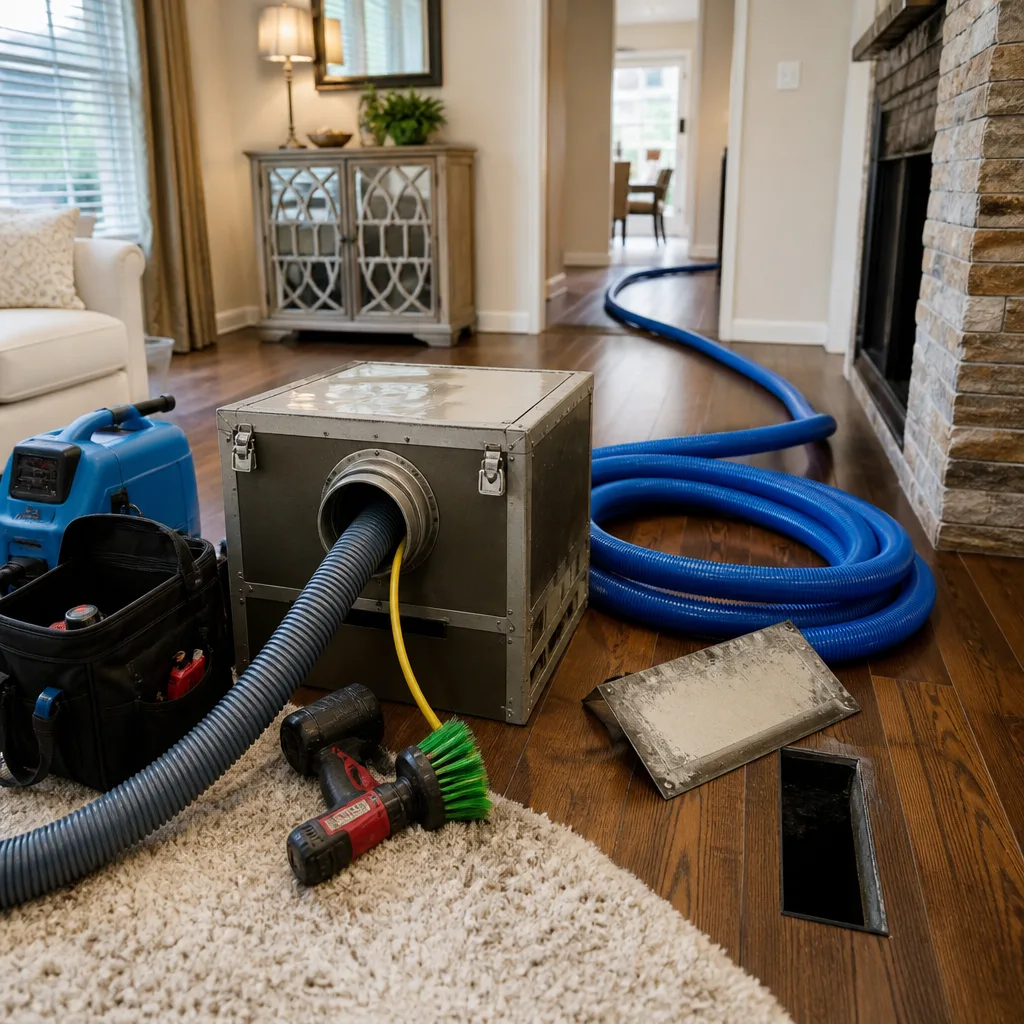
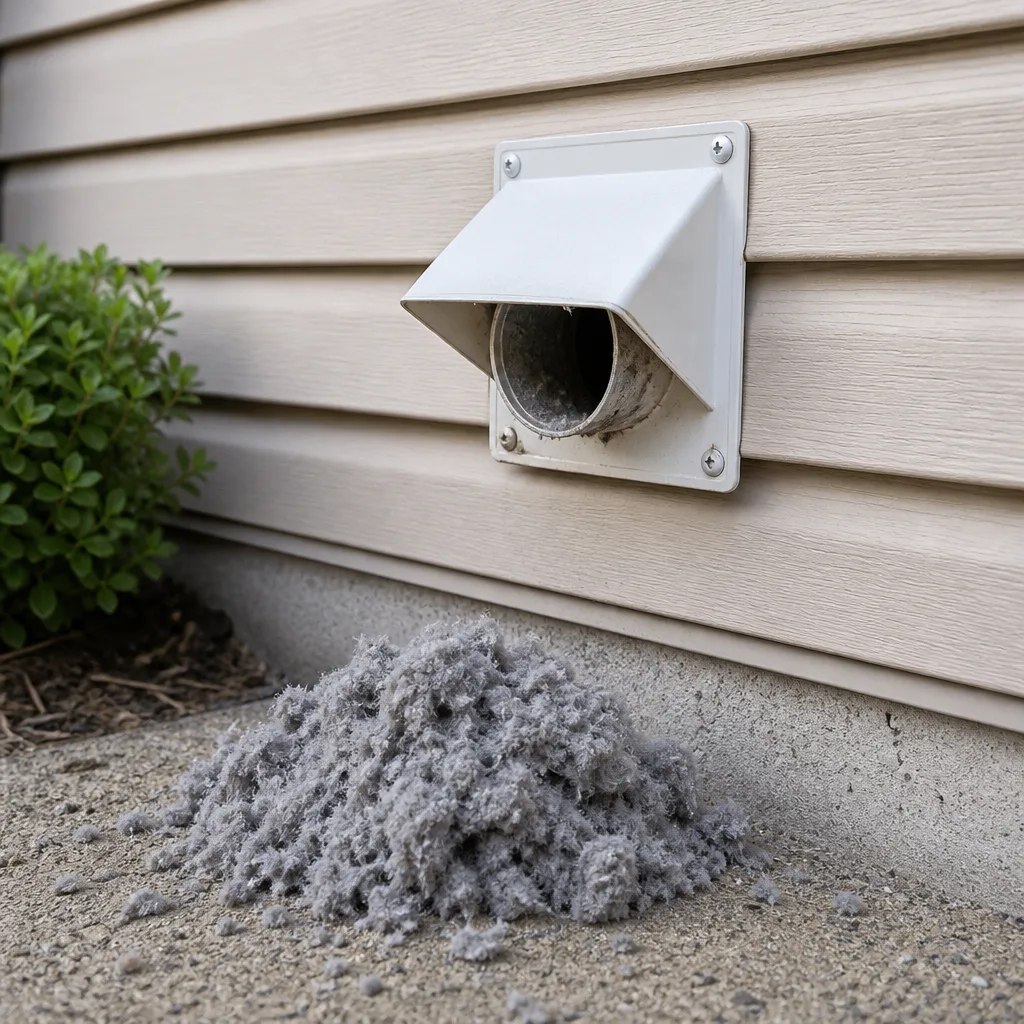
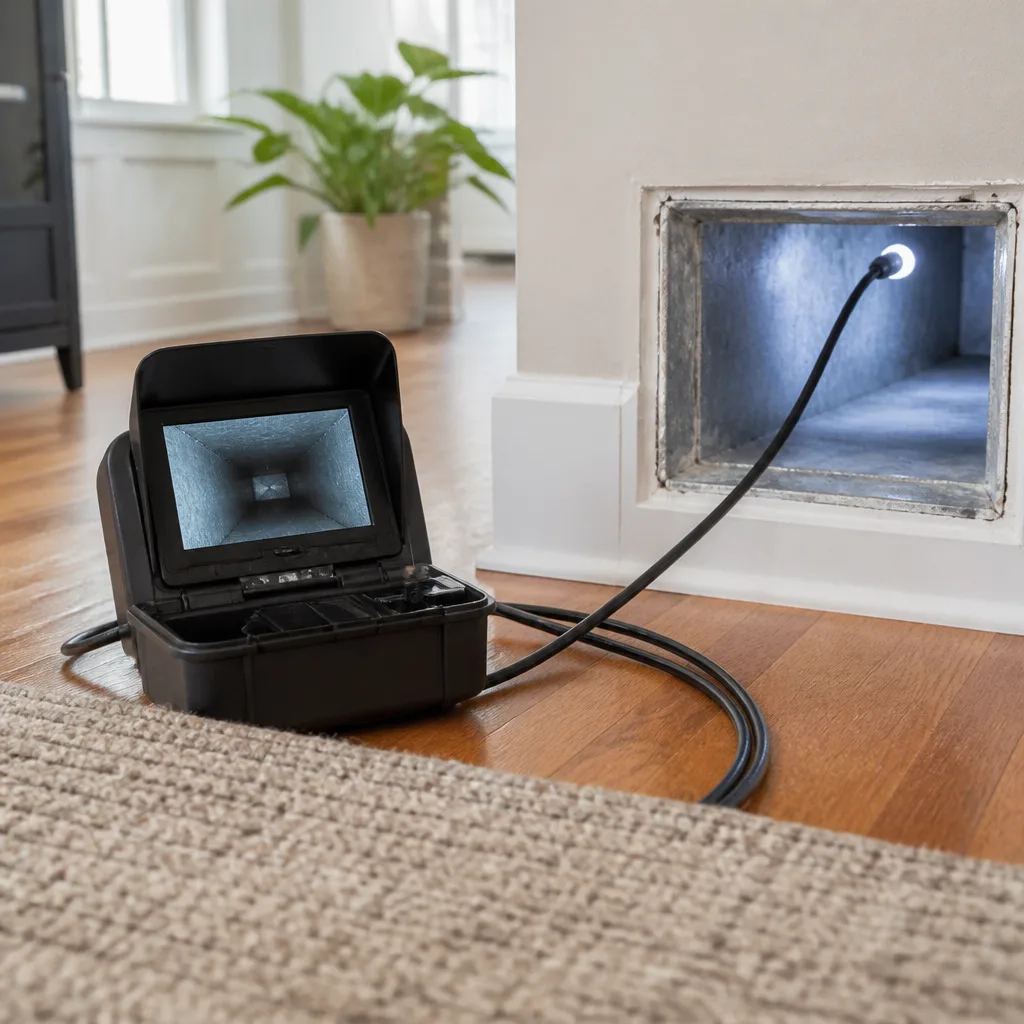
Whole-system duct and dryer vent check with before-and-after photos - you see exactly what came out of your vents
That "$99 whole-house special" is a bait ad - the real number appears once they are in your hallway, or the "clean" is a shop-vac at the register. We photograph the inside of your ducts before and after instead.
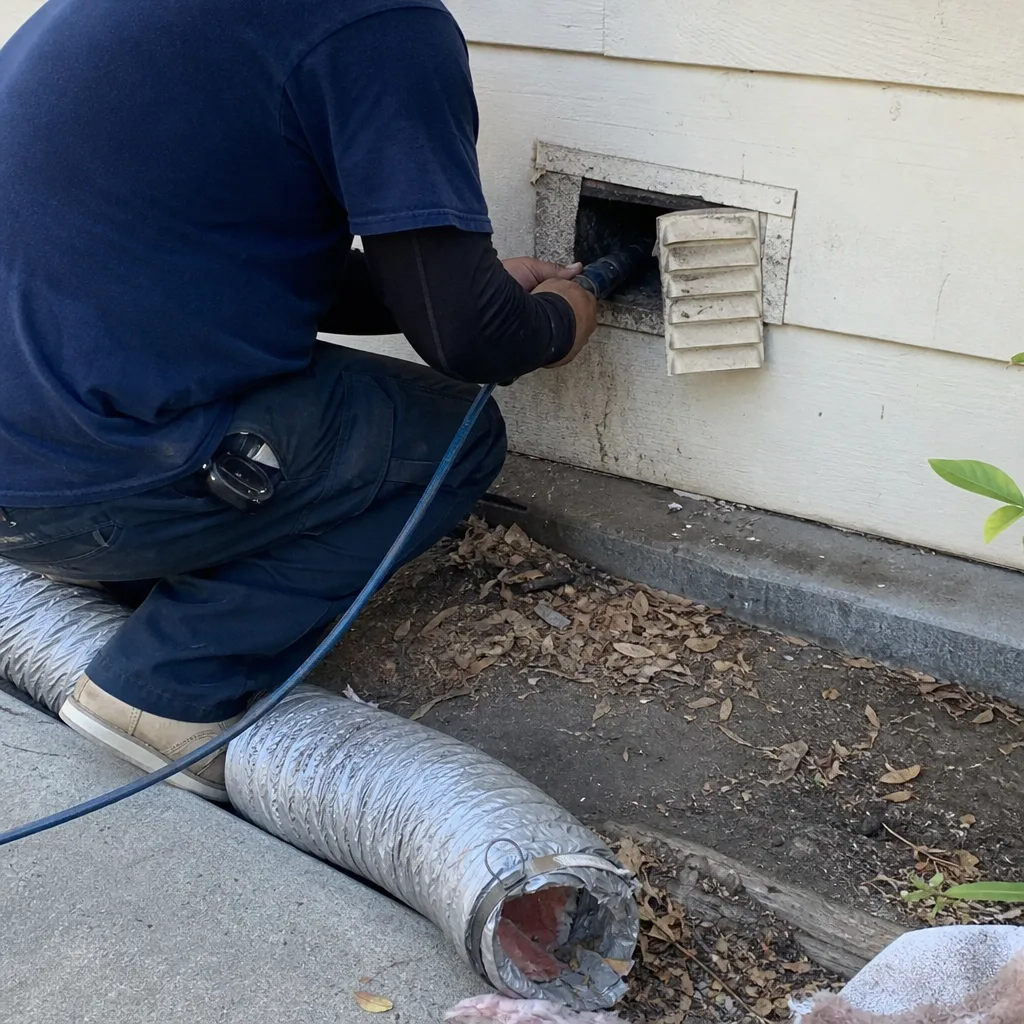 Before
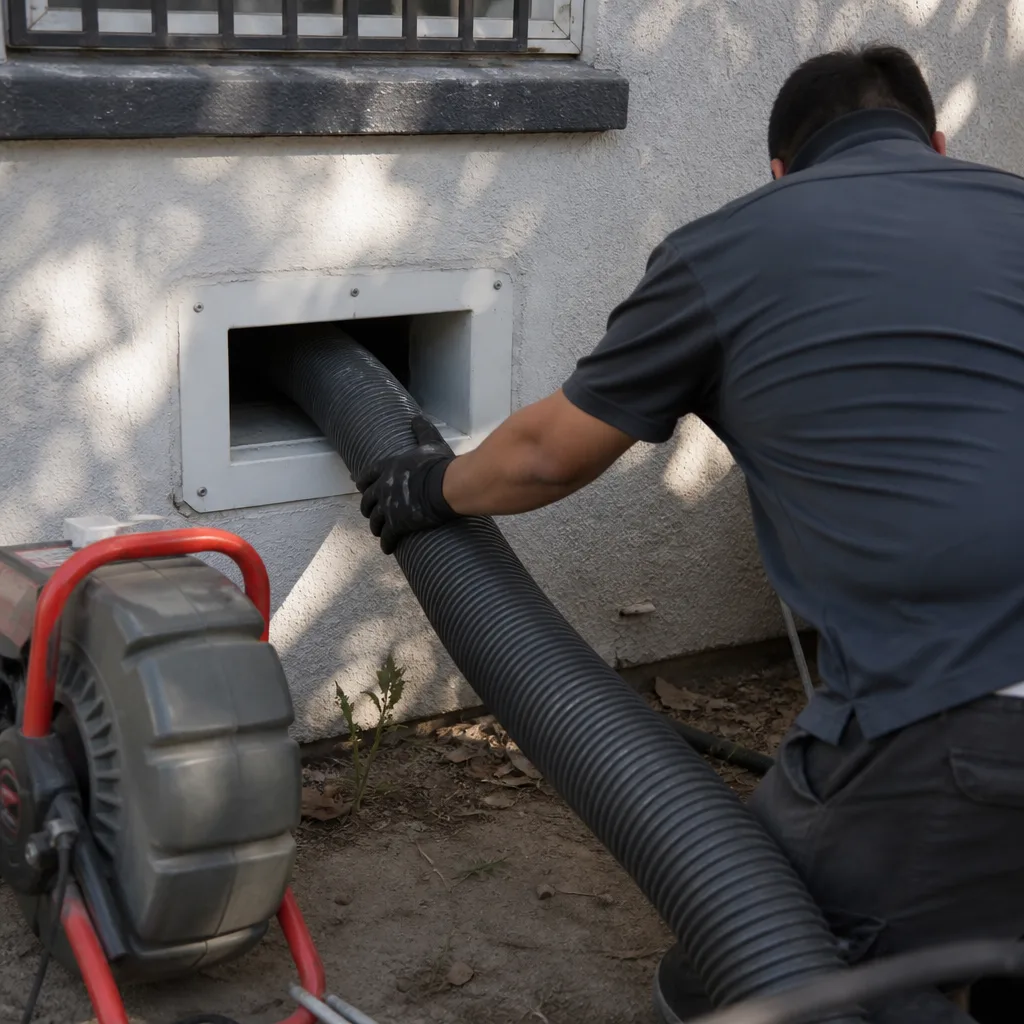 After
After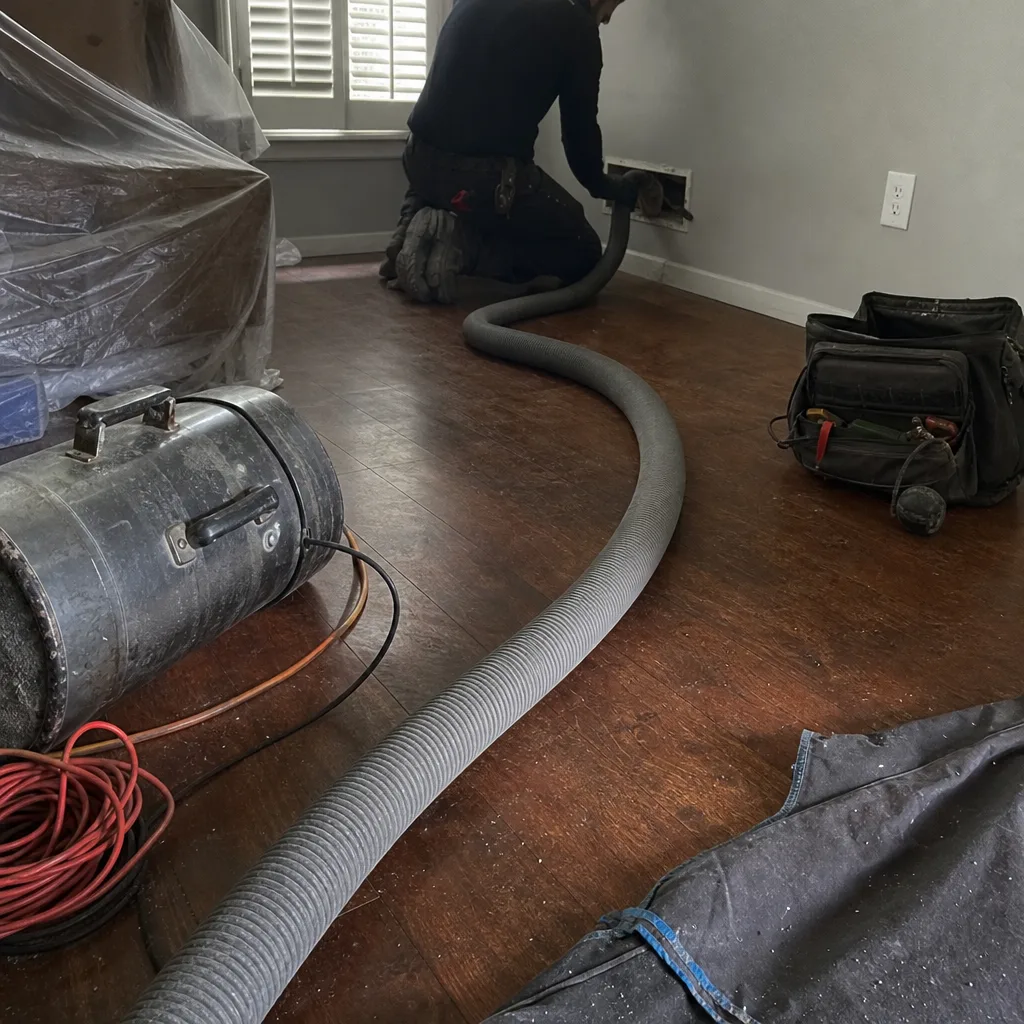 Before
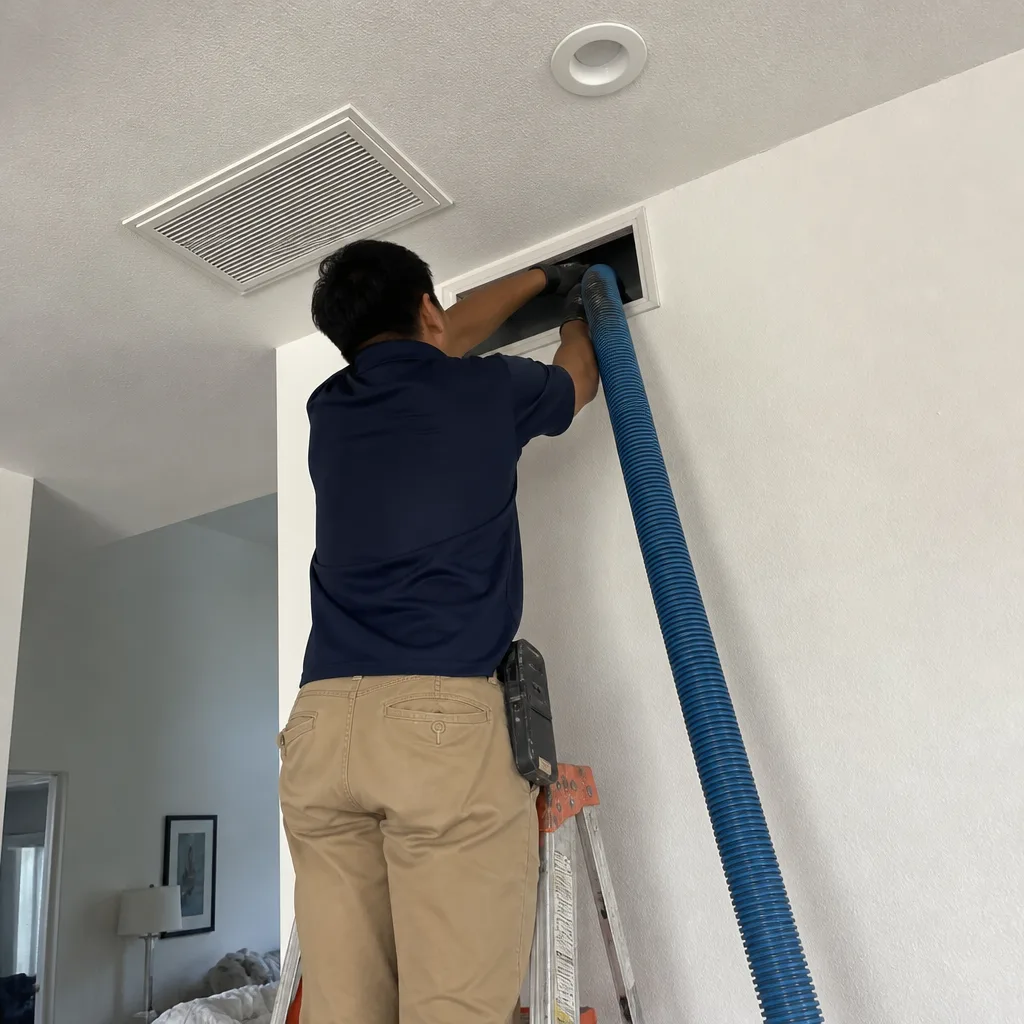 After
After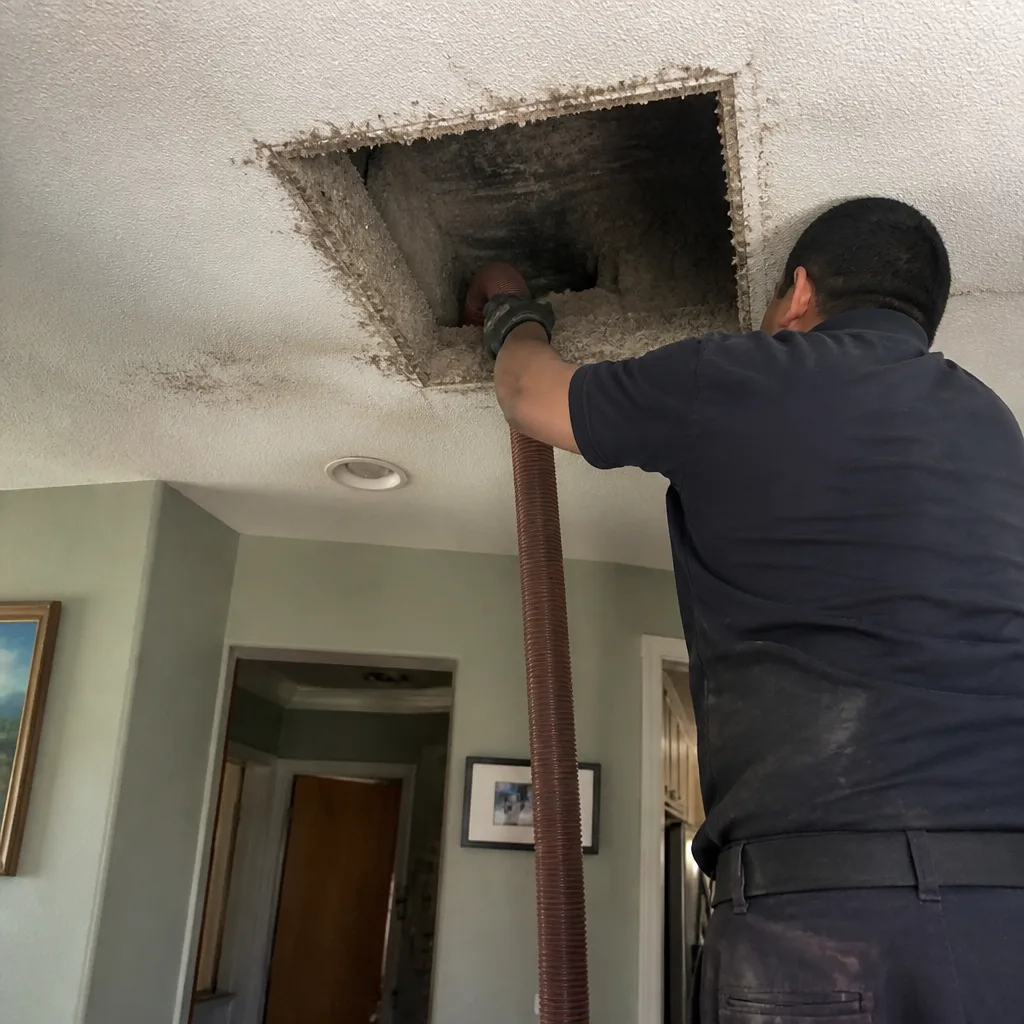 Before
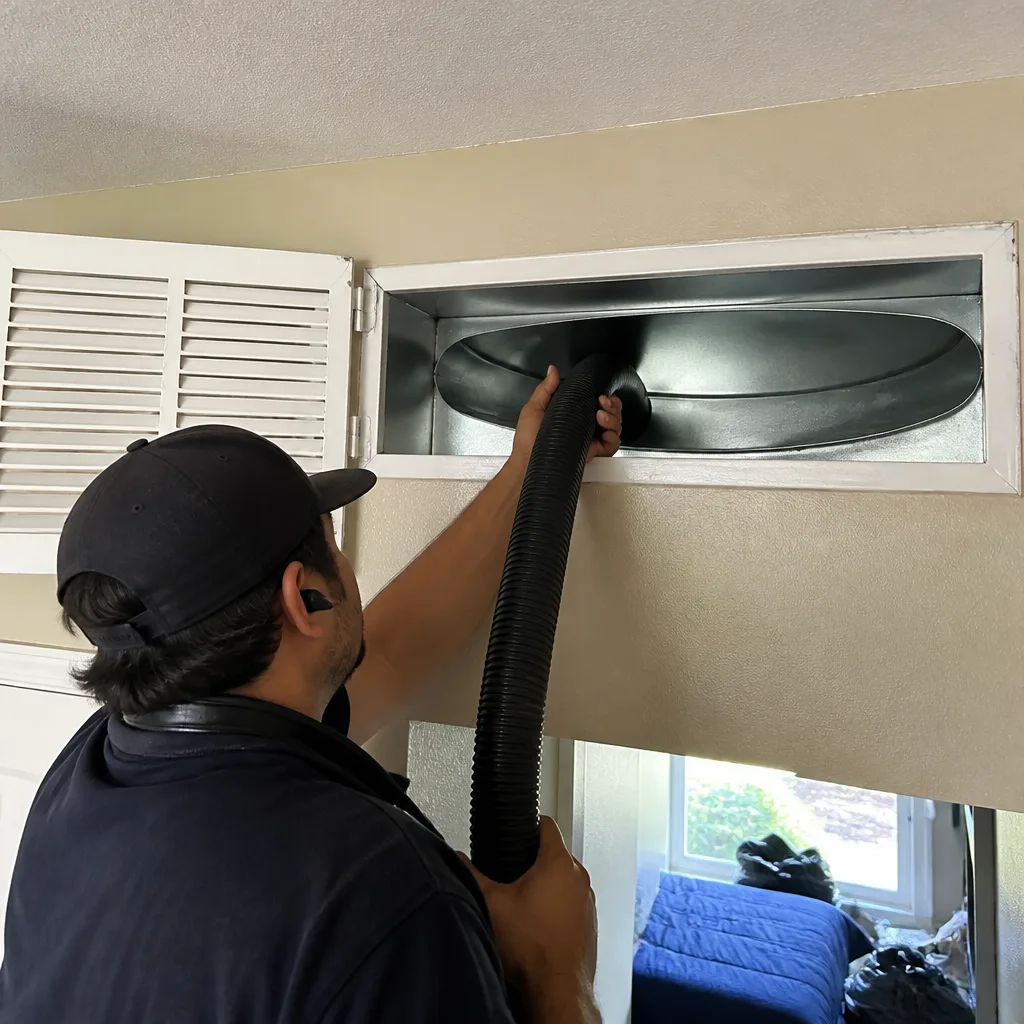 After
AfterThe Complete HVAC Cleaning Guide for Los Angeles Homeowners
After a Santa Ana wind event, Los Angeles air quality can drop to levels that deposit more particulate in your ducts in one week than a typical Midwest home sees in a year. That is not hyperbole. It is what we measure when we open up return plenums in Sherman Oaks after a windstorm and find a quarter inch of fine desert dust on surfaces that were clean thirty days prior. This guide walks through exactly how LA’s specific environment affects your HVAC system, what cleaning should cost, when to schedule it by neighborhood, and how to verify the work was actually done. We’ll cover the triggers most national guides miss entirely, because they were not written for Los Angeles.
Quick Answer
HVAC cleaning in Los Angeles typically costs between $450 and $900 for a full system on a standard single-family home, and it should be scheduled every 2 to 3 years in most LA neighborhoods, not the national 3-to-5-year average. Homes in wildfire-adjacent zones or Santa Ana wind corridors may need annual service. The job should include cleaning of supply ducts, return ducts, the blower motor, evaporator coil, and drain pan, with before-and-after photo documentation.
Table of Contents
- Why Los Angeles Is Different: The Climate Factor
- How Often Should You Clean Your HVAC System in LA?
- Neighborhood-by-Neighborhood Cleaning Guide
- What a Proper HVAC Cleaning Actually Includes
- What Does HVAC Cleaning Cost in Los Angeles?
- Older LA Housing Stock: Permits, Asbestos, and Access
- How Filtration Upgrades Extend Time Between Cleanings
- Common Mistakes to Avoid
- When to Call a Professional
- Frequently Asked Questions
- The Bottom Line
Why Los Angeles Is Different: The Climate Factor
Los Angeles combines three environmental forces that most of the country deals with one at a time, if at all. First, the Mojave Desert sits directly to the east. When Santa Ana winds kick up between September and February, they push dry, fine desert particulate across the basin at speeds that can exceed 50 mph in passes like the Cajon and Soledad. That dust is not the heavy, visible kind. It’s micron-fine silica and decomposed granite that stays suspended in air for hours and gets drawn directly into your HVAC return. Second, wildfire smoke season now runs nearly year-round in Southern California, but peaks from late summer through late fall. Smoke particulate is oily and electrostatically charged. It does not just settle in ducts. It clings to duct walls, blower fan blades, and coil fins, forming a sticky layer that subsequent dust bonds to. Third, the marine layer that rolls into coastal neighborhoods from Santa Monica to San Pedro introduces persistent humidity into duct systems that inland areas like Burbank or Northridge never experience. That humidity turns the accumulated dust into a damp mat inside your ducts, which is exactly the environment where mold spores and bacteria multiply.
What this means in practical terms: a homeowner in Brentwood with a 2,000-square-foot home may need HVAC cleaning more frequently than a homeowner in the San Fernando Valley with the same floor plan, simply because coastal humidity accelerates microbial growth in ductwork. Meanwhile, a homeowner in Porter Ranch or Granada Hills, directly downwind of wildfire-prone mountain zones, will see heavier ash accumulation after fire events. The national advice to clean ducts every 3 to 5 years ignores these local variables. In Los Angeles, we use a 2-to-3-year baseline, adjusted by ZIP code and lifestyle factors we cover below.
How Often Should You Clean Your HVAC System in LA?
The honest answer: most Los Angeles homes need professional HVAC cleaning every 2 to 3 years. That is faster than the national average because LA’s particulate load is higher and its humidity patterns are uneven. But the frequency is not uniform across the city, and it should not be. Here is the framework we use when homeowners call and ask whether it is time:
- Baseline for most LA homes: Every 2 to 3 years for a full HVAC cleaning, including supply ducts, return ducts, blower assembly, evaporator coil, and drain pan.
- Annual cleaning if: You live within 5 miles of wildfire burn zones (think Sylmar, Tujunga, Porter Ranch, Topanga, Malibu hills, La Cañada Flintridge) or in a Santa Ana wind corridor where desert dust blows through frequently.
- Every 3 years may suffice if: You live in a coastal neighborhood with mild particulate levels, you run a high-MERV Aprilaire filter year-round, you have no pets, and no one in the home has allergies or respiratory conditions.
- Immediately after: Any home renovation, a wildfire smoke event that kept you indoors for more than a few days, a rodent infestation in the attic or crawl space, or visible mold growth around supply registers.
- When buying a home: If the previous owner cannot produce a cleaning record from the last 3 years, assume it was not done. Schedule a cleaning before you move furniture in. In our experience across Los Angeles real estate transactions, duct cleaning is one of the most frequently skipped maintenance items on older homes.
These are starting points, not rigid formulas. A home in Silver Lake with two shedding dogs and a smoker in the household may need annual service even without wildfire exposure. A home in Manhattan Beach with a hospital-grade filtration system and no pets may go four years without significant buildup. The point is: LA does not follow national averages, and neither should your cleaning schedule.
Neighborhood-by-Neighborhood Cleaning Guide for Los Angeles
Los Angeles spans 469 square miles and at least three distinct climate zones that affect HVAC systems differently. Here is how we think about it by region:
Westside and Coastal (Santa Monica, Venice, Brentwood, Pacific Palisades, Playa del Rey)
These neighborhoods get the marine layer 200 to 300 mornings per year. That humidity enters duct systems through outside air intakes and does not dry out the way it does inland. The result: dust in ducts stays damp longer, and damp dust supports microbial growth. We see more mold-related duct cleaning calls from Westside ZIP codes than anywhere else in the city. If you live within 3 miles of the coast, plan for cleaning every 2 years even if your filters look clean. The moisture problem is invisible until it is not.
San Fernando Valley (Sherman Oaks, Encino, Woodland Hills, Northridge, Burbank, Glendale)
The Valley is hot, dry, and sits directly downwind of Santa Ana passes. This is where we see the fastest dust accumulation in Los Angeles. After a multi-day Santa Ana event, we have measured dust accumulation in Valley return ducts that would take 18 months to build up in a coastal home. Valley homeowners should use pleated MERV 11 or higher filters, change them every 30 to 45 days during wind season, and schedule HVAC cleaning every 2 years, more often if they live near the 118 or 210 freeway corridors where brake dust and tire particulate add to the load.
South Bay and Long Beach Area (Torrance, Redondo Beach, San Pedro, Lakewood)
The South Bay gets a combination of marine humidity and port-related particulate. The 710 and 110 freeway corridors carry diesel soot from port trucking that settles into HVAC systems at higher rates than beach-adjacent neighborhoods further west. Homes in San Pedro and Wilmington near the port complex should consider annual cleaning if anyone in the household has asthma. Homes in Torrance or Redondo Beach can follow the 2-to-3-year baseline.
Northeast LA and Foothill Communities (Pasadena, Altadena, La Cañada, Montrose, Glendale hills)
These neighborhoods sit at the base of the San Gabriel Mountains and take the brunt of both wildfire ash and mountain drainage winds. The Station Fire, Bobcat Fire, and Eaton Fire all left particulate signatures in local HVAC systems that persisted for months after the smoke cleared. If you live in a foothill community, invest in the best filtration your system can handle and plan for annual duct inspection, with cleaning every 1 to 2 years depending on fire season intensity.
What a Proper HVAC Cleaning Actually Includes
There is no legal definition of “HVAC cleaning” in California, which means different companies perform wildly different levels of service under the same name. Here is what a complete cleaning should cover, and what you should verify before hiring:
- Supply duct cleaning: Every supply duct from the plenum to each register should be cleaned using rotary brush agitation combined with negative-pressure extraction. Negative-pressure extraction means the loosened debris goes straight into a HEPA-filtered vacuum, not back into your living room. We use Rotobrush rotary systems paired with Nikro HEPA vacuums for this exact reason.
- Return duct cleaning: Return ducts are often dirtier than supply ducts because they carry unfiltered air from the living space back to the unit. A proper clean includes the full return path from grille to air handler.
- Blower motor and housing: The blower wheel accumulates a caked-on layer of dust that reduces airflow and forces the motor to work harder. This is a common source of premature blower motor failure in Los Angeles systems that run 10-plus hours a day during summer peaks.
- Evaporator coil cleaning: The coil sits in the air stream and gets coated with the same particulate as the ducts, but with the added complication of condensation. Wet coil fins plus LA’s fine dust equals a cement-like coating that kills cooling efficiency. Coil cleaning requires careful access and the right cleaning agents; done wrong, it damages the fins.
- Drain pan and condensate line flush: A clogged drain pan in coastal Los Angeles homes is a mold source waiting to happen. The pan and line should be flushed and checked during every full HVAC cleaning.
- Blower compartment and plenum wipe-down: Any surface that air passes over should be cleaned. If a company only cleans ducts and skips the equipment, they are doing half a job.
Before-and-after photos of your actual ducts are the single best verification that work was done properly. If a company cannot or will not provide them, that is a red flag. Cardinal Air Duct Cleaning documents every job with photos through The Relay Standard booking experience, which includes a live trackable arrival time, photo proof, and a digital invoice you can pay from your phone.
What Does HVAC Cleaning Cost in Los Angeles?
For a standard single-family home in Los Angeles, full HVAC cleaning typically runs between $450 and $900. The range varies based on home size, number of registers, system accessibility, and the condition of the ductwork. Most 3-bedroom, 2-bath homes under 2,000 square feet land between $500 and $700. Larger homes, multi-zone systems, or systems that have not been cleaned in a decade can exceed $1,000.
- Small home or condo (under 1,200 sq ft, up to 8 registers): $450 – $600
- Standard single-family home (1,200 – 2,500 sq ft, 9 – 14 registers): $500 – $750
- Large home (2,500 – 4,000 sq ft, 15 – 20 registers): $700 – $900
- Very large or multi-zone systems (4,000+ sq ft, dual systems): $900 – $1,300+
Here is the part that matters more than the number: the price you are quoted should be the price you pay. Los Angeles homeowners have been burned by bait-and-switch duct cleaning offers for years, a low teaser quote that balloons once the technician is in the attic and “discovers” extra work. The rule we operate by is simple: a written price is handed to you before a single duct is touched, and it does not change at the door. If the scope must change due to something genuinely unexpected, like collapsed ductwork hidden behind a finished wall, the new price is discussed and approved in writing before any additional work happens. You should expect the same standard from any company you hire. If a company refuses to put a number on paper before starting, keep looking.
Older LA Housing Stock: Permits, Asbestos, and Access
Los Angeles has one of the oldest housing stocks of any major US city, and roughly 40% of homes in the city were built before 1980. That matters for HVAC cleaning in three specific ways:
First, pre-1980 homes may have asbestos-containing duct wrap or pipe insulation. Asbestos was commonly used as thermal insulation on HVAC ducting through the late 1970s. If your home is older and the ductwork has never been replaced, the cleaning technician should visually inspect for asbestos-containing materials before agitation begins. Disturbing asbestos-wrapped ducts can release fibers into the air. We do not remove or abate asbestos, but we do identify it and stop work until an abatement professional has cleared the area. This is not a sales tactic. It is a health and safety requirement.
Second, older homes in neighborhoods like Hancock Park, Los Feliz, and Pasadena often have retrofit HVAC systems crammed into attics, crawl spaces, or closets that were never designed for modern equipment. Access can be tight, and cleaning those systems takes longer. A responsible company accounts for access difficulty in the quote. We include an access assessment in every pre-inspection so the written price reflects the actual conditions of your home, not a generic assumption.
Third, some older LA homes have ducting made of materials that react poorly to aggressive cleaning methods. Flexible plastic or foil ducting from the 1980s and 1990s can tear if a rotary brush is run through it at the wrong speed with the wrong head. Fiberglass duct board, common in 1970s construction, requires gentler cleaning techniques than sheet metal. The equipment you use matters. We run Rotobrush systems with adjustable heads sized to the duct material, not a one-size-fits-all approach that risks damaging older systems.
How Filtration Upgrades Extend Time Between Cleanings
The single most effective thing a Los Angeles homeowner can do to extend the interval between professional HVAC cleanings is upgrade the filtration. Most homes in LA run basic fiberglass or low-MERV pleated filters that catch large particles but let the fine stuff through. That fine stuff, the sub-10-micron particulate from wildfire smoke and Santa Ana dust, is exactly what builds up in ducts and on coils.
- MERV 11 – 13 pleated filters: These catch significantly more fine particulate than standard MERV 7 – 8 filters. Aprilaire makes a range of high-MERV options that fit most standard filter slots. For LA wildfire season, MERV 13 is the minimum we recommend if your system can handle the pressure drop.
- Media cabinet upgrades: If your system is currently running a 1-inch filter, consider a media cabinet upgrade that accepts 4-inch or 5-inch filters. More media depth means more surface area, which means better filtration without choking airflow. Aprilaire and Honeywell both make solid options.
- Electronic air cleaners: These work well for very fine smoke particulate but require regular maintenance themselves. If you go this route, make sure the cells are cleaned every 3 months or the system stops working effectively.
- UV lamps and PCO systems: These address microbial growth, not particulate. In humid coastal Los Angeles homes where mold is a concern, a UV system installed at the coil can reduce biological contamination between cleanings. They do nothing for dust, so they are a supplement, not a replacement, for filtration and cleaning.
A well-filtered system in a standard Valley home can often go 3 years between cleanings instead of 2. That is a real savings over the life of the home. But filtration upgrades only help if filters are actually changed. We recommend checking filters every 30 days during wildfire season and every 60 days the rest of the year, regardless of the filter’s advertised 3-month lifespan. LA air is harder on filters than the national average, and a dirty filter forces your blower to work harder and pushes unfiltered air around the filter edges.
Common Mistakes to Avoid
- Hiring the lowest bidder without checking equipment. A truck-mounted shop vac is not a professional duct cleaning system. Proper cleaning requires rotary brush agitation and HEPA-filtered negative pressure extraction. If the company cannot name their equipment, they do not have the right equipment.
- Cleaning ducts but skipping the coil and blower. This is the half-job we mentioned earlier. Dirty coil fins and a caked blower wheel negate the benefit of clean ducts within months. Insist on full-system cleaning.
- Replacing the filter and thinking that is enough. A new filter catches new particulate. It does nothing for the dust already coating your ducts, coil, and blower assembly.
- Waiting for visible dust on registers to schedule cleaning. By the time you see dust on the outside of a register, the inside of your system is long past due. Visible register dust is a lagging indicator, not an early warning.
- Not documenting the before-and-after condition. Without photo proof, you cannot verify whether the work was done at all, let alone done well. Demand photos of your actual system, not stock images of clean ducts.
- Falling for teaser pricing. If a $99 duct cleaning offer seems too good to be true, it is. Upsell technicians make their money by “finding” mold, or charging per vent, or selling antimicrobial fogging services at inflated rates. Get a written, whole-system price before work starts.
- Ignoring the condensate drain line. A clogged drain line in a coastal LA home can overflow into the drain pan and create a mold problem that spreads through the entire system. Flush it during every cleaning and check it at least annually if you skip a year between cleanings.
When to Call a Professional
You should call a professional HVAC cleaning service if you have not had your system cleaned in 3 or more years, if you live in a wildfire-adjacent or Santa Ana corridor neighborhood and cannot remember the last cleaning, if you notice dust accumulating on surfaces within days of a deep clean, if anyone in the home has unexplained allergy symptoms that worsen when the HVAC runs, if there is visible mold around any supply register, or if your system’s airflow feels noticeably weaker than it used to. These are not issues that resolve themselves. Cardinal Air Duct Cleaning offers free estimates throughout Los Angeles, with a written price before any work starts. Call (737) 727-2314 to schedule an assessment, or visit our Cardinal Air Duct Cleaning home page to learn more about our process.
Frequently Asked Questions
How much does HVAC cleaning cost in Los Angeles?
Full HVAC cleaning in Los Angeles typically costs between $450 and $900 for a standard single-family home, with most homes under 2,500 square feet falling in the $500 to $750 range. The final price depends on home size, number of registers, system accessibility, and ductwork condition. Cardinal Air Duct Cleaning provides a written price before any work starts, and that price does not change at the door. Call (737) 727-2314 for an exact quote on your system.
How often should I clean my HVAC system in Los Angeles?
Most Los Angeles homeowners should clean their HVAC system every 2 to 3 years, compared to the national 3-to-5-year average. Homes near wildfire zones or in Santa Ana wind corridors may need annual service. Coastal neighborhoods with marine-layer humidity also trend toward the 2-year end of the range because damp dust in ducts supports microbial growth faster than dry dust does.
Why are some HVAC cleaning quotes so much cheaper?
Cheaper quotes usually mean one of three things: the company is only cleaning ducts and skipping the coil, blower, and drain pan; the company is using a Shop-Vac instead of professional rotary brush and HEPA extraction equipment; or the low price is a teaser rate that will be padded with upsells once the technician arrives. In Los Angeles, legitimate whole-system HVAC cleaning starts around $450. Anything dramatically below that should make you ask hard questions about scope and equipment.
How do I know the work was actually done?
Demand before-and-after photos of your actual ductwork, coil, and blower assembly. A company that documents its work has nothing to hide. Cardinal Air Duct Cleaning includes photo documentation as part of The Relay Standard booking experience, along with a trackable arrival time and a digital invoice. If a company refuses to provide photos, find another company.
Does HVAC cleaning help with wildfire smoke inside my home?
Yes. Wildfire smoke particulate is sticky and electrostatically charged, which means it clings to duct walls, blower blades, and coil fins. A professional cleaning removes that residue and prevents it from recirculating through your home every time the system runs. Homes in Los Angeles neighborhoods that experience smoke exposure should be cleaned immediately after a significant smoke event, not on the normal 2-to-3-year schedule. For dryer vent work, see our Dryer Vent Cleaning in Los Angeles page.
Is HVAC cleaning different from air duct cleaning?
Yes, though the terms get used interchangeably by many companies. Air duct cleaning refers specifically to the ductwork. HVAC cleaning includes the ducts plus the mechanical components: blower motor, evaporator coil, drain pan, and plenum. A complete HVAC cleaning is the more thorough service and the one we recommend for Los Angeles homes where high particulate loads affect the entire system. Learn more on our Air Duct Cleaning in Los Angeles page or the dedicated HVAC Cleaning in Los Angeles service page.
The Bottom Line
Los Angeles HVAC systems work harder and get dirtier than the national average, which means the national advice does not apply to you. Clean every 2 to 3 years, more often if you live near wildfire zones or in Santa Ana corridors. Expect to pay between $450 and $900 for a complete job on a standard home, and refuse to work with any company that will not put a written price on paper before the work starts. Insist on before-and-after photos, verify the coil and blower are included, and upgrade your filtration to MERV 11 or higher so your system stays cleaner longer between professional visits. The goal is not just cleaner air. It is knowing the work was done right, documented, and backed by a company that answers the phone when you call.
Written by Omar Haddad, Owner at Cardinal Air Duct Cleaning, serving Los Angeles since 2005.