
Last updated October 9, 2026
Whole-system duct and dryer vent check with before-and-after photos - you see exactly what came out of your vents
That "$99 whole-house special" is a bait ad - the real number appears once they are in your hallway, or the "clean" is a shop-vac at the register. We photograph the inside of your ducts before and after instead.
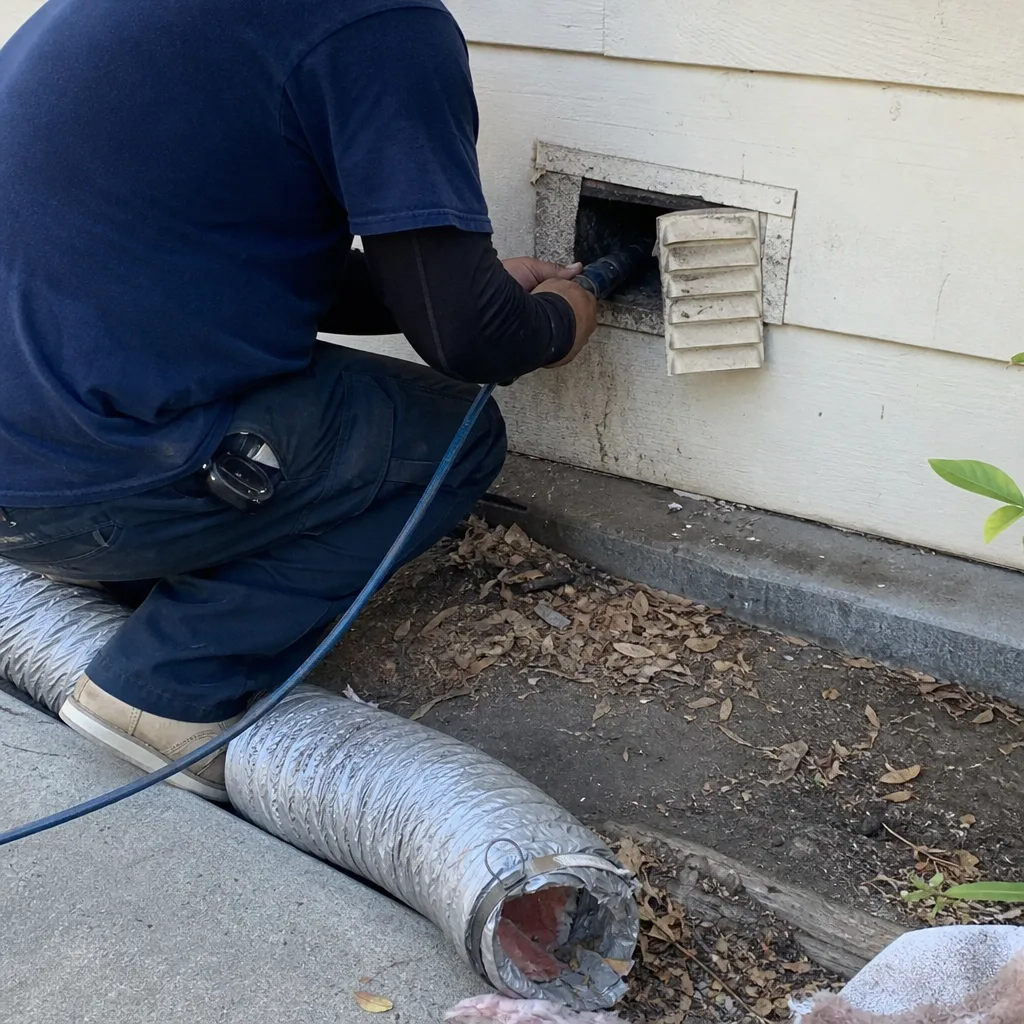 Before
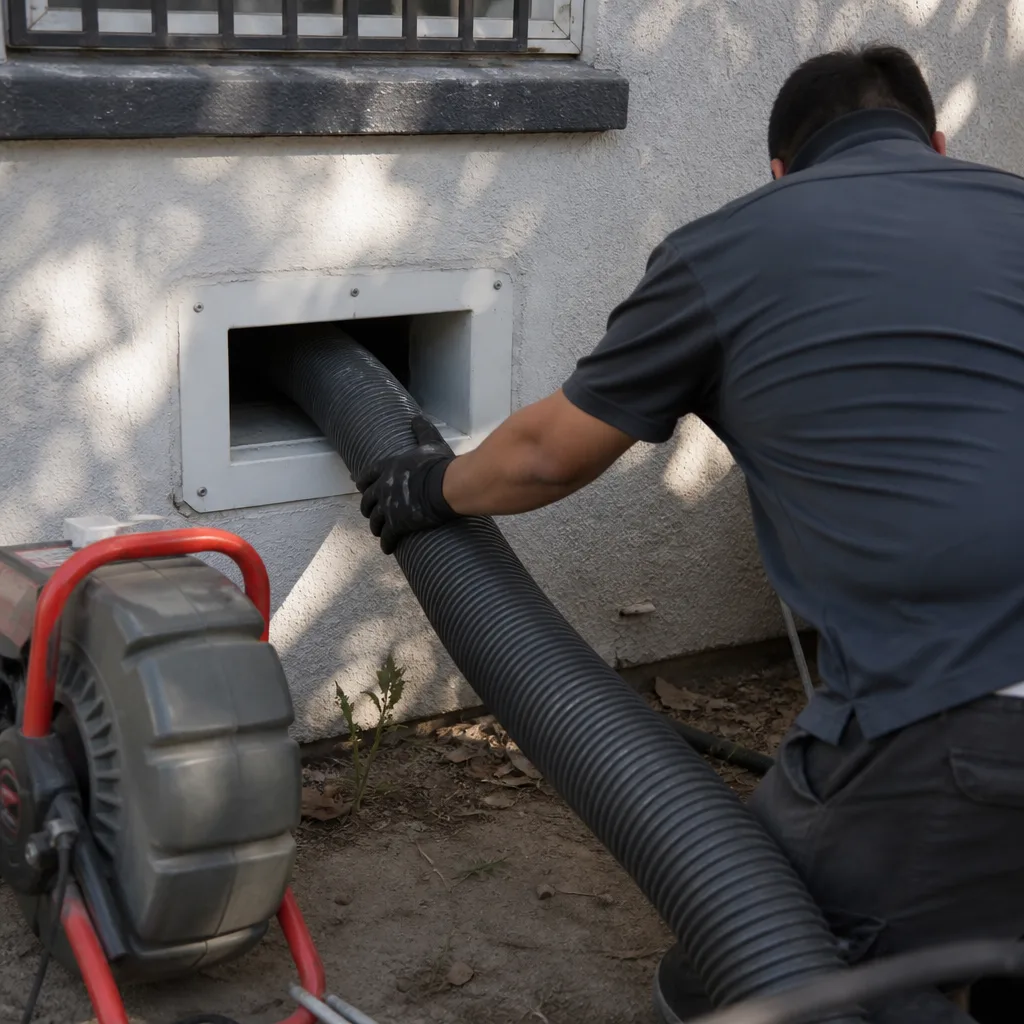 After
After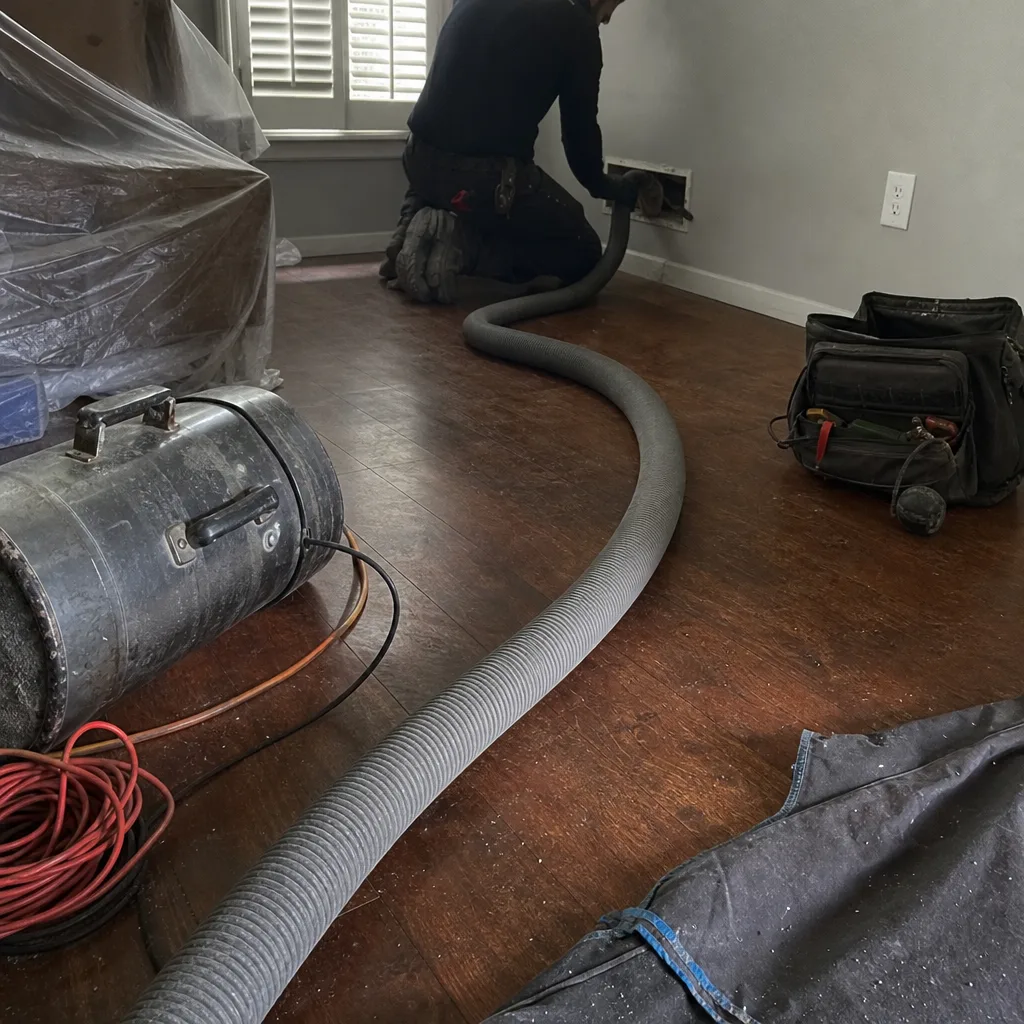 Before
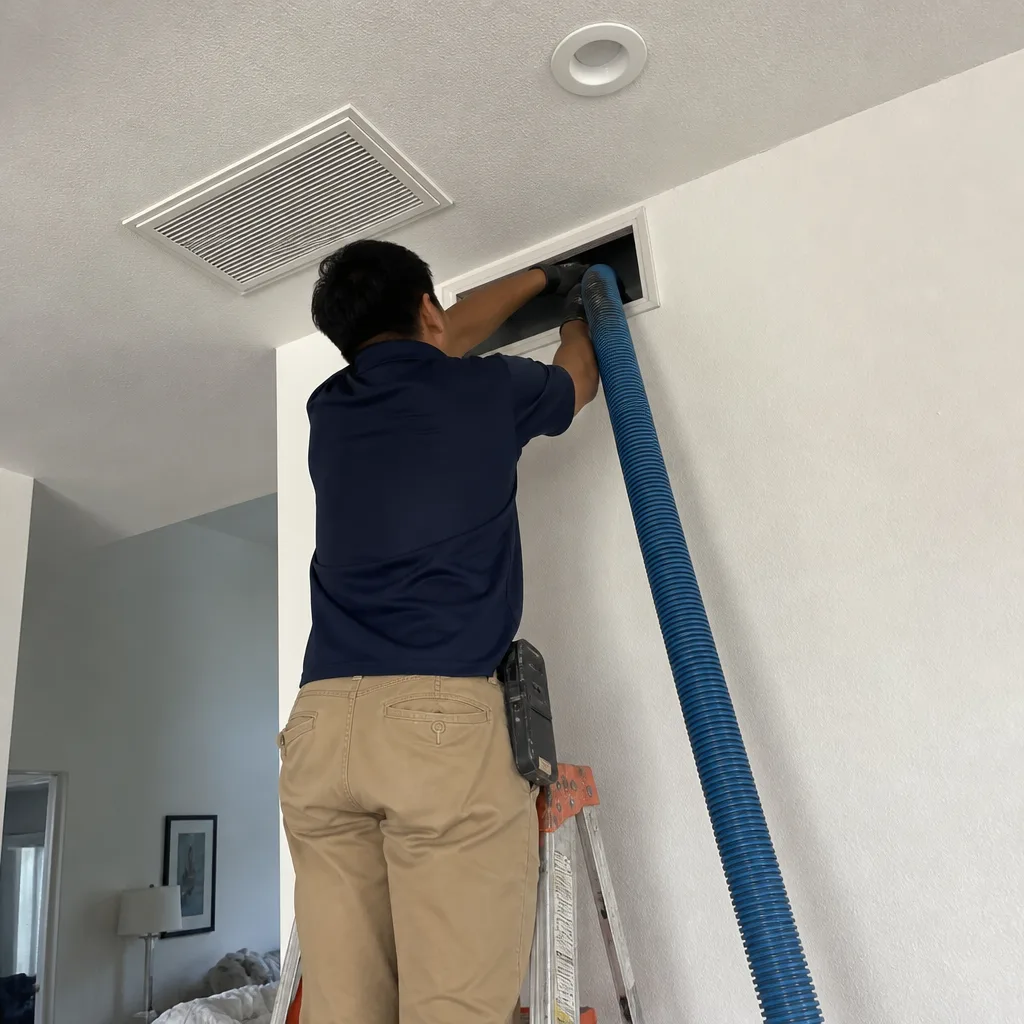 After
After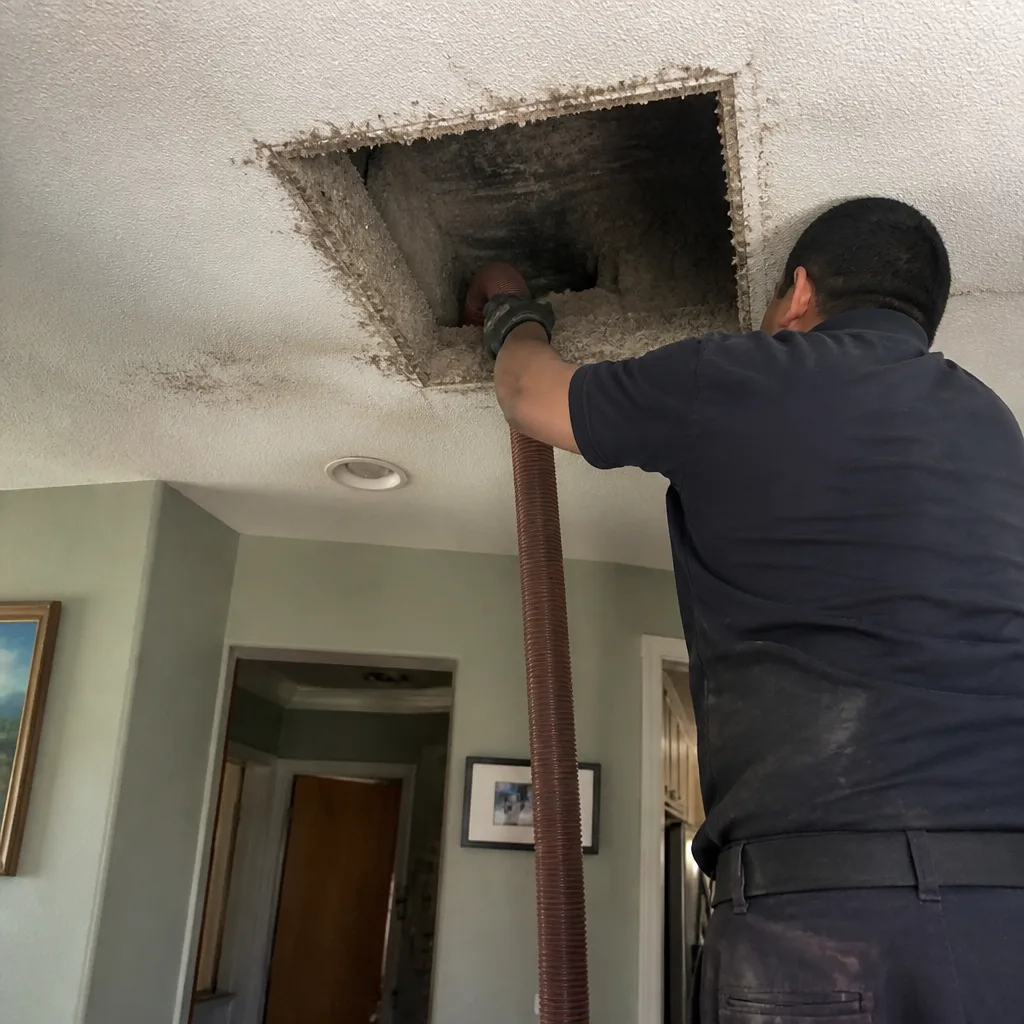 Before
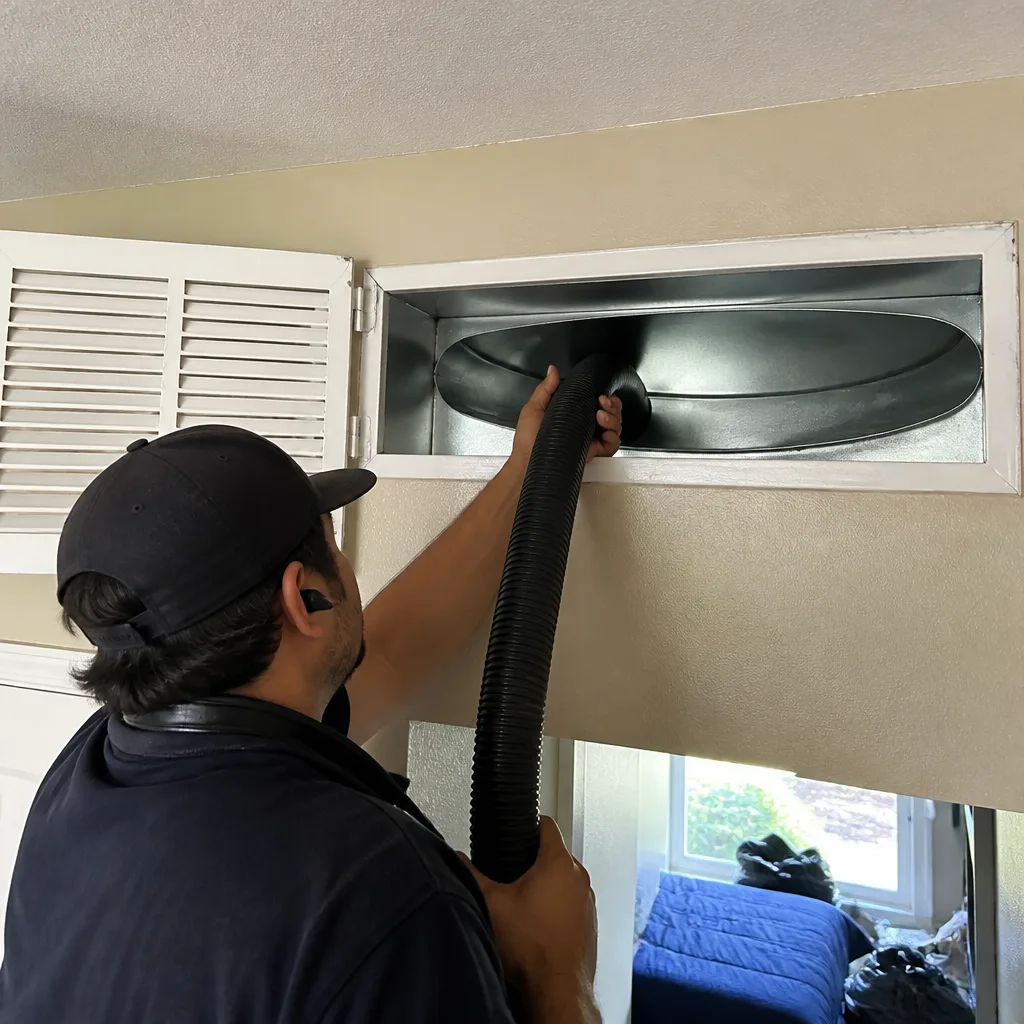 After
AfterChoosing the Right Air Duct Cleaning Brand: A Buyer’s Guide for Los Angeles
Here’s something most Los Angeles homeowners don’t realize: the barrier to entry for air duct cleaning is shockingly low. A pickup truck, a portable vacuum from a hardware store, and a generic logo are all it takes to start advertising “professional duct cleaning” across Los Angeles. No license requirement specific to duct cleaning. No mandatory equipment standard. No inspection before you hand over money. That means the difference between a company that actually cleans your ducts and one that just waves a hose near your vents comes down to what you know before you book. This guide walks you through the five questions that separate real duct-cleaning operations from the rest, with Los Angeles-specific context on why this matters here more than most places. For a deeper dive, see The Complete Air Duct Cleaning Guide for Los Angeles Homeowners.
Quick Answer
The best air duct cleaning company in Los Angeles is the one that can name its equipment brands, explain its process in plain terms, show before-and-after photo proof, give you a written price before work starts, and offer a real satisfaction window beyond the day of service. Brand name alone tells you almost nothing. Process, equipment, and accountability standards tell you everything.
Table of Contents
- The Equipment Name Test: Why It Matters More Than Any Logo
- What “NADCA Certified” Actually Means in the Real World
- Before-and-After Photos: The Honesty Filter No One Talks About
- Written Pricing and Live Arrival Tracking: The Two Standards That Protect You
- Why Los Angeles Ducts Get Dirtier Than You’d Expect
- The Screening Call: Exactly What to Ask and What Real Answers Sound Like
- What Air Duct Cleaning Actually Costs in Los Angeles
- Common Mistakes to Avoid
The Equipment Name Test: Why It Matters More Than Any Logo
Ask a duct cleaning company what equipment brand they use. Then listen. The answer tells you more in ten seconds than an entire website’s About page.
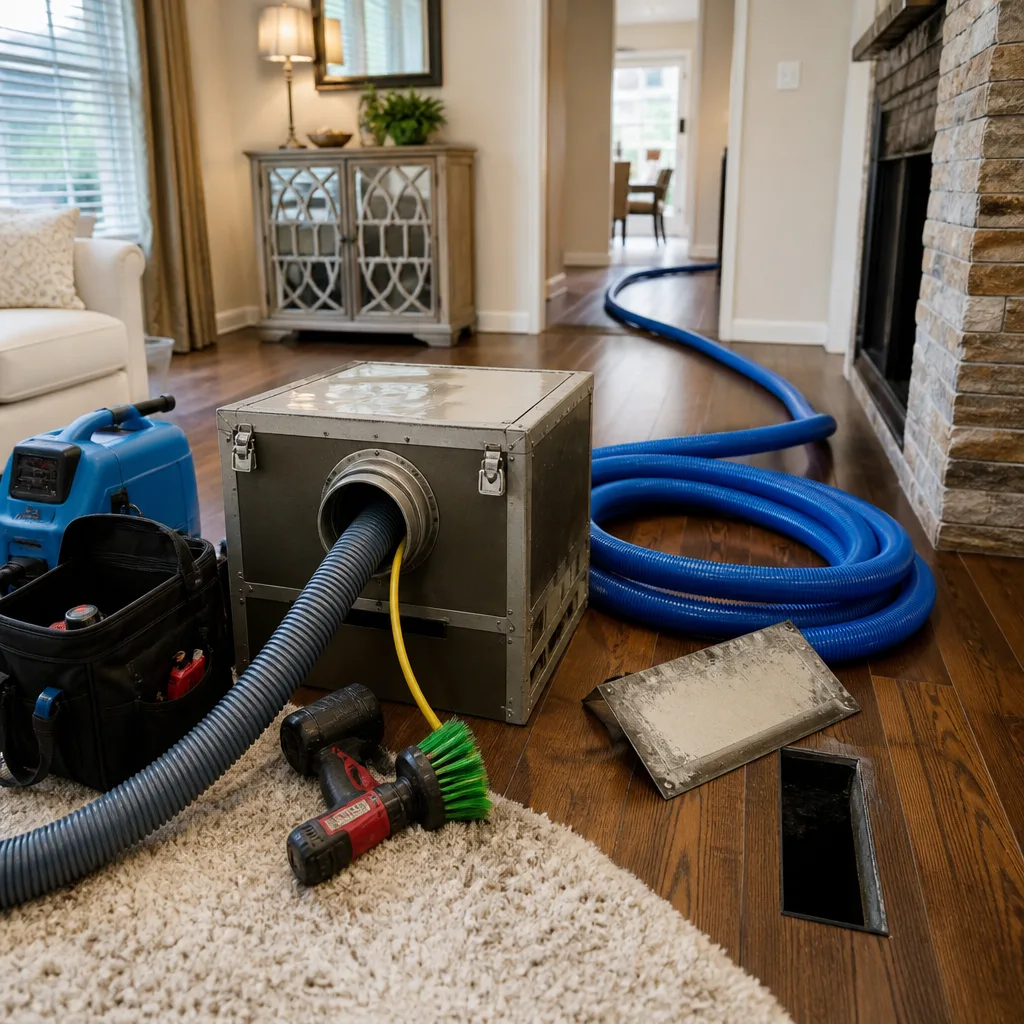
A trained technician can name their system without hesitation. They’ll tell you whether they run Rotobrush rotary brush systems, Nikro HEPA-rated negative-pressure vacuums, or Abatement Technologies containment units, and they can explain why they chose that setup for Los Angeles homes. A company running professional equipment knows their tools the way a mechanic knows their torque wrench. They invested in it, trained on it, and chose it deliberately for the work it does.
Now ask the same question to a low-budget operation. You’ll get answers like “we use professional-grade equipment” with no brand attached, or “the same stuff everyone uses,” or a vague reference to “truck-mounted systems” that somehow never names a manufacturer. That evasiveness isn’t modesty. It’s a tell. If a company cannot name the equipment they use to clean your home’s air ducts, they’re either running hardware-store vacuums or outsourcing to whoever shows up that day. Neither is what you’re paying for.
Here’s why the equipment question matters in Los Angeles specifically. LA homes run HVAC systems hard through long cooling seasons. The average system cycles hundreds of times per month from June through October. That means dust, pet dander, and the fine particulate that drifts in through open windows in neighborhoods from Silver Lake to Sherman Oaks compacts into ductwork at a rate that surprises homeowners. Rotary brush agitation paired with HEPA negative-pressure extraction, which means the loosened debris gets pulled directly into a sealed vacuum system rather than blown back into your living room, is the minimum standard for actually removing that buildup. A shop vac held at a vent opening simply cannot do it. It’s the difference between cleaning the inside of the pipe and tidying up around the opening.
What “NADCA Certified” Actually Means in the Real World
NADCA, the National Air Duct Cleaners Association, publishes the ACR standard, which is the closest thing this industry has to a technical rulebook. The standard specifies measurable requirements: minimum airflow rates in cubic feet per minute (CFM) during extraction, minimum contact time for agitation tools against duct surfaces, and specific protocols for containing debris during the job. That’s real substance. It’s not a membership card.
But here’s what most homeowners don’t know: “NADCA certified” appears in marketing copy from companies that have never had a NADCA-certified technician on a job site. The term gets borrowed, stretched, and outright faked. A company can write “NADCA standards” on a flyer without any certification behind it, and enforcement is nearly nonexistent in the Los Angeles market.
So how do you verify it? Ask the company whether their technicians hold current Air Systems Cleaning Specialist (ASCS) certification through NADCA, and ask to see a certification number. A legitimate operation will volunteer this information or direct you to the NADCA directory. A company that hesitates, changes the subject, or says “we follow NADCA guidelines” without naming a certified technician is telling you what you need to know.
The practical takeaway: treat “NADCA” in marketing as a starting point for questions, not an answer. The certification matters because the ACR standard sets a performance floor, but only if a real certified person is actually doing or directly supervising the work. In our experience across Los Angeles, the companies that meet the standard are the same ones that can name their equipment brands and show you their process. The two signals travel together.
Before-and-After Photos: The Honesty Filter No One Talks About
You cannot see your own air ducts. That’s the fundamental problem with this industry. You pay for a service, the technician leaves, and you have no visual evidence anything happened inside your walls. That information asymmetry is exactly why before-and-after photo documentation exists as a practice, and exactly why so many low-end operators avoid it.
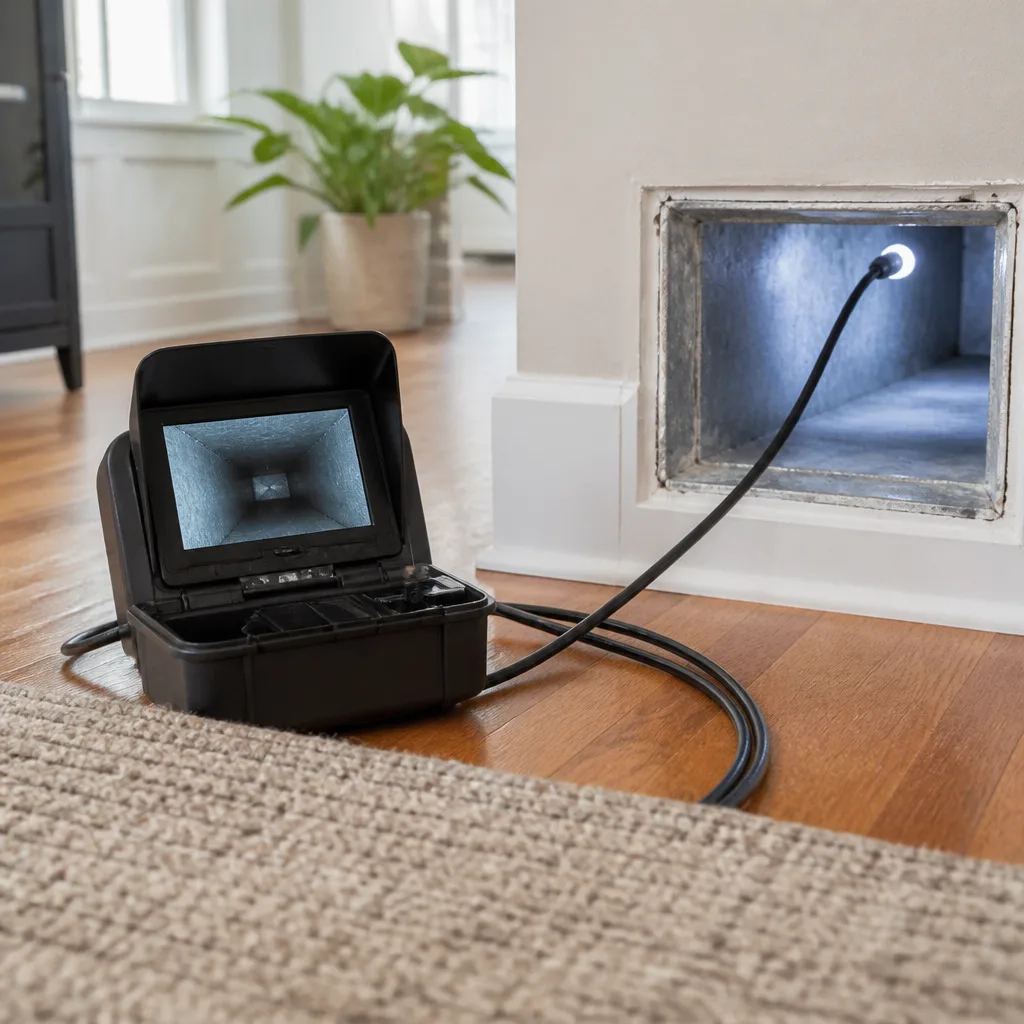
Companies that take inspection-port photos before and after the cleaning are betting on their own work. They open an access point into the duct, photograph the interior surface showing the buildup, clean the system, then photograph the same spot showing the result. This is not difficult to do with modern inspection cameras. The companies that refuse to do it are making a choice, not facing a technical limitation.
In the Los Angeles market, where a homeowner might book a duct cleaning once every three to five years and never see the inside of their ducts in between, photo documentation is the single most direct form of accountability available. It answers the question “did the tech actually do anything?” without requiring you to climb into an attic or behind a return grille.
Here’s the screening tip: ask any company you’re considering whether before-and-after photos are included with every job, at no extra charge, with no special request required. The right answer is a simple yes. An answer that involves conditions, upgrade fees, or confusion is a company telling you they don’t document results as standard practice. That’s a signal to keep looking.
Written Pricing and Live Arrival Tracking: The Two Standards That Protect You
Two operational practices protect Los Angeles homeowners from this industry’s most common problems more than any equipment brand or certification ever will. The first is a written price handed to you before work begins, with no changes at the door. The second is a live arrival window you can track from your phone.
The bait-and-switch pricing model has defined air duct cleaning’s reputation for decades. A company advertises one number, the technician arrives and “discovers” that your ducts are larger than expected, dirtier than expected, or require additional sanitizing treatments, and the invoice balloons. In Los Angeles, where the cost of living already squeezes every budget, this pattern hits hard. A written price presented before the job starts, without pressure and without per-vent upselling, eliminates the dynamic entirely. You should know the full cost before the first access panel comes off.
The arrival window matters for the same reason it matters in every home service category, but with an LA twist: traffic. A company that gives you a four-hour window in a city where the 405 can turn a 20-minute drive into a 90-minute crawl isn’t respecting your time. Live, trackable arrival times, the kind you see with ride-share apps, tell you that the company has operational discipline. You know when the technician will arrive, you know their name before they walk in, and you’re not burning a full day waiting for a knock on the door.
These two standards, written upfront pricing and live arrival tracking, are what protect you before the equipment ever gets unloaded. Everything else is performance. These are structure.
Why Los Angeles Ducts Get Dirtier Than You’d Expect
Los Angeles has a dust problem most people don’t connect to their HVAC systems. It starts with the geography: the LA Basin traps particulate against the mountains, and the long dry season keeps that dust airborne and mobile. It continues with the way Angelenos live: windows open in the evening for the ocean breeze, pets indoors year-round, and homes that run cooling systems for eight or nine months of the year.
Every time your system cycles, it pulls air through the return vents and pushes it through the ducts. That air carries whatever is floating in your home. Pet hair, dust from the Santa Ana winds, cooking aerosols, and the fine grit that settles on every surface. Over time, a layer of debris builds up inside the ductwork, and because the system keeps pulling air across it, that debris affects air quality throughout the house.
There’s also the construction factor. Los Angeles neighborhoods are in a constant state of renovation, from Highland Park bungalows to Westside condo complexes. Renovation dust, drywall particulate, and sawdust find their way into registers during remodels, and unless the ducts are cleaned afterward, that debris circulates for years.
The practical result: ducts in Los Angeles homes often need cleaning more frequently than homeowners assume. If you’re noticing dust accumulating on surfaces within days of cleaning, or if rooms at the far end of the house never seem to hold temperature as well as the rest, your ducts may be carrying a heavier debris load than you realize. A professional inspection with camera documentation can tell you the condition of your ductwork in about the time it takes to watch a sitcom episode.
The Screening Call: Exactly What to Ask and What Real Answers Sound Like
You’ve narrowed your list. It’s time to call. Here’s a five-question sequence that will tell you everything you need to know in under ten minutes, with the answers a legitimate company gives versus the evasions that should send you elsewhere.
- “What equipment brand do you use for cleaning, and why did you choose it?” A real answer sounds like: “We run Rotobrush rotary brush systems for agitation and Nikro HEPA negative-pressure vacuums for extraction, because the combination lets us clean and capture debris in a single pass without blowing anything back into the living space.” An evasive answer sounds like: “Professional-grade equipment” with no brand named, or a defensive “all equipment works the same.”
- “Do you include before-and-after photos of the ducts with every job?” The right answer is one word: yes. Anything that involves an upcharge, a special package, or a “we can if you want” tells you photos aren’t standard practice, which means accountability isn’t standard practice.
- “Do you give me a written price before any work begins, and does it stay fixed?” Listen for a clear commitment: “The price we quote is the price on the invoice. It doesn’t change at the door.” Ambiguity here, phrases like “well, it depends on what we find” without a clear ceiling, is a red flag.
- “What’s your satisfaction window if something isn’t right?” A real answer includes a specific timeframe: 30 days, 90 days, 365 days. “We’ll make it right” with no timeframe attached means you have no enforceable promise. The better companies commit to a period, in writing, and extend it to every job rather than select ones.
- “Can I track the technician’s arrival time, and will I know who’s coming?” In 2026, the right answer is yes. Background-checked, uniformed technicians with live arrival tracking is the standard for serious home service operations. A company still operating on four-hour windows and “we’ll call when we’re close” is behind on the basics.
Run this sequence with two or three companies. The difference in the answers will make your decision obvious.
What Air Duct Cleaning Actually Costs in Los Angeles
Let’s put numbers on it. Most standard air duct cleanings for a typical Los Angeles home, meaning roughly 1,500 to 2,500 square feet with two to three bedrooms, run between $350 and $650. That’s the honest whole-system range. Larger homes, multi-zone systems, or ducts that haven’t been cleaned in a decade or more can push the number toward $800 or beyond, especially if multiple HVAC units or long runs in older construction are involved.
Here’s the breakdown of what drives that price:
- Number of systems: A single central HVAC system is the baseline. Homes with a second unit for an upper floor or an ADU effectively double the scope.
- System size and duct count: More supply and return runs mean more time, more agitation passes, more extraction, and more inspection ports opened and resealed.
- Access difficulty: Crawlspace or attic equipment, high ceilings, and tight mechanical closets add labor time, and Los Angeles homes run the full spectrum from 1920s bungalows with impossible access to modern builds with generous mechanical rooms.
- Condition of the existing system: Heavily impacted ducts, visible mold growth, or pest debris require slower, more deliberate cleaning and sometimes specialty treatment.
- Add-on services: Sanitizing treatments, dryer vent cleaning bundled with duct cleaning, or filtration upgrades (Honeywell, Aprilaire, Guardsman products) add cost if you choose them.
Be wary of quotes far below the $350 mark for whole-home duct cleaning. In the Los Angeles market, a sub-$200 quote for a full system typically signals a bait price designed to create an upsell opportunity at the door, or a superficial “vent sweeping” service that doesn’t actually clean the duct interiors. Neither is the service you’re shopping for.
If you want a precise number for your home, call a company that offers free estimates and ask for a written quote before booking. At Cardinal Air Duct Cleaning home, we give a written price before any work starts, and that price is what you pay. No changes at the door. If you’re also seeing lint buildup around your dryer, our Dryer Vent Cleaning in Los Angeles service can be bundled with your duct cleaning for a single visit. Full Air Duct Cleaning in Los Angeles details are available on our service page, and HVAC Cleaning in Los Angeles covers coil and blower cleaning for systems that need deeper mechanical service.
Common Mistakes to Avoid
- Booking on price alone. The cheapest quote in Los Angeles is usually a door price designed to become a much larger invoice once the technician is inside. A written price that doesn’t change is worth more than a cheaper one that does.
- Trusting “certified” without verification. Anyone can print the word on a flyer. Ask for a certification number and verify it before you book, no matter how many logos appear on the website.
- Skipping the equipment question. If a company cannot name its equipment brands, it has not invested in professional tools. That’s not a company, that’s a person with a vacuum.
- Accepting a multi-hour arrival window. In Los Angeles, where traffic is unpredictable but tracking technology is not, a four-hour window signals operational laziness. Live arrival tracking exists. Demand it.
- Not asking for photo proof. If you don’t get before-and-after documentation, you’re taking a stranger’s word that work happened inside your walls. That’s a trust you should not extend to a company you’ve never worked with.
- Assuming duct cleaning is “once a decade” maintenance. Los Angeles dust loads, pet dander, and long cooling seasons mean many homes need service more frequently. An inspection camera tells the real story.
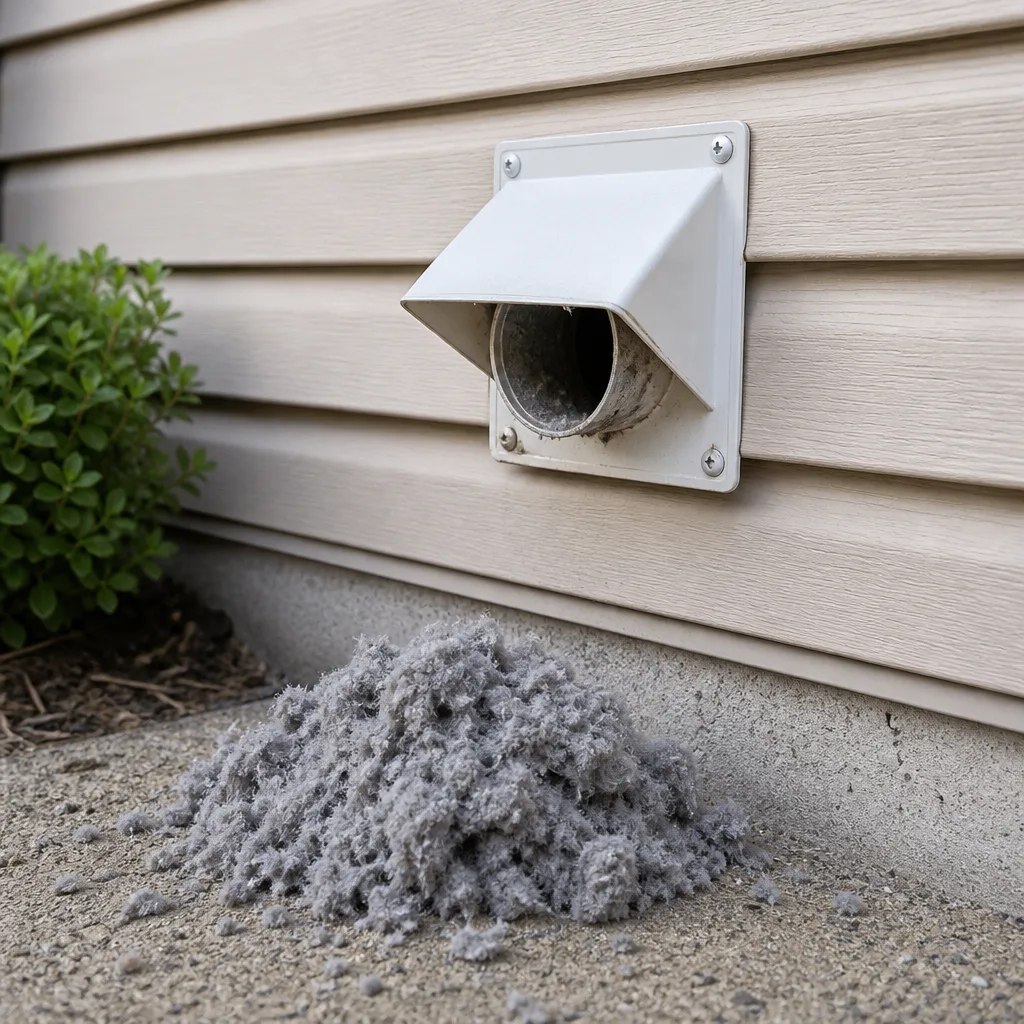
- Ignoring the dryer vent. Dryer vents share the same debris problem as air ducts but add a fire risk. If you’re having ducts cleaned, have the dryer vent inspected in the same visit. Lint from years of drying cycles compacts quickly in LA’s dry air, and a blocked vent forces your dryer to work harder and run hotter.
When to Call a Professional
Call a duct cleaning professional when you notice visible dust buildup around supply registers, when rooms at the far end of the house run warmer than the rest, when allergy symptoms worsen at home but improve elsewhere, or when you’ve completed a renovation that produced drywall dust or sawdust. If you’ve lived in your home for three or more years and have never had the ducts cleaned, an inspection is overdue. If anyone in the house has respiratory issues, don’t wait for visual clues. The dust inside the ducts circulates through every room the system serves. Cardinal Air Duct Cleaning offers Air Duct Cleaning services with free estimates in Los Angeles; call (737) 727-2314 and we’ll inspect your ducts, give you a written price, and show you exactly what we found with before-and-after photo documentation.
Frequently Asked Questions
Most standard air duct cleanings for a typical Los Angeles home run between $350 and $650, depending on system size, number of HVAC units, access difficulty, and the condition of the ductwork. Larger homes or heavily impacted systems can run higher. Be cautious of quotes far below that range, as they typically signal a bait price that grows once the technician arrives. Call (737) 727-2314 for an exact quote, estimates are free and the written price does not change at the door.
Every three to five years is the general guideline for Los Angeles homes, but the real answer depends on your specific conditions. Homes with pets, homes near busy roads or construction, homes with family members who have allergies or asthma, and homes that run cooling systems nine months out of the year often need service more frequently. An inspection camera is the fastest way to know for certain. If you can’t remember the last time your ducts were cleaned, it’s time to look.
A professional air duct cleaner should use rotary brush agitation combined with negative-pressure extraction, and they should be able to name their equipment brands. Rotobrush brush systems, Nikro HEPA vacuums, and Abatement Technologies containment units are professional-grade standards. Negative-pressure extraction means the loosened debris is pulled directly into the vacuum system rather than blown back into your living room. If a company cannot name its equipment, it’s not running professional tools.
Before-and-after photos taken through inspection ports into the ductwork are the answer. A legitimate company documents the interior surface before cleaning, then photographs the same spot after, and includes those photos with your invoice. If a company doesn’t offer photo documentation as standard practice, you’re being asked to trust the technician’s word alone. In Los Angeles, where most homeowners never see the inside of their ducts, photo proof is the baseline for accountability. Call (737) 727-2314 if you want an inspection with photo documentation before you commit to anything.
The gap exists because low-ball quotes are a sales tactic, not a service difference. A company advertising a sub-$200 whole-home cleaning is betting on getting a technician into your home where pressure and “discoveries” drive the invoice up. The actual cost of proper cleaning, with professional equipment, trained technicians, and proper containment, lands in the $350 to $650 range for most LA homes. A written price before work starts, with no changes at the door, eliminates the dynamic entirely.
No, NADCA certification is not required by California law or Los Angeles city code, which is exactly why it matters as a differentiator. Companies that pursue certification and employ ASCS-certified technicians are voluntarily holding themselves to the ACR standard, which specifies airflow rates, contact time, and containment protocols. Companies that don’t are operating without any technical standard at all. Ask for a certification number and verify it. Call (737) 727-2314 to speak with someone who can answer your equipment and process questions directly.
The Bottom Line
The best air duct cleaning company in Los Angeles is not the one with the biggest ad budget or the shiniest logo. It’s the one that names its equipment brands, documents its work with photos, hands you a written price before starting, gives you a live arrival window you can track, and backs the job with a real satisfaction timeframe. Those five signals answer every question that matters about this industry, though you can find more guides & resources on our blog. Ask them of any company you’re considering. The ones that answer well are the ones you can trust with your home’s air. Cardinal Air Duct Cleaning is part of the Relay Home Co. family, founded 2005, and every job includes a written price, before-and-after photos, and the 365-Day Done Right Promise. Call (737) 727-2314 for a free estimate.
Written by Omar Haddad, Owner at Cardinal Air Duct Cleaning, serving Los Angeles since 2005.