
Last updated October 9, 2026
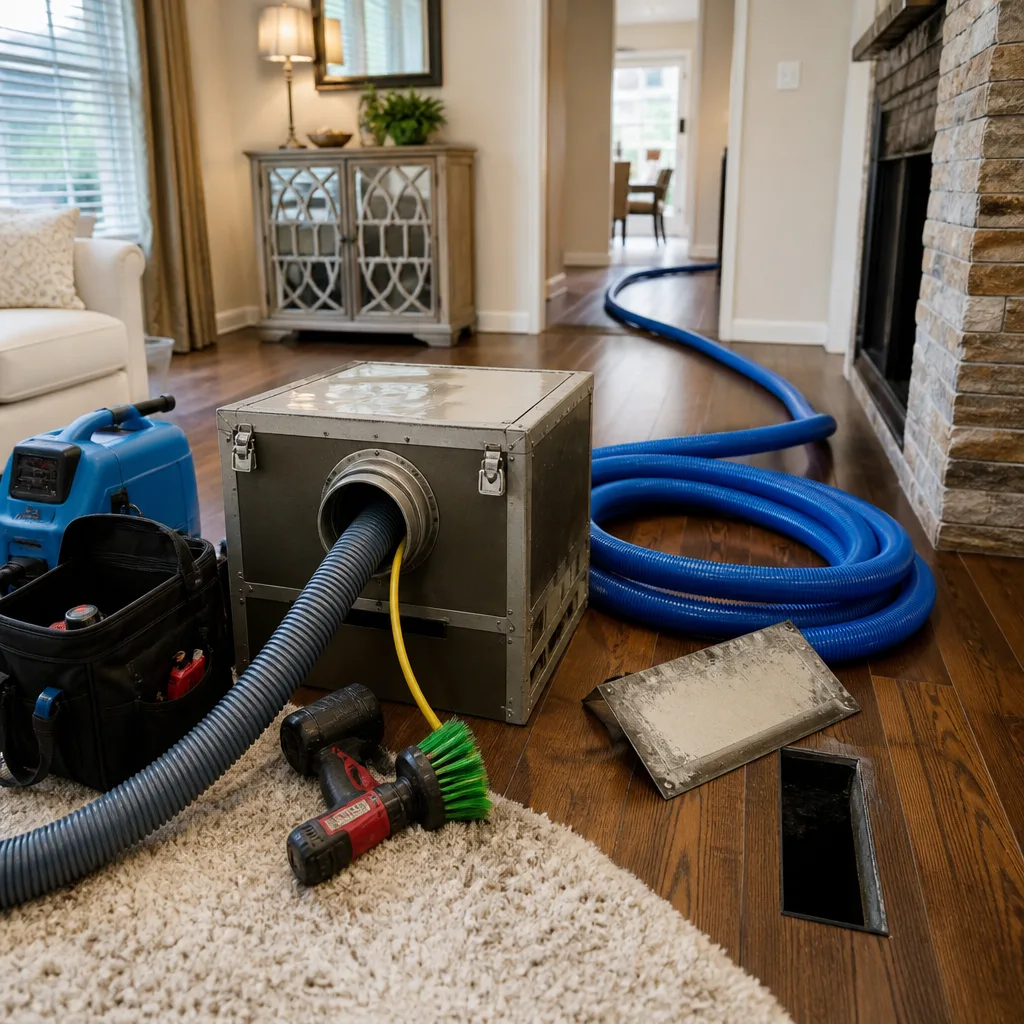
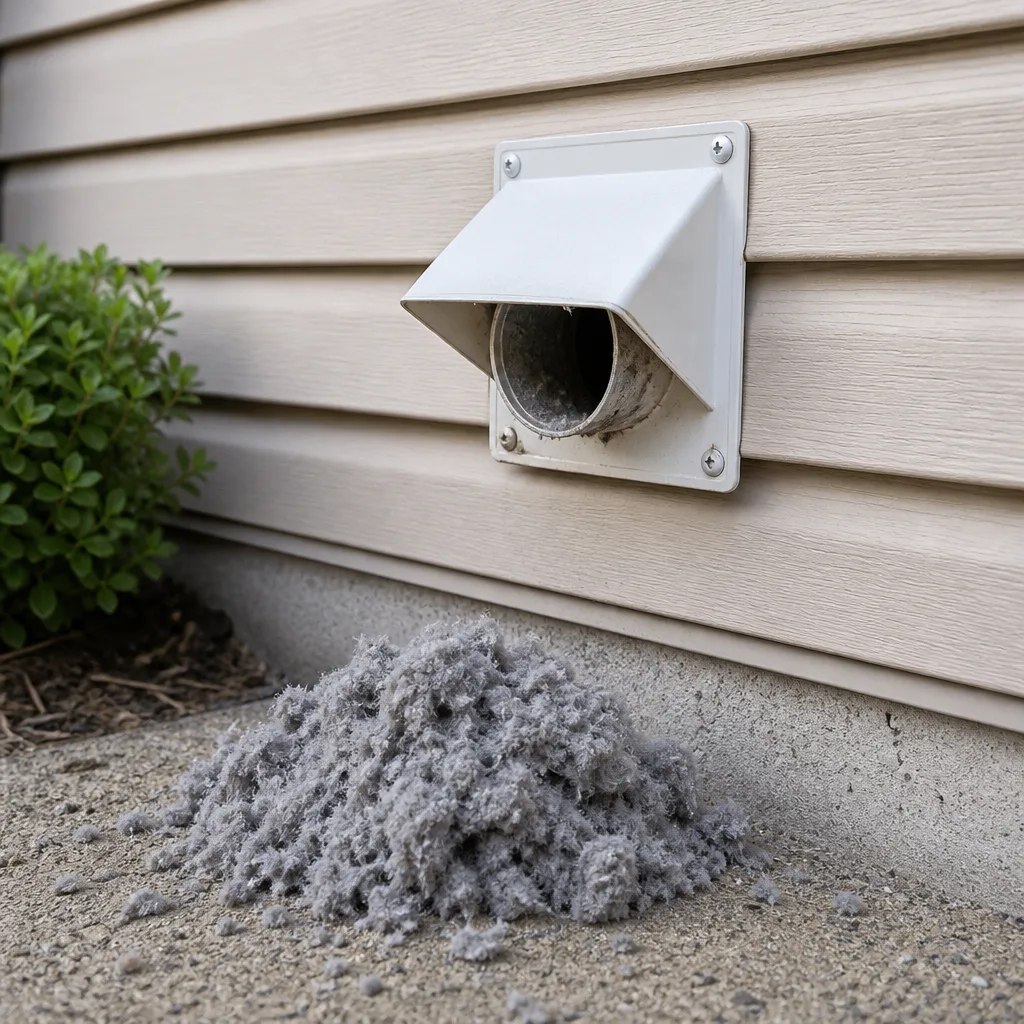
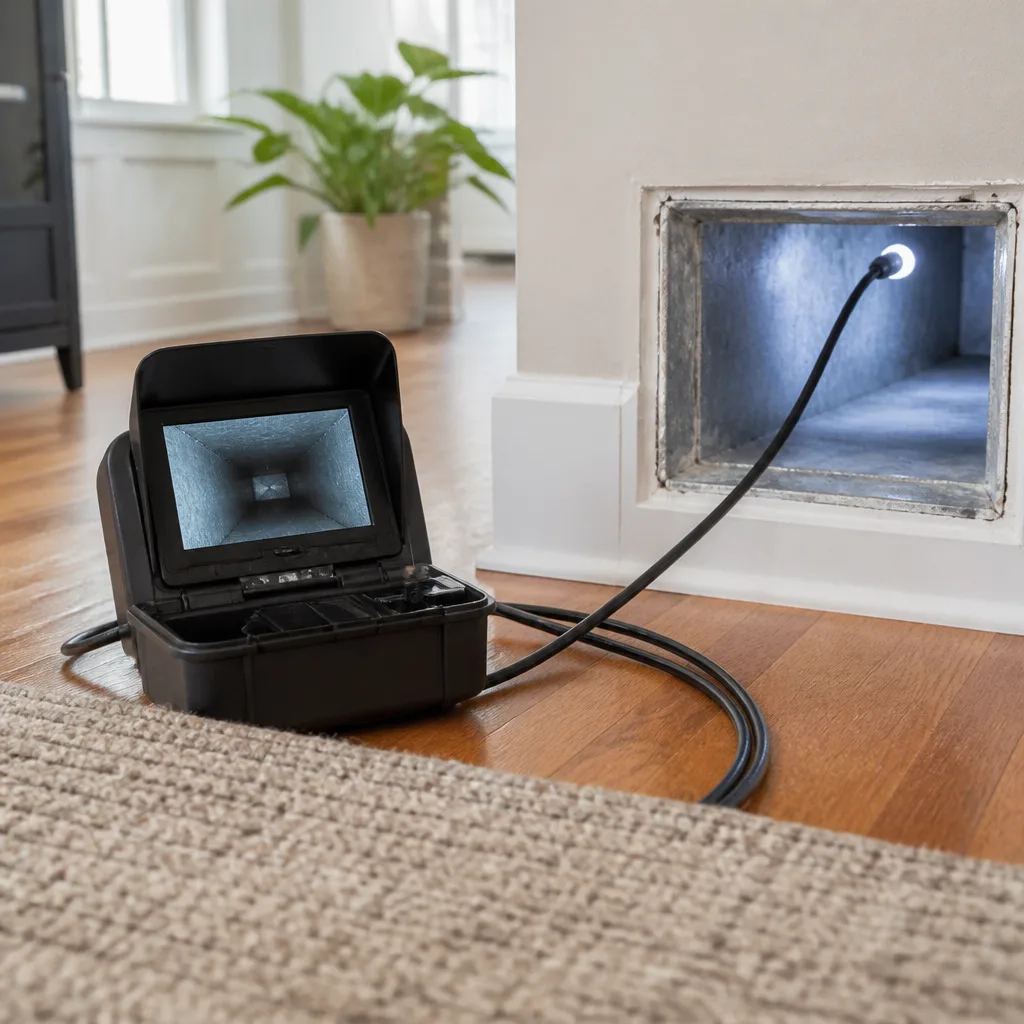
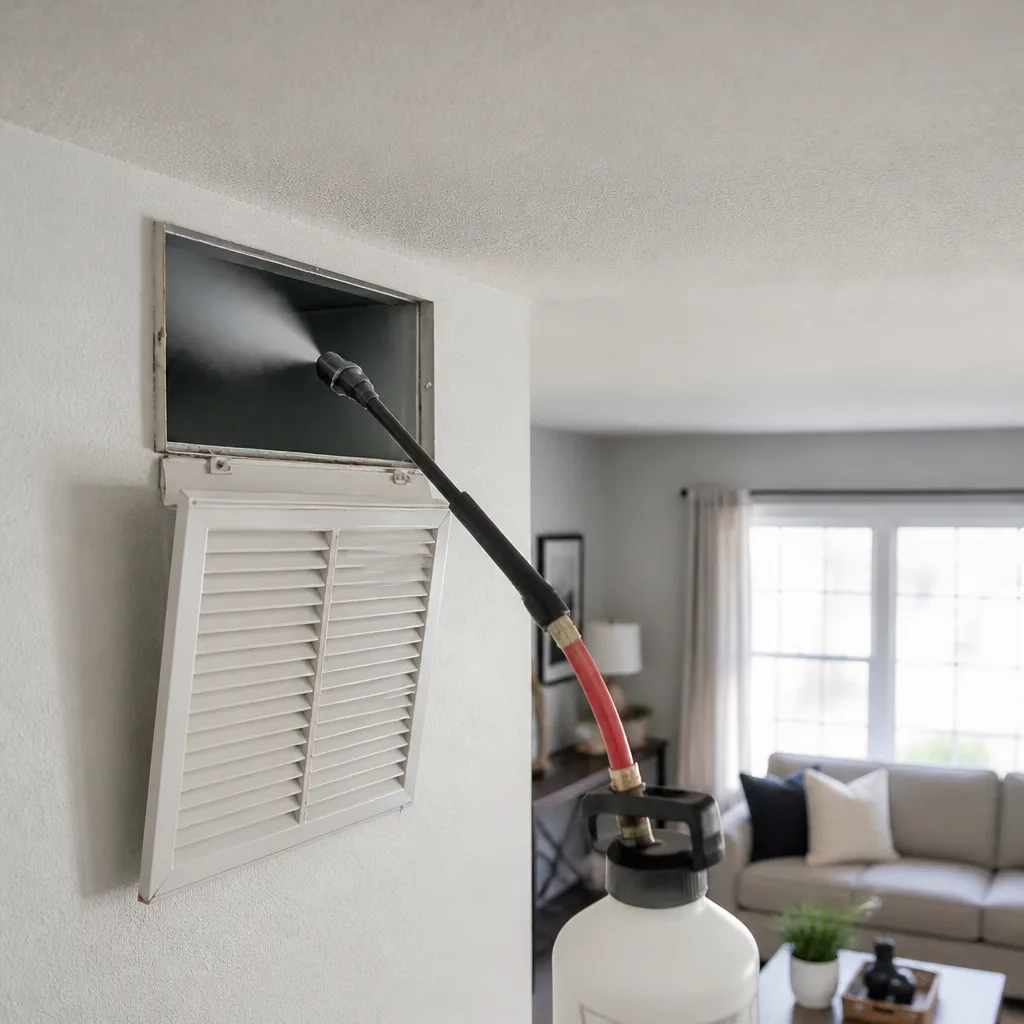
Whole-system duct and dryer vent check with before-and-after photos - you see exactly what came out of your vents
That "$99 whole-house special" is a bait ad - the real number appears once they are in your hallway, or the "clean" is a shop-vac at the register. We photograph the inside of your ducts before and after instead.
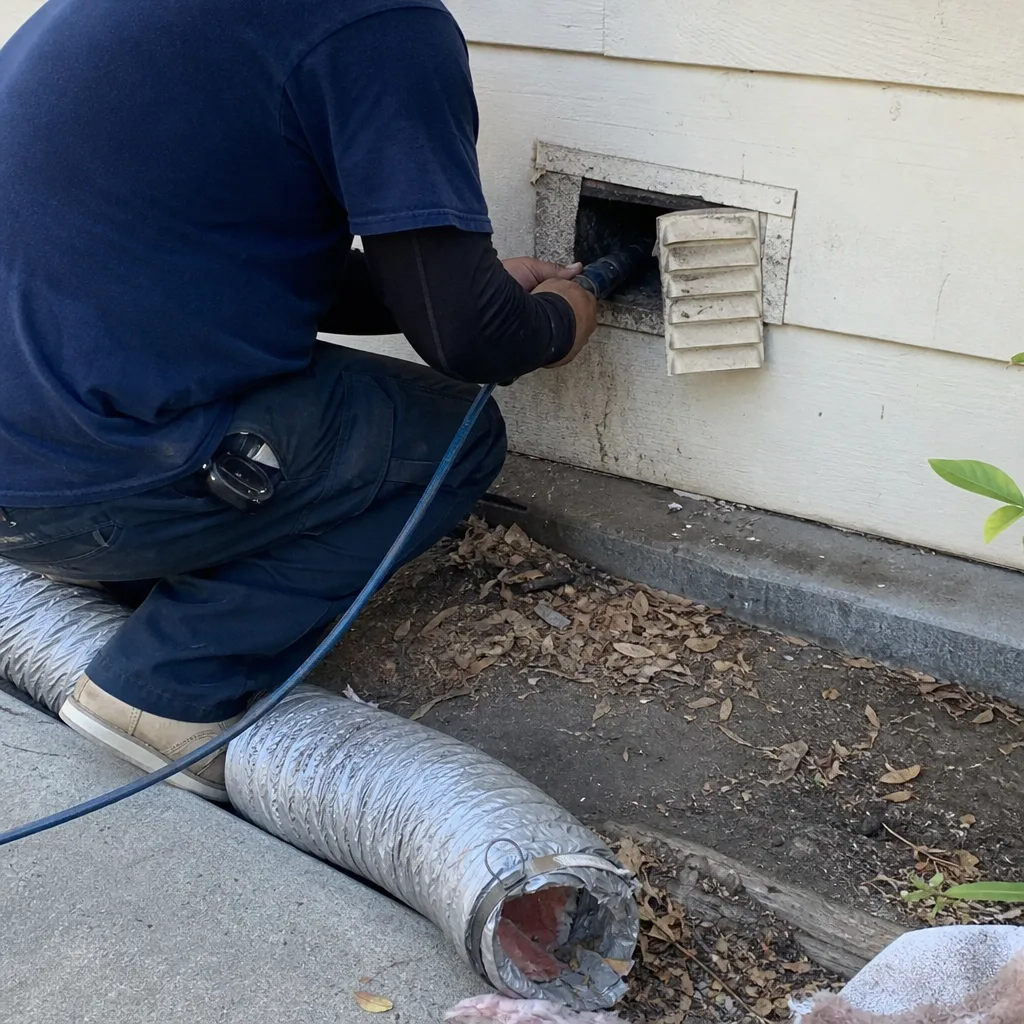 Before
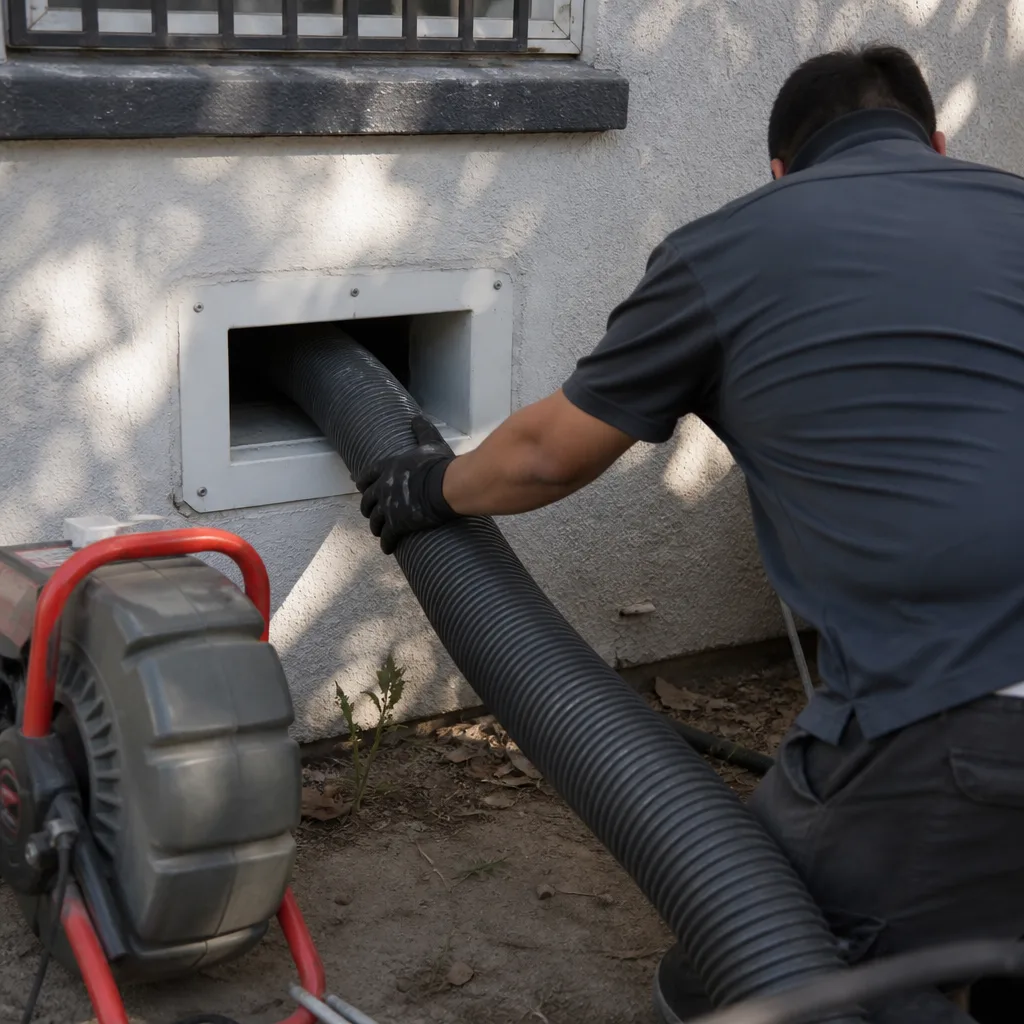 After
After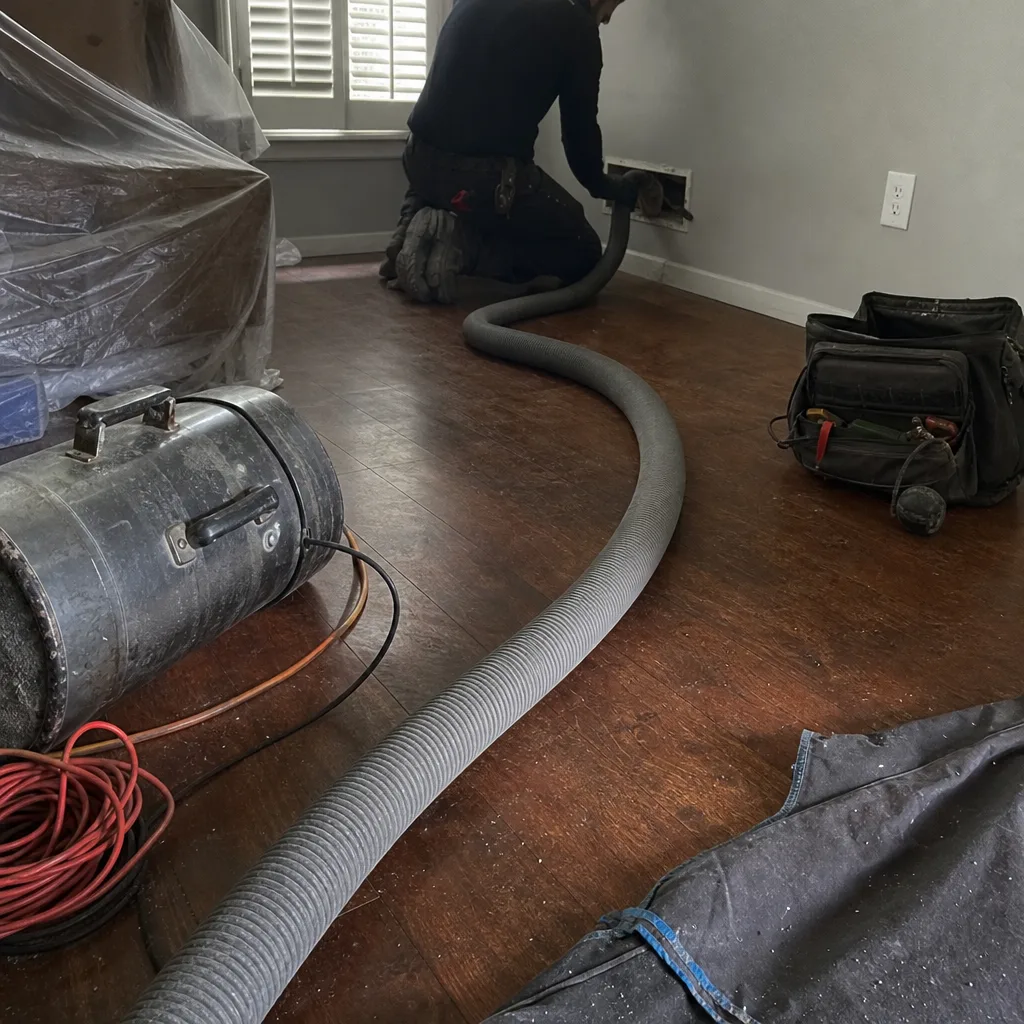 Before
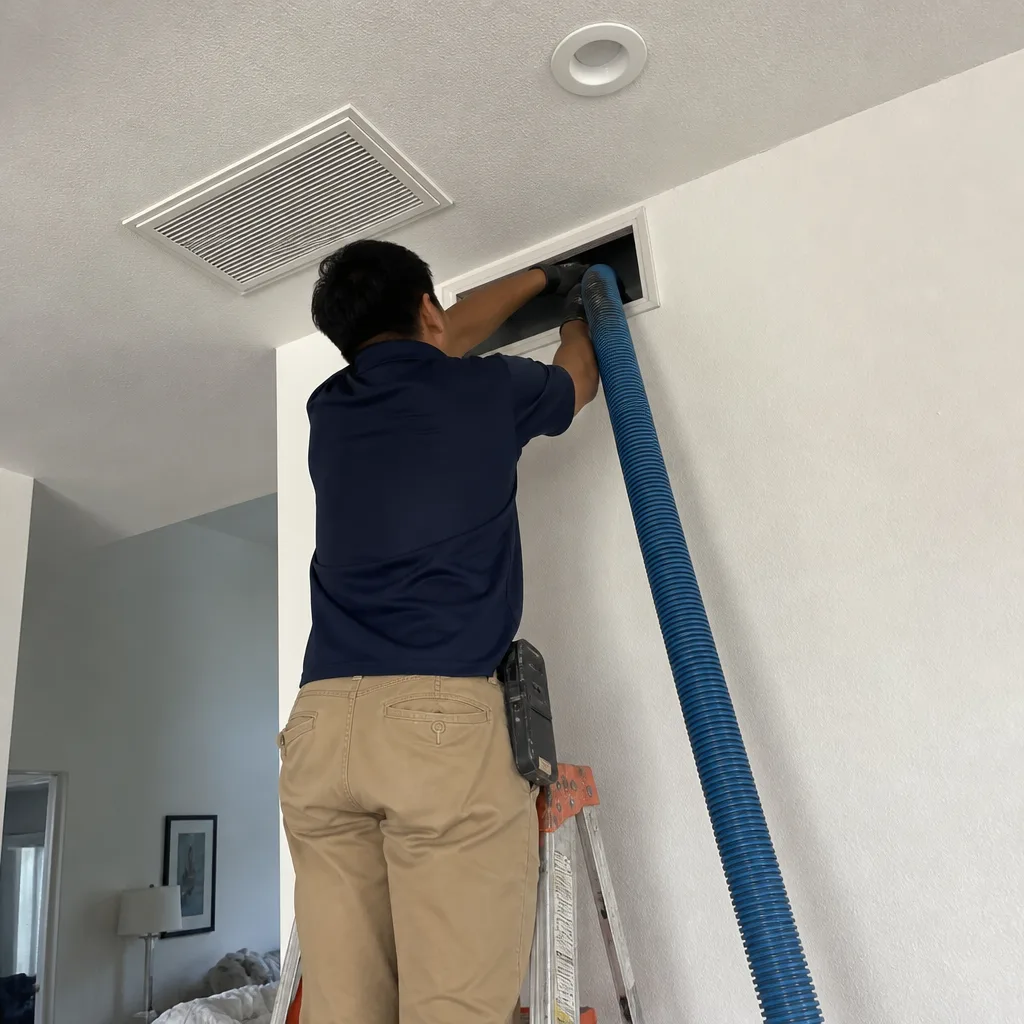 After
After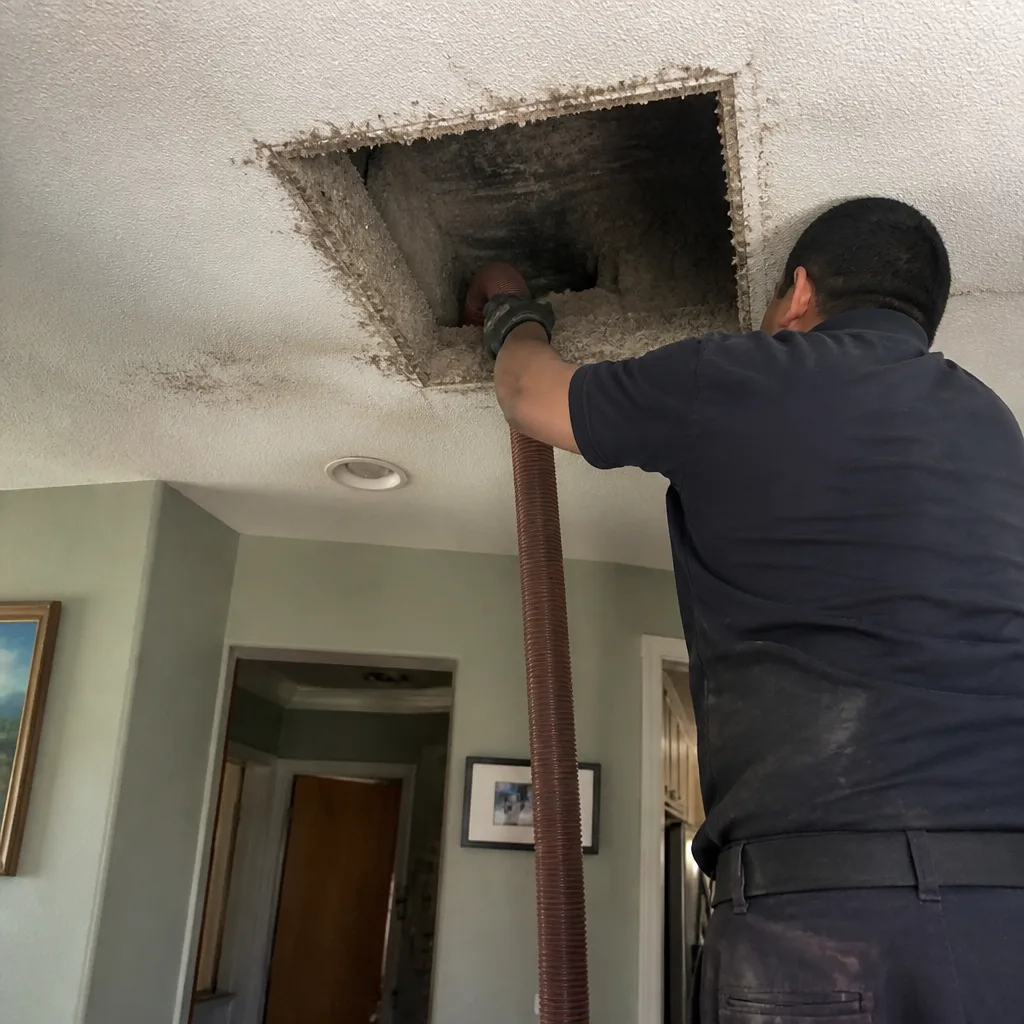 Before
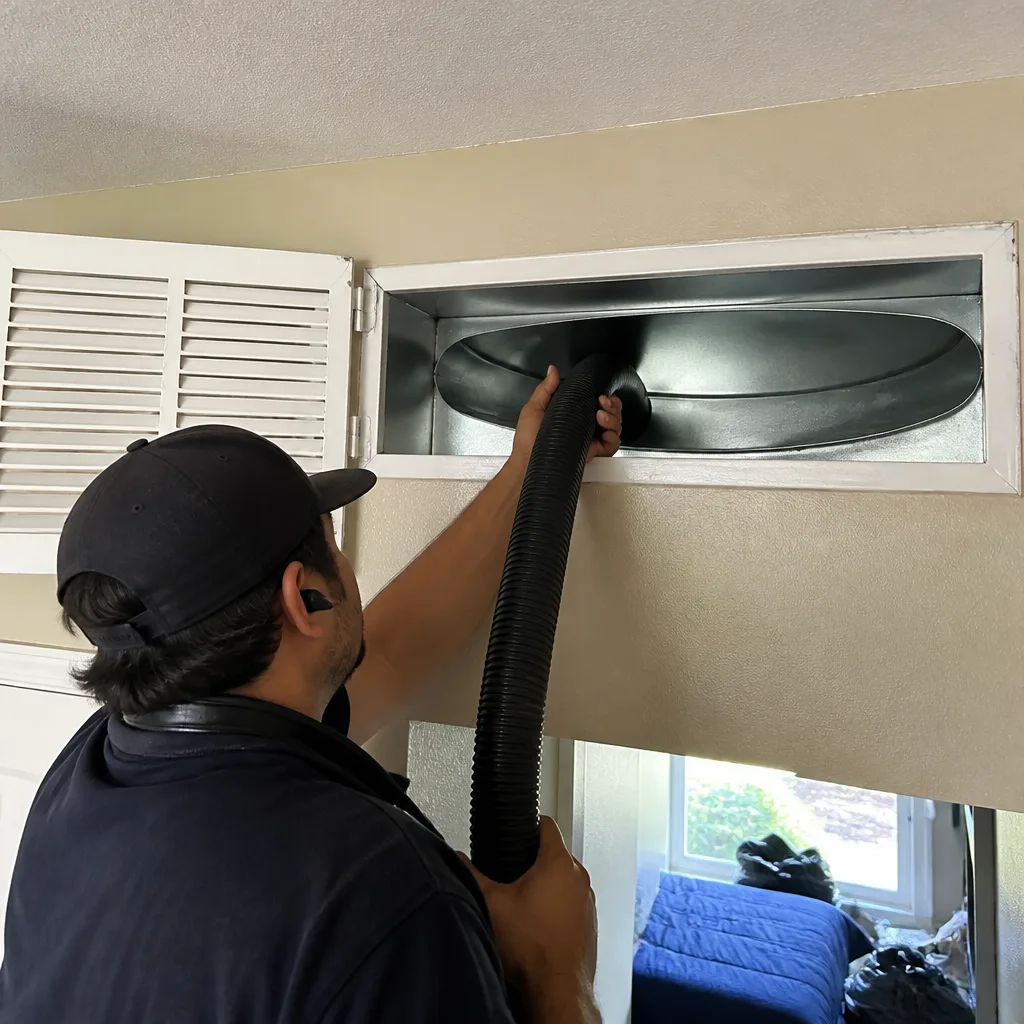 After
AfterHVAC Cleaning Troubleshooting: Common Problems and How to Fix Them
Nine out of ten “my HVAC smells bad after cleaning” complaints trace back to one skipped step: the evaporator coil, not the ductwork. Most crews in Los Angeles run a vacuum through the vents, snap a few photos, and never open the air handler. You’re left with cleaner ducts but the same damp, debris-caked coil sitting in the airflow path. This guide walks through the most common post-cleaning problems, what actually causes them, and how to tell whether you need a re-clean or more thorough HVAC cleaning.
Quick Answer
Most HVAC cleaning problems fall into three buckets: smells that persist or worsen after a job (usually a dirty evaporator coil or lingering chemical residue), airflow that still feels weak (often a loose access panel, wrong filter size, or collapsed flex duct), and uncertainty about whether the work was even done (missing before-and-after photos). For HVAC Cleaning Warning Signs Every Homeowner Should Know, read our detailed breakdown. The fix depends on identifying which root cause applies, and in many cases it’s a 30-minute correction, not a full re-clean.
Table of Contents
- Why Your HVAC Smells Worse After a Cleaning
- Burning vs. Musty vs. Chemical: What Each Smell Means
- Airflow Still Weak After Cleaning? Start With These Three Checks
- How to Verify Your Duct Cleaning Was Actually Completed
- When Re-Cleaning Is Warranted vs. When It’s a Mechanical Fault
- Using HEPA Filtration Units Post-Cleaning to Clear Residual Particulate
- Los Angeles-Specific Factors That Affect HVAC Cleaning Outcomes
- Common Mistakes to Avoid
- When to Call a Professional
- Frequently Asked Questions
- The Bottom Line
Why Your HVAC Smells Worse After a Cleaning
Here’s the scenario we hear most often from Los Angeles homeowners: they book an air duct cleaning, the crew leaves, and three days later the house smells like a damp basement. The ducts are clean, so why does it reek? Because the evaporator coil was never touched. This coil sits inside the air handler and runs wet whenever the AC cycles. Air moves across it before entering your ducts. If it’s coated in a biofilm of dust, pet dander, and moisture, you’re blowing conditioned air over a microbial mat every time the system kicks on.
A reputable HVAC cleaning in Los Angeles should include the coil as a standard part of the scope. Not as an upsell. Not as a separate “coil sanitation package.” If your cleaner only quoted ductwork, that’s a red flag. The coil is part of the air pathway. Cleaning ducts without the coil is like washing the outside of a glass but leaving last week’s orange juice inside.
What you can check right now:
- Open the air handler access panel and look at the coil. If it’s fuzzy, gray, or damp with visible buildup, that’s your odor source.
- Confirm whether your post-cleaning invoice itemizes “evaporator coil cleaning.” If it doesn’t, it probably didn’t happen.
- Ask for photos. We take before-and-after images of every component we touch, including the coil compartment.
In our experience cleaning homes across Los Angeles, from Sherman Oaks to Culver City, a skipped coil accounts for roughly 80% of “my ducts were cleaned and it still smells” callbacks. The good news: cleaning the coil properly usually resolves the odor in a single visit.
Burning vs. Musty vs. Chemical: What Each Smell Means
Post-cleaning smells aren’t all the same, and each one points to a different problem. Here’s how to read what your nose is telling you.
Burning or Electrical Smell
A sharp, acrid, or unmistakably “hot” smell within days of a cleaning usually means something got bumped, disconnected, or left against a heat source. It could be a wire nudged loose at the blower motor, a foreign object resting against the heat exchanger, or a failing capacitor that chose an inconvenient week to die. This one deserves immediate attention. Turn the system off and call the cleaner who performed the work, or any licensed HVAC tech. Don’t run the fan and hope it goes away. Electrical faults don’t self-heal.
Musty, Damp, or Sour Smell
This is the mold-adjacent smell most people call “dirty sock syndrome.” It comes from microbial growth on a damp surface, and in a post-cleaning context it almost always means the evaporator coil wasn’t cleaned, or was cleaned but not dried properly. It can also come from a clogged condensate drain pan. If water sits in the pan because the drain line is blocked, you get standing water inside the air handler. In Los Angeles humidity, that’s a petri dish. Cleaning the coil and clearing the drain line together is the fix.
Chemical or “Cleaner” Smell
A solvent-like or perfumed chemical smell following a cleaning usually traces to sanitizing agents or coil cleaners that weren’t fully rinsed or dried before the system was reassembled. Some crews spray a deodorizing fog into the ducts as a “final touch.” That smell lingers for days and does nothing for the underlying issue. If you’re smelling chemicals, ask what product was used and whether it carries an EPA registration number for HVAC use. A proper cleaning shouldn’t leave the house smelling like a pine-scented janitor’s closet.
One thing we do differently at Cardinal Air Duct Cleaning: we run the system long enough to verify no chemical residue remains before we pack up. If the coil cleaner hasn’t evaporated or been rinsed, we don’t consider the job done.
Airflow Still Weak After Cleaning? Start With These Three Checks
You paid for cleaning expecting better airflow, and the vents still feel anemic. Before you blame the cleaner, work through these three causes in order. They account for most persistent airflow complaints after a duct cleaning.
- Check the air handler access panel seal. Any time a technician opens the air handler to clean the blower or coil, the access panel must go back on with a proper seal. If it’s not flush, or if the seal has gaps, the blower sucks air through the crack instead of pulling through the return ducts. You’ll hear a whistling or feel air moving around the cabinet. Fixing this is usually a five-minute adjustment.
- Verify the filter size. A filter that’s slightly too small for the rack lets unfiltered air bypass around its edges, and it can also shift and partially block the return opening. After a cleaning, some homeowners toss the old filter and grab a new one in what they think is the same size. A 16x20x1 is not the same as a 16x25x1. Check the actual filter slot dimensions, not the size printed on the old filter.
- Inspect for collapsed flex duct. Flex duct, the silver accordion tubing in attics and crawlspaces, can crush or kink when someone moves through the space during a cleaning. Rodents also chew through it. If one section collapsed after the techs were in the attic, that room loses airflow while the rest of the house feels fine. Look for obvious flattening or a sharp bend. A collapsed run needs replacement, not reshaping.
If all three check out and airflow is still weak, the issue may be an undersized blower motor, a slipping belt, or duct leakage at the plenum, none of which are caused by cleaning. That’s when you need a tech with diagnostic equipment, not a re-clean.
Cardinal Air Duct Cleaning is part of the Cardinal Air Duct Cleaning home family of services, and we include a post-cleaning airflow check on every job in Los Angeles. It takes ten minutes and catches the easy stuff before we leave.
How to Verify Your Duct Cleaning Was Actually Completed
This is the uncomfortable truth about the air duct cleaning industry: a meaningful number of jobs are never done at all. The crew shows up, runs a vacuum for an hour, and leaves. The ducts look identical. If you didn’t get proof, you have no way to know. Here’s how to verify.
Before-and-After Photos Are Non-Negotiable
Every professional duct cleaning should produce before-and-after photos of the actual duct interiors, not just a shot of the vacuum hose sitting in a vent. At Cardinal Air Duct Cleaning, every job includes photo documentation of each trunk line, return, and the air handler coil. These photos are accessible from your phone before you pay. If a cleaner can’t or won’t provide them, you should assume the work was incomplete.
What the Photos Should Show
- Visible debris accumulation in the “before” image: dust bunnies, pet hair, construction debris.
- A clear, bare metal or fiberglass surface in the “after” image.
- Consistent lighting and angle so you can actually compare the two. If the before photo is dark and the after photo is washed out, ask for clearer shots.
- Coverage of every section claimed on the invoice. If you paid for eight supply runs, you should see eight supply runs.
If You Didn’t Get Photos
Call the company and ask for them. Legitimate cleaners keep photo logs. If they deflect, stall, or claim the camera “stopped working,” that’s a signal. In Los Angeles, you have recourse through the Contractors State License Board if a licensed contractor failed to perform agreed-upon work. But the simplest move is to book with a company that makes photo verification standard, not something you have to request.
This is exactly why we built The Relay Standard into every booking: live trackable arrival, before-and-after photo proof, and a written price before any work starts. You should never have to wonder whether a job actually happened.
When Re-Cleaning Is Warranted vs. When It’s a Mechanical Fault
Not every post-cleaning problem is caused by incomplete cleaning. Some issues look like cleaning failures but are actually mechanical faults that no duct cleaning will fix. Here’s how to tell the difference.
Re-Cleaning Is Warranted When:
- You can see visible debris in the ducts from a vent opening less than a week after the job.
- The before-and-after photos show no meaningful difference.
- A specific smell (musty, sour, or chemical) appeared after the cleaning and persists beyond a few days.
- The cleaner never opened the air handler, and the coil remains visibly coated.
- You find debris blown into rooms that should have been extracted during negative-pressure cleaning.
It’s More Likely a Mechanical Fault When:
- The system trips a breaker or blows a fuse when the blower runs.
- You hear grinding, squealing, or rattling from the blower motor or compressor.
- One zone is dead while others work perfectly, and the duct run isn’t collapsed or blocked.
- The thermostat calls for cooling but the compressor doesn’t engage.
- Airflow is weak everywhere, even at the return grille where air enters the system.
In our experience across Los Angeles, mechanical faults account for maybe 15% of complaints that get labeled “bad cleaning.” The issue is that homeowners can’t always tell the difference, and some cleaners will happily re-clean charge a trip fee and hope the problem was actually mechanical. A straight answer requires a tech who diagnoses rather than guesses.
Our rule at Cardinal Air Duct Cleaning: if we clean your system and the problem turns out to be mechanical, we tell you. We don’t sell you a second cleaning you don’t need. If the problem was our scope and we missed something, the 365-Day Done Right Promise means we return and correct it at no charge. Every job, no exclusions.
Using HEPA Filtration Units Post-Cleaning to Clear Residual Particulate
Here’s a step most cleaners never mention: after aggressive agitation inside ductwork, fine particulate hangs suspended in the air for hours. It drifts through the house, settles on furniture, and gets pulled back into the system. A proper cleaning uses negative-pressure extraction during the job, meaning the loosened debris goes straight into the vacuum, not back into your living room. But even with good extraction, residual dust in the air is common in Los Angeles homes, especially older ones in neighborhoods like Pasadena or the Valley with decades of accumulated buildup.
This is where HEPA filtration units make a measurable difference. We run Abatement Technologies HEPA air scrubbers during and after the cleaning in cases where particulate is heavy, the homeowner has respiratory sensitivities, or the home has had recent construction. These units pull room air through a HEPA filter and return it cleaner than it started. Think of it as clearing the air while the dust settles.
Is it always necessary? No. In a clean, well-maintained home with mild dust, standard negative-pressure cleaning handles everything. But if you have allergies, asthma, or a house full of dust from renovations, ask your cleaner whether they run post-cleaning air scrubbing. If they look confused, that’s useful information.
We also recommend Aprilaire media filters as a long-term upgrade for homes that chase dust year-round. A basic 1-inch fiberglass filter catches large particles. A 4-inch media filter catches much more without choking airflow. Pair that with regular cleaning and the system stays cleaner longer.
Los Angeles-Specific Factors That Affect HVAC Cleaning Outcomes
Los Angeles is not one climate. It’s several, and each one creates different HVAC cleaning problems.
Coastal zones (Santa Monica, Venice, Long Beach): Marine layer moisture means coils run damp for months. Biofilm builds faster here than anywhere else in the city. If you live near the coast, insist on coil cleaning as part of every duct service, and consider an annual schedule rather than the typical every-3-to-5-years.
Inland heat zones (Van Nuys, Northridge, Woodland Hills): Systems run 10+ hours a day from June through September. High runtime equals rapid dust accumulation on the blower and coil. Post-cleaning airflow complaints are common here because the system never gets a break.
Hillside and canyon homes (Studio City, Laurel Canyon, Mount Washington): Wildlife, dry brush, and construction debris all get pulled into return ducts. We also see more collapsed flex duct in hillside homes because attic spaces are tight and branch runs get pinched.
Older buildings (Koreatown, Westlake, parts of Pasadena): These systems may have original ductwork from the 1960s or 1970s. Fibrous insulation inside ducts degrades over time and sheds into the air stream. Cleaning helps, but replacement may be the only real fix if the liner is deteriorating.
Understanding where you live helps set expectations. A one-size-fits-all “duct cleaning every five years” recommendation doesn’t hold up across a city this varied. That’s also why we price by system and scope, not by square footage alone. A two-bedroom hillside home can be a far more complex job than a four-bedroom tract house in Torrance.
Common Mistakes to Avoid
- Hiring on price alone. Los Angeles has dozens of $49 duct cleaning ads. That price covers the trip, not the work. If you’re quoted a per-vent price or a coupon rate, expect a rewritten invoice on arrival. We give one flat price per system, in writing, before any work starts.
- Assuming ducts are the only thing that needs cleaning. The blower motor, evaporator coil, and drain pan are all part of the air pathway. If your quote only says “ductwork,” ask what else is included.
- Replacing the filter with the wrong size after a cleaning. Check the filter rack dimensions before you buy replacements. A wrong-sized filter can cut airflow by 30% or more.
- Ignoring a musty smell and hoping it fades. It won’t. Microbial growth on a damp coil keeps coming back until the coil is cleaned and the moisture source addressed.
- Accepting a cleaning without photos. No before-and-after photo documentation, no proof of work. This should be a dealbreaker.
- Running the system immediately after a chemical cleaning without ventilation. Give the house a few hours with windows open to clear any residue. Better yet, use a cleaner who verifies the system is safe to run before they leave.
- Waiting until the smell or airflow problem is severe before calling. Small issues compound. A musty coil becomes a clogged drain line becomes a water leak. Early intervention costs less.
When to Call a Professional
Some troubleshooting you can do yourself: checking the filter, looking for collapsed flex duct, sniffing out which type of smell you’re dealing with. But if you’ve checked the basics and the problem persists, or if you smell anything electrical, or if you’re unsure whether your last cleaning was actually done, stop guessing. A trained technician with proper diagnostic tools can identify the root cause in under an hour. Cardinal Air Duct Cleaning offers free estimates in Los Angeles, call (737) 727-2314 and we’ll send a background-checked, uniformed tech to your home with professional-grade equipment from Rotobrush, Nikro, and Abatement Technologies. You’ll get a written price before any work starts and before-and-after photos so you know exactly what was done.
Frequently Asked Questions
A musty smell after a duct cleaning usually means the evaporator coil wasn’t cleaned, only the ducts were. The coil sits wet inside your air handler and harbors microbial growth that blows into your home every cycle. The fix is cleaning the coil and clearing the condensate drain line. Call (737) 727-2314 and we’ll verify what was and wasn’t done before recommending next steps.
You should receive before-and-after photos of your duct interiors, including each trunk line and the air handler. If the photos don’t show a clear difference, or if you never received any photos at all, the work likely wasn’t completed properly. At Cardinal Air Duct Cleaning, photo documentation is standard on every Los Angeles job, not an add-on.
A standard HVAC cleaning in Los Angeles, including ductwork and the air handler, typically runs $450 to $900 for a typical single-family home depending on the number of zones and system accessibility-see our air duct cleaning cost breakdown for Los Angeles homeowners. Homes with multiple systems, long duct runs, or heavy contamination run higher. We quote one flat price per system in writing before any work starts, so the number you see is the number you pay.
Weak airflow after cleaning is usually one of three things: a loose air handler access panel, a wrong-sized air filter, or collapsed flex duct in the attic. All three are quick checks. If those are fine, the issue may be a failing blower motor or duct leakage at the plenum, which requires mechanical diagnosis rather than re-cleaning.
For most Los Angeles homes, every 3 to 5 years is reasonable. Coastal homes with persistent moisture, homes with pets or allergy concerns, and homes that have had recent construction may benefit from seasonal air duct cleaning care on an annual or biennial schedule. If you notice visible dust around vents, a musty smell, or declining airflow between cleanings, it’s time.
No. A burning or electrical smell is not caused by dirty ducts and is not fixed by cleaning. It usually indicates an electrical fault, a foreign object against a heat source, or a failing component. Turn the system off and call a licensed HVAC technician. If the smell appeared right after a cleaning, also notify the cleaning company.
The Bottom Line
HVAC cleaning problems almost always come down to one of three root causes: a skipped evaporator coil, a post-cleaning mechanical issue that was never properly diagnosed, or a cleaner who didn’t actually complete the work. Most of these are preventable. Hire a cleaner who includes the coil as standard, demands photo documentation, offers a written price before work starts, and stands behind the job with a real guarantee. Browse more guides & resources to protect your home. In Los Angeles, where homes range from coastal condos to canyon houses, that specificity matters. If you’re dealing with a lingering smell, weak airflow, or doubts about your last cleaning, call (737) 727-2314 for a free estimate and a straight answer.
Written by Omar Haddad, Owner at Cardinal Air Duct Cleaning, serving Los Angeles since 2005.