
Last updated October 9, 2026
Whole-system duct and dryer vent check with before-and-after photos - you see exactly what came out of your vents
That "$99 whole-house special" is a bait ad - the real number appears once they are in your hallway, or the "clean" is a shop-vac at the register. We photograph the inside of your ducts before and after instead.
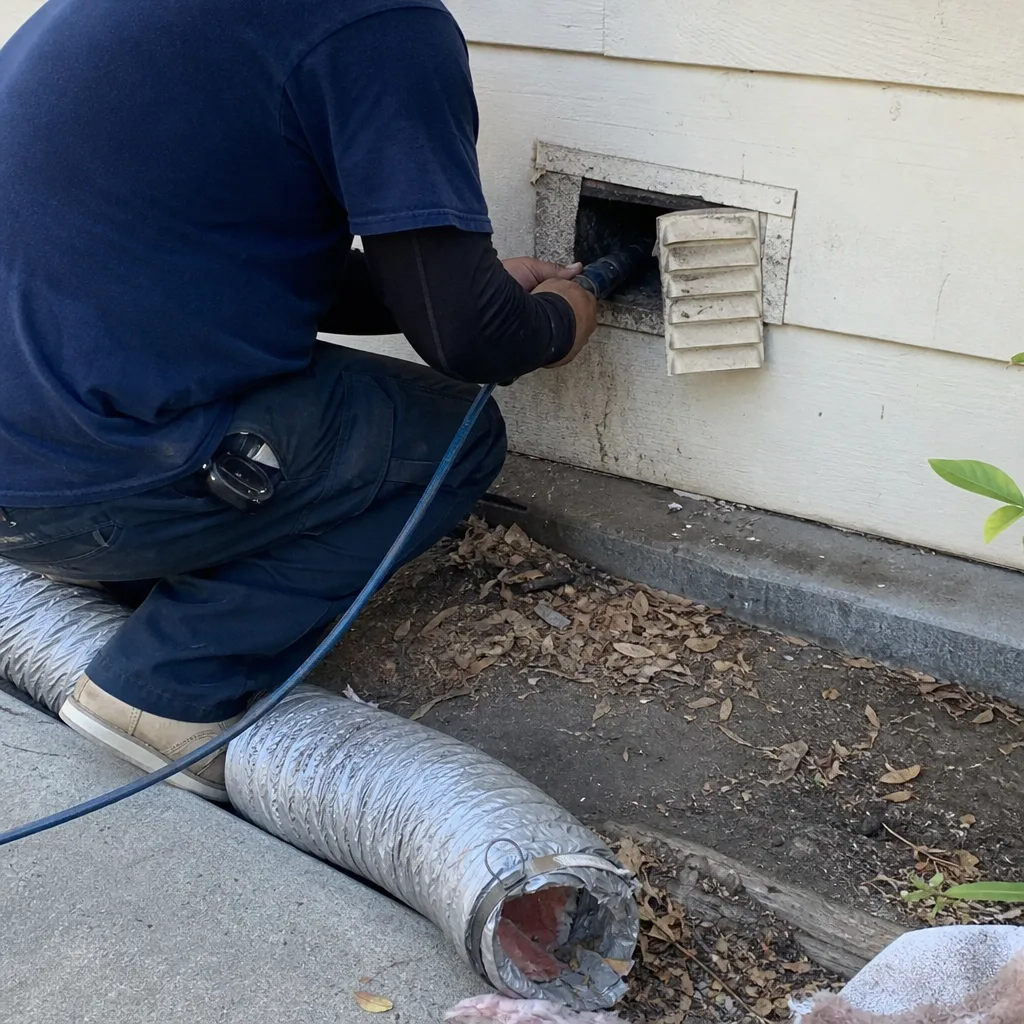 Before
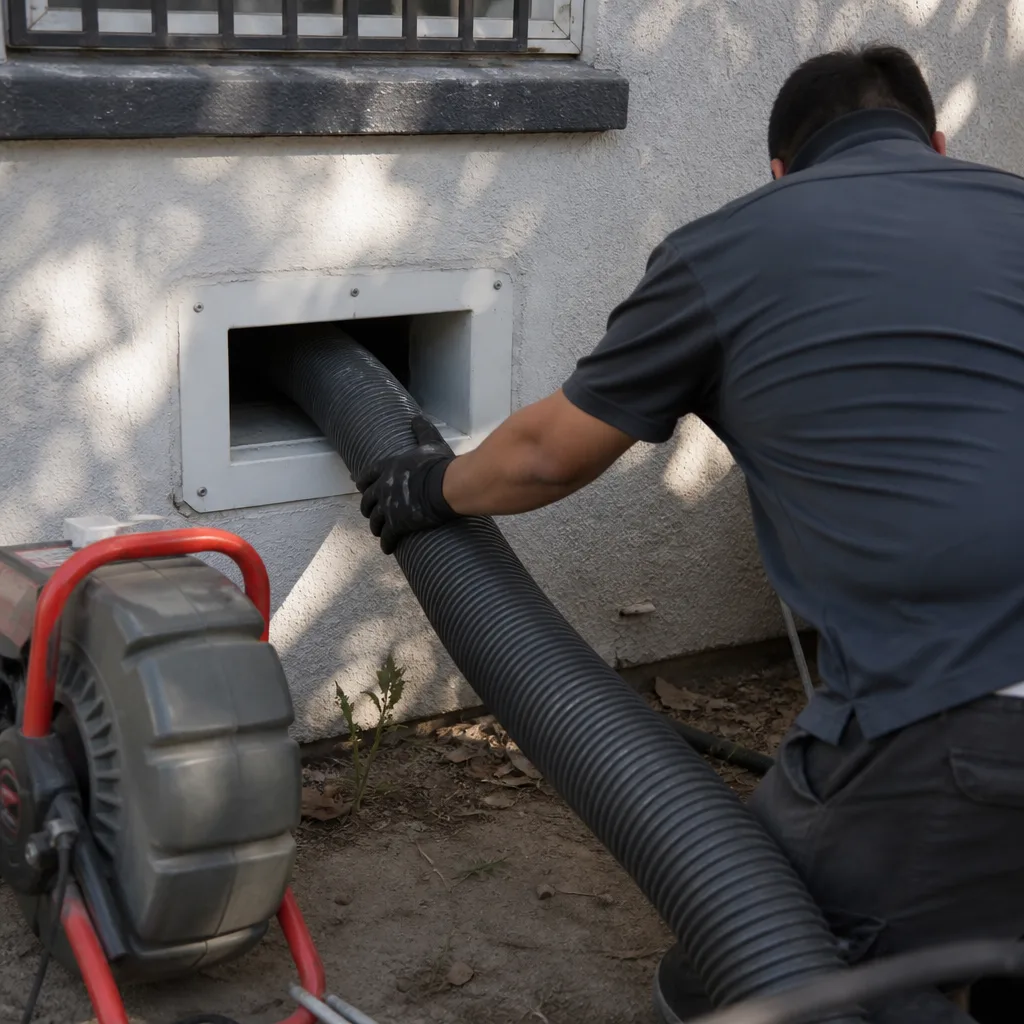 After
After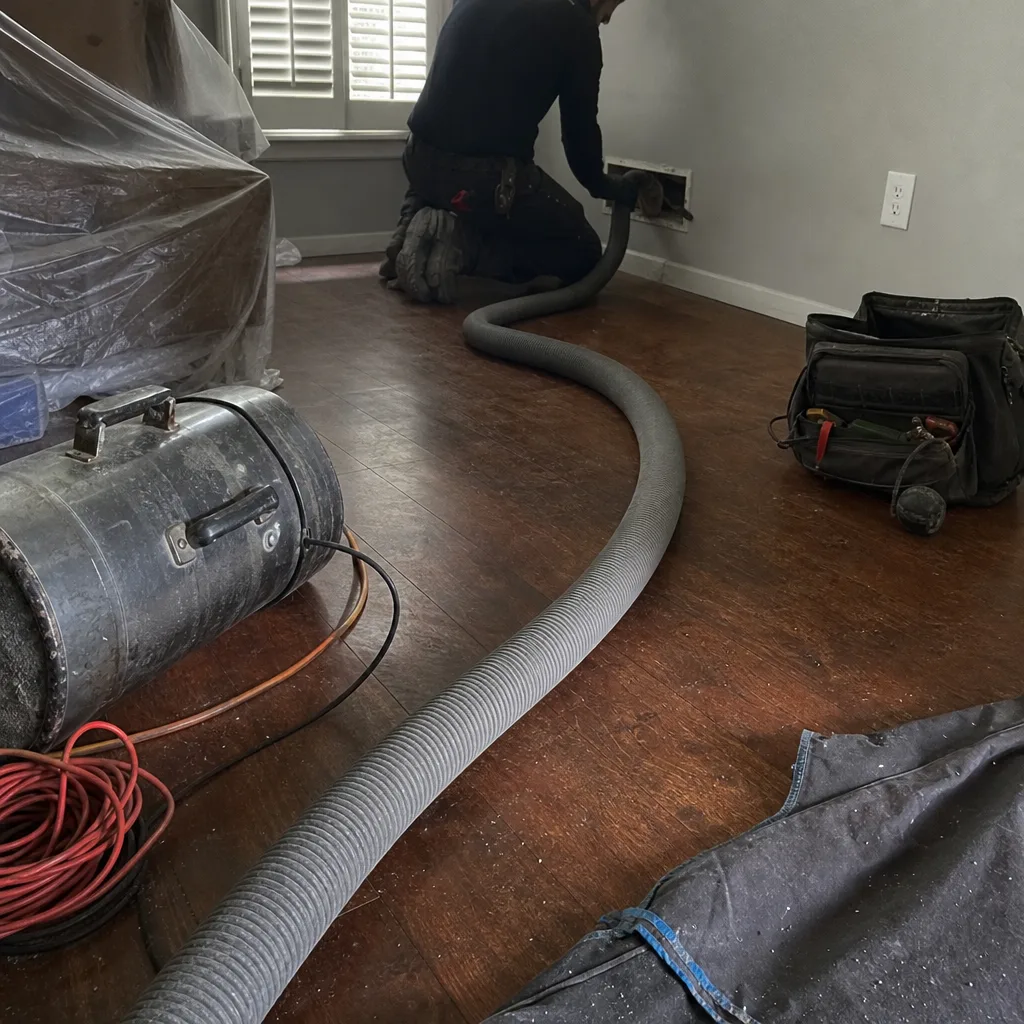 Before
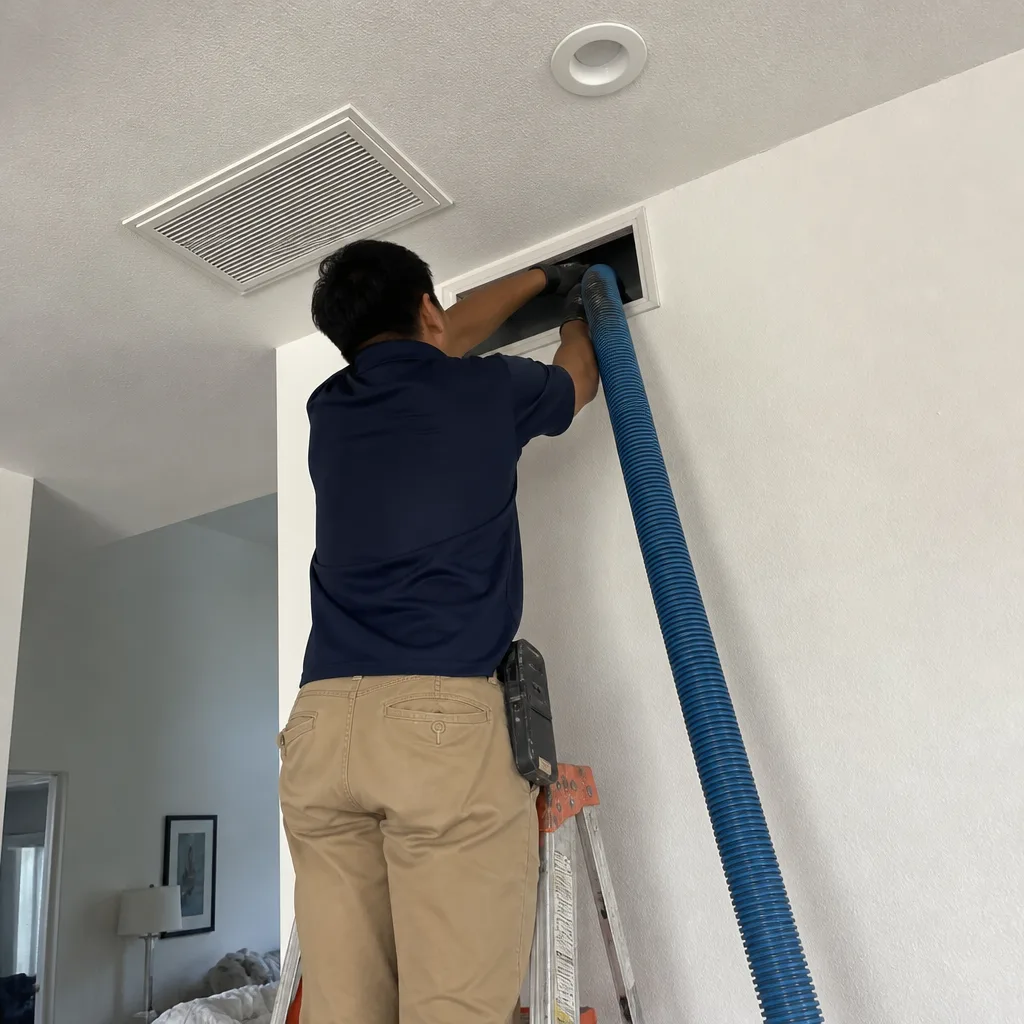 After
After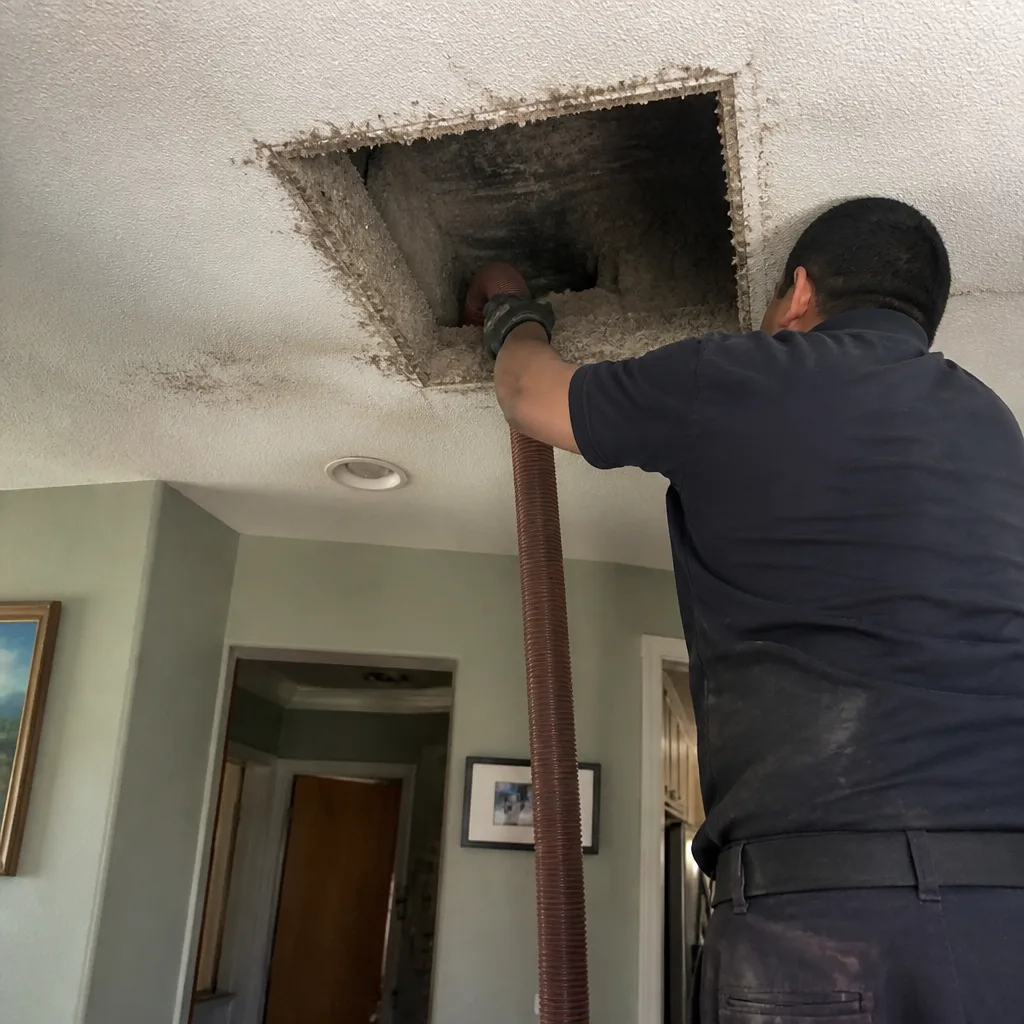 Before
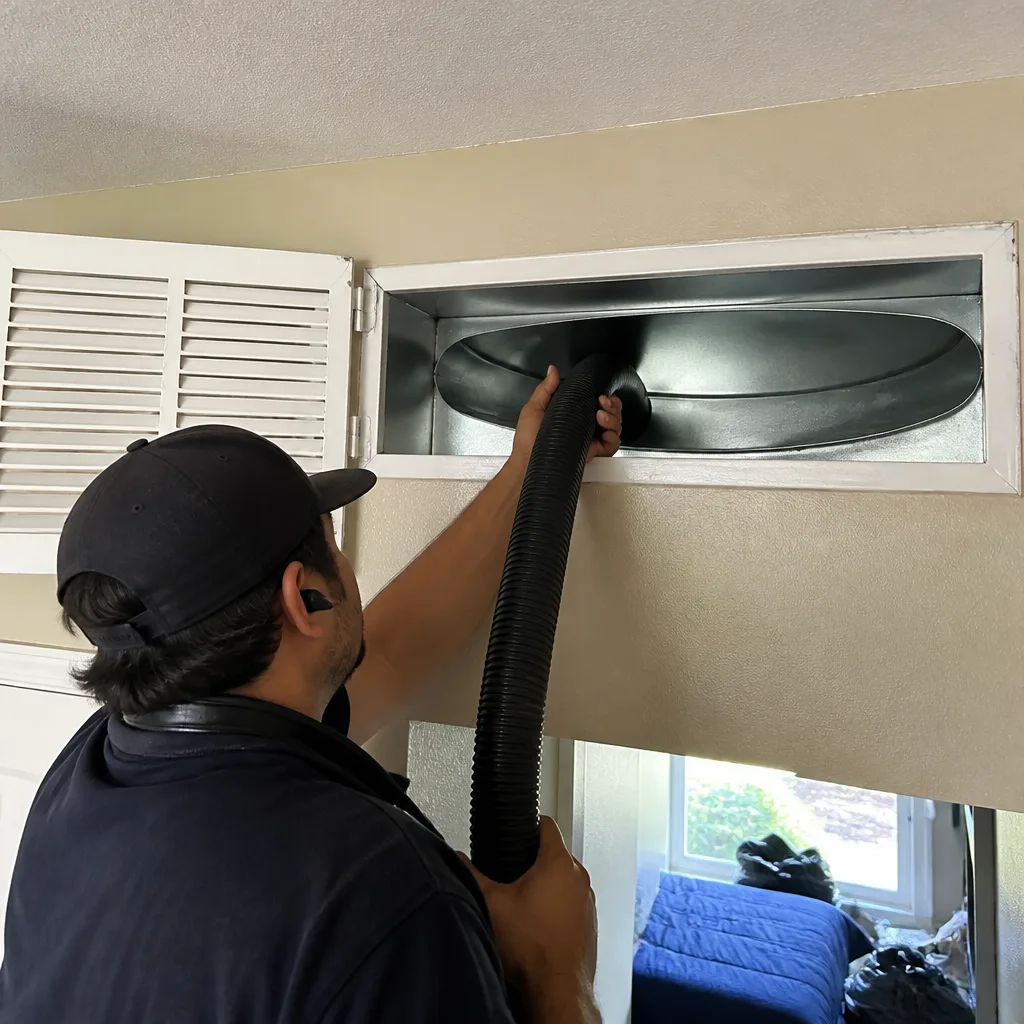 After
AfterThe Complete Guide to Air Duct Cleaning in Los Angeles
Here’s something that surprises most Los Angeles homeowners: the EPA does not officially recommend routine duct cleaning as a matter of course. Yet LA’s air quality index hits “unhealthy” dozens of days per year, wildfire smoke pushes PM2.5 readings into the hazardous range for weeks at a time, and most of us run our HVAC systems nearly year-round just to stay comfortable. That combination creates a duct environment unlike nearly anywhere else in the country. This guide is built specifically for Los Angeles: our climate, our housing stock, our contractor market. You’ll learn what actually accumulates in LA ducts, how air duct cleaning methods differ, what you should pay, and how to verify the work was done properly.
Quick Answer
For a deeper look at the process, see our DIY vs Professional Air Duct Cleaning: What’s Safe to Do Yourself breakdown. Air duct cleaning in Los Angeles typically costs between $350 and $650 for a standard single-family home, depending on square footage and the number of supply and return registers. The most effective method is negative-pressure source removal, which uses a HEPA-filtered vacuum system and rotary agitation to extract debris rather than simply stirring it loose. In LA specifically, duct cleaning is worth considering every 3 to 5 years if you live near wildfire zones, run your AC heavily, or own a home built before 1980.
Table of Contents
- Why Los Angeles Ducts Are Different From the Rest of the Country
- What Actually Accumulates in LA Ducts
- Negative-Pressure Source Removal vs. Contact Vacuuming: Why the Method Matters
- Los Angeles Housing Stock: How Your Home’s Age Affects Duct Cleaning
- How Much Air Duct Cleaning Costs in Los Angeles: A Real Pricing Guide
- How to Verify the Work: What Before-and-After Photos Should Actually Show
- How to Choose a Duct Cleaning Company in Los Angeles
- Common Mistakes to Avoid
- When to Call a Professional
- Frequently Asked Questions
- The Bottom Line
Why Los Angeles Ducts Are Different From the Rest of the Country
LA is a coastal basin with mountains on three sides, which means whatever enters the air tends to stay in the air. National duct cleaning guides written for Chicago or Houston simply don’t account for this. A home in Los Angeles experiences three overlapping forces that load ducts with particulate faster than most regions.
First, there’s wildfire ash. The Woolsey Fire, the Getty Fire, the Bobcat Fire, the Creek Fire – LA has endured multiple major wildfire events in the past decade alone, each one pushing fine ash and carbonized particulate across the basin. Santa Ana wind events don’t just dry out the hills; they carry that ash directly into neighborhoods, where it gets pulled through return vents and deposited throughout the duct system. Ash particles are abrasive and extremely fine, often under 10 microns, meaning they bypass standard return grille filters and settle deep in duct runs.
Second, marine-layer humidity. The same morning marine layer that rolls through Santa Monica, Playa Vista, and the Westside keeps humidity levels elevated near the coast for hours each day. That moisture, combined with dark, cool duct interiors, creates exactly the environment where dust binds to duct walls instead of blowing through. Once dust becomes sticky, simple air movement won’t clear it – it requires mechanical agitation to break the bond.
Third, runtime. HVAC systems in the San Fernando Valley, Pasadena, and the Inland Empire run for eight to ten months out of the year. Every hour of runtime means return air is being pulled through those ducts, carrying whatever is in your home’s air with it. More runtime equals more deposition. Homes in Burbank and Glendale with older, undersized systems run even longer, compounding the issue.
In our experience cleaning ducts across Los Angeles, homes that are five miles inland from the coast and homes in fire-adjacent zones like Calabasas, Topanga, or the foothills of Altadena show noticeably heavier particulate loading than homes in West Hollywood or Culver City. The geography is genuinely different, and so is the duct profile.
What Actually Accumulates in LA Ducts
Let’s be honest about what’s actually in your ducts, because the national ads that show decades of black sludge are mostly fiction. What we see in Los Angeles homes is more subtle but more pervasive.
The most common material is fine dust: a mix of clothing fiber, dead skin cells, soil tracked in from outside, and Los Angeles-specific particulate like road dust from the 405 and 101 corridors. Homes within a quarter mile of a major freeway show measurably more of this than homes on quiet residential streets.
Construction dust is another frequent find, especially in Los Angeles where ADU construction, kitchen remodels, and additions are constant. That dust infiltrates return ducts during work and then gets redistributed through the supply side every time the system cycles. We see this in neighborhoods like Silver Lake, Echo Park, and Highland Park, where renovation activity has been relentless for years.
Then there’s pet hair and dander, which is universal, and in LA we also find a surprising amount of cosmetic powder, hair products, and film-set residue in creative industry households. None of this is dangerous in most cases, but it reduces airflow efficiency and contributes to that persistent layer of dust on your furniture an hour after you wipe it down.
One thing we rarely find in LA ducts is mold, despite what some alarmist ads suggest. Los Angeles is dry enough most of the year that duct mold is uncommon unless there’s been a specific water event: a leaking evaporator coil, a roof leak near a return plenum, or a condensation overflow that soaked into insulation. If a company tells you they found “toxic black mold” in your ducts during a $99 inspection, get a second opinion before paying anything.
What LA homes do accumulate, especially those built before 1980, is fiberglass insulation shedding from the ducts themselves. Flex duct from that era used fiberglass liners that degrade over time and release fibers into the airstream. Those fibers then coat registers and settle on surfaces. That is one of the most common reasons older Los Angeles homes benefit from duct cleaning and, in many cases, duct replacement.
Negative-Pressure Source Removal vs. Contact Vacuuming: Why the Method Matters
There are two broad approaches to air duct cleaning, and knowing the difference is the single most important thing you can learn before hiring anyone in Los Angeles.
Contact vacuuming is what you get with a shop-vac style system or a basic portable vacuum. The technician holds a vacuum hose up to the duct opening and pushes a brush in from the same access point. The problem is physics: a vacuum can only pull air from a short distance, and as the duct extends deeper into the wall, the suction drops off dramatically. A brush can push debris deeper, but the vacuum isn’t actually capturing it. Contact vacuuming can remove loose debris in the first few feet of a duct run, but it leaves the interior of the duct largely untouched. For older Los Angeles homes with long flex duct runs, it’s close to useless.
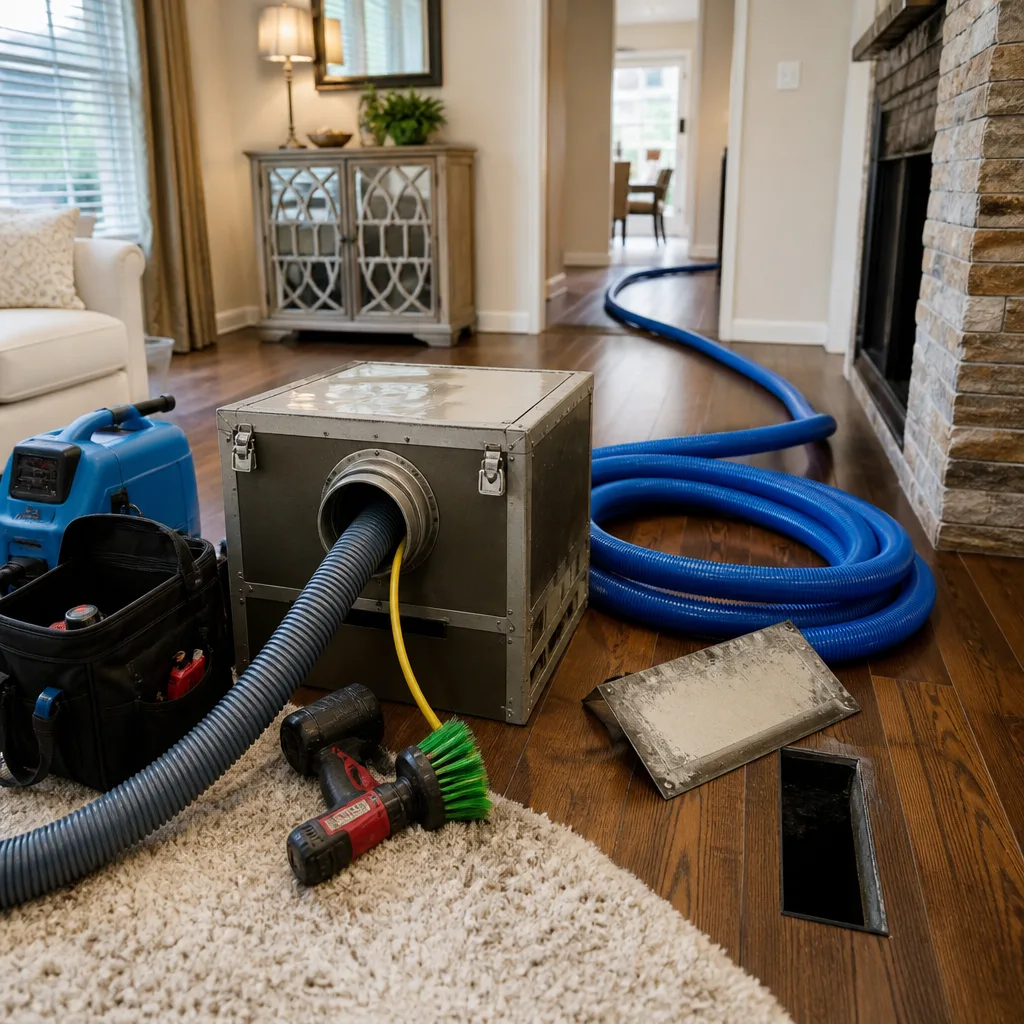
Negative-pressure source removal is the professional standard. The system connects a powerful vacuum unit (we run Nikro and Rotobrush equipment, both designed specifically for commercial-grade negative-pressure extraction) to the duct system to create a strong vacuum on the entire duct network. Then a rotating brush is inserted through each register to physically agitate and dislodge the bonded debris. The vacuum is pulling at all times, so loosened material is drawn through the duct and captured by the vacuum’s HEPA filtration rather than being pushed into the living space or recirculated. Negative-pressure extraction means the loosened debris goes straight into the vacuum, not back into your living room.
Why does this matter for older LA stucco homes? Because flex duct and fiberglass-lined sheet metal can’t handle aggressive contact scrubbing. Negative-pressure systems with soft rotary brushes are designed to dislodge material without damaging the duct lining. A hand brush or a stiff contact tool can tear flex duct interiors, which is a far more expensive problem than the dust you were trying to remove. In our experience in neighborhoods like Mar Vista, Westchester, and the older parts of Pasadena, the difference between a proper negative-pressure cleaning and a contact vacuum job is visible in the before-and-after photos: one shows clean duct walls; the other shows a clean opening with a shadow of untouched debris three feet in.
Professional-grade containment matters, too. A proper job uses containment units like those from Abatement Technologies to prevent dust from escaping into the home during cleaning. If the company is running a dusty operation inside your house, that’s a sign the equipment isn’t up to the standard you’re paying for.
Los Angeles Housing Stock: How Your Home’s Age Affects Duct Cleaning
Los Angeles has one of the most diverse housing stocks in the country, and the type of duct system in your home has a direct effect on how it should be cleaned and what it should cost.
Pre-1950 homes – think Hancock Park, Windsor Square, West Adams, and the older pockets of Long Beach – often have no original duct system at all. What’s there was added during a retrofit, frequently with a mix of rigid sheet metal in accessible areas and flexible duct in tight spaces. Retrofits often mean tight registers, awkward access points, and ducts that were sized for a window AC era. Cleaning these systems takes longer and requires more access points, but it also yields the biggest improvement in airflow, because decades of retrofit construction debris often never got cleaned out in the first place.
1950s through 1970s tract homes – the classic San Fernando Valley subdivisions, the Crenshaw corridor, and the original Orange County sprawl – were built with what were then cutting-edge heating systems. Most of those original ducts are now 50 to 70 years old. Flex duct from that era degrades, fiberglass liners shed, and joints loosen. These homes benefit most from a cleaning that includes a full system inspection, because degraded duct interiors are a common finding. We’ve cleaned systems in Van Nuys and Reseda where the duct lining had deteriorated to the point that cleaning uncovered the need for partial replacement.
1980s and 1990s construction – the era of the Los Angeles condo boom and the first wave of Master Planned Communities – typically used more consistent flex duct installations. These systems are newer but often undersized, especially in multi-story condos where long duct runs meander through tight floor cavities. Cleaning difficulty varies by access: units with attic access are straightforward; units where ducts run between floors can be challenging and may require cutting access ports, which should always be professionally sealed afterward.
2000s and newer – newer construction in Los Angeles, from Downtown LA high-rises to the newer single-family developments in Porter Ranch and Playa Vista, generally has cleaner duct systems to begin with. Sheet metal is more common, installation standards are higher, and the systems are younger. These homes typically need less frequent cleaning but benefit more from dryer vent cleaning and HVAC coil cleaning than from duct cleaning alone. The Air Duct Cleaning in Los Angeles needs for a 2015 Playa Vista townhome are simply different from those of a 1962 Valley Ranch house.
How Much Air Duct Cleaning Costs in Los Angeles: A Real Pricing Guide
Let’s talk real numbers, because the single most common complaint we hear about duct cleaning is surprise pricing. A company quotes one number on the phone, then finds “problems” that triple the invoice once the technician is in the home. Here’s what honest pricing actually looks like in Los Angeles as of 2025 or so.
Typical whole-system cleaning for a single-family home:
- Small home (under 1,200 sq ft, 6-8 registers): $350-$450
- Standard home (1,200-2,400 sq ft, 9-14 registers): $450-$650
- Large home (2,400+ sq ft, 15-20 registers): $650-$900
- Multi-story or complex access: add $100-$250
These are whole-system prices, not per-vent prices. Some companies in Los Angeles advertise low per-vent rates – $49 per vent, for example – and then count every single register, return, and access point until a normal home magically has 18 or 20 vents and the “deal” is now $900. A reputable company quotes one flat price for the entire system before work starts. That’s our policy: a written price is handed to you before a single duct is touched, and it does not change at the door.
What should be included in that price:
- Cleaning of all supply and return ducts
- Cleaning of all supply registers and return grilles
- Access to the main trunk line
- HEPA-filtered negative-pressure extraction
- Before-and-after photo documentation
What may cost extra (legitimately):
- Furnace blower or evaporator coil cleaning: $100-$200, done separately from the duct work. This is covered under our HVAC Cleaning in Los Angeles service.
- Filter replacement: the cost of the filter itself. We use Aprilaire and Honeywell filtration products when a home has a compatible housing.
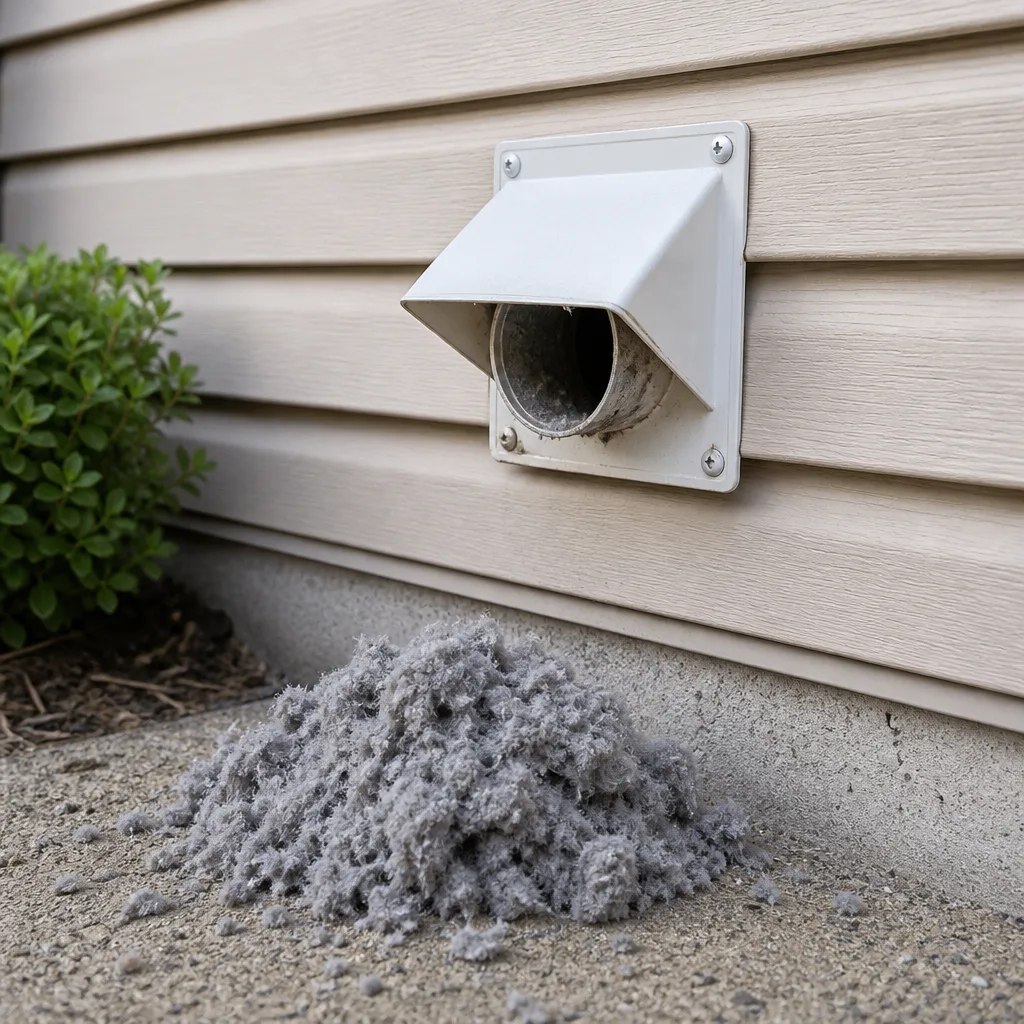
- Dryer vent cleaning: a separate service, typically $75-$150. Our Dryer Vent Cleaning in Los Angeles is done as a standalone appointment because it requires its own equipment and methodology.
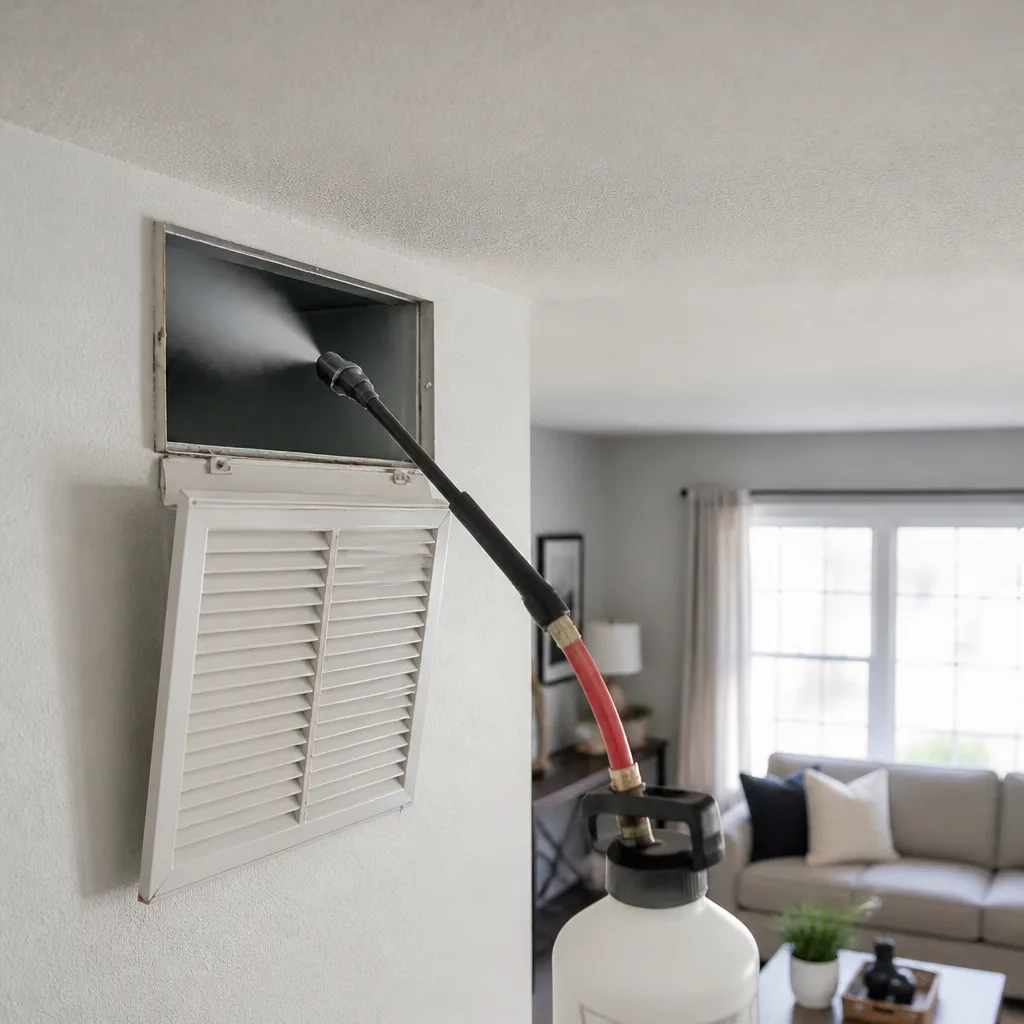
- Sanitizing or deodorizing treatments: only if you want them, and they should never be pressured as necessary.
If a quote comes in below $250 for a full home, ask hard questions about what method is actually being used. If it comes in above $1,000 for a standard home, ask for a written breakdown of what justifies the premium. In the Los Angeles market, the legitimate range is narrow and predictable.
How to Verify the Work: What Before-and-After Photos Should Actually Show
This is where The Relay Standard matters. Before-and-after photos are only useful if they actually document the inside of the ducts, not just a clean register cover sitting on the floor. Here’s what you should see in a legitimate photo set.
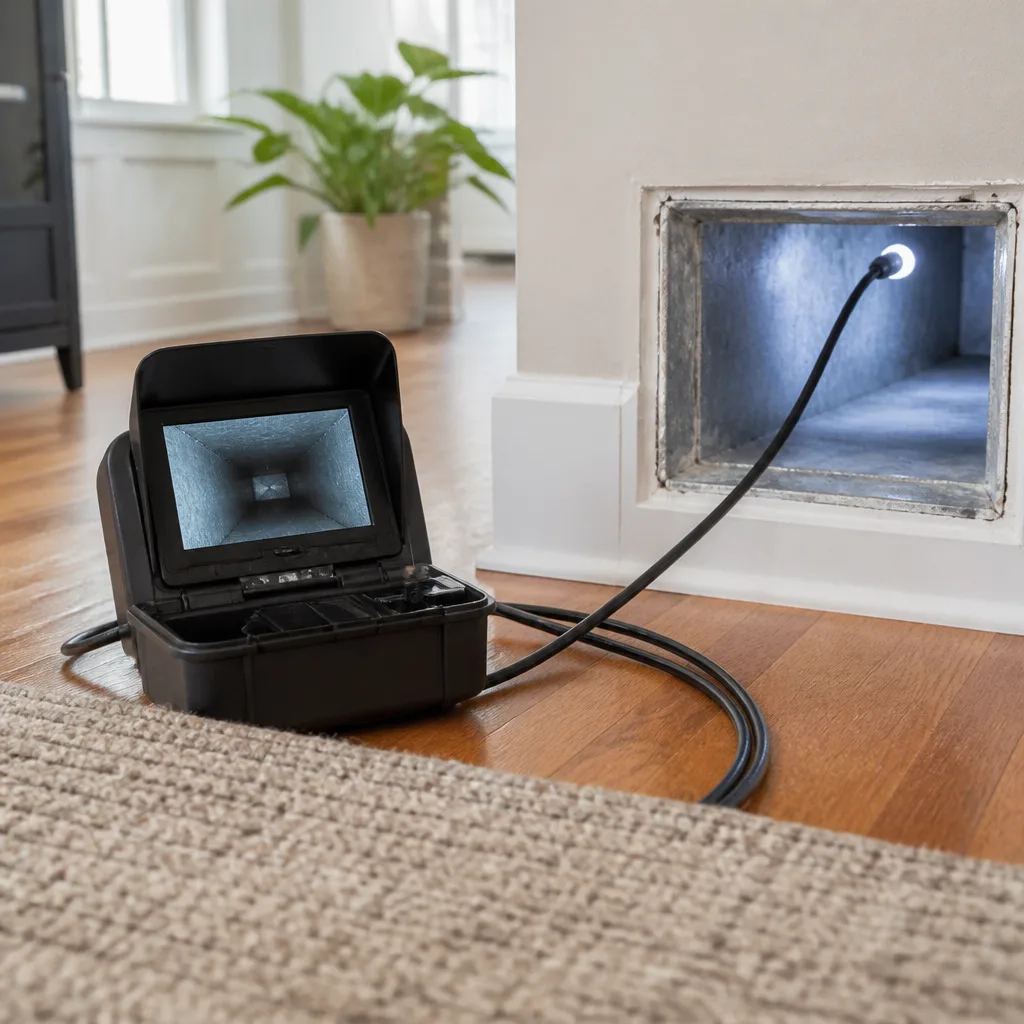
1. Inspection port access, not just register openings. Your supply registers are the openings in the walls or ceilings where conditioned air blows into rooms. The duct interior should be photographed through a dedicated access port or a removed register, but the photo needs to look down the duct run, not just at the opening. A well-lit photo of a duct interior before cleaning will show dust and debris accumulation along the walls. The after photo of the same duct run should show the same wall, visibly cleaner.
2. Supply vs. return comparison. Return ducts pull air back to the furnace or air handler, and they’re almost always dirtier than supply ducts because they carry unfiltered air from the living space. Your before-and-after set should include both supply and return runs. If the company only shows you supply ducts, ask why the returns were left out of the documentation.
3. Blower compartment shots. The blower is the fan inside your furnace that pushes air through the ducts. It accumulates dust and hair and is often the dirtiest component in the system. A proper cleaning includes the blower compartment and the evaporator coil if accessible, and the documentation should show those components before and after. This is a common omission in budget cleanings.
4. Time-stamped and location-tagged images. A photo of “your” ducts that could have been taken in any home in Los Angeles isn’t verification. The Relay Standard books every customer with a live trackable arrival time and before-and-after photo proof of the work, matched to your job. You should be able to confirm the photos are from your home, taken during your appointment window.
If a company refuses to provide before-and-after photos, or provides photos that only show register covers, or claims their equipment can’t access your specific ducts, that’s a red flag. Every duct system can be accessed and documented. The only reason not to document is that the work wasn’t actually done.
How to Choose a Duct Cleaning Company in Los Angeles
The Los Angeles duct cleaning market is crowded, and the range of quality is enormous. Here’s a methodical approach to separating the professionals from the operations that give this trade a bad reputation.
- Ask for a written estimate before scheduling. A legitimate company will price the job over the phone or through a quick video walkthrough and commit to that price in writing. If the company won’t give you a number until a technician is standing in your living room, that’s a tactic, not a policy. Our process: the written price is handed to you before a single duct is touched, and it does not change at the door.
- Ask what equipment they run. The answer should include named brands and a method. Rotobrush and Nikro systems are the standards for rotary agitation and HEPA-filtered negative-pressure extraction. Abatement Technologies is the name to look for in containment. If the answer is “a powerful truck-mounted vacuum” with no brand and no explanation of source removal, you’re likely paying for a rug-cleaning rig with a long hose.
- Ask about technician background and uniform. You should know who is coming to your home before you open the door. Background-checked, uniformed technicians are a basic professional standard. If the company can’t tell you the technician’s name in advance, ask why not.
- Ask about the guarantee. Every job we do carries the 365-Day Done Right Promise: if the work isn’t right within a full year, we return and correct it at no charge. Every repair gets a written guarantee, and if a repair fails, we return for a free second visit. A company that won’t put a guarantee in writing is telling you how they’ll handle problems before they happen.
- Check the reviews, but read them carefully. Los Angeles service companies are review machines. Filter for reviews that mention specific technicians, specific equipment, and specific outcomes. Generic five-star reviews with no detail are often bought. Specific three and four-star reviews that mention honest quibbles alongside real positives are usually real.
We recommend getting two or three quotes, comparing them line by line, and trusting the company that communicates clearly. If you can’t get a straight answer to “how do you actually clean the ducts?”, keep looking. For a broader picture of what we do and how we work, start with our Cardinal Air Duct Cleaning home page for our full service overview.
Common Mistakes to Avoid
- Falling for the $99 whole-house special. In the Los Angeles market, a legitimate full-system negative-pressure cleaning cannot be done for $99. That price exists to get a technician through your door, where the “problems” will be discovered that require a $700 upcharge. If the price sounds too good to be true, it’s a sales lead, not a service.
- Paying per vent. Per-vent pricing is how dishonest companies hide the real total until the last register is counted. A written whole-system price is the only number you should ever agree to.
- Skipping the before-and-after photos. If you don’t get photographic proof of the duct interiors before and after, you have no way of knowing the work was actually done. Any company that won’t provide this documentation is telling you something.
- Believing mold claims without verification. As noted earlier, duct mold is uncommon in Los Angeles. If a technician “finds” mold during a cheap inspection and it will cost thousands to remediate, get an independent assessment before spending anything. Genuine mold issues are rare and should be confirmed by a third party.
- Cleaning ducts in a home with leaky flex duct before checking the ducts themselves. In older Los Angeles homes, flex duct from the 1960s and 70s may be degraded to the point that cleaning is the wrong first step. A professional inspection should tell you whether your ducts are worth cleaning or whether replacement should happen first.
- Using duct cleaning as a substitute for HVAC maintenance. Cleaning your ducts won’t fix a failing blower motor, a dirty evaporator coil, or a refrigerant leak. Duct cleaning and HVAC maintenance are complementary services, and a good provider will tell you which one you actually need.
- Hiring the first name on Google without checking what’s behind it. The Los Angeles market rewards aggressive SEO and review generation, not necessarily good work. Take time to vet the company rather than letting search rankings make the decision for you.
When to Call a Professional
Duct cleaning is a job for trained professionals with proper equipment, not a weekend DIY project. The reasons are practical: your ducts run through walls, attics, and crawl spaces; proper cleaning requires negative-pressure extraction equipment that costs more than the cleaning itself; and cutting access ports or opening a plenum without knowing how to reseal it can introduce new air leaks into your system.
You should consider a professional duct cleaning in Los Angeles if any of these apply: visible dust buildup around your registers that returns within days of wiping; a home built before 1980 that has never had the ducts cleaned; recent construction or renovation work in the home; pets that shed heavily; a home within a few miles of a wildfire zone during the past several fire seasons; or family members with allergies or respiratory conditions that seem worse indoors than out. If you’re unsure whether your home needs it, Cardinal Air Duct Cleaning offers free estimates in Los Angeles – call (737) 727-2314 and we’ll help you figure out what’s actually needed. For more guides & resources, visit our blog.
Frequently Asked Questions
Most Los Angeles homes pay between $350 and $650 for a complete, professional air duct cleaning using negative-pressure source removal. Small homes under about 1,200 square feet run $350 to $450, standard homes of 1,200 to 2,400 square feet run $450 to $650, and larger or multi-story homes can run $650 to $900. Be wary of any quote under $250, which is almost certainly a bait price. Call (737) 727-2314 for an exact quote – estimates are free.
Most Los Angeles homes benefit from duct cleaning every 3 to 5 years, but that assumes a typical home in a typical neighborhood. Homes in wildfire-adjacent areas like Calabasas, Topanga, or the Altadena foothills may need cleaning more frequently, as do homes with heavy HVAC runtime in the San Fernando Valley or Inland Empire. Homes newer than about 2010 with no pets and no renovation history can comfortably go longer, often 5 to 7 years.
Cheap quotes are almost always a different service in disguise. Contact vacuuming with a portable shop-vac system costs a company very little, which is why it can be priced at $99 or $199. Negative-pressure source removal with HEPA filtration, rotary agitation, and proper containment costs more because the equipment is more expensive and the job takes longer. The cheaper quote isn’t a better deal on the same work; it’s less work at a lower price. We hand you a written price before any work starts, and it covers the complete system cleaning, not a partial job.
Look at the before-and-after photos, and specifically at the duct interiors, not the register covers. A proper documentation set will show supply ducts and return ducts, photographed through access points, with visible improvement in the duct walls between the before and after shots. The blower compartment should also be documented. The Relay Standard makes this mandatory for every booking: you get live trackable arrival, before-and-after photo proof, and a digital invoice you can review from your phone. If a company won’t provide that, find one that will.
It can, but the results depend on what’s actually in your ducts and whether you’re cleaning the right component of the system. Duct cleaning removes accumulated dust, pet dander, and particulate that recirculates through your home every time the system cycles. For many Los Angeles residents, that means a noticeable reduction in indoor dust and symptoms, especially during Santa Ana season when airborne particulate is already elevated. But duct cleaning is not a substitute for a good filtration setup; pairing a proper cleaning with quality filtration from brands like Aprilaire or Honeywell typically produces the best results for allergy sufferers.
For most homes built in the last 5 to 10 years, probably not yet. Newer Los Angeles construction generally has cleaner duct systems, and unless there’s been significant construction dust, a specific indoor air issue, or you’re in a wildfire-adjacent zone, your ducts likely don’t need attention. The better investment for newer homes is regular filter replacement and annual HVAC coil cleaning rather than duct cleaning. We’re happy to give you an honest assessment of whether your home actually needs ducts cleaned right now – call (737) 727-2314.
The Bottom Line
Air duct cleaning in Los Angeles is a different proposition than it is in most of the country, because our climate creates a specific particulate profile: wildfire ash, freeway dust, and marine-layer humidity combining inside ducts that run nearly year-round. The service is worth doing every 3 to 5 years for most homes, and the method matters more than the price. Negative-pressure source removal with HEPA filtration is the professional standard, and before-and-after photo documentation is the only reliable way to verify the work. Pricing in LA is predictable: $350 to $650 for most homes, with written whole-system quotes being the mark of an honest operator. If you’re ready for a straight answer about your ducts, we’re one call away at (737) 727-2314.
Written by Omar Haddad, Owner at Cardinal Air Duct Cleaning, serving Los Angeles since 2005.