
Last updated October 9, 2026
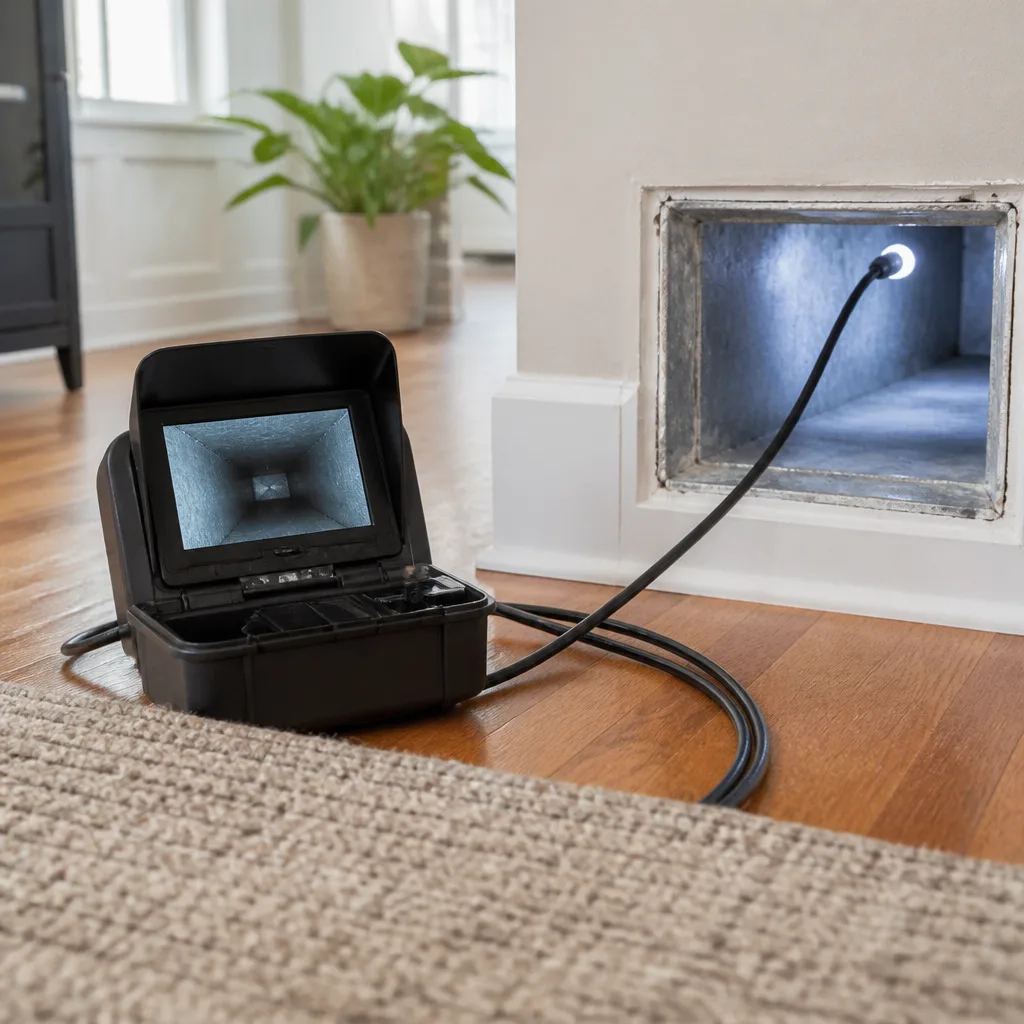
Whole-system duct and dryer vent check with before-and-after photos - you see exactly what came out of your vents
That "$99 whole-house special" is a bait ad - the real number appears once they are in your hallway, or the "clean" is a shop-vac at the register. We photograph the inside of your ducts before and after instead.
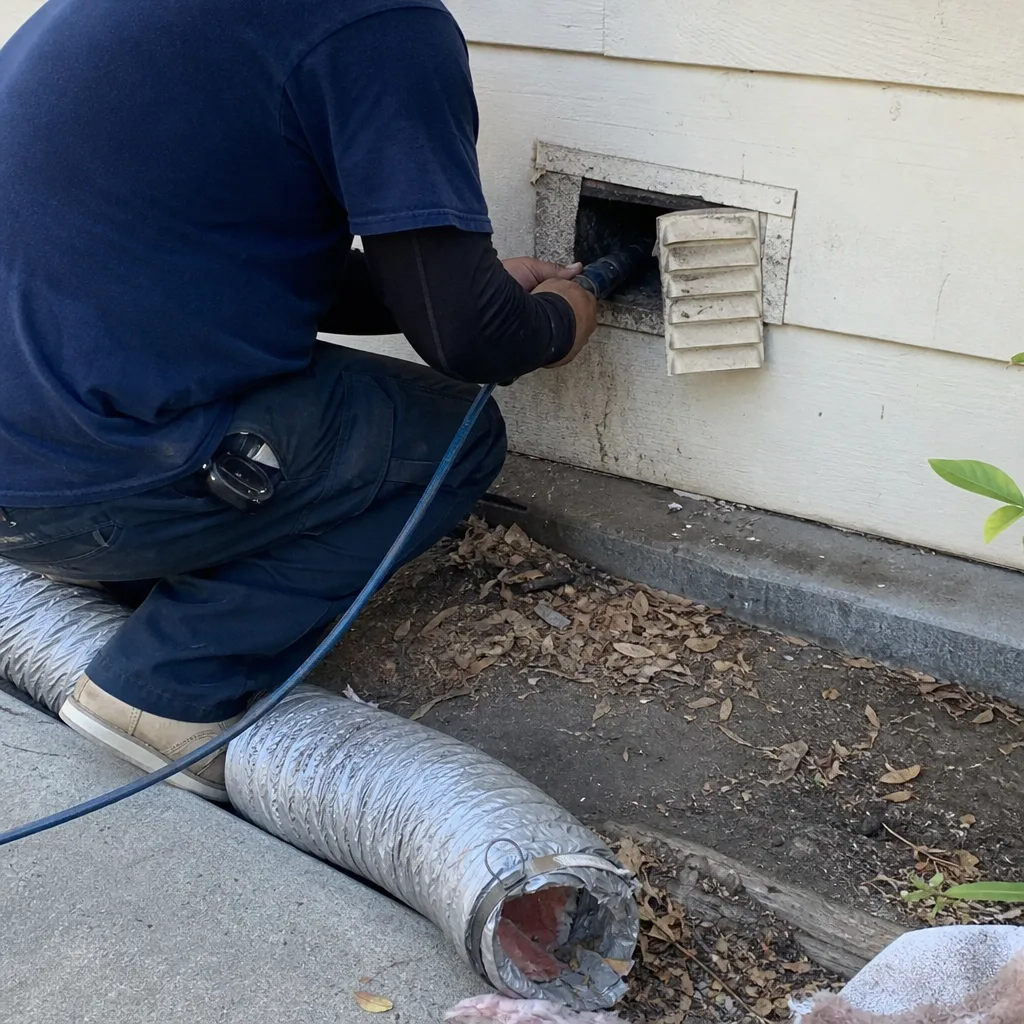 Before
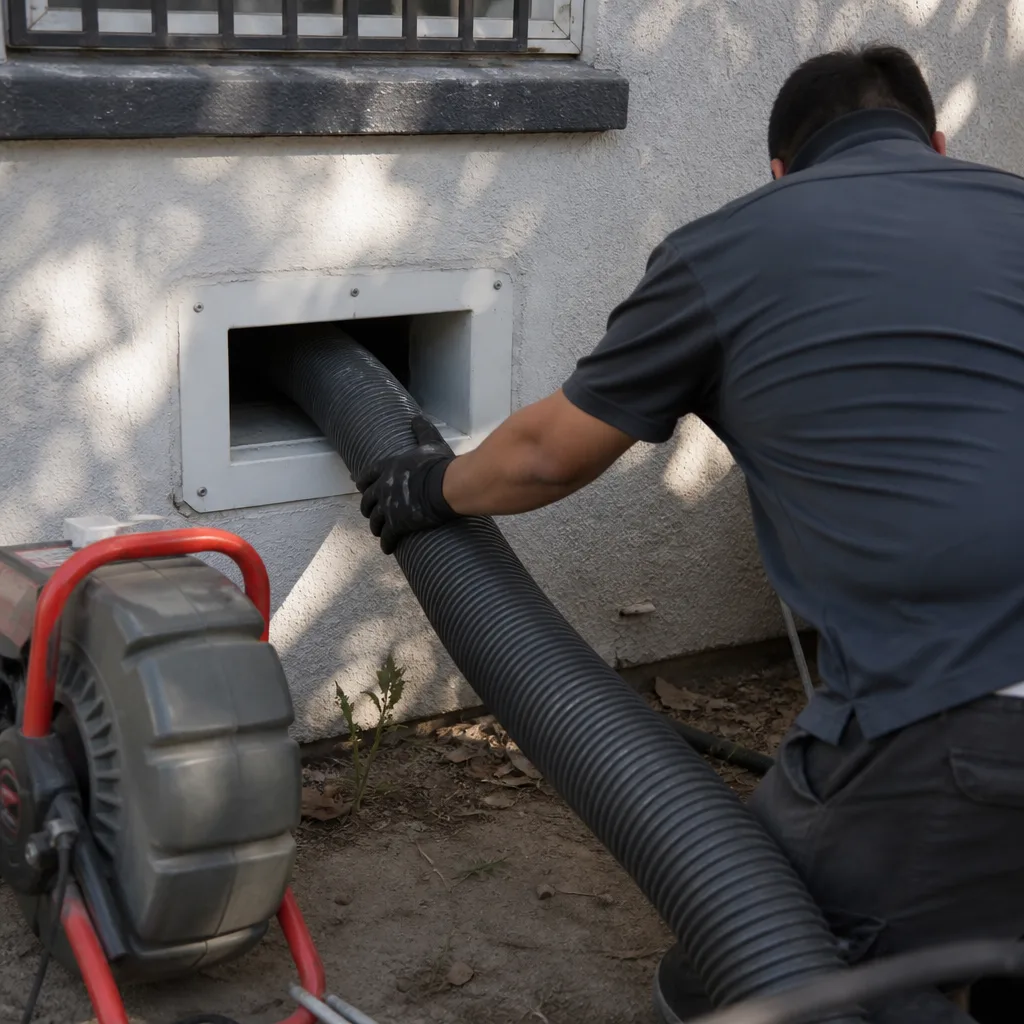 After
After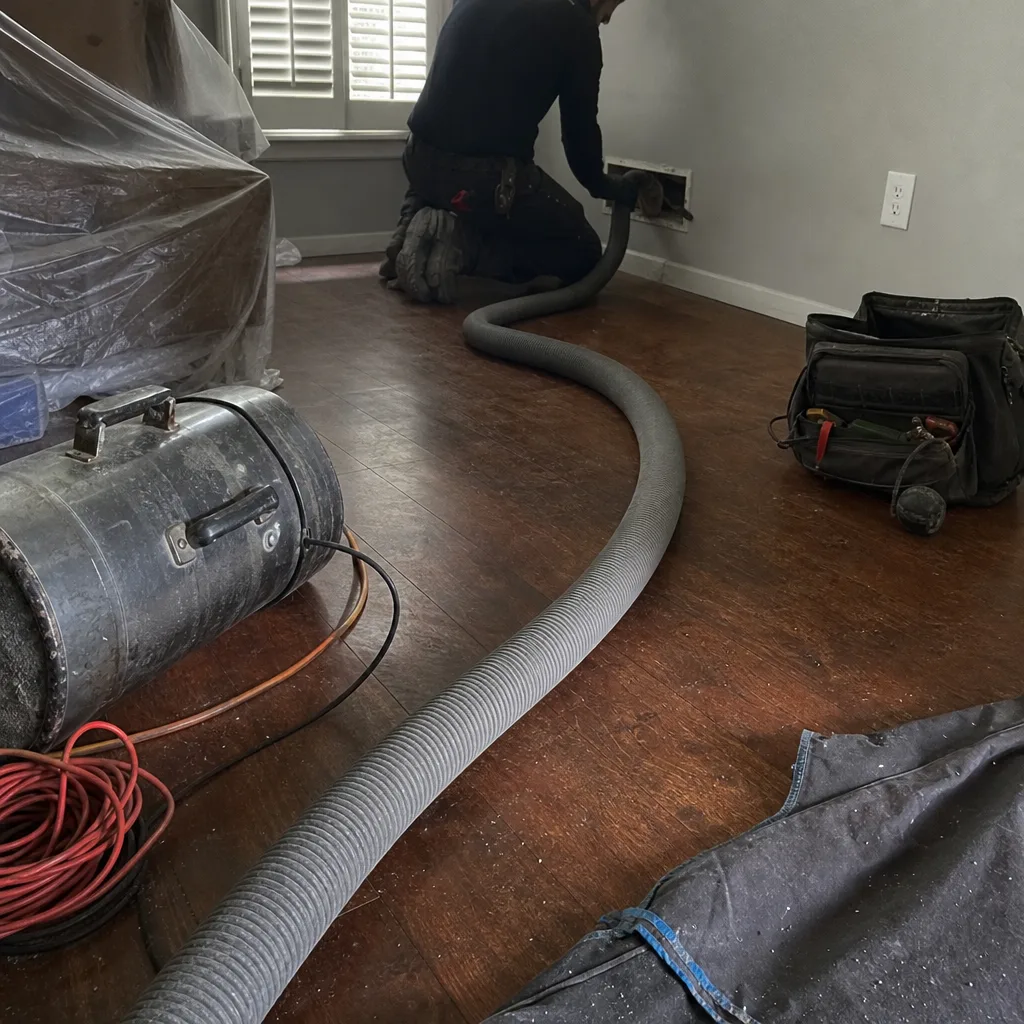 Before
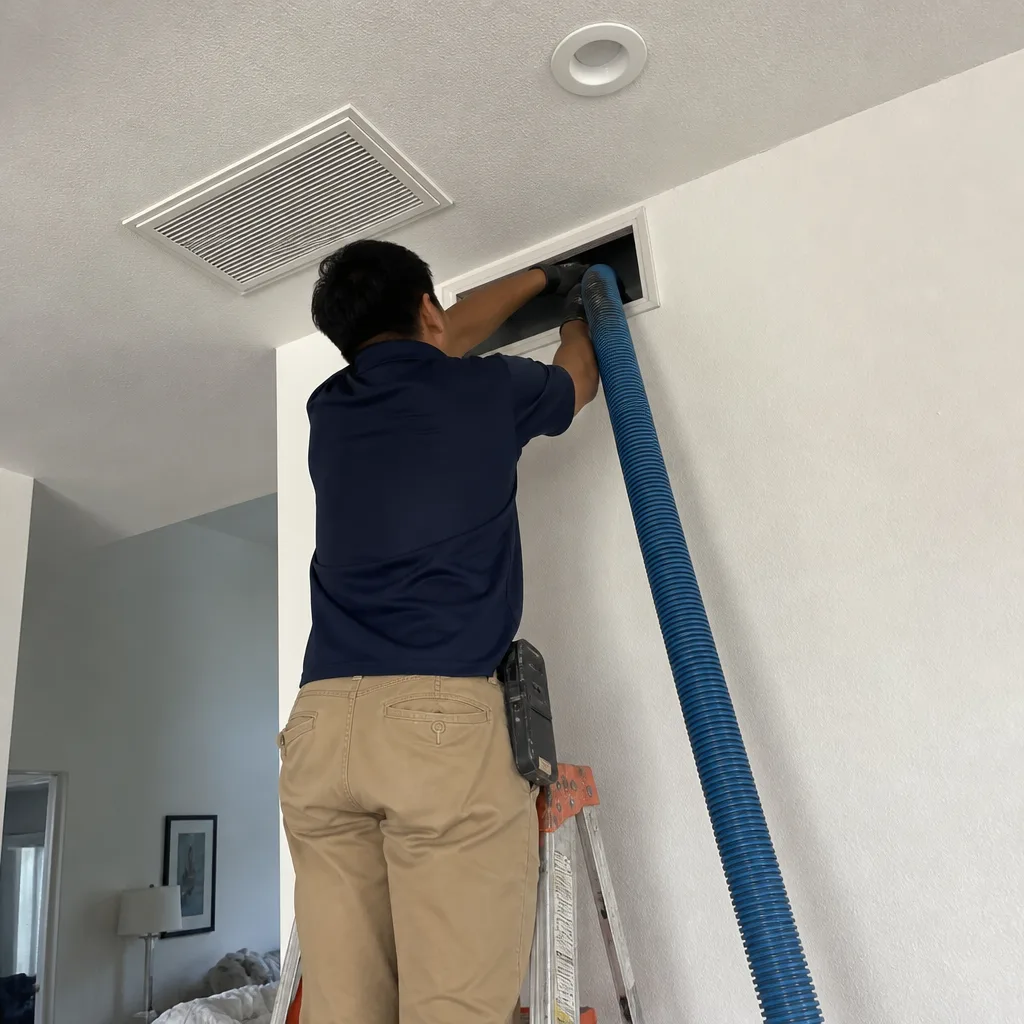 After
After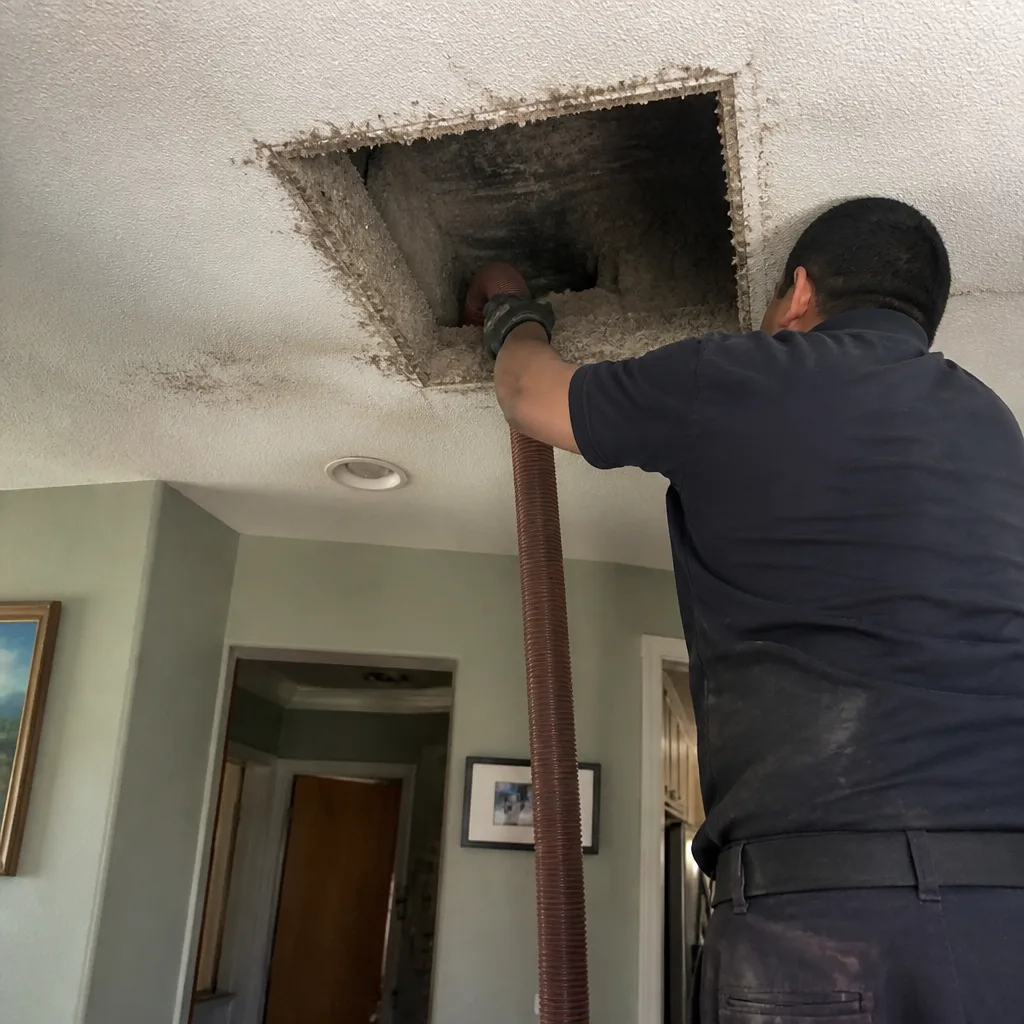 Before
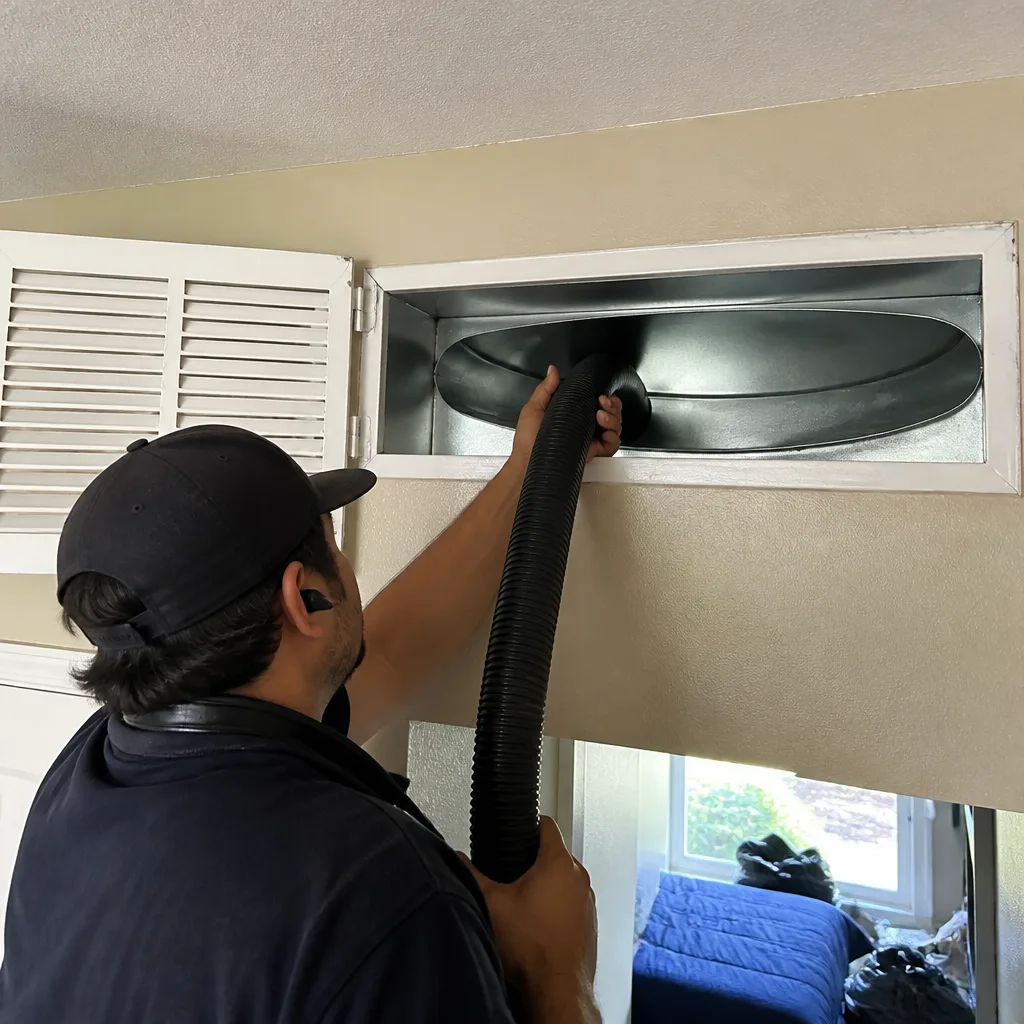 After
AfterDIY vs Professional Air Duct Cleaning: The Los Angeles Homeowner’s Decision Guide
A $30 dryer vent brush from Home Depot does exactly what a $150 professional service does – on a straight, accessible, under-10-foot vent run. On anything else, it either does nothing or makes the problem worse. This guide defines exactly where that line sits, because most Los Angeles homeowners are either paying for work they could do themselves or trying to DIY a job that needs commercial equipment. For a deeper comparison, see our full breakdown of DIY vs Professional Dryer Vent Cleaning: What’s Safe to Do Yourself. By the time you finish reading, you’ll know which side of the line you’re on, what tools actually matter, and where your money is better spent.
Quick Answer
Air Duct Cleaning makes sense as a DIY project when your ducts are short, straight, and accessible, and you’re only dealing with visible surface dust in the first few feet. Professional cleaning is worth the cost when ducts run through walls or attic spaces, the system hasn’t been cleaned in five-plus years, or you have pets, smokers, recent renovation, or allergy concerns. Most whole-house systems in Los Angeles fall into the professional category, and the honest reason is physics: a consumer shop vac doesn’t have the negative pressure or containment to clean what it can’t reach.
Table of Contents
- The Four Conditions Where DIY Is Genuinely Sufficient
- The Physics Problem: Why a Shop Vac Pushes Dust Deeper
- Tool-by-Tool: What Professional Equipment Does Differently
- The Hidden DIY Cost Most People Never Calculate
- Why Los Angeles Climate and Housing Stock Change the Equation
- The Los Angeles Decision Matrix: Home Age, Duct Material, and Pets
- Step-by-Step: What a Responsible DIY Clean Actually Looks Like
- Common Mistakes to Avoid
The Four Conditions Where DIY Is Genuinely Sufficient
Let’s be direct about this: there are real situations where hiring a professional air duct cleaner in Los Angeles is overkill. We tell customers this all the time, and Omar Haddad, our owner, has turned away jobs that didn’t need doing. Here are the four conditions where you should absolutely save your money and handle it yourself.
1. Short, accessible vent runs under 10 feet. If you can see the entire duct from one end to the other and it runs in a straight line, a basic brush kit does the job. This applies to many dryer vents in single-story Los Angeles homes, particularly in areas like the Valley where laundry rooms sit on exterior walls with a direct vent run to the outside.
2. Post-renovation surface dust only. If you just had drywall work done and the supply registers are coated in a fine white film, that’s surface-level. You can wipe register faces and vacuum the first 12 to 18 inches of the duct yourself. This dust hasn’t adhered to duct walls and hasn’t worked its way deep into the system. Wait until the renovation is fully complete, then do a basic register clean.
3. Filter maintenance and replacement. Changing your return-air filter every 60 days is the single most effective DIY duct-related task you can do. A clean MERV 8 to MERV 11 filter (we stock Honeywell and Aprilaire filtration products for this exact reason) stops most dust from entering the system in the first place. This isn’t air duct cleaning, but it delays the need for it.
4. Register and grille cleaning. Pop off your supply registers and return grilles, wash them in warm soapy water, dry them, and reinstall. This is a 30-minute job for a typical Los Angeles house with 8 to 12 registers. It improves airflow and removes visible dust without touching the ducts themselves.
If your situation checks all four boxes and nothing else, DIY is genuinely sufficient. But the moment you’re dealing with ducts that disappear into walls or ceiling spaces, the conversation changes.
For most homes surveyed across Los Angeles from Echo Park to Woodland Hills, the reality is that supply and return runs average 15 to 30 feet, branch in multiple directions, and include at least one section you can’t see, let alone reach. That’s the threshold where professional equipment starts mattering. See our full guide to Air Duct Cleaning in Los Angeles for what a complete system job looks like.
The Physics Problem: Why a Shop Vac Pushes Dust Deeper
Here’s the part nobody explains. Your standard wet/dry shop vac creates positive pressure on the exhaust side and negative pressure on the intake side. When you push the hose into a duct and turn it on, you’re pulling air from the open end of the duct toward the vacuum. So far, so good. The problem is that the open end of a typical supply duct in a Los Angeles home is 20 to 35 feet away from your vacuum, around bends, and often in a different room.
The negative pressure at the far end of that run is close to zero. Meanwhile, the vibration of the hose against the duct walls, the brush you’re threading through, and the turbulence you create dislodge dust that then resettles deeper along the run. You’re not removing it. You’re redistributing it.
With flex duct the problem compounds. Flex duct in Los Angeles homes typically runs through attic spaces where temperatures hit 130 degrees in summer. The internal liner is a ribbed plastic film. A consumer shop vac lacks the air velocity to overcome the friction of that ribbed surface over a 20-foot run. Dust and pet dander that were loosely adhered get knocked loose, carried a few feet, and deposited somewhere they weren’t before.
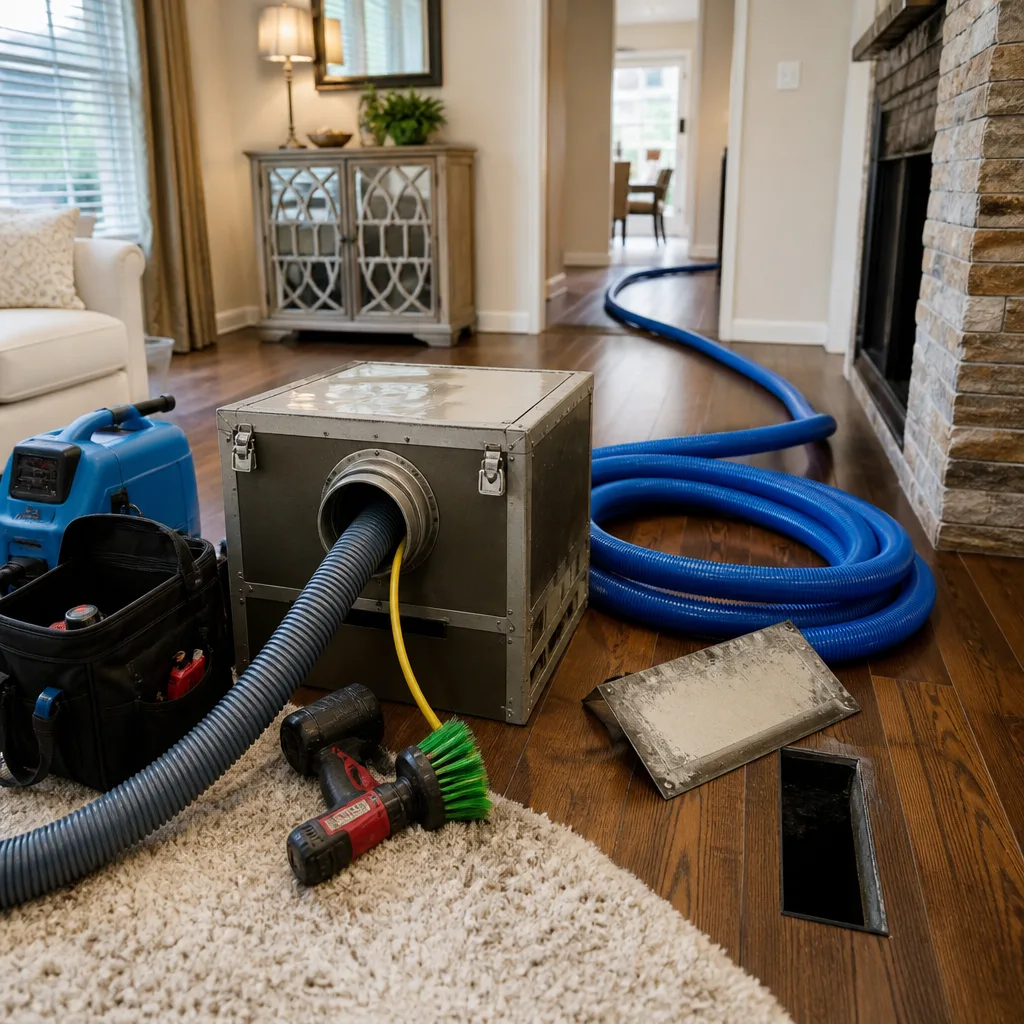
Professional systems solve this with what’s called negative-pressure extraction. That means the whole duct run is placed under vacuum using a HEPA-rated unit (we run Nikro HEPA vacuums for this), so loosened debris gets pulled toward the vacuum instead of drifting back into the living space. The vacuum is attached at one end, the system is sealed, and the brush works in toward the negative pressure source. The physics work with the cleaning motion, not against it.
This matters in Los Angeles specifically because of how many homes have systems in unconditioned attic space. The temperature differential between a 130-degree attic and a 72-degree conditioned room creates condensation inside ducts during certain times of year. That moisture turns light dust into something that adheres to duct walls. A shop vac can’t remove adhered material from 25 feet away. A professional rotary brush system can.
Tool-by-Tool: What Professional Equipment Does Differently
We’re going to name actual brands here, because the tool gap between consumer and professional equipment is the single biggest factor in the DIY vs professional decision. A $40 hardware store kit and a Rotobrush rotary brush system are not doing the same job with different price tags. They’re different tools for different scopes of work.
Rotobrush rotary brush systems feed a motorized brush head into the duct on a flexible cable. The brush spins at high RPM while the operator feeds it through the run. It scrubs the duct walls mechanically, dislodging adhered dust, pet hair, and construction debris. A hardware store brush is a static nylon bristle on a drill attachment or a manual rod. It can’t generate the same torque or reach, and it doesn’t integrate with a vacuum system to remove debris as it’s loosened.
Nikro HEPA vacuums are the other half of professional extraction. They’re rated to capture 99.97% of particles at 0.3 microns, and more importantly, they maintain suction pressure over long hose runs. They’re designed to attach to the duct system and create continuous negative pressure throughout the job. A consumer shop vac with a HEPA filter retrofitted onto it still isn’t designed for sustained high-resistance duct cleaning. The motor wears, the filter clogs quickly, and barely any suction reaches the far end of the run.
Abatement Technologies containment units are used when there’s a specific contaminant concern: heavy mold growth, post-fire smoke residue (relevant for Los Angeles homeowners in wildfire-adjacent areas), or ductwork in homes that had vermin. They create a negative air environment in the room where the work happens, which prevents cross-contamination into other rooms during the cleaning. A homeowner cannot replicate this. It’s a dedicated piece of commercial equipment with a specific purpose.
For filtration, we work with Honeywell and Aprilaire products, which matter more for what you install at the return than what you clean with. But the point stands: you can see and touch the difference between a consumer kit and professional equipment. The tools determine what the job can actually accomplish.
The Hidden DIY Cost Most People Never Calculate
The pitch for DIY air duct cleaning usually starts with the $30 brush kit and a shop vac you already own. But if you actually price out what a responsible DIY clean costs, the gap shrinks fast. Here’s the real material budget for a homeowner trying to do this correctly in Los Angeles:
- HEPA filter for your shop vac: $25 to $45. If you don’t run a HEPA filter, you’re exhausting fine dust back into your living room while you clean. This alone defeats the purpose.
- Disposable vacuum bags rated for fine dust: $15 to $20. Duct debris will destroy a standard shop vac filter in one session.
- Proper brush set with enough rod length to reach 20 to 30 feet: $40 to $80. Most budget kits max out at 10 to 15 feet.
- Protective sheeting and masking tape for containment: $10 to $15. Without it, dust from the register openings settles on furniture and floors.
- Disposal bags: $5 to $10. Duct debris goes in the trash, but you need sealed bags to get it there without re-contaminating the house.
That puts a real DIY attempt at roughly $80 to $120 in materials before you spend a single minute of labor. Most standard professional air duct cleanings in Los Angeles run $300 to $550 for a typical single-family home. The DIY savings, once you account for materials, is often only $200 to $400, and you’re trading that against a full-day weekend project, the real risk of doing an incomplete job, and zero warranty on the work.
The 365-Day Done Right Promise matters here because it’s the difference between a service and a purchase. If the work isn’t right within a full year, Cardinal Air Duct Cleaning returns and corrects it at no charge. A $30 brush kit comes with no such promise. The math changes when you factor in what it costs to do the job twice.
Why Los Angeles Climate and Housing Stock Change the Equation
Los Angeles is not a generic housing market, and the local conditions that affect ductwork are specific. We work in homes from Santa Monica to Pasadena, and we see the same patterns repeat.
Attic-mounted systems run hot. Most Los Angeles homes built before 1990 have furnaces and air handlers in unconditioned attics. Summer attic temperatures routinely exceed 120 degrees, which bakes fine dust onto duct interiors. What settles as loose dust in a cooler climate becomes a hardened film here. That’s a material difference for cleaning difficulty. A brush that might suffice for loose dust in another market is useless against heat-set debris in a Highland Park attic.
Flex duct dominates post-1960 construction. The housing boom from the 1960s through the 1980s across the San Fernando Valley and Westside built homes with miles of flex duct. It’s cheaper to install and easier to route through tight attic framing. But flex duct ages poorly. By year 15 to 20, the internal liner is degraded, the ribbed surface holds onto debris, and the outer jacket is often compromised by attic pests. A DIY cleaning on degraded flex duct can actually tear the liner, which turns a cleaning job into a duct replacement job.
Wildfire smoke compounds the problem. Los Angeles has dealt with increasingly frequent wildfire smoke events. Smoke particles are extremely fine and electrostatically charged, which means they cling to duct interiors. Standard household dust layers can be brushed away. Smoke-affected duct surfaces often need professional agitation and HEPA extraction. This has become a growing part of our service calls across Los Angeles in recent years, from Burbank to Sherman Oaks.
The Los Angeles Decision Matrix: Home Age, Duct Material, and Pets
Run yourself through these four questions and you’ll know which side of the line you’re on.
- How old is the home? Pre-1970 housing stock in Los Angeles often has sheet metal ducts, which clean more predictably and hold up better under DIY attempts. Post-1980 homes nearly always have flex duct, which is more fragile and harder to clean without professional negative-pressure equipment. If your home is post-1980 with original ducts, lean professional.
- What material are the ducts? You can check this by removing a register and looking inside. Rigid sheet metal is smooth and silver. Flex duct is ribbed, usually gray or black plastic film over a wire coil. Fiberglass-lined duct (common in some 1970s commercial-to-residential conversions in downtown Los Angeles) has a soft, fuzzy interior. If you see fiberglass lining, do not attempt DIY brushing. You’ll release fiberglass particles into the air stream.
- When was the last professional cleaning? If the answer is never, or more than five years ago, there’s a lot more than surface dust in there. The first professional cleaning on a system that hasn’t been touched in a decade is the most dramatic, visible, and valuable. DIY at that point is like sweeping a parking garage. The scale is wrong.
- Pets or smokers in the house? Pet dander and hair, plus smoke residue, create a greasy, adhered debris layer that no amount of consumer brushing will remove. We see this constantly in Los Angeles apartments and homes with multiple pets. It requires rotary agitation plus HEPA extraction to properly remove.
If you answered: pre-1970, sheet metal, professionally cleaned within the last three years, no pets, no smokers – then a careful DIY register clean and filter change is reasonable. If you answered anything else, the professional route is the honest choice.
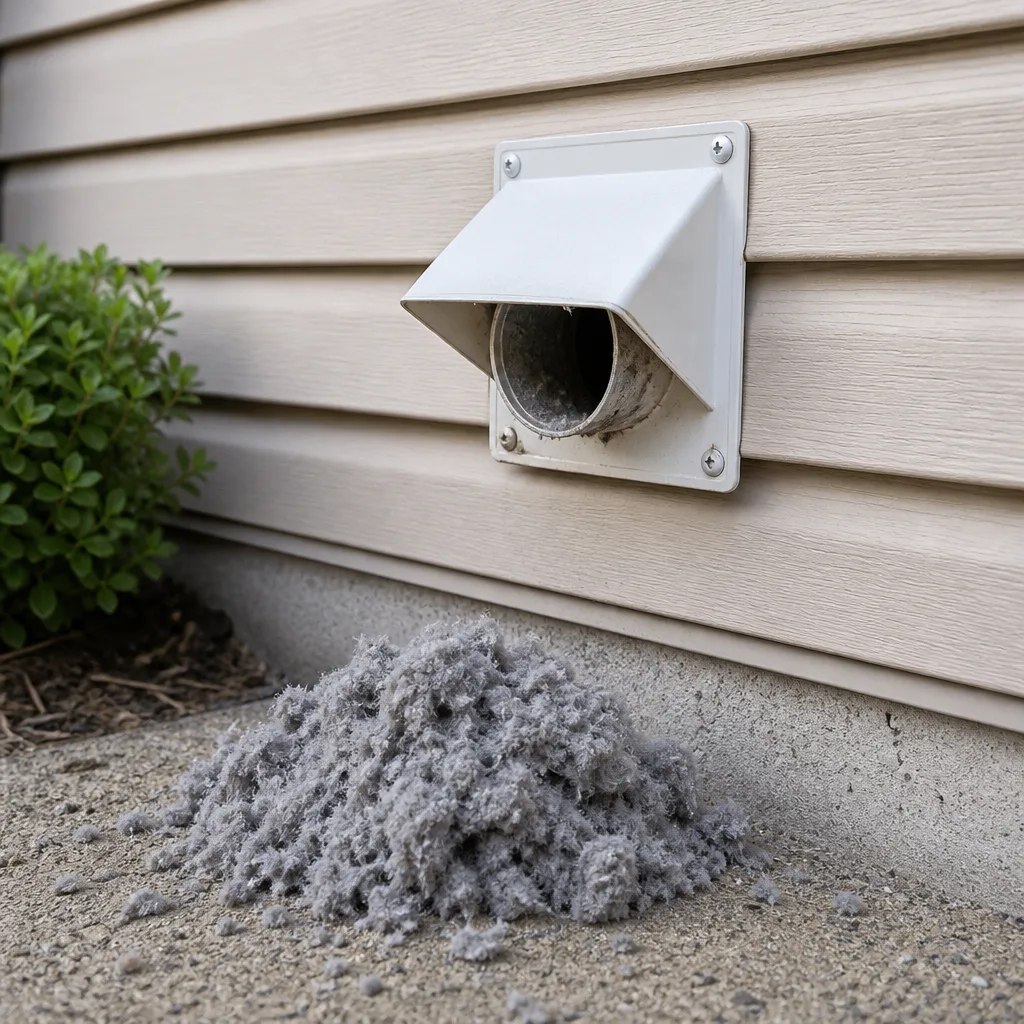
For dryer vents specifically, the same rules apply, but the stakes are higher: a clogged dryer vent is a fire hazard. We cover that in detail in our Dryer Vent Cleaning in Los Angeles guide. For whole-home HVAC systems that go beyond the ducts themselves, see our HVAC Cleaning in Los Angeles page.
Step-by-Step: What a Responsible DIY Clean Actually Looks Like
If you’ve decided DIY is right for your situation, at minimum do it correctly. Here’s the sequence we’d follow on a short, accessible run, and the parts of this where people cut corners are the parts that matter.
- Turn off the HVAC system completely. Fan off, thermostat set to off. You don’t want air moving through the system while you’re dislodging material.
- Lay down protective sheeting under each register you’ll be working on. Tape it to the floor. Dust will fall out of registers when you open them. This is the step that separates a clean house from a dusty one afterward.
- Remove each register face and wash them in warm soapy water. Let them dry completely before reinstalling. While they’re off, vacuum the visible first 12 to 18 inches with a HEPA-filtered shop vac. That’s a clean bite, not a partial job, because the visible part is the only part you can actually reach.
- Replace the air filter with a fresh one. Use a MERV 8 to MERV 11 rated filter for standard residential systems. Honeywell and Aprilaire make good options. Don’t jump to a MERV 13 or higher without confirming your system can handle the added static pressure, or you’ll choke airflow and strain the blower.
- Reinstall registers, turn the system back on, and run it for 15 minutes. Listen for anything that sounds loose or rattling. If you hear new noise, you may have dislodged something inside the duct. That’s a signal to stop and call a professional.
This is the full extent of a responsible DIY job on short runs. It’s filter maintenance, register hygiene, and visible-surface cleaning. It is not a substitute for a full system clean when the situation calls for one. Understanding that distinction saves you either money or frustration, depending on which mistake you were about to make.
Common Mistakes to Avoid
- Running a shop vac without a HEPA filter because “it’s just dust.” The exhaust side of a standard shop vac blows microparticles straight back into the room. If you’re cleaning ducts to improve air quality, you’ve made it worse. We respond to calls from Los Angeles homeowners who attempted a DIY clean and ended up with a fine dust coating on every surface in the living room.
- Using a leaf blower inside a duct opening. This does exactly what the physics section described: it pressurizes the system and forces debris deeper. It doesn’t remove anything. You’re moving the dust from a visible location to an invisible one and calling it done.
- Brushing flex duct aggressively from the register side. Flex duct is a thin plastic liner over a wire coil, and it degrades with age. Aggressive brushing with a hardware store brush can puncture or tear it. A torn flex duct pull costs far more to replace than a professional cleaning would have cost.
- Forgetting the return side entirely. Most DIY attempts focus on supply registers and leave the return air side untouched. But the return side sees all the airflow first, and it’s where the filter sits. If you’re cleaning anything, clean the return plenum area too, or don’t bother at all.
- Doing post-renovation cleaning before the renovation is actually finished. You will have to do it again. Drywall dust, paint overspray, and flooring debris keep generating until the project is truly complete. Wait a week after the final punch-list item, then clean.
- Assuming no visible dust means clean ducts. Most duct debris is not visible from the register opening. The inside of a 25-foot run can be coated while the first foot you can see looks pristine. This is the most common reason people think their ducts don’t need cleaning when they do.
- Skipping the filter replacement because the filter “looks fine.” A used filter can look clean and still be loaded with sub-visible particles. Change it on a schedule, not by appearance. Every 60 days is right for most Los Angeles homes, and more often during wildfire season.
When to Call a Professional
Call a professional when the ducts disappear from view and you can’t see the majority of the run, when the system hasn’t been cleaned in five or more years, when you have pets or smokers in the home, when recent renovation has put construction dust through the system, or when anyone in the house has allergies or respiratory conditions. These are the situations where guessing doesn’t work and the cost of doing it wrong exceeds the cost of doing it right. Cardinal Air Duct Cleaning offers free estimates in Los Angeles – call (737) 727-2314 and you’ll get a written price before any work starts, with no pressure and no obligation.
Frequently Asked Questions
Most standard whole-home air duct cleanings in Los Angeles run $300 to $550 for a typical single-family home, depending on system size, number of registers, and contamination level. Extremely large homes or heavily contaminated systems run higher. You should get a written price before work begins, not after. Call (737) 727-2314 for an exact quote on your system.
Lowball quotes usually mean per-vent pricing that balloons once the technician is inside, or a cut-rate job with consumer-grade equipment that doesn’t actually clean the system. The air duct cleaning industry has a well-earned bait-and-switch reputation. A legitimate company gives you one flat price for the whole system before work starts. That’s how we operate, and it’s written into every booking.
You should receive before-and-after photos of the inside of your ducts, not just a verbal summary. Every Cardinal Air Duct Cleaning job includes photo documentation as part of The Relay Standard, so you can see the duct interior before and after the cleaning. If a company won’t show you photos, ask why.
For most Los Angeles homes, every 3 to 5 years is the right interval, with shorter cycles if you have pets, smokers, recent renovation, or live in a wildfire-prone area. Homes with excellent filter discipline can stretch toward 5 years. Homes with multiple pets and no filter discipline often need cleaning every 2 to 3 years. There’s no one-size answer, but there’s also no scenario where “never” is correct.
You can clean the first 12 to 18 inches of visible ductwork and wash your registers, which is legitimate maintenance. What you can’t do with a consumer vacuum is clean 20 to 30 feet of duct that runs through walls or attic space. The physics don’t work in a homeowner’s favor. If your ducts are short, straight, and recently cleaned, DIY register maintenance is fine. Otherwise, save the effort and call a professional.
Air duct cleaning is necessary in specific situations, and those situations are common in Los Angeles: homes with pets, homes affected by wildfire smoke, homes with post-renovation dust, and systems that haven’t been cleaned in five-plus years. It is also aggressively marketed by scam operators using lowball pricing and fear tactics. The legitimate version of the service is real, measurable, and visible in before-and-after photos. The scam version gives the whole industry a bad name, and homeowners have every right to be skeptical until they see proof.
The Bottom Line
The decision between DIY and professional air duct cleaning comes down to what you can actually reach, what condition your ducts are in, and what’s been living in them. Short, accessible runs with surface dust are fair game for a careful homeowner with a HEPA-filtered vacuum and realistic expectations. Everything else – flex duct, attic runs, pet hair, smoke residue, five-plus years of buildup – requires professional rotary brush equipment and negative-pressure extraction to do the job correctly. Los Angeles homes, with their attic-mounted systems, flex duct, and wildfire smoke exposure, lean strongly toward the professional side. If you’re still unsure, call Cardinal Air Duct Cleaning at (737) 727-2314. You’ll get a straight answer and a written quote, and you’ll know exactly what you’re paying for before anyone touches a duct. Start with our Cardinal Air Duct Cleaning home page to see how we work.
Written by Omar Haddad, Owner at Cardinal Air Duct Cleaning, serving Los Angeles since 2005.