
Last updated October 9, 2026
Whole-system duct and dryer vent check with before-and-after photos - you see exactly what came out of your vents
That "$99 whole-house special" is a bait ad - the real number appears once they are in your hallway, or the "clean" is a shop-vac at the register. We photograph the inside of your ducts before and after instead.
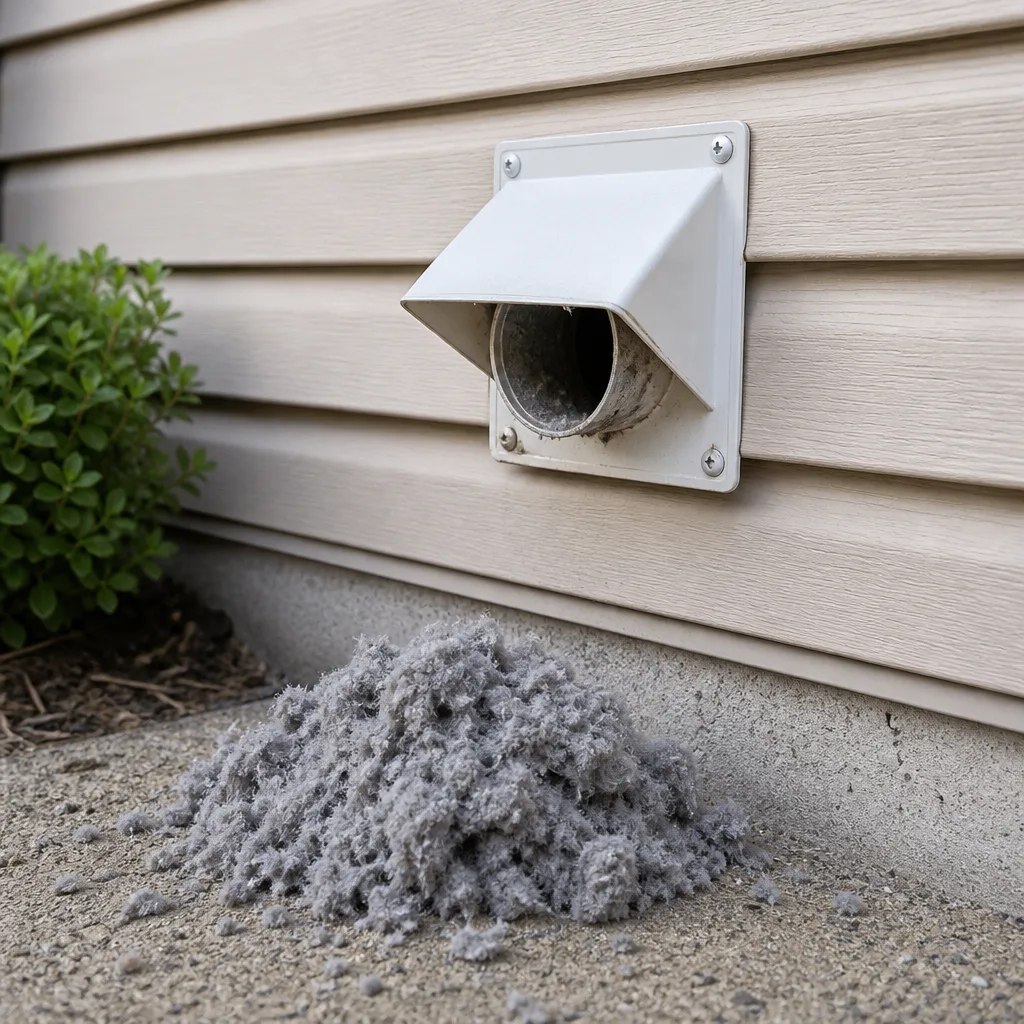
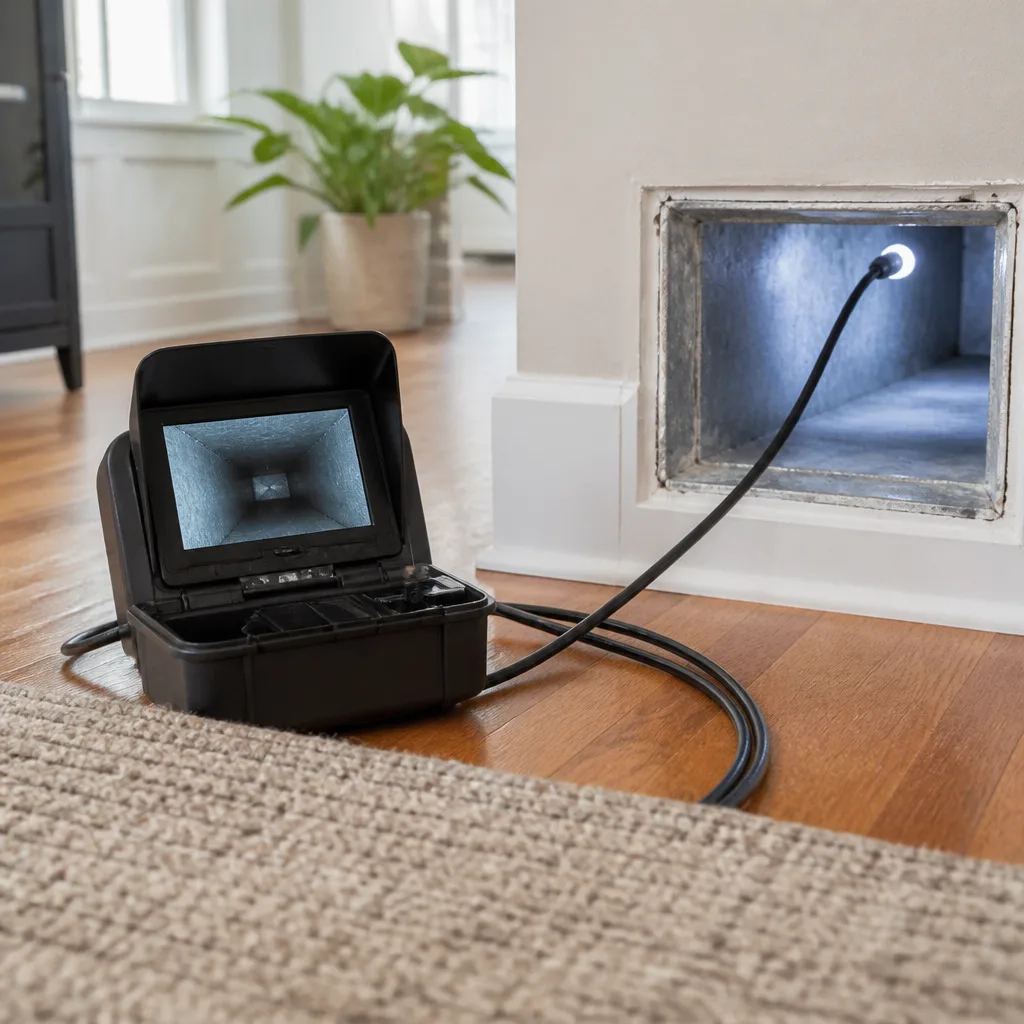
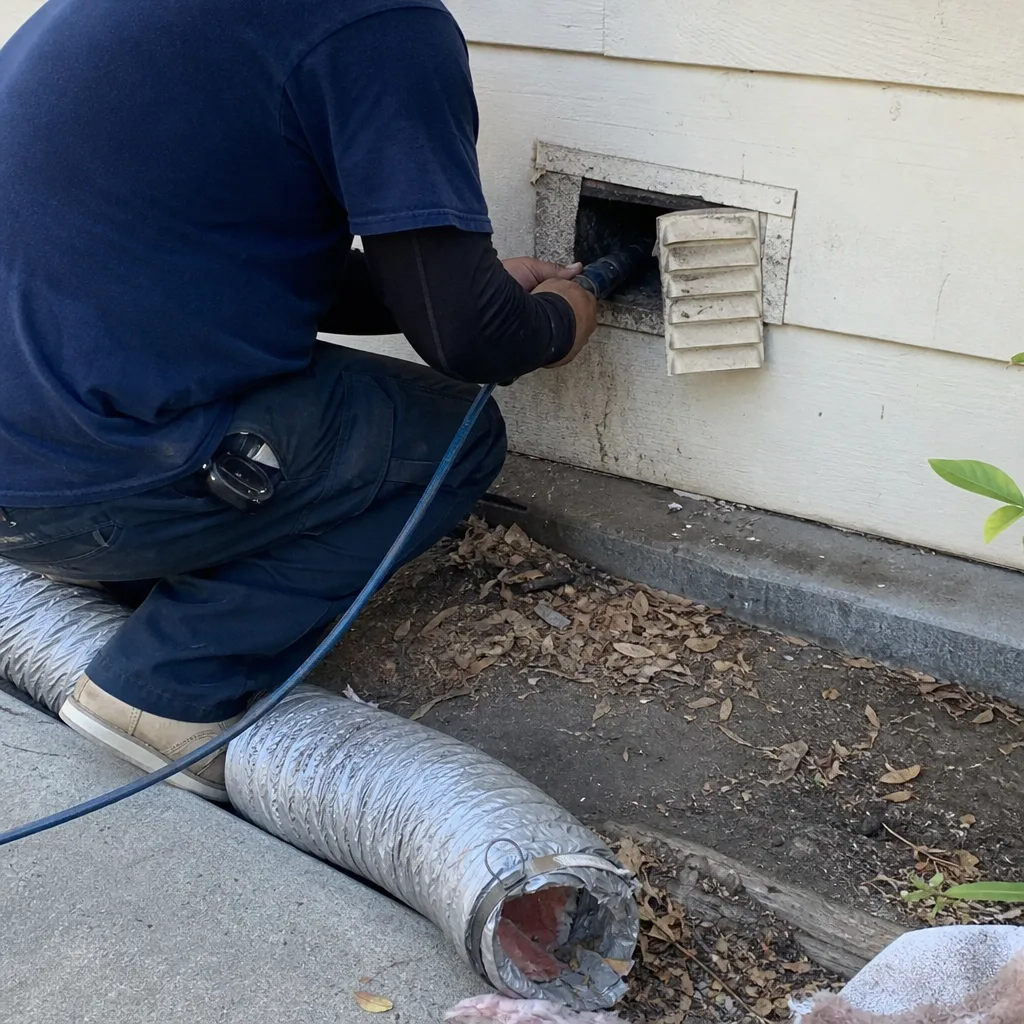 Before
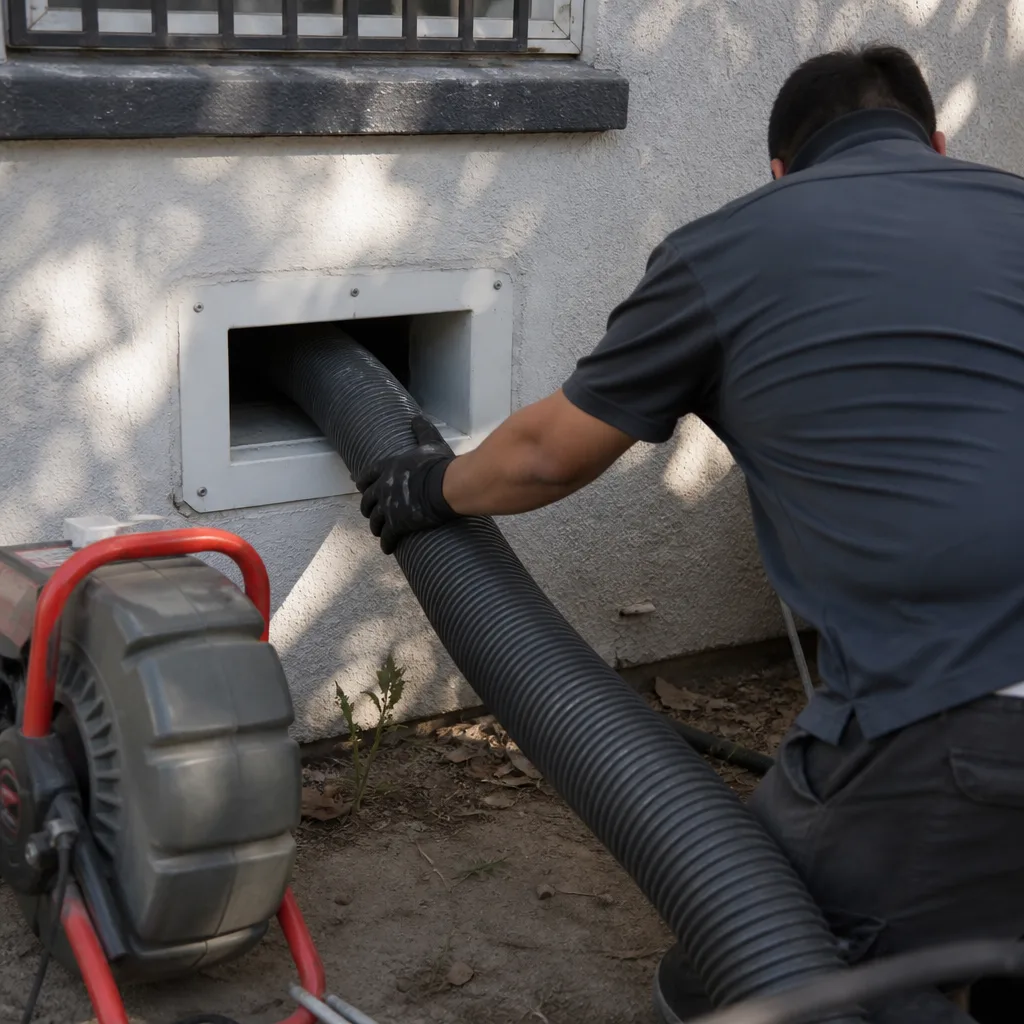 After
After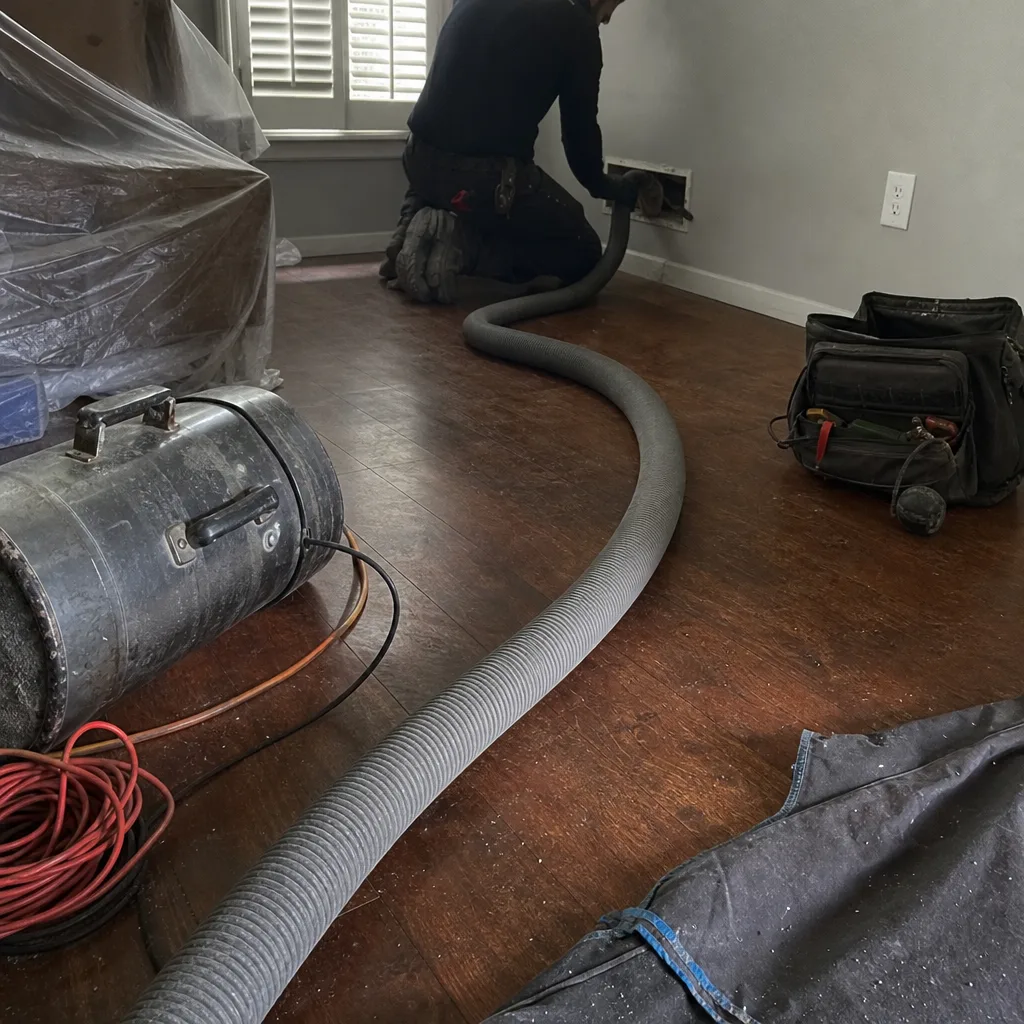 Before
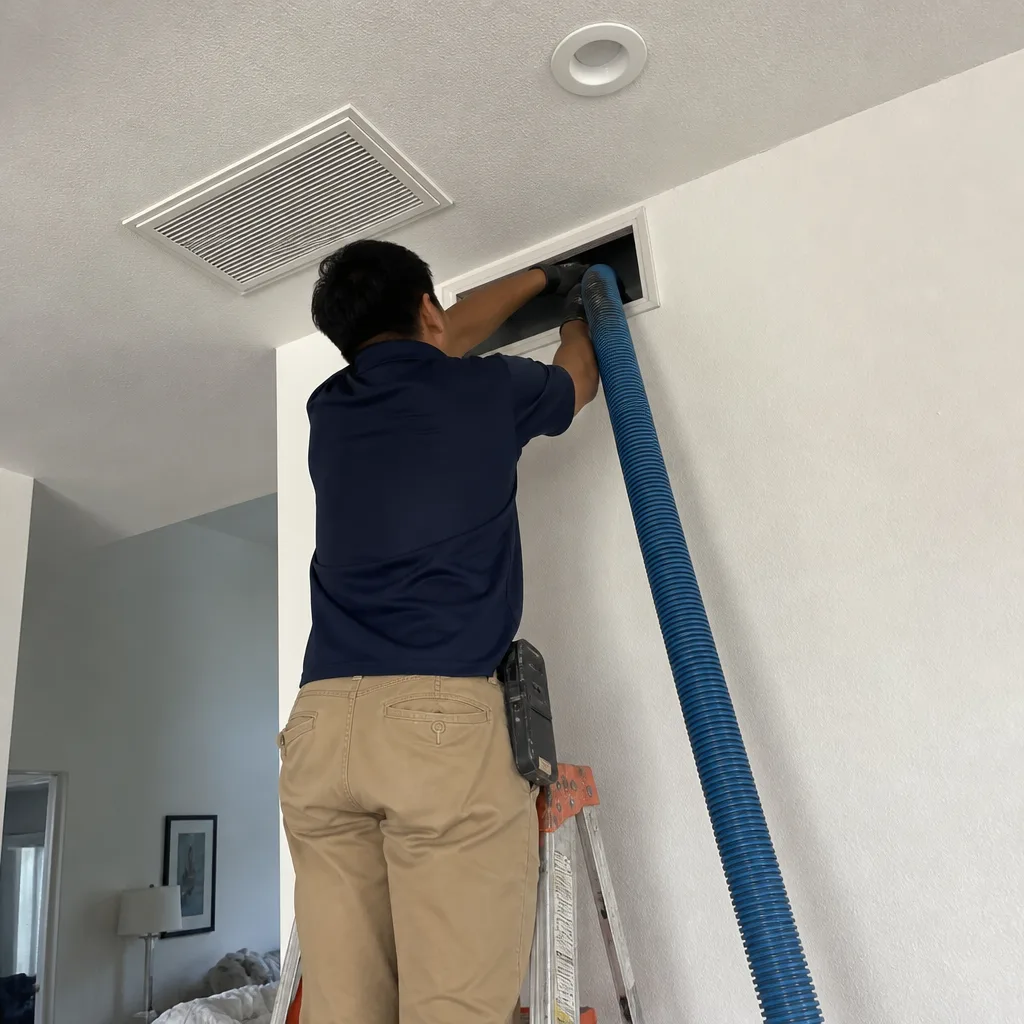 After
After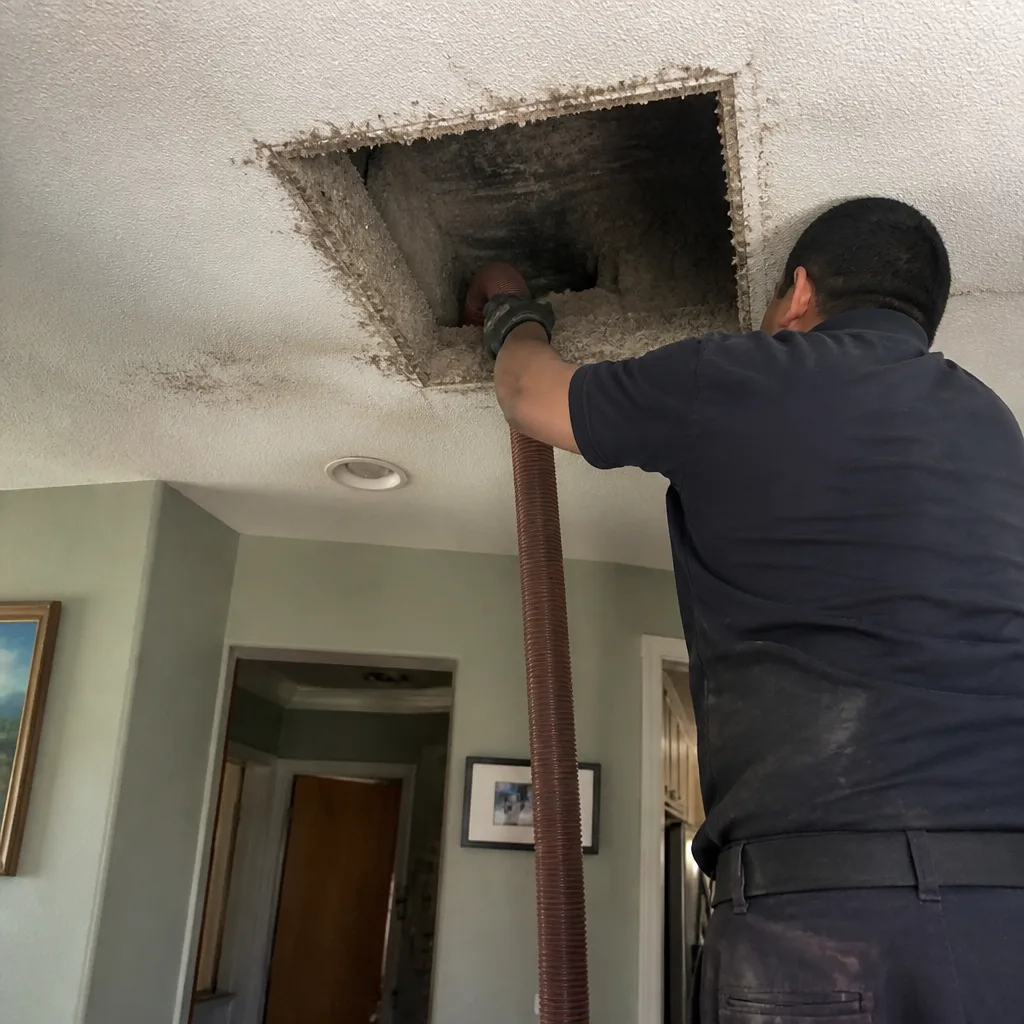 Before
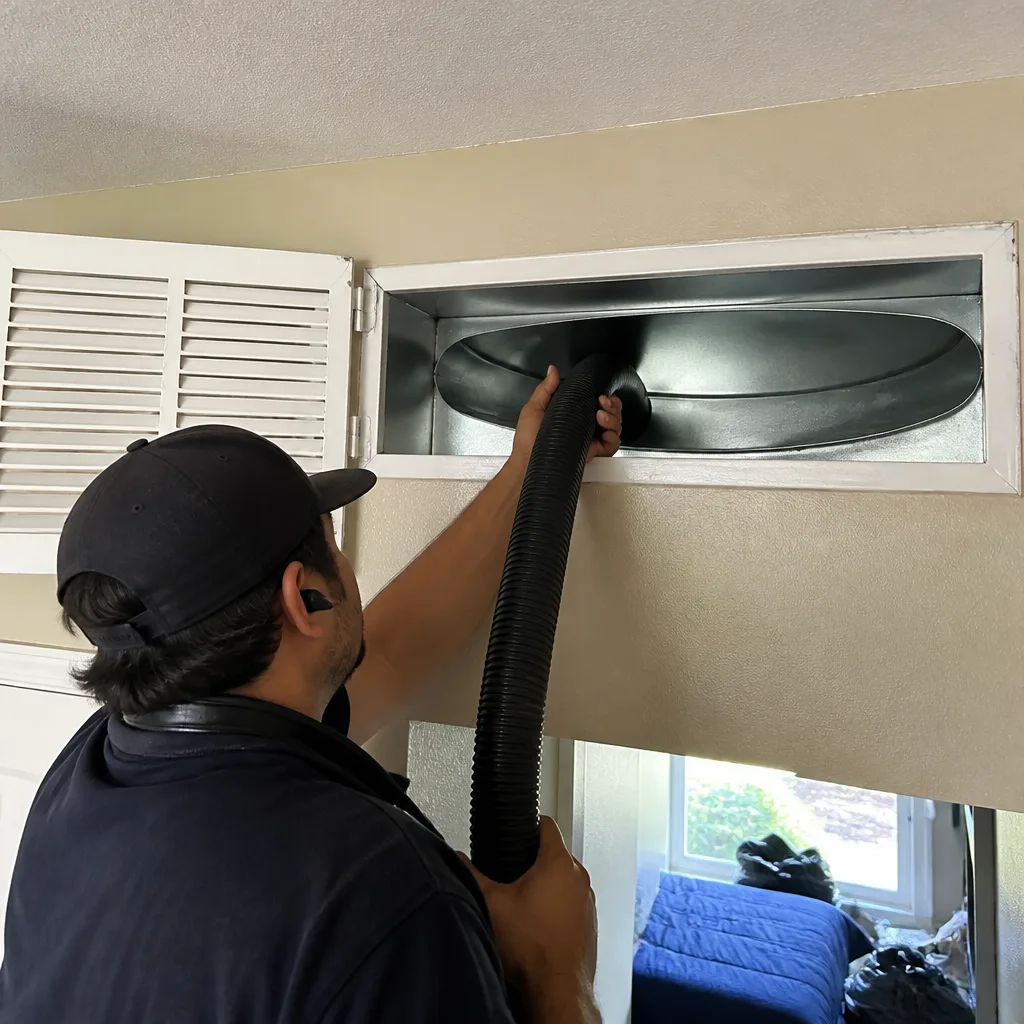 After
AfterHow Long Does HVAC Cleaning Take? Timelines and What to Expect
Most homeowners book HVAC cleaning and get duct cleaning. The evaporator coil, blower wheel, and drain pan are skipped entirely, and those three components hold the majority of biological growth in a typical Los Angeles system. That’s the core problem this guide solves. You’ll learn the real time commitment for a full HVAC cleaning, why it takes twice as long as duct-only work, and exactly what should be on your technician’s scope-of-work document before the first vent is touched. If you live in Los Angeles, you’ll also learn how our climate and housing stock affect your timeline in ways a generic guide will never mention.
Quick Answer
A full HVAC cleaning in Los Angeles takes 3 to 5 hours for a typical single-family home. Duct-only cleaning runs 1.5 to 2 hours. The difference is the coil, blower, and drain pan work, which adds real time but is the only way to actually solve the biological growth problem in your system.
Table of Contents
- Duct Cleaning vs. HVAC Cleaning: Why the Time Difference Matters
- Component-by-Component Time Breakdown
- What Affects Your Timeline in Los Angeles
- Chemical Coil Treatment: The 30 Minutes You Can’t Skip
- The Written Scope of Work: Your Protection Against Scope Creep
- Step-by-Step: What Happens During a Full HVAC Cleaning
- What to Expect After the Cleaning
- Common Mistakes to Avoid
Duct Cleaning vs. HVAC Cleaning: Why the Time Difference Matters
Here’s the distinction that changes everything: duct cleaning addresses the pathways air travels through. HVAC cleaning addresses the equipment that conditions the air. One is a pipe job. The other is a mechanical component job. They’re priced differently, they take different amounts of time, and they solve different problems.
In Los Angeles, where air conditioners run from May through October, the evaporator coil stays damp for roughly five months straight. That’s a biological growth environment. The blower wheel pulls air across that coil and pushes it through your ducts. If the coil is dirty, everything downstream gets contaminated, no matter how thoroughly the ducts were just cleaned. We see this weekly: a homeowner pays for duct-only service, gets visible improvement for a few months, then the musty smell returns because the source was never addressed.
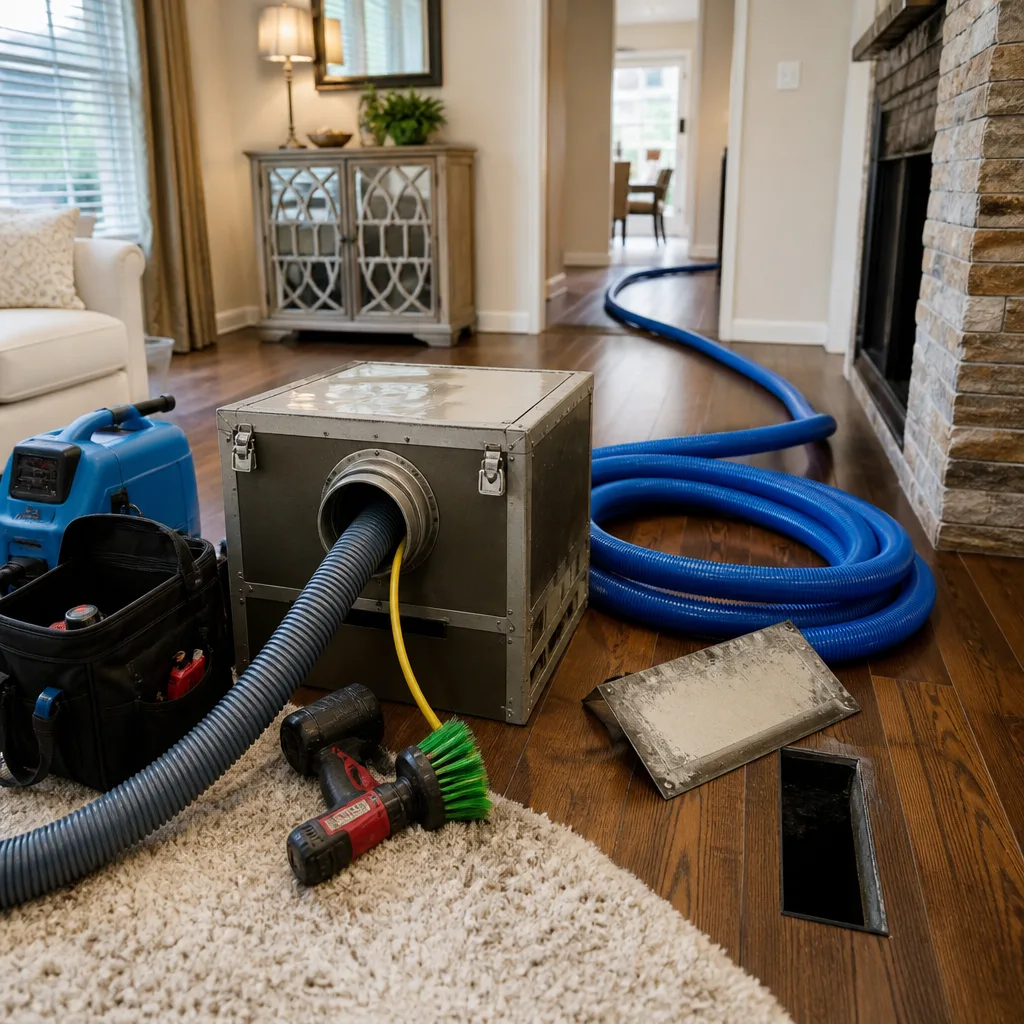
A duct-only cleaning typically involves connecting a vacuum collection unit to the main trunk line, sealing registers, and using agitation tools to break debris loose from the duct walls. Done properly, it’s effective for what it is. But what it is, is limited. The equipment sits untouched.
A full HVAC cleaning adds three mechanical components: the evaporator coil, the blower assembly, and the drain pan. It also includes the return plenum, which is the large chamber where air enters the system. Each of these takes time to access, clean, and reassemble. That’s why the timeline jumps from under two hours to potentially five. You’re not paying for slower work. You’re paying for more work.
Think of it like dental care. A cleaning removes surface buildup. A deep cleaning gets under the gumline. One is maintenance. The other treats the actual problem. Los Angeles homeowners with older systems, pets, or nearby freeway proximity generally need the deeper service, because the contamination load is higher.
Component-by-Component Time Breakdown
Here’s how a full HVAC cleaning actually breaks down, by component, based on what we see in typical Los Angeles homes. Times assume a single system in a house under 2,500 square feet with reasonable access.
- Return plenum and filter housing: 20 to 30 minutes. The return plenum is the large box where air first enters the system. It collects dust, pet hair, and in LA, a surprising amount of fine black soot if you live near a freeway like the 405 or the 10. This area needs to be opened, vacuumed with a HEPA system, and wiped down.
- Evaporator coil: 45 to 90 minutes. This is the biggest variable. The coil is where refrigerant meets air. It’s wet during cooling season, which means the dirt here becomes a paste. If the coil is heavily impacted, it needs chemical treatment plus dwell time (see below). If it’s never been cleaned, the technician has to work carefully to avoid bending the fins.
- Blower compartment and blower wheel: 30 to 45 minutes. The blower wheel is the fan that pushes air through your ducts. Each blade accumulates a film of dust that throws the wheel out of balance. Accessing it often means removing the blower motor assembly. In tight LA closet installations from the 1960s and 70s, just getting to the blower can take 15 minutes alone.
- Drain pan and condensate line: 15 to 25 minutes. The drain pan sits under the coil and holds standing water. In a city where AC runs half the year, this pan is a breeding ground. It needs to be cleaned, treated, and the drain line cleared to prevent overflow. A clogged line in August is one of the most common service calls we see in the San Fernando Valley.
- Supply and return duct runs: 45 to 75 minutes. This is the portion that overlaps with a duct-only cleaning. It involves sealing registers, creating negative pressure with a vacuum like a Nikro HEPA unit, and agitating the duct walls with a brush system like a Rotobrush. Each run gets worked from the register to the main trunk.
- Sanitizing and reassembly: 15 to 30 minutes. After everything is clean, the system gets treated with an antimicrobial agent where appropriate, all access points are sealed, and the system is tested for proper airflow and temperature drop.
Add those up and you get roughly 3 to 5 hours total. The range exists because no two systems are identical. A 1972 ranch house in Westchester with an original attic air handler and a 25-foot crawl space return will take longer than a 2015 build in Playa Vista with a closet-mounted unit and modern access panels. Both need the same work. One just fights you more.
Quick Time Reference Table
| Service | Typical Time | What It Includes | Typical Price Range (LA) |
|---|---|---|---|
| Duct-only cleaning | 1.5 to 2 hours | Duct runs, registers, main trunk line | $400 to $700 |
| Full HVAC cleaning | 3 to 5 hours | Ducts plus coil, blower, drain pan, plenum | $800 to $1,500 |
| Full HVAC cleaning with heavy coil treatment | 4.5 to 5.5 hours | Everything above plus extended chemical dwell and coil rinse | $1,200 to $1,800 |
These are honest ranges for Los Angeles market pricing in 2025. If a quote comes in dramatically below these ranges, the scope is almost certainly smaller than what we’re describing here. That’s not always wrong. Some homes genuinely need less work. But you should know what you’re comparing.
What Affects Your Timeline in Los Angeles
Your house, not your technician, is the biggest variable. Los Angeles housing stock spans from 1920s bungalows in Highland Park to 1990s track homes in Valencia. Each era of construction presents different access challenges, and access time is real time.
Attic Air Handlers
Homes built in the 1960s and 1970s, particularly in the San Gabriel Valley and the South Bay, often have air handlers mounted horizontally in attics with minimal clearance. A technician has to work on their knees, under fiberglass insulation, in temperatures that can exceed 130 degrees in August. Safety matters here. The coil and blower are just as dirty as any closet unit, but reaching them takes significantly longer. A good company will include attic time in their estimate upfront. A bad one will discover it on the day of the job and hand you a revised invoice.
Crawl Space Returns
Raised foundations are common in neighborhoods like Mar Vista, Culver City, and older parts of Long Beach. The return duct runs through a crawl space under the house. To clean that run properly, someone has to go under there. It’s dark, it’s tight, and in winter, it can be wet after rain. This is another area where time balloons compared to a slab-on-grade home with all ductwork in the walls.
System Age and Condition
An original 1984 system that has never had its coil cleaned will take longer than a five-year-old system that’s been maintained. The coil cleaning alone can double if the debris has hardened. Older systems also have more fragile components. A blower motor from the Reagan administration needs gentler handling than a 2020 variable-speed unit. Rushing this work damages equipment. There’s a reason we move carefully around 40-year-old evaporator coils: replacement parts for some of those units don’t exist anymore.
Pet Load and Freeway Proximity
Two Los Angeles-specific factors affect contamination load. Homes with multiple pets generate more hair, dander, and the sticky particles that bind to it. And homes within a mile of a major freeway corridor, think the 101 through the Valley or the 710 through the SGV, accumulate fine particulate soot that clings to coil surfaces and duct walls. This isn’t theory. It’s visible on every job we do in those zones. Heavier contamination means longer agitation times and more passes with the vacuum.
Chemical Coil Treatment: The 30 Minutes You Can’t Skip
The phrase “chemical coil treatment” makes people nervous, but it’s standard trade practice and for good reason. A dirty evaporator coil in Los Angeles has been wet for months. The debris on it is not loose dust. It’s a biofilm: a sticky matrix of dust, skin cells, and microbial growth. Mechanical brushing alone won’t remove it. You need a chemical agent to break the bond, and that agent needs time to work.
Here’s the process and why it adds a minimum of 30 minutes to your job:
- Initial assessment: The technician inspects the coil with a mirror and light to determine the contamination level. Heavy buildup requires a stronger dilution and longer dwell.
- Application: An alkaline coil cleaner is applied to the coil surface. It foams and begins breaking down the biofilm. This takes about 5 minutes.
- Dwell time: The chemical needs 15 to 20 minutes to penetrate and loosen the debris. This is the step that cannot be rushed. Cutting this short means the rinse step doesn’t work, and you’re left with a half-cleaned coil.
- Rinse: The coil is rinsed with low-pressure water or a pump sprayer. The loosened debris washes into the drain pan, which is then cleaned and treated.
- Inspection: The technician confirms the coil fins are clean and unobstructed before moving to the blower.
Any company that skips the dwell time is selling you a visual cleaning, not a functional one. The coil might look brighter, but the bonding layer remains. Within a season, the growth returns. We use the full dwell cycle on every coil we clean. It’s the slowest correct way to do it, and the only way we’re willing to do it.
If you’re sensitive to cleaning agents, tell your technician. Most modern coil cleaners are biodegradable and low-odor, but the technician should be able to show you the product label and explain what’s being used. You deserve to know.
The Written Scope of Work: Your Protection Against Scope Creep
Scope creep is the dirty secret of the air duct industry. It works like this: you book a $99 duct cleaning special from a flyer. The technician arrives, spends 20 minutes looking at your system, and tells you the job is actually bigger than the special covers. Suddenly it’s $1,400 for “mold remediation” and “coil service” that wasn’t in the original quote. You’re standing in your own living room, a technician is already set up, and you feel pressured to say yes.
That’s why a written scope of work matters more than the written price. It tells you exactly which components will be cleaned, what methods will be used, and what the total cost is before anything begins. At Cardinal Air Duct Cleaning, the written price is handed to you before a single duct is touched, and it does not change at the door. That’s our standard operating procedure, and it’s part of the Relay Standard booking experience. For more on vetting providers, see our step-by-step guide.
What should a scope of work include? Here’s the list to check for:
- The specific components being cleaned: ducts, coil, blower, drain pan, plenum
- The cleaning method for each component
- Whether chemical coil treatment is included
- Whether drain line clearing is included
- The total time estimate
- The total price
- Any exclusions or contingencies spelled out clearly
If a company won’t put this in writing before starting, you’re being set up for a surprise. Walk away. The 365-Day Done Right Promise we offer means the scope of work isn’t a sales tool. It’s a contract. If the work isn’t right within 365 days, we return and correct it at no charge. That promise only works because we define “right” on paper before the job begins.
Step-by-Step: What Happens During a Full HVAC Cleaning
Here’s the complete sequence of a full HVAC cleaning, from arrival to final walkthrough. This is the process we follow in Los Angeles homes, and any competent company should follow something close to it.
The Full HVAC Cleaning Sequence
- Arrival and walkthrough. The technician arrives in uniform, introduces themselves by name, and walks the system with you. They check the thermostat, locate the air handler, identify the return(s), and confirm the scope of work on paper.
- System shutdown and protection. The HVAC system is powered down at the breaker. Drop cloths and floor protection go down around the work area. Shoe covers go on. The technician should protect your floors before any equipment comes through the door.
- Return plenum access. The return grille or access panel is removed. The plenum is inspected, vacuumed, and wiped down. This is also when the filter is removed and replaced if needed. We’re happy to show you the old filter before it goes in the trash. Photograph it if you want.
- Duct cleaning setup. Access holes are cut into the supply and return plenums if needed. A HEPA vacuum unit, in our fleet that’s a Nikro system, is connected to create negative pressure. This means the loosened debris goes straight into the vacuum, not back into your living room. Registers are sealed in sequence as each run is cleaned.
- Duct agitation. A rotary brush system, we run Rotobrush equipment, is fed through each duct run. The brush spins and knocks debris loose from the duct walls. The negative pressure pulls everything into the vacuum containment. Each run gets worked individually, from the register back to the main trunk.
- Evaporator coil cleaning. The technician accesses the coil, applies the chemical cleaner, allows full dwell time, then rinses. This is the longest single component of the day and the one that matters most in Los Angeles. The coil is where your air gets cold, and it’s where the biological growth lives.
- Blower wheel and compartment. The blower assembly is removed or accessed in place. The wheel is cleaned blade by blade to restore balance and airflow. The compartment is vacuumed. The motor is checked for dust buildup and wear.
- Drain pan and line. The pan is cleaned, treated, and the drain line is flushed and cleared. A wet/dry vacuum is used to pull blockages from the drain line. If the line is severely clogged, this step takes longer. Better to find out now than in the middle of a heat wave.
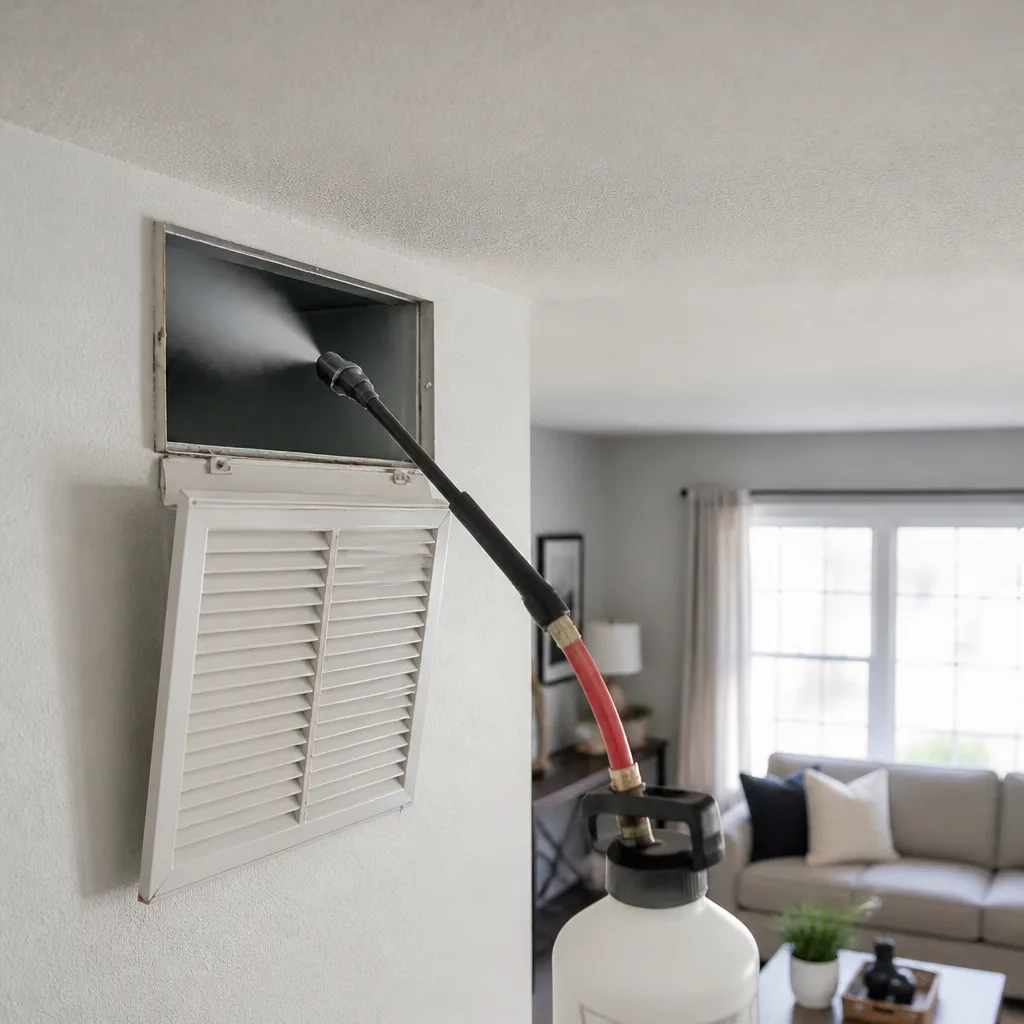
- Sanitizing and filter installation. An EPA-registered antimicrobial treatment is applied to the cleaned surfaces where appropriate. A new filter is installed if you’ve provided one or if it’s part of your service. We recommend Aprilaire media filters for LA homes because they hold more particulate between changes.
- Reassembly and system test. Access points are sealed, registers are reinstalled, and the system is powered back on. The technician checks airflow at multiple registers, confirms the temperature drop across the coil, and verifies the drain line is flowing.
- Before-and-after photos and final walkthrough. You see photos of your coil, blower, and ducts before and after the work. This is the Relay Standard: photo documentation of the work you paid for. No guessing. No trust us. Here’s your coil, here’s what it looked like, here’s what it looks like now.
Total time: 3 to 5 hours, depending on the variables described above. Total transparency: complete, before the technician leaves.
What to Expect After the Cleaning
The system is clean. Here’s what happens next, and what you should and shouldn’t notice in the days after the work is done.
The first day. You may notice a difference in airflow immediately, especially if your coil was heavily impacted. The system moves more air with less effort. Some homeowners describe it as the AC “breathing easier.” The temperature drop across the coil should be in the normal range, which a good technician will confirm before they leave.
The first week. If a sanitizing agent was applied, you may notice a faint, clean smell for a day or two. That’s normal and should dissipate quickly. If you have a new filter installed, your system is now starting from a genuinely clean baseline.
The first month. Your energy usage may drop slightly. A clean coil and blower wheel mean the system draws fewer amps to move the same amount of air. It’s not dramatic, usually 5% to 10% on cooling costs, but it’s real. In a Los Angeles summer, that’s money.
What you should NOT see: debris blowing out of your registers. If that happens, the agitation step was done without proper negative pressure. Debris wasn’t vacuumed out. It was pushed around. That’s not cleaning. That’s shuffling.
What you SHOULD see: photos. Before-and-after documentation of every component that was cleaned. If your duct cleaning company can’t show you what they did, you have no way to know they did anything at all. This is why Cardinal includes photo proof in every booking under The Relay Standard. The camera doesn’t lie, and neither should your invoice.
How often does this need doing? In Los Angeles, with our climate and air quality, we recommend a full HVAC cleaning every 3 to 5 years for most homes. Homes with multiple pets, heavy freeway proximity, or residents with respiratory conditions may benefit from every 2 to 3 years. Duct-only cleaning as a stopgap between full cleanings has a role, but it’s not a substitute for the mechanical components.
Common Mistakes to Avoid
- Booking “HVAC cleaning” without asking what it includes. The phrase is not standardized. Ask for a component list in writing. If the coil, blower, and drain pan aren’t on it, you’re getting duct cleaning at an HVAC-cleaning price.
- Falling for the $79 special. A price that low covers the cost of sending a truck to your door. It does not cover 3 to 5 hours of skilled labor. The money gets made on upsells once the technician is inside. In Los Angeles, this flyer market is aggressive. Check the actual scope before you book anything under $200.
- Accepting a quote without dwell time on the coil. If the company says the coil won’t need chemical treatment without even looking at it, they’re either not inspecting or not cleaning it properly. You can’t know the coil’s condition without looking at it.
- Skipping before-and-after photos. If there’s no photo proof, there’s no way to verify the work. This isn’t a luxury extra. It’s the only verification mechanism you have. Demand it.
- Assuming newer homes don’t need cleaning. A 2018 system can have significant coil buildup if the previous owners never changed filters. Age of construction is not the same as age of cleanliness.
- Rushing the job. A full HVAC cleaning cannot be done properly in 90 minutes. If the technician is done in under two hours and you were told you’d get a “full” cleaning, the coil or blower was skipped. Time is the cost of doing this right.
- Ignoring the drain line. The condensate drain is the most overlooked component, and it’s the one that causes water damage when it fails. In Los Angeles, drain failures peak in August, when the system works hardest. A clean HVAC system with a clogged drain line is still a flood waiting to happen.
Frequently Asked Questions
A full HVAC cleaning takes 3 to 5 hours for a typical single-family home in Los Angeles. The range depends on access, system condition, and whether the coil requires extended chemical treatment. Duct-only cleaning runs 1.5 to 2 hours, but it does not address the coil, blower, or drain pan.
HVAC cleaning costs more because it includes substantially more labor. The technician opens the air handler, removes or accesses the blower assembly, cleans the evaporator coil with chemical treatment and full dwell time, flushes the drain pan and line, and then still does all the duct work. It’s roughly double the labor hours and requires more skill. Typical LA pricing runs $800 to $1,500 for a full HVAC cleaning versus $400 to $700 for ducts only. Call (737) 727-2314 for an exact quote. Estimates are free.
Yes, you can stay home. The work is contained and most homeowners work remotely or go about their day while the technician is working. The only disruption is noise from the vacuum unit, which runs continuously during the duct cleaning portion. The system will be off during the cleaning, so plan for a few hours without AC if you’re getting this done in summer.
You know because you see photos. Before-and-after images of the coil should be provided on every job. A clean coil should show visible aluminum fins, not a gray mat of debris. If your company won’t provide visual proof, you have no way to verify the work. This is one reason Cardinal includes photo documentation on every booking as part of the Relay Standard.
Every 3 to 5 years for most LA homes. If you have multiple pets, live within a mile of a freeway, or have residents with asthma or allergies, every 2 to 3 years is more appropriate. The constant AC use in Los Angeles means coils stay wet for months at a time, accelerating buildup compared to drier climates.
No. A $79 duct cleaning in Los Angeles is a lead generation tactic, not a service. The price doesn’t cover the cost of equipment, labor, and insurance. The technician arrives knowing they need to upsell you to several hundred dollars to make the visit profitable. If it sounds too good to be true in Los Angeles, it is. We encourage you to compare written scopes of work side by side before booking anything.
The Bottom Line
HVAC cleaning takes 3 to 5 hours because that’s what the work actually requires. Anything faster means something was skipped, and in Los Angeles, the thing that gets skipped is usually the coil. The difference between a duct cleaning and a full HVAC cleaning is the difference between treating the symptom and treating the source. Get a written scope of work. Confirm the coil, blower, and drain pan are included. Get before-and-after photos. If the company won’t do all three, keep looking. When you’re ready, Cardinal Air Duct Cleaning is a trusted local air duct cleaning company serving Los Angeles. We also specialize in Dryer Vent Cleaning in Los Angeles and full Air Duct Cleaning in Los Angeles, including HVAC Cleaning in Los Angeles for homes across the city. Call us at (737) 727-2314 for a free estimate, and you’ll get a written price before any work begins. No surprises, no scope creep, just the actual job done right.
Written by Omar Haddad, Owner at Cardinal Air Duct Cleaning, serving Los Angeles since 2005. Explore more guides & resources on keeping your system clean.