
Last updated October 9, 2026
Whole-system duct and dryer vent check with before-and-after photos - you see exactly what came out of your vents
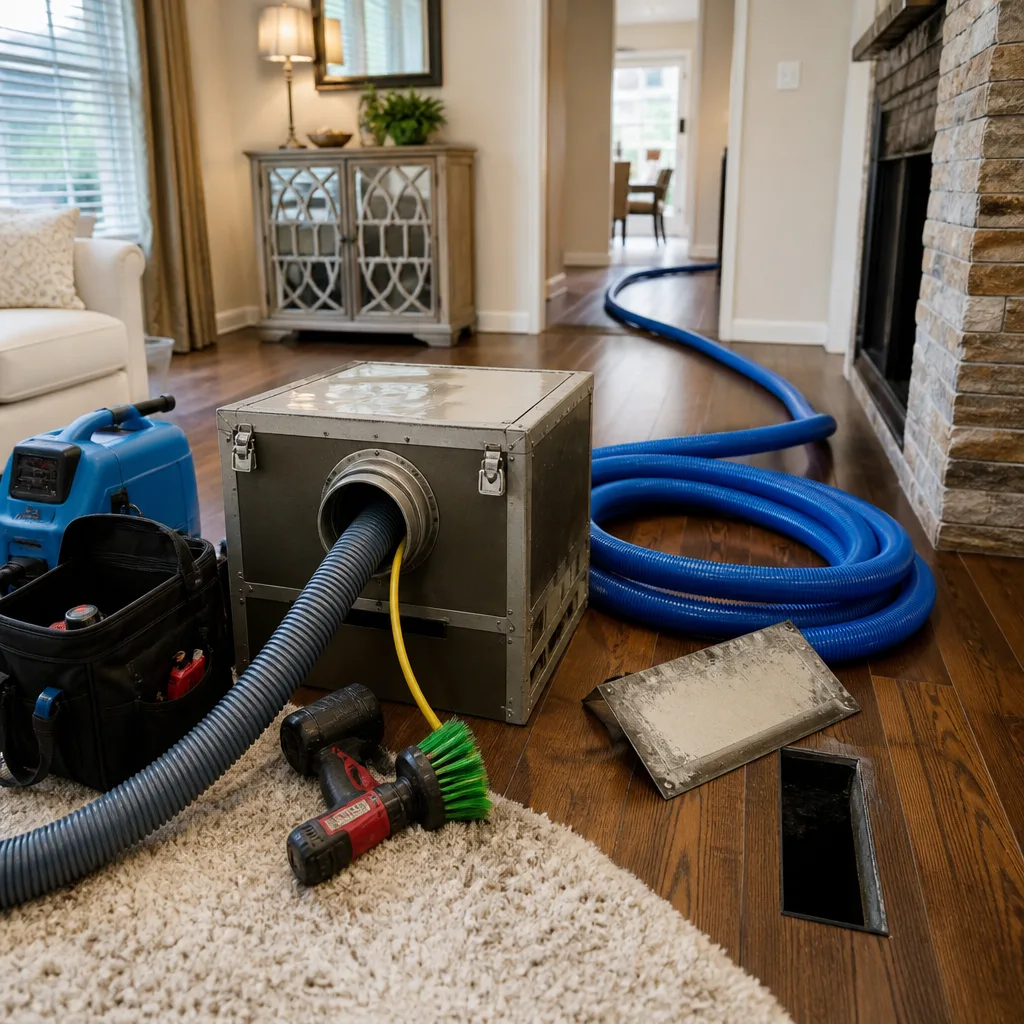
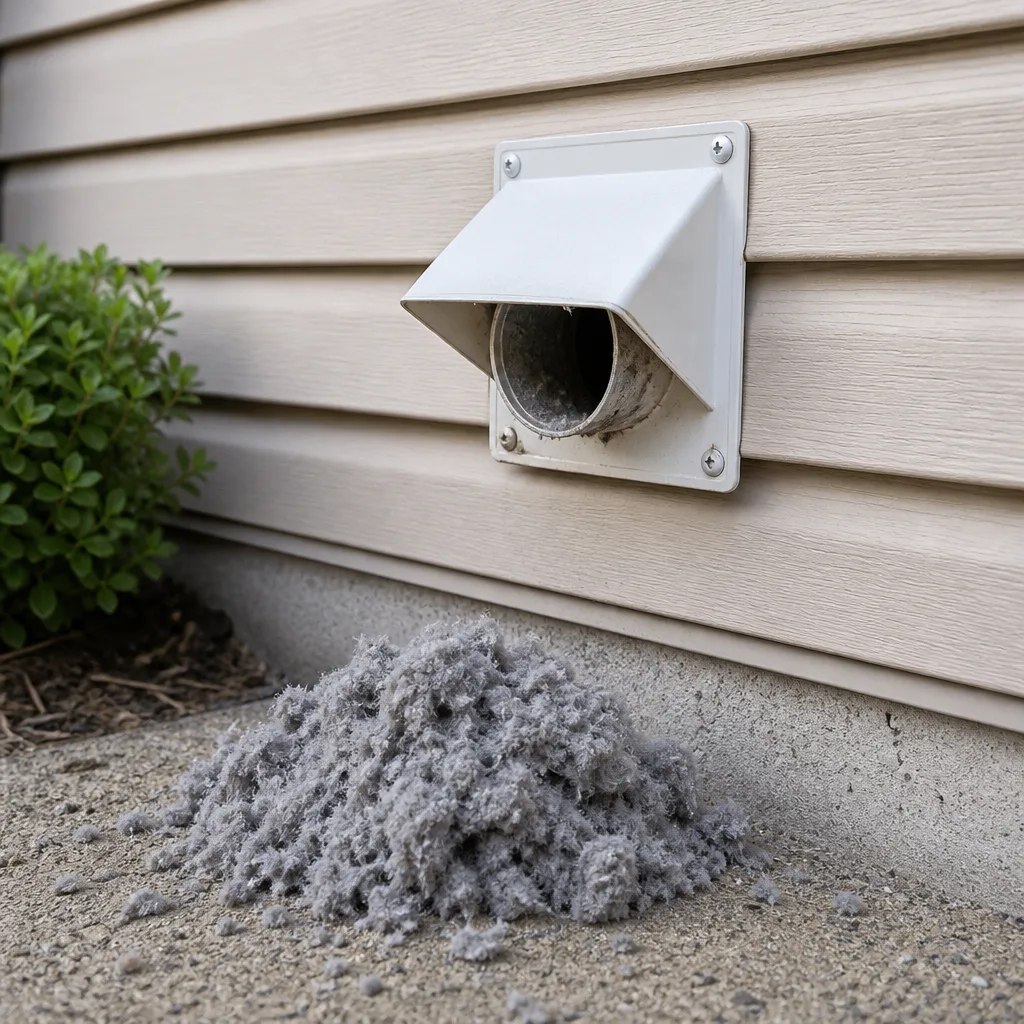
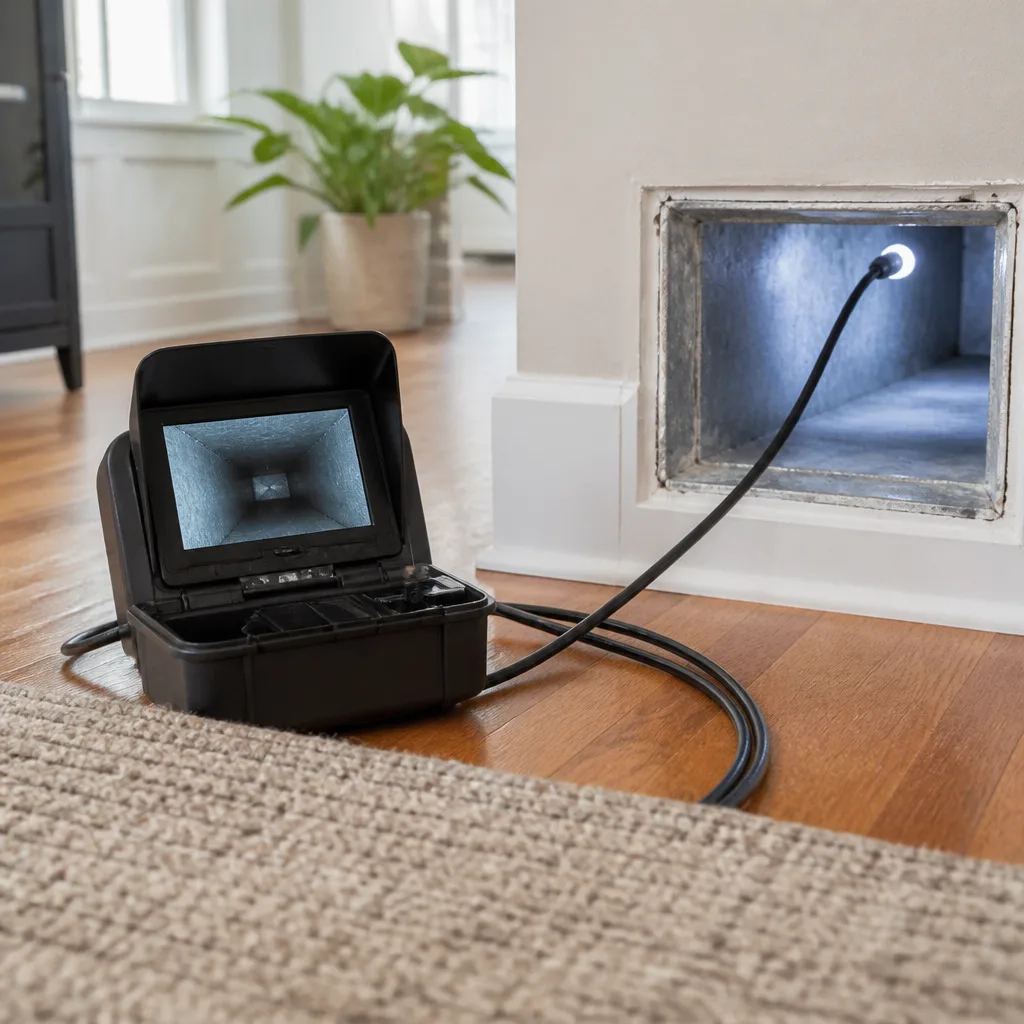
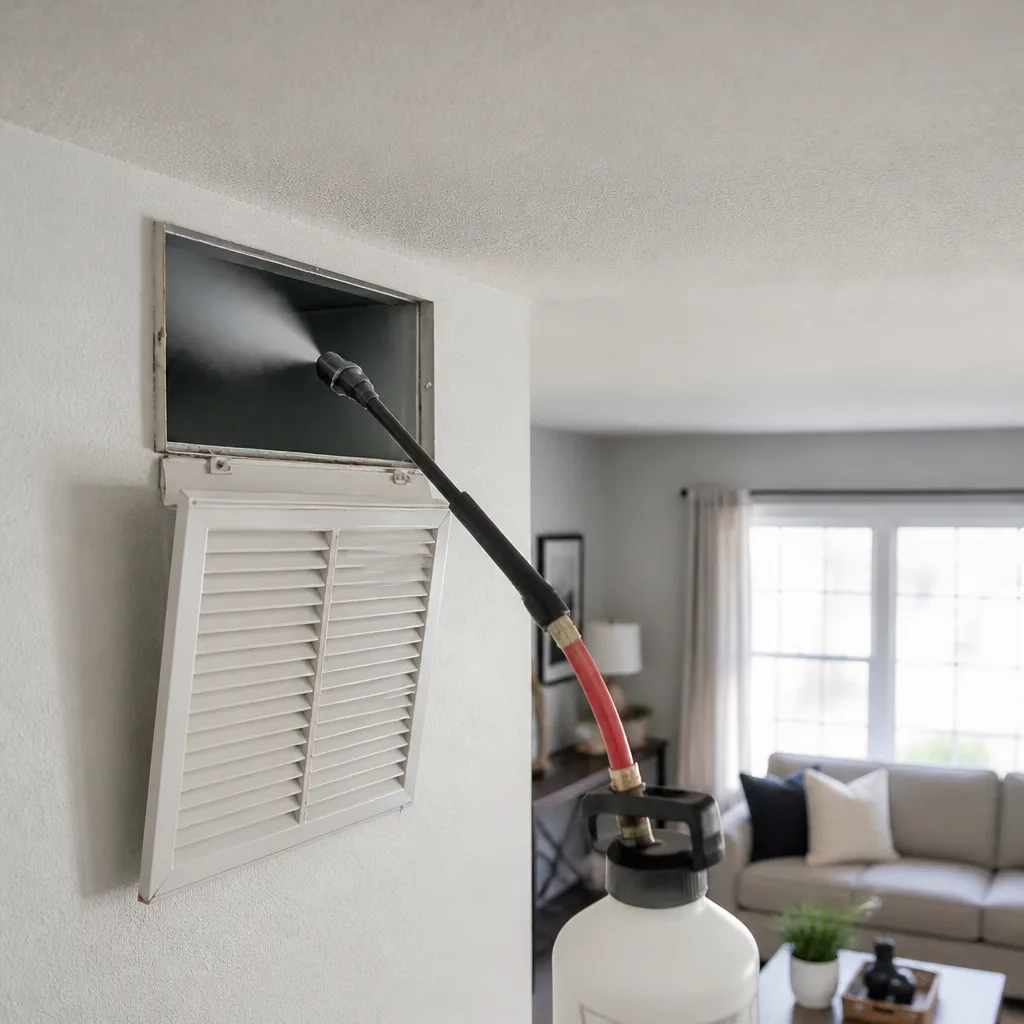
That "$99 whole-house special" is a bait ad - the real number appears once they are in your hallway, or the "clean" is a shop-vac at the register. We photograph the inside of your ducts before and after instead.
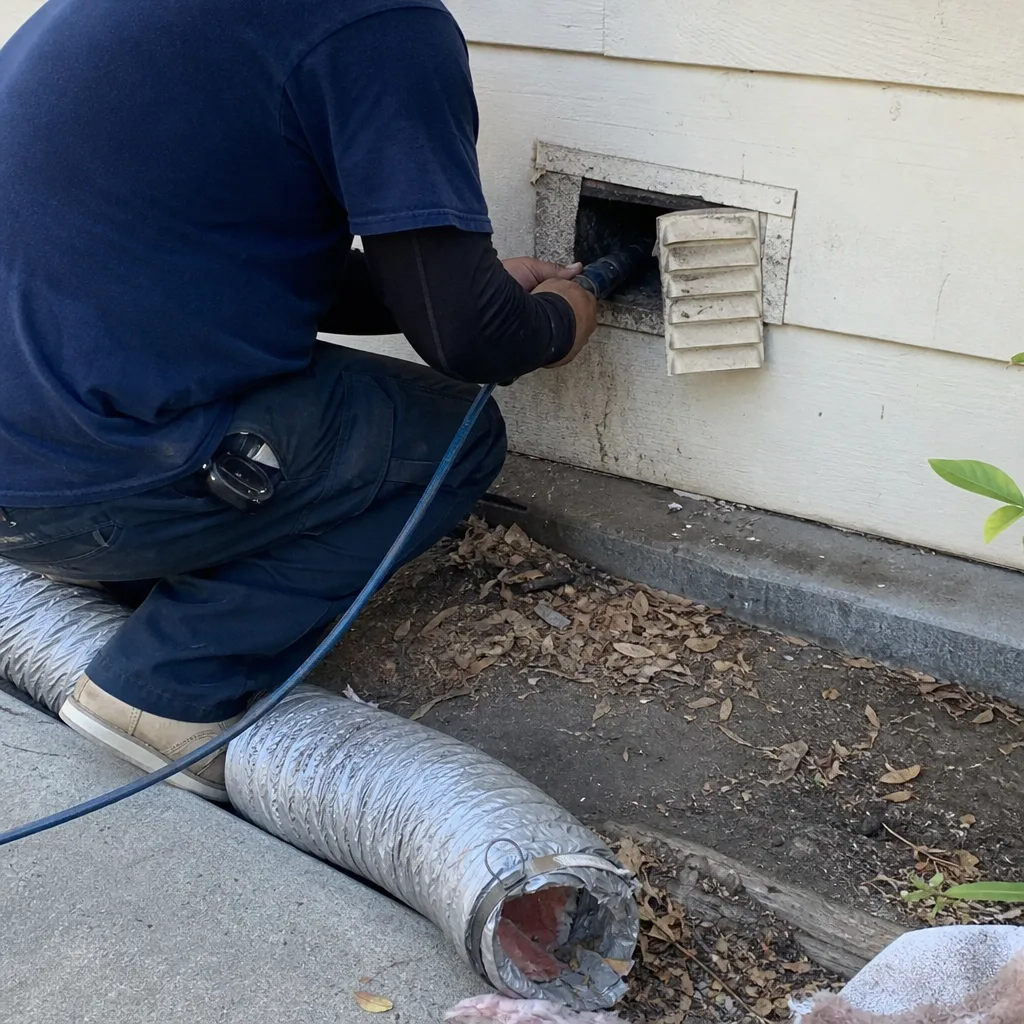 Before
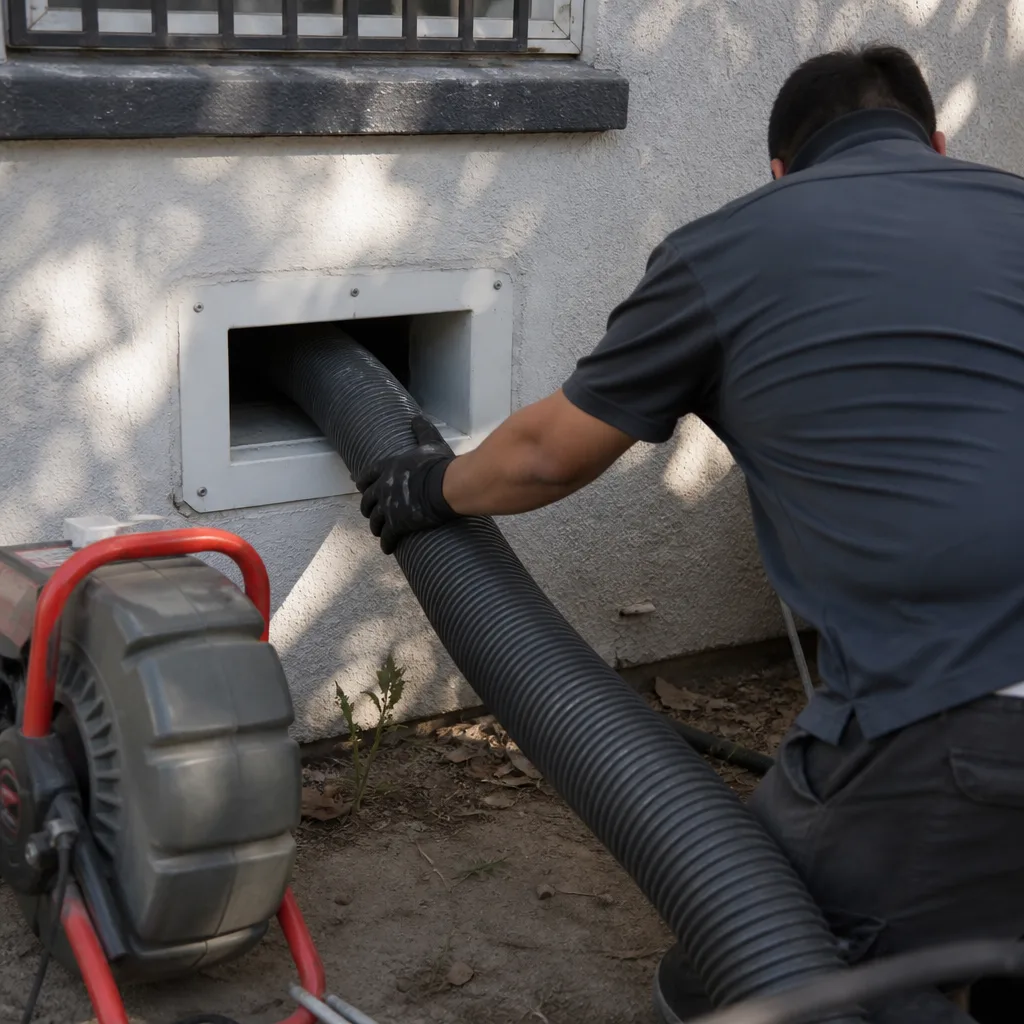 After
After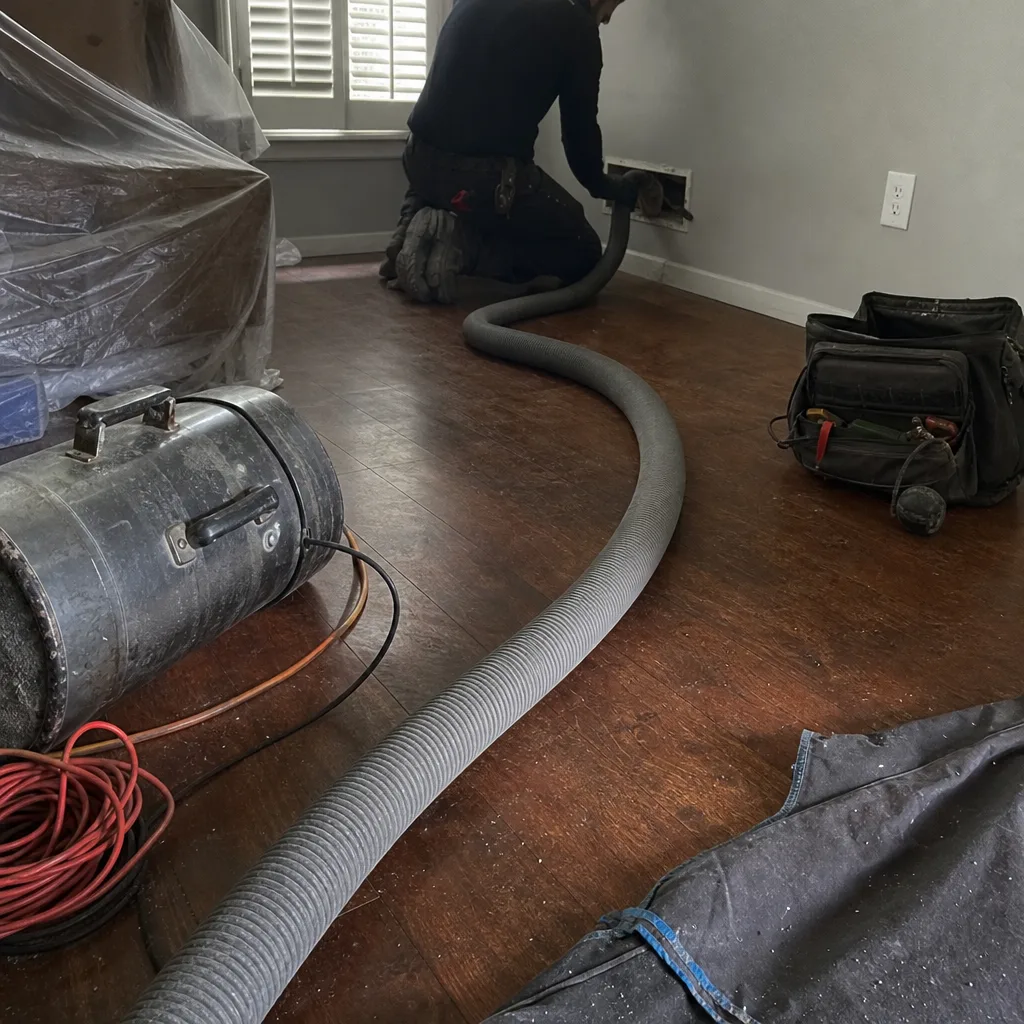 Before
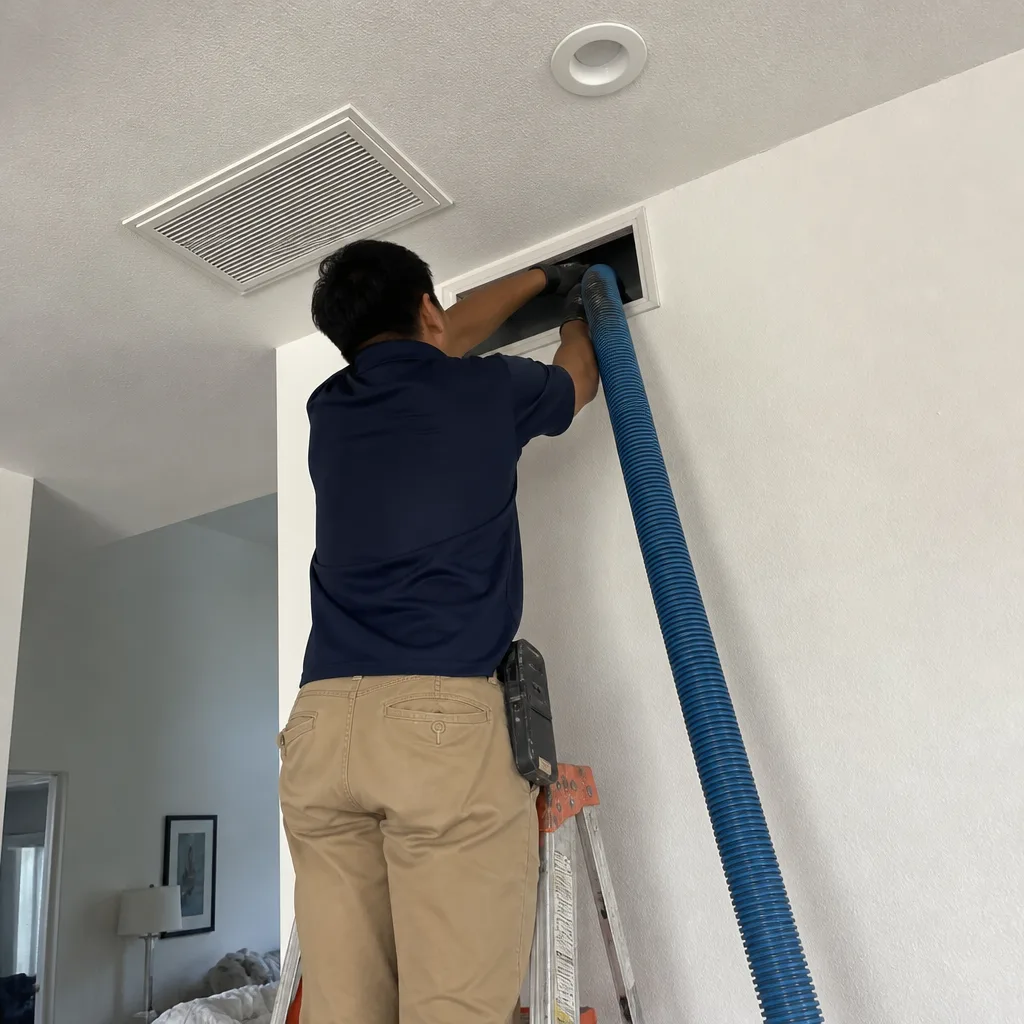 After
After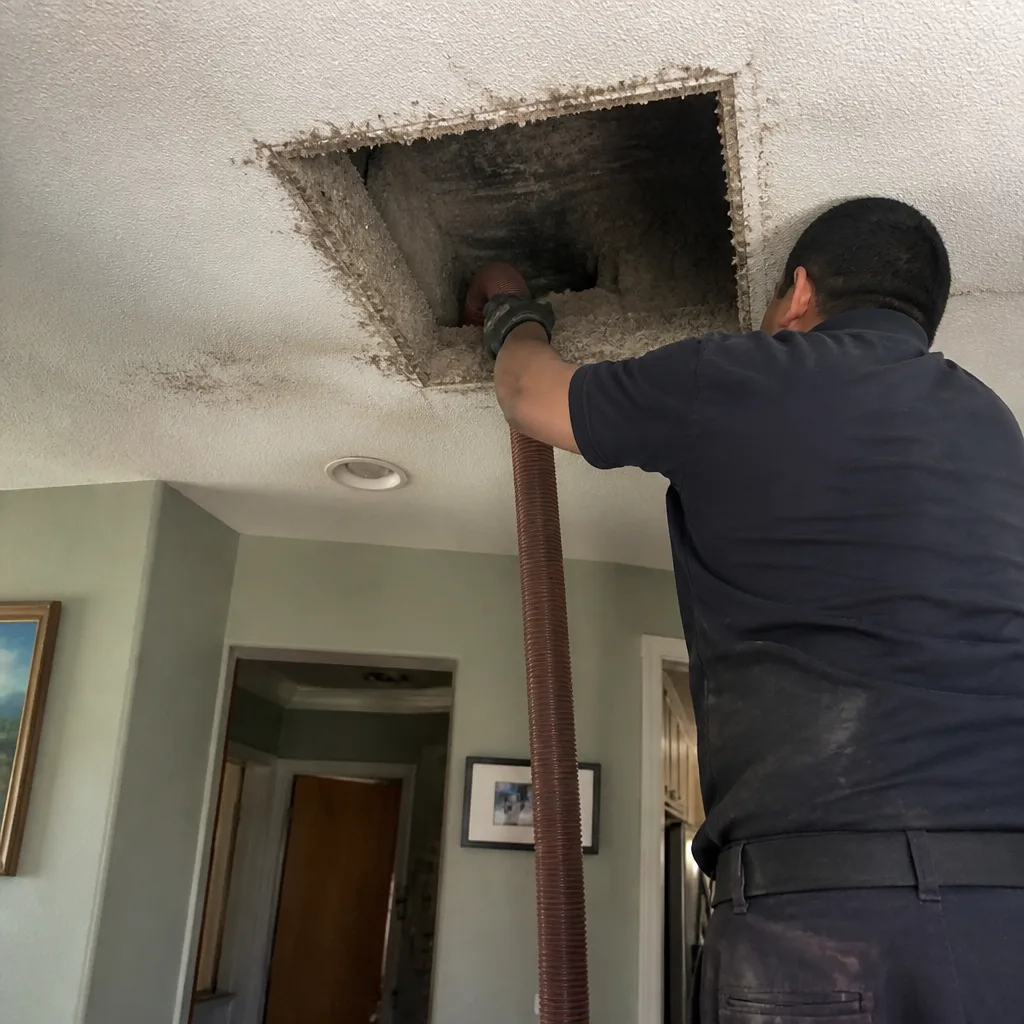 Before
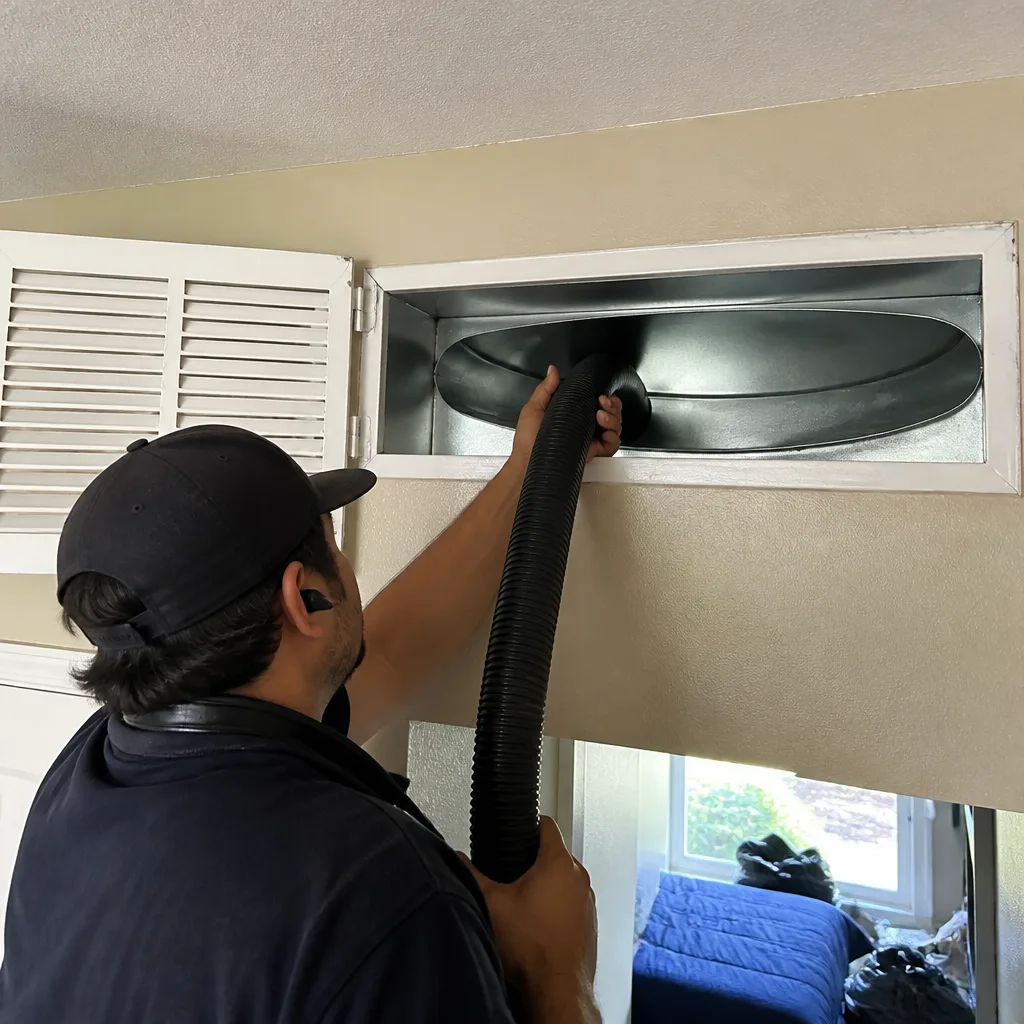 After
AfterHow to Hire a Air Duct Cleaning Contractor in Los Angeles: A Step-by-Step Guide
Here’s something most Los Angeles homeowners don’t realize: the California Contractors State License Board does not issue a specific license for air duct cleaning. Anyone with a van and a shop vac can print business cards and call themselves a duct cleaner. That single fact explains why LA has some of the best duct cleaning companies in the country and some of the worst, often showing up side by side in the same Google search. This Air Duct Cleaning guide will give you a concrete vetting script, five deal-breaker questions to ask before booking, and the specific red flags that Los Angeles homeowners face more than most markets.
Quick Answer
To hire a legitimate air duct cleaning contractor in Los Angeles, verify their NADCA membership (not just a claimed affiliation), confirm they use professional-grade negative-pressure equipment from brands like Rotobrush or Nikro, require a written price based on an actual duct count before work starts, and check their insurance certificate with your name listed as additionally insured. Most standard air duct cleanings in Los Angeles run $350 – $600 for a typical single-family home, and any quote well below that should trigger immediate skepticism.
Table of Contents
- The Los Angeles Duct Cleaning Market: Why It’s Different
- The Five Phone-Screen Questions That Separate Pros from Upsell Mills
- What NADCA Membership Actually Means (and What Contractors Claim It Means)
- Written Price Before Work Starts: Why a Duct Count Matters
- How to Verify Insurance and Liability Coverage in California
- Los Angeles-Specific Red Flags
- What a Legitimate Duct Cleaning Should Include
- Common Mistakes to Avoid
- When to Call a Professional
- Frequently Asked Questions
The Los Angeles Duct Cleaning Market: Why It’s Different
Los Angeles has a unique combination of factors that make duct cleaning both more necessary and more prone to scams than almost any other city. Our climate means windows stay closed and HVAC systems run for months at a time, especially in the San Fernando Valley where summer temperatures routinely cross 100 degrees. Wildfire smoke from the surrounding mountains settles into ductwork. Construction dust from the city’s endless remodeling projects finds its way into return registers. And because LA homes range from 1920s Spanish bungalows in Echo Park to 1990s tract houses in Porter Ranch, duct systems vary wildly in design, age, and condition.
That variability is exactly why a flat “whole house” rate makes no sense in Los Angeles. A two-bedroom bungalow in Highland Park might have eight duct runs. A five-bedroom house in Encino could have twenty-two. Any contractor who quotes a price without knowing that number is guessing, and in our experience, the guess rarely favors the homeowner.
The market here is also saturated with what we call “coupon cleaners” – operators who advertise $49 or $79 specials on social media, show up, and then “discover” mold, damaged plenums, or missing insulation that somehow costs $800 to address. Los Angeles homeowners are targeted aggressively because the density of single-family homes is high, the average household income supports larger invoices, and the transient nature of the contractor workforce makes it easy for bad actors to cycle through company names.
The Five Phone-Screen Questions That Separate Pros from Upsell Mills
The first phone call tells you more than any website. Before you book anything, ask these five questions in order. A legitimate contractor answers all of them without hesitation. An upsell mill stumbles, deflects, or gets vague.
- “What equipment do you use?” Listen for the words negative-pressure extraction and specific brand names like Rotobrush, Nikro, or Abatement Technologies. Negative-pressure extraction means the loosened debris goes straight into the vacuum, not back into your living room. If they can’t name their equipment, they’re likely using a truck-mounted shop vac, which is not duct cleaning, it’s duct brushing with recirculation.
- “Will you provide a written price before any work starts?” The only acceptable answer is “yes, after we walk the system and count the ducts.” If they quote a flat rate over the phone without seeing the system, that number is a bait number. It will change.
- “Are you NADCA certified?” Don’t accept “we follow NADCA standards.” Anyone can say that. Ask for their membership number and verify it at nadca.com. More on this below.
- “Do you carry liability insurance, and can you name me as additionally insured?” In California, duct cleaning companies are not required to carry a specific license, so insurance is your only real protection. A company that hesitates or says “we’re fully covered” without offering a certificate is telling you something important.
- “What’s your physical business address?” Not a PO box. Not “we’re mobile.” If they can’t give you a street address where the company actually operates, they can disappear the moment something goes wrong. Los Angeles has thousands of unregistered operators working out of rented vans and rented bedrooms.
Write the answers down. Compare them across two or three companies. The differences will be obvious.
What NADCA Membership Actually Means (and What Contractors Claim It Means)
NADCA is the National Air Duct Cleaners Association, and it’s the closest thing the industry has to a governing body. NADCA publishes the ACR standard – the Assessment, Cleaning, and Restoration of HVAC Systems – which is the technical benchmark for how duct cleaning should be performed. A company that actually follows the ACR standard uses source-removal methods, not just surface brushing. Source removal means the debris is physically extracted from the system, not pushed around inside it.
Here’s the catch: NADCA membership is a paid membership, not a license. A company can pay dues, put the logo on their website, and still do poor work. What separates real adherence from logo-stamping is whether the company performs the work the way the ACR standard describes. Ask this: “Can you walk me through your process step by step?” A company that actually follows the standard will describe containment setup, register sealing, negative-pressure hookup, mechanical agitation, and final inspection. A company that just paid for the logo will talk in generalities.
This is the disconnect we see most often in Los Angeles. Homeowners assume NADCA equals quality. It’s a useful starting signal, but it’s not a guarantee. The guarantee comes from a company that names its process, puts its price in writing, and backs the work with something enforceable.
At Cardinal Air Duct Cleaning, our technicians run Rotobrush rotary brush systems paired with Nikro HEPA-rated negative-pressure vacuums and Abatement Technologies containment units. We name those brands because they matter. A homeowner who knows what professional equipment looks like can spot the difference the moment the van doors open. The van should have a company name, not a magnetic sign that can be swapped between jobs.
Written Price Before Work Starts: Why a Duct Count Matters
The single most important thing you can do when hiring a duct cleaner in Los Angeles is demand a written price based on an actual duct count. Here’s why: every home’s duct system is different. A 1,200-square-foot condo in Culver City might share wall stacks with neighboring units. A 3,000-square-foot mid-century in Brentwood might have soffit runs, multiple returns, and a split system. Until someone walks the property, opens the registers, and counts the physical runs, any price is a fabrication.
Here’s what a legitimate quote process looks like:
- The contractor visits before the day of the job (or during a combined estimate-and-service visit, but never without a walkthrough).
- The technician physically counts supply runs, return runs, and identifies the plenum type.
- The written price reflects that count, not a “whole house rate.”
- The written price includes everything: containment, cleaning, sanitizing (if applicable), and any access panels that need to be installed.
- You sign nothing until the number is on paper.
Why do we insist on this? Because the bait-and-switch model in Los Angeles depends on a low teaser price followed by “discoveries” once the job is underway. The $49 coupon becomes $249 once they count the vents. Then it becomes $549 once they “find” mold. Then it becomes $849 to “sanitize.” Each step is a surprise, and each surprise happens while the technician is already in your home. A written price based on a real count removes every one of those surprises.
Our standard is simple: most air duct cleanings for a typical Los Angeles single-family home run $350 – $600 depending on duct count, system complexity, and access. We hand you that number in writing before a single register is removed. The number does not change at the door. If it’s not in the written quote, it’s not on the invoice.
How to Verify Insurance and Liability Coverage in California
California’s licensing gap means insurance verification falls entirely on the homeowner. Here’s the exact process we recommend, step by step:
- Ask for a Certificate of Insurance (COI) before the job. The contractor should be able to email this within a business day. It lists their liability carrier, policy number, and coverage limits.
- Request to be named as “additionally insured” on the certificate. This costs the contractor nothing or nearly nothing. It means if something goes wrong, you have standing with their insurance carrier. A company that refuses is sending a clear signal.
- Check minimum coverage levels. For residential duct cleaning, $500,000 general liability is the bare minimum. $1 million is standard for professional operators. Anything below $500,000 should be an automatic disqualification.
- Call the carrier to verify the policy is active. Certificates can be forged. A 60-second phone call to the carrier’s verification line confirms the policy is real and current. The carrier’s phone number is printed on the certificate.
- If the company also does HVAC work, check the CSLB. While duct cleaning alone doesn’t require a specific license in California, any contractor performing HVAC repairs or installations must hold a C-20 license. Check the Contractors State License Board website at cslb.ca.gov. If a company is offering HVAC services without a C-20, walk away.
Holding your ground on insurance will eliminate the majority of Los Angeles’s lowest-quality operators in one step. Most bait-and-switch companies bank on the fact that homeowners never ask.
Los Angeles-Specific Red Flags
Every city has bad contractors, but Los Angeles has a particular flavor of bad. Watch for these signs, which we’ve seen more times than we can count in this market:
- The unmarked van. Los Angeles is a city of vehicles, and a white cargo van with no lettering, no DOT number, and no company name is the universal uniform of the transient operator. They can be “ABC Duct Cleaning” on Monday and “LA Air Experts” on Friday.
- The “mold found” upsell. Nearly every low-price duct cleaning job in Los Angeles earns a visit from the mold scare. The technician pokes a camera into a return, points at a dark spot, and says your family is in danger. Black dust in a return duct is usually soot, construction debris, or normal accumulation. Actual mold growth on duct surfaces is uncommon in LA’s dry climate and must be confirmed by a lab test, not a camera glance.
- No fixed business address. A website with a phone number and a “service area” map is not a business. A business has an address. Google it. If it comes back to a UPS Store on Ventura Boulevard or a residential apartment, you’re dealing with a one-person operation that can vanish.
- High-pressure “today only” pricing. Real duct cleaning prices don’t change based on what day you book. If someone tells you the price is only good if you sign right now, they need you to decide before you do the research you’re doing right now.
- Refusal to provide references in Los Angeles. This is a big city. A company that’s been operating here for years has dozens of homes in Silver Lake, Sherman Oaks, Torrance, or Pasadena they can reference. “We don’t share client information” is a weak excuse. Google reviews exist. Check them.
What a Legitimate Duct Cleaning Should Include
When you hire the right company, here’s what a professional duct cleaning in Los Angeles should actually look like. At Cardinal Air Duct Cleaning, this is our standard process, and it follows the NADCA ACR standard step for step.
Pre-job containment. Before any agitation begins, the technician seals each register and sets up a negative-pressure vacuum at the main trunk. Abatement Technologies containment units keep loosened debris contained during the job. This prevents dust from being blown back into your living room.
Mechanical agitation. A rotary brush system – we run Rotobrush – physically dislodges caked dust, pet hair, and fine particulate from the interior walls of the ducts. The brush reaches the full length of each run. It’s not a surface wipe; it’s mechanical removal.
HEPA extraction. The loosened debris is pulled out of the system by a Nikro HEPA-rated vacuum. The HEPA filtration captures particles down to 0.3 microns, which means the exhaust from the vacuum is cleaner than the air in most Los Angeles homes. Nothing recirculates.
Filter service and recommendations. A good technician checks your filter situation and tells you what you need. We carry Honeywell, Aprilaire, and Guardsman filtration products for homeowners who want better air quality than a basic fiberglass filter provides.
Before-and-after photos. You should be able to see exactly what was done. Every Cardinal job includes photo documentation of the interior duct surfaces before and after cleaning. If a company won’t show you photos of their own work, ask why.
Final walkthrough. The technician should show you the collected debris, confirm the system is fully reassembled, and answer any questions. You should never be left wondering whether the job actually happened.
Common Mistakes to Avoid
- Booking the cheapest quote without asking why it’s cheap. Duct cleaning requires equipment, insurance, trained labor, and time. A $99 whole-house special in Los Angeles cannot cover those costs honestly. You’re either buying a partial job or subsidizing an upsell.
- Skipping the insurance check. It takes ten minutes and it’s the only real protection you have in a market with no licensing requirement. Most homeowners who get burned skipped this step.
- Trusting a website over a phone call. Beautiful websites are cheap. A five-minute phone conversation reveals more about a company’s legitimacy than any landing page. Call before you book.
- Believing the mold scare without lab confirmation. If a technician claims mold, ask for a lab test result, not a camera screenshot. This single response ends most upsell attempts immediately.
- Hiring a company that also “does everything.” Duct cleaning, house painting, junk removal, and gutter cleaning from the same company usually means the duct cleaning is a side hustle. Hire a duct cleaning specialist.
- Paying in full before the work is done. A deposit is normal. Full payment before the job starts is not. The payment schedule should match the work schedule.
- Assuming all ducts need cleaning. A quality contractor will tell you if your system doesn’t need cleaning. That’s how you know they’re honest. If every estimate says “your ducts are the worst I’ve ever seen,” your estimator is selling something other than duct cleaning.
When to Call a Professional
You should call a professional duct cleaning company when you see visible dust buildup around your registers, when you’ve recently completed a major remodel that generated drywall dust, when you’ve moved into a new home and don’t know the history of the system, or when it’s been more than five years since the last cleaning. Wildfire season in Los Angeles is another trigger – smoke particulates settle into ductwork and recirculate for months after the air clears outside. If anyone in your home has allergies or respiratory sensitivities, clean ducts are not a luxury. Cardinal Air Duct Cleaning offers free estimates in Los Angeles – call (737) 727-2314 and a live person will answer, day or night.
Frequently Asked Questions
Most standard air duct cleanings in Los Angeles run $350 – $600 for a typical single-family home, depending on the number of duct runs, system complexity, and access. Anything under $200 should be treated as a teaser price that will escalate once the technician is inside. Anything over $800 should come with a detailed explanation of what makes your system unusual. Air Duct Cleaning in Los Angeles at Cardinal includes a written price before any work starts, so you’ll know your exact number before a single register is removed. Call (737) 727-2314 for a free estimate.
Cheaper quotes usually come from operators who use inferior equipment, skip containment and negative-pressure extraction, and make their profit through add-on sales once they’re inside your home. A $99 quote cannot cover the cost of professional-grade equipment, insured labor, and a full NADCA-standard cleaning. The low price is a door-opener, not a real number. The honest price is the one that’s written down before work starts and doesn’t change at the door.
Demand before-and-after photos of the interior duct surfaces. Any professional duct cleaning company can provide them, because the technician should be photographing the system during the job anyway. At Cardinal, photo documentation is part of The Relay Standard – every booking includes visual proof of the work, along with a trackable arrival window and a digital invoice you can pay from your phone. If a company can’t show you photos, you have no way to verify the work happened at all.
Yes, but with a caveat: duct cleaning removes accumulated dust, pollen, pet dander, and wildfire particulate from the system, which reduces the amount of recirculated irritants in your air. It’s not a cure for allergies, and it works best when paired with a quality filtration upgrade. Brands like Aprilaire and Honeywell make high-efficiency filters that go well beyond a basic fiberglass panel, and a good technician will recommend what fits your system and your air quality goals.
The HVAC Cleaning Maintenance Schedule: What to Do and When recommends cleaning every three to five years for most homes, but Los Angeles conditions can shorten that window. Homes with pets, homes near wildfire zones, homes where the HVAC runs most of the year, and homes that have recently undergone renovation should be cleaned more frequently – every two to three years in many cases. If you’ve never had your ducts cleaned and your home is more than ten years old, you’re overdue.
Duct cleaning addresses the ductwork itself – the supply and return runs that carry conditioned air through your home. HVAC Cleaning in Los Angeles goes further, addressing the full system: the blower motor compartment, the evaporator coil, the drain pan, and the plenums. Both use professional-grade negative-pressure equipment, but HVAC cleaning is a deeper job that improves system efficiency as well as air quality. A good contractor can tell you which one your system actually needs after a walkthrough.
Dryer Vent Cleaning in Los Angeles is a separate service from duct cleaning, and it’s one of the highest-value services in this industry. Lint buildup in dryer vents is a genuine fire hazard – the U.S. Fire Administration identifies it as a leading cause of residential dryer fires. In Los Angeles, where laundry rooms are often in closets or garages with longer vent runs, annual dryer vent cleaning is a legitimate recommendation. It’s not an upsell; it’s a safety issue.
The Bottom Line
Hiring a duct cleaning contractor in Los Angeles comes down to five things: verify equipment, demand written pricing based on a duct count, check NADCA membership and insurance, watch for the LA-specific red flags, and get before-and-after photos. There’s no state license to protect you, so the vetting is on your shoulders. Do it before you book, not after the van pulls up. A legitimate company answers every question with specifics; a bait-and-switch operator answers with vague reassurances and a ticking clock. Ask the hard questions, get the written price, and you’ll be fine.
Written by Omar Haddad, Owner at Cardinal Air Duct Cleaning, serving Los Angeles since 2005. Explore more guides & resources.