
Last updated October 9, 2026
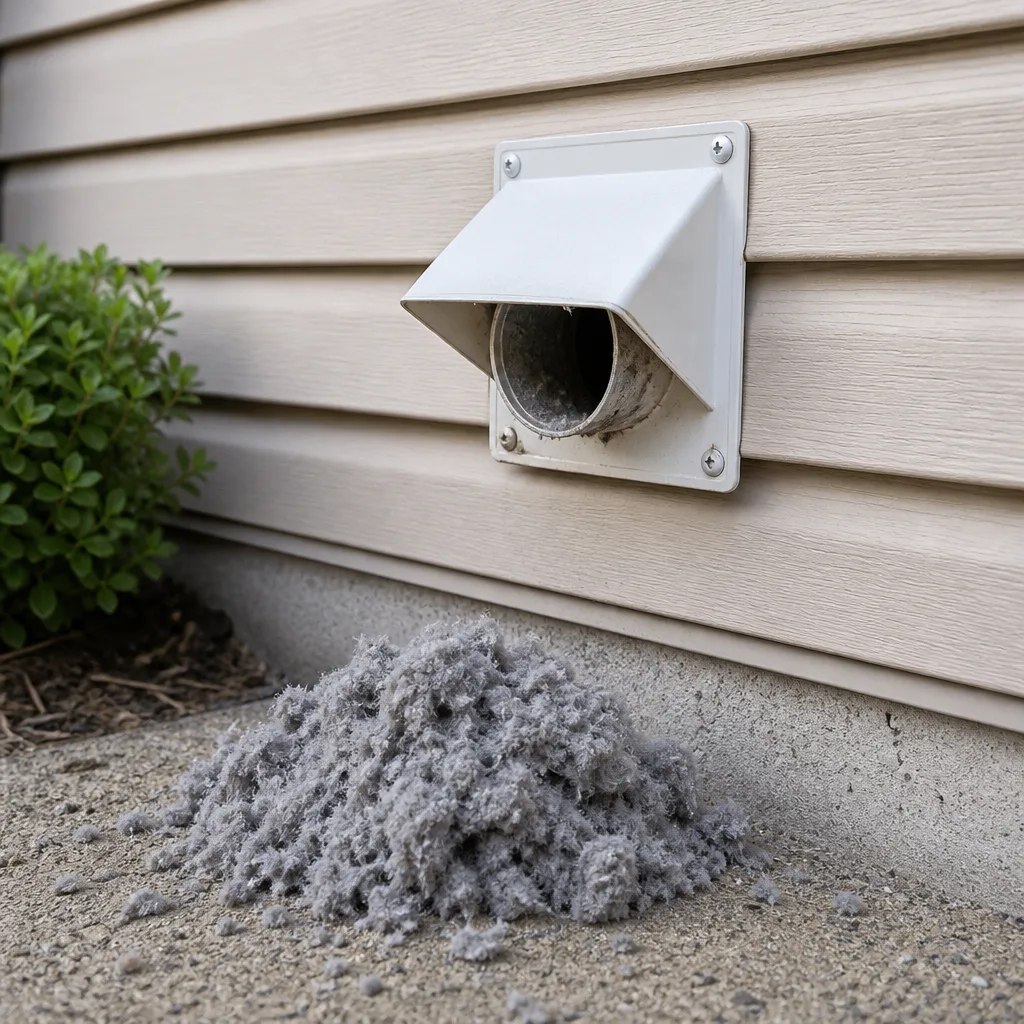
Whole-system duct and dryer vent check with before-and-after photos - you see exactly what came out of your vents
That "$99 whole-house special" is a bait ad - the real number appears once they are in your hallway, or the "clean" is a shop-vac at the register. We photograph the inside of your ducts before and after instead.
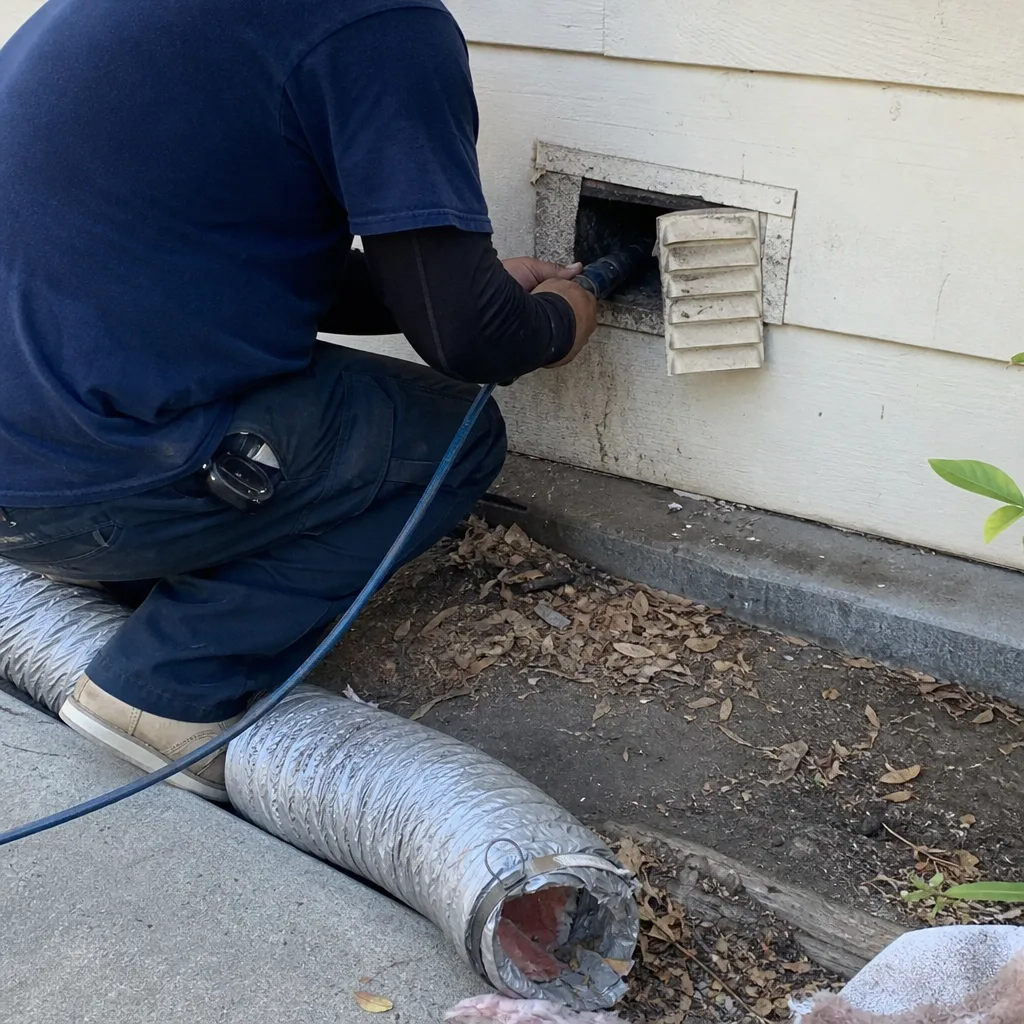 Before
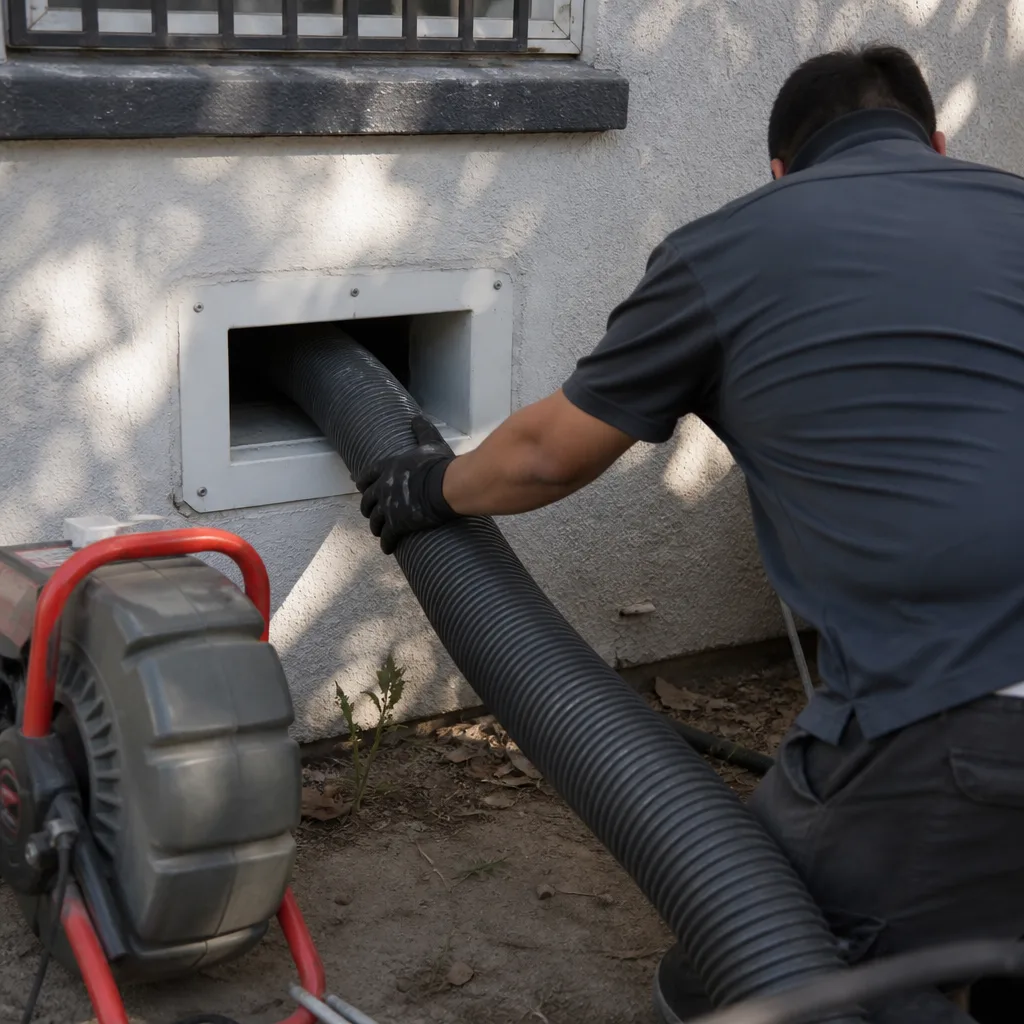 After
After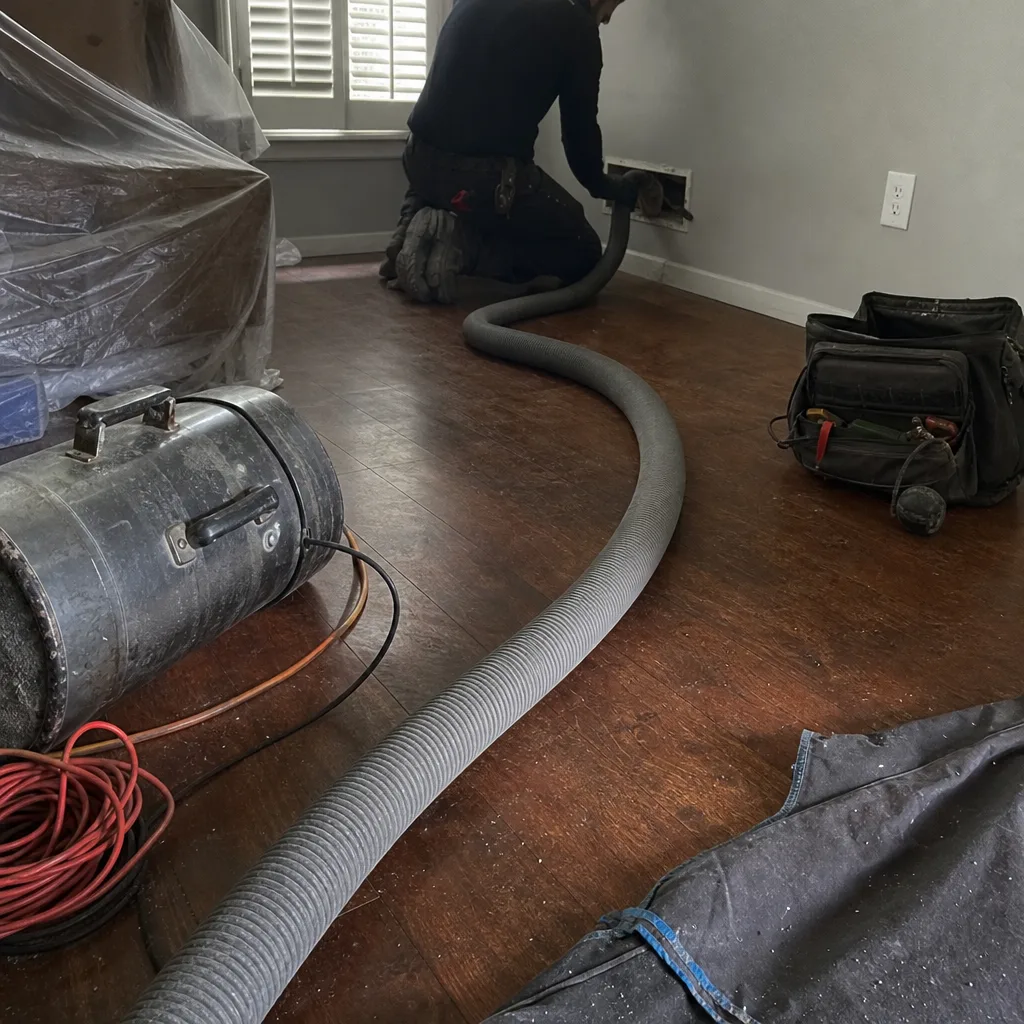 Before
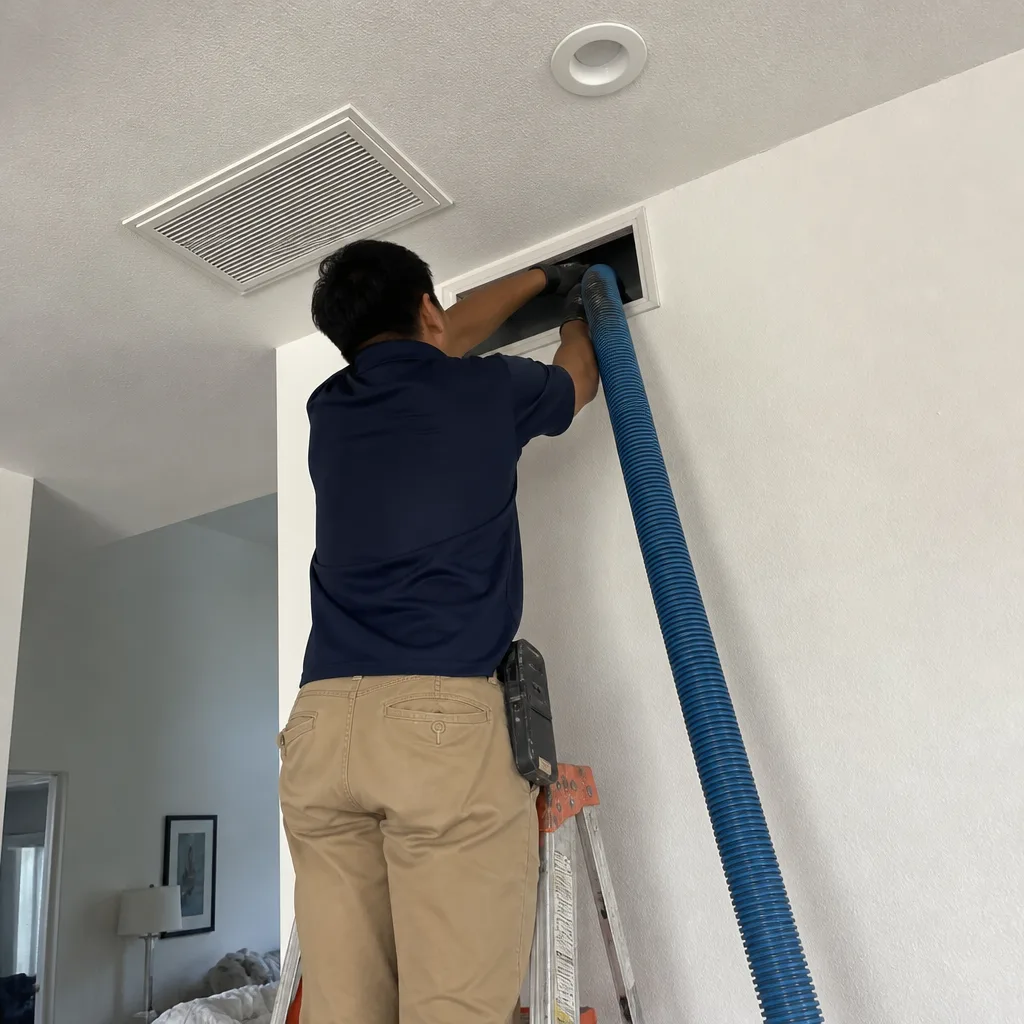 After
After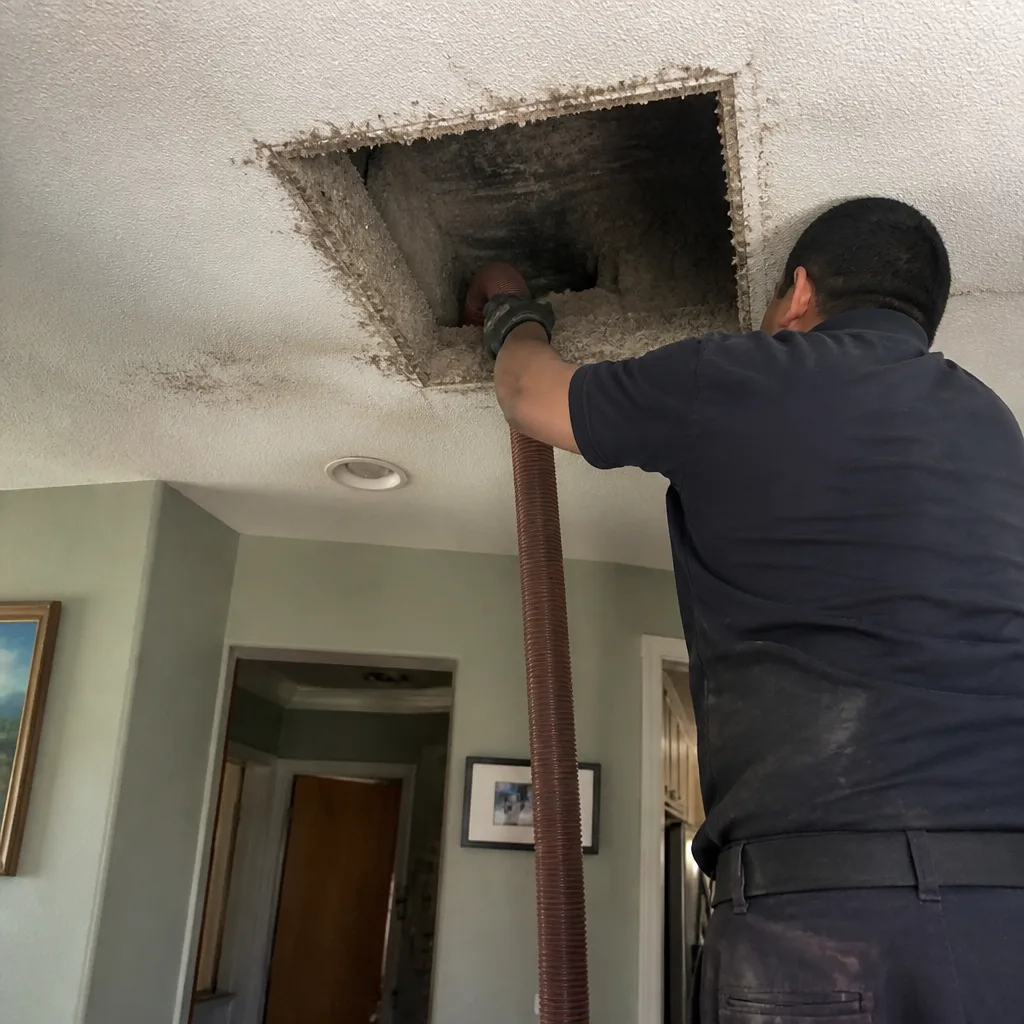 Before
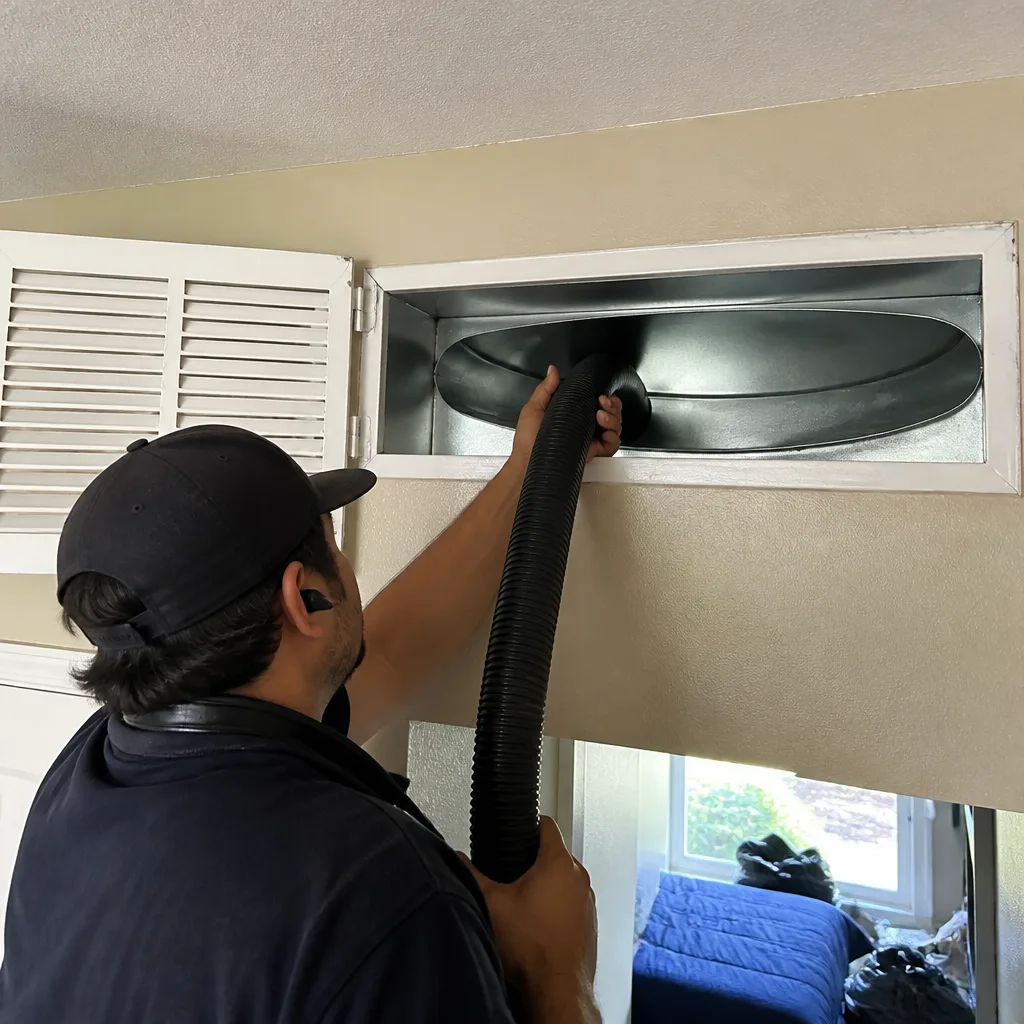 After
AfterDIY vs Professional HVAC Cleaning: What’s Safe to Do Yourself
Vacuuming your registers with a shop vac doesn’t clean your ducts. It dislodges debris from the duct walls and suspends it in your living space, which is measurably worse than leaving it in place. We see this pattern constantly in Los Angeles, where dust from wildfires, freeway particulates, and shed pet hair settle into ductwork faster than most homeowners realize. This guide draws the line between what you can safely handle and what genuinely requires professional negative-pressure equipment. You’ll leave with a clear protocol for both.
Quick Answer
Homeowners can safely handle three HVAC cleaning tasks: register grille cleaning, filter replacement, and accessible coil fin brushing with the correct brush. You should never attempt duct interior cleaning with a shop vac or any consumer tool, because without negative-pressure containment (sealing the system so dislodged debris is pulled out, not pushed into your rooms), you make the air quality worse. Professional HVAC Cleaning pays for itself when ducts have visible dust buildup, mold signs, or post-construction debris, and it extends the life of your HVAC system. In Los Angeles, that threshold arrives faster due to wildfire ash and year-round AC use.
Table of Contents
- The Three Safe DIY Tasks
- Why a Shop Vac Is Counterproductive
- What Professional Equipment Actually Does
- Cost-Benefit Breakdown: Filters vs. Professional Cleaning
- How to Vet a Professional Cleaner
- Los Angeles-Specific Considerations
- Common Mistakes to Avoid
- When to Call a Professional
The Three Safe DIY Tasks
We’ve spent years watching Los Angeles homeowners either overreach into dangerous territory or, more commonly, avoid maintenance entirely because they don’t know where the line is. Here’s the complete list of what’s genuinely safe to do yourself, with the specific method for each.
1. Register Grille Cleaning
Every supply and return register in your home collects a layer of dust, pet hair, cooking residue, and in Los Angeles, a fine gray film of wildfire ash that settles even when windows are closed. This is the visible surface you can clean without any risk. Remove the grille (most pop off or unscrew), wash it in warm soapy water, dry it completely, and reinstall it. While the grille is off, you can reach into the visible duct opening with a damp microfiber cloth and wipe the first inch or two of interior surface. Do not reach deeper. Do not use a vacuum at this stage; wiping removes surface dust without suspending it into the air column.
2. Filter Replacement
Filter replacement is the single most impactful maintenance task you control, and most Los Angeles homes run on a one-inch disposable filter that should be swapped every 30 to 60 days. In fire season, check it every two weeks. A clogged filter forces your blower motor to work harder, reduces airflow, and shortens the life of your compressor. If you upgrade to a higher-MERV filter from Aprilaire (which we install regularly), you capture more particulate, but you need to confirm your system can handle the added air resistance. A 4-inch media filter can run six to twelve months depending on home conditions. Replacing a one-inch filter takes ninety seconds: note the arrow on the frame, confirm airflow direction, slide it in. No tools, no risk.
3. Accessible Coil Fin Brushing
If your evaporator coil is accessible through a service panel and you can see the aluminum fins clearly, you can gently brush them with the correct tool: a fin comb or a soft bristle brush meant for refrigeration coils. The direction matters. Always brush with the fins, never against them, and use light, controlled strokes. The goal is removing loose surface dust, not scouring the coil. Bent fins reduce efficiency, so if you’re uncomfortable identifying the correct angle, leave this one alone. In our experience, about a third of Los Angeles homeowners have safe access; the rest have coils buried inside the air handler where no DIY method reaches.
Why a Shop Vac Is Counterproductive
The most persistent myth in this trade is that a powerful vacuum on a register effectively cleans the duct behind it. The physics says otherwise. Here’s why, in plain language.
Professional duct cleaning works on the principle of negative-pressure extraction, which means the entire duct system is sealed and placed under vacuum while agitation tools loosen debris inside. The loosened debris has nowhere to go except into the vacuum. A shop vac applies suction only at the spot you’re touching; the surrounding duct walls remain untouched, and the suction is not strong enough to redirect airflow through the full branch run. What actually happens: your shop vac creates local turbulence, which knocks dust off the duct walls near the register, and that dust then enters the living space before the vacuum captures any of it.
We see this demonstrated constantly in Los Angeles homes. Someone spends a Saturday morning vacuuming twelve registers, feels productive, and then reports more dust settling on furniture the following week. It’s not a coincidence. You’ve redistributed what was sitting inert inside the duct. In a climate where windows stay closed and the AC runs eight months of the year, that dust recirculates through the system repeatedly before settling. The cleaning made the indoor air quality worse, and the only honest assessment is that the job needs to be redone properly.
What Professional Equipment Actually Does
The reason professional-grade results cannot be replicated with consumer gear comes down to three tool types that work in sequence. Understanding this sequence is also how you’ll vet contractors later in this guide.
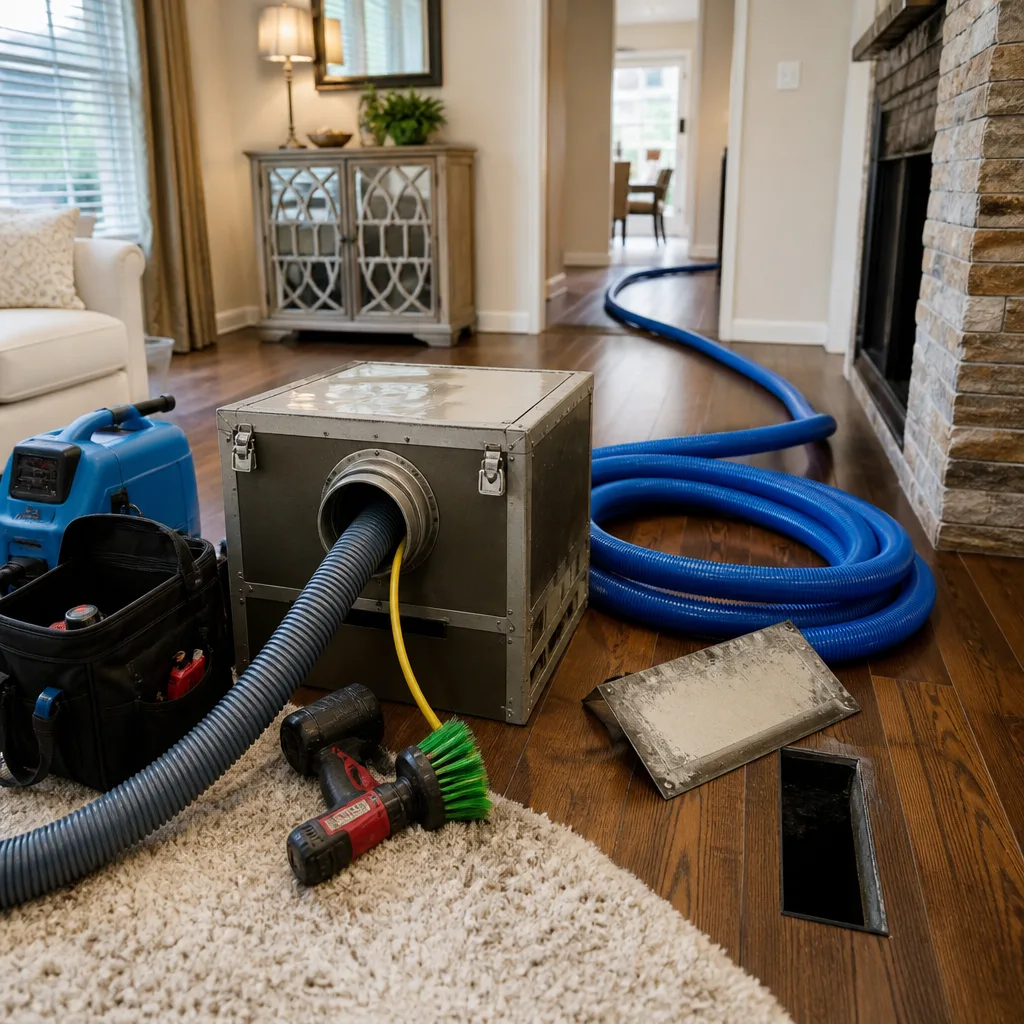
- Containment and negative pressure: The team seals off registers and creates a closed system, then connects a high-powered vacuum unit (we run Nikro HEPA-rated extraction systems) to the ductwork. This pulls the entire system under vacuum before cleaning begins.
- Mechanical agitation: With negative pressure running, the technician inserts a rotary brush (our fleet uses Rotobrush systems) through each duct run. The brush head spins and scrubs the duct walls while the vacuum simultaneously pulls the dislodged debris out of the living space.
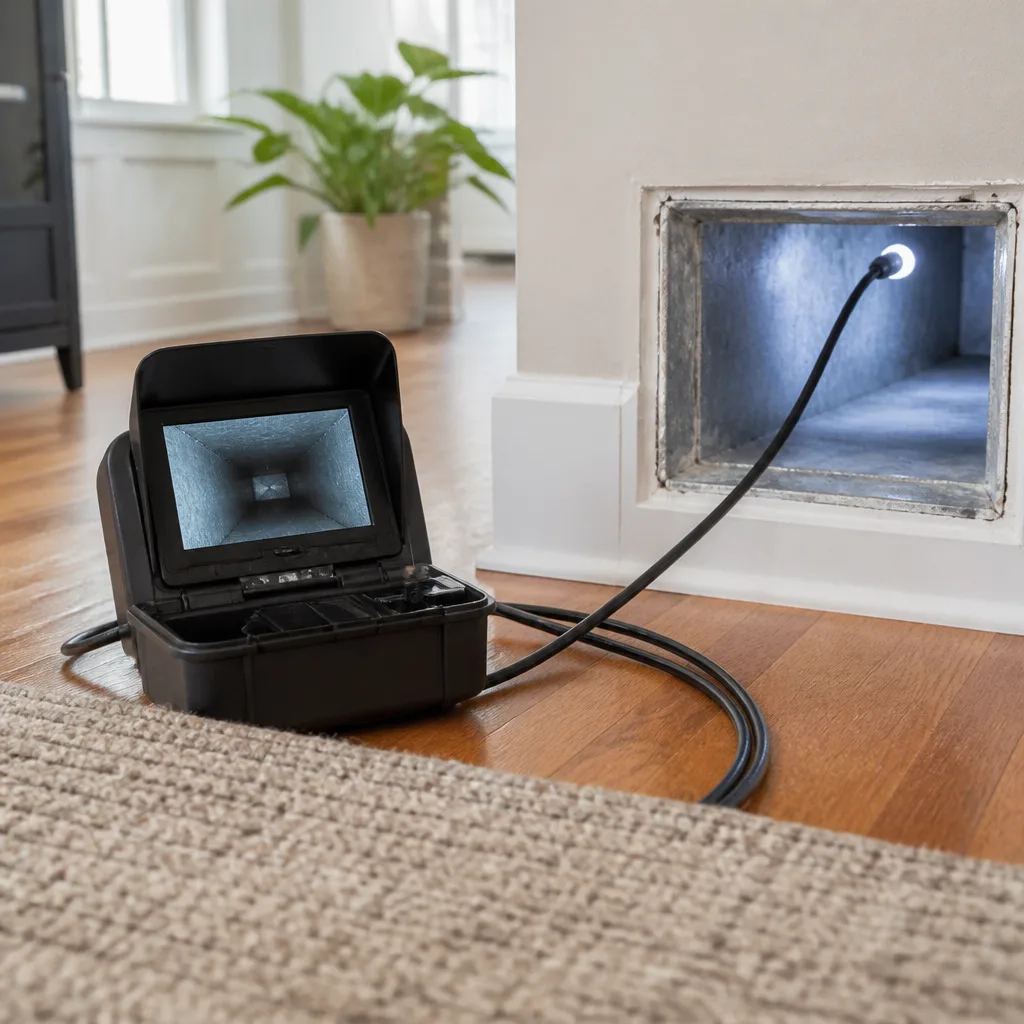
- System verification: After all branches are cleaned, the technician inspects with a borescope or camera to confirm walls are clear. This is the before-and-after documentation step, and it’s what gives you proof the work was actually done rather than a verbal assurance.
None of these steps replicate. A shop vac creates no sealed system, no sustained negative pressure, and no simultaneous agitation. A brush without vacuum pushes debris forward. A vacuum without brush leaves debris adhered. The combination is the entire mechanism.
We also run Abatement Technologies containment units for jobs where significant duct contamination is present. This is the same brand used in hospital and commercial environments, and there’s no consumer equivalent.
Cost-Benefit Breakdown: Filters vs. Professional Cleaning
Los Angeles homeowners who ask about DIY cleaning are usually asking a deeper question: “How do I spend the least money for the best air quality over time?” The honest answer involves understanding what actually extends the interval between professional cleanings, and our Dryer Vent Cleaning Maintenance Schedule: What to Do and When offers a useful framework for timing.
Upgrading to a high-quality media filter such as Aprilaire does, in our years of field experience, extend professional cleaning intervals. A typical one-inch filter captures larger particles but lets finer dust through. A 4-inch Aprilaire media filter captures much finer particulate, which means less of it coats your ducts and coils over the same period. The upgrade cost runs $250 to $450 installed in most Los Angeles systems, and it often means professional cleaning is needed every three to five years rather than every two to three.
Professional HVAC cleaning in Los Angeles typically runs $350 to $650 for a standard single-system home with ten to fourteen registers. Larger homes, multiple systems, or homes with post-construction debris fall above that range. What most DIY guides fail to mention: the cost of skipping professional cleaning entirely appears later as reduced system efficiency, higher energy bills, or an evaporator coil failure that runs anywhere from $1,200 to $2,800 to replace in the Los Angeles market. The math isn’t really DIY vs. pro; it’s careful maintenance vs. deferred maintenance.
Here’s what the budget-conscious homeowner should prioritize, in order:
- Install quality filters and actually replace them on schedule. This costs less than $100 a year.
- Schedule professional duct cleaning when you see visible dust accumulation at registers, experience unexplained allergy increases, or have significant dust on surfaces within two weeks of cleaning.
- Add coil cleaning to any professional service visit; it’s the component most directly tied to efficiency and longevity.
How to Vet a Professional Cleaner
If you’ve decided to hire someone, the next DIY task is evaluating candidates. The industry has a known pattern of low quoted prices that climb sharply once the van is in the driveway, which is why the Relay Visibility Guarantee exists and why we give written pricing before any work begins. Ask these three questions in your initial call or email:
- “What equipment do you actually use for extraction, and what vacuum unit is it?” You’re listening for a named unit with HEPA-rated filtration, such as Nikro systems. Avoid any company that says “truck-mounted vacuum” without specifics or mentions a portable shop-vac style setup.
- “Do you seal the system and run negative pressure during cleaning?” If they cannot explain how their containment works in one sentence, they’re not doing it. The correct answer sounds like “we seal each register, create negative pressure with a HEPA extraction unit, and agitate simultaneously.”
- “What documentation do I receive after the job?” The answer should include before-and-after photos or video from inside your ducts. If they’re not documenting, they either don’t have the equipment to inspect or they’re not interested in accountability.
In Los Angeles, where callout pricing from some operators has become notorious, a fourth practical step protects you: request the written quote in advance with a total system price, and confirm nothing changes at the door. A flat rate per system, agreed before work starts, is the structure you want to see. Our team at Cardinal Air Duct Cleaning operates this way as standard practice under the Relay Standard, and we believe every Los Angeles homeowner should demand it from any contractor they call.
Los Angeles-Specific Considerations
Cleaning intervals and methods are not uniform nationwide. Our Dryer Vent Cleaning Maintenance Checklist for Los Angeles Homeowners covers what makes this region distinctive, and how it should inform your maintenance schedule.
Wildfire smoke is the largest variable. Even when active fires are distant, the fine ash travels for miles and settles into any residence with standard filtration. During fire season, which in Southern California now runs essentially year-round with intensifications in late summer and autumn, we recommend checking filters every two weeks and planing the filter against a light source to check for the gray-brown tint that indicates particulate loading. Homes near freeways (the 405, 110, 101 corridors) accumulate brake dust and tire particulate at faster rates than homes in more isolated areas like the canyons or coastal strips.
Coastal moisture creates another issue. Homes in Santa Monica, Playa del Rey, Marina del Rey, and Long Beach run in higher relative humidity, and that moisture binds to the dust that settles inside ducts. The result is a denser, more adherent coating that’s harder to remove once it forms, and it creates conditions more favorable to microbial growth. The dryer inland neighborhoods like the Valley face the inverse issue: drier, lighter dust that resuspends easily with any disturbance, which is exactly why shop vacs are more counterproductive in Sherman Oaks and Van Nuys than they might be elsewhere.
Older housing stock plays a role too. Many neighborhoods from the 1920s through 1960s, including Silver Lake, Echo Park, Koreatown, and parts of Pasadena, contain ductwork that was never sealed properly at the seams or insulated to modern standards. Those homes often run dirtier systems because the ducts pull air from attics and crawlspaces. A professional cleaning visit in these homes should include a visual seam inspection; if you see your technician treat this as optional, you’ve hired the wrong crew.
Common Mistakes to Avoid
- Vacuuming duct interiors with a shop vac. This resuspends dust into your living space and makes air quality worse. We see homes do this every month in Los Angeles and the result is uniformly dustier living rooms within days.
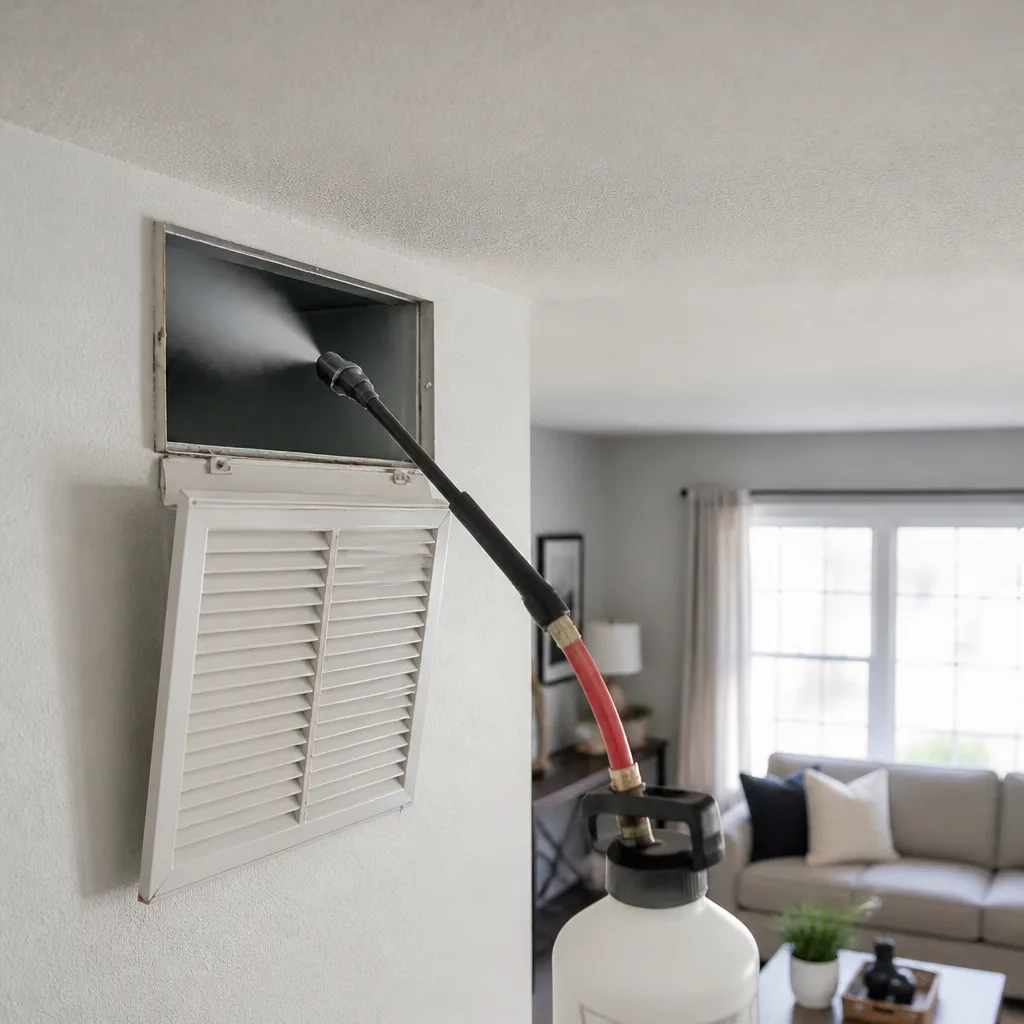
- Using chemical duct sprays or foggers as a cleaning substitute. Chemicals mask odors and homogenize visible dust, but they don’t remove particulate. The debris stays in the ducts, and you’re adding chemical residue to the mix.
- Bending coil fins with the wrong brush. A stiff wire brush against evaporator fins flattens them, reduces efficiency, and can make the coil impossible to clean properly later. Use a dedicated fin comb or don’t attempt it.
- Replacing filters with the airflow arrow reversed. A backwards filter collapses against the blower, reduces airflow further, and can eventually damage the motor. The arrow has one correct orientation, and ninety seconds of checking prevents a four-figure repair.
- Ignoring post-construction dust. After any remodel in Los Angeles, drywall dust, paint overspray, and sanding particulate settle into ducts. Waiting months to address this lets it bond with moisture and makes eventual cleaning much harder.
- Hiring the cheapest quote without checking equipment. Los Angeles has plenty of operators running truck-mounted shop vacs and charging low rates that balloon once the job is assessed on-site. The only defense is asking the three vetting questions above before you book.
When to Call a Professional
Professional cleaning is warranted when visible dust accumulates on registers within weeks of being wiped, when allergy symptoms increase at home but improve away from home, when you’ve had a remodel or major construction, when you notice a musty smell from vents, or when the system hasn’t been cleaned in five years or more. Any sign of mold on visible duct surfaces or register grilles means a professional inspection should happen immediately. Cardinal Air Duct Cleaning offers free estimates in Los Angeles. Call (737) 727-2314 and we’ll walk you through what we’d recommend based on your specific house, system, and situation.
Frequently Asked Questions
Professional HVAC cleaning in Los Angeles typically costs $350 to $650 for a standard single-system home with ten to fourteen registers. Larger homes, multiple systems, or heavy post-construction debris pushes the total higher. The key number to verify is the whole-system price agreed in writing before any work starts. Call (737) 727-2314 for an exact quote on your system; estimates are free.
Low quotes usually come from operators who use consumer-grade equipment, skip negative-pressure containment, or apply per-vent pricing that multiplies dramatically once the technician is inside. A legitimate professional crew runs named extraction units (ours are Nikro HEPA systems) and quotes a flat price per system up front. The cheaper quote is often more expensive by the time the invoice arrives.
Most Los Angeles homes benefit from professional duct cleaning every three to five years, but the interval varies significantly with local conditions. Homes near freeway corridors, homes with pets that shed heavily, homes in wildfire-prone areas, and homes with older unsealed ductwork trend toward the shorter end. Upgrading to high-quality filtration such as Aprilaire media filters can extend that window.
If your coil is easily accessible through a service panel and you can see the fins clearly, you can gently brush off loose surface dust with a soft fin brush. Never use a wire brush, never apply pressure, and never attempt chemical cleaners from a hardware store on a coil that’s installed in your system. If you’re unsure about access or technique, leave it alone; a bent coil is a more expensive problem than the cleaning it was meant to solve. Call (737) 727-2314 if you want a professional assessment rather than guessing.
In homes where ducts genuinely run dirty, professional cleaning removes the reservoir of dust, pollen, pet hair, and wildfire ash that your system redistributes through the home every cycle. Allergy sufferers often notice improvement within days. In homes with clean ducts, no cleaning service will change allergy outcomes; the culprit lies elsewhere, typically in filter choice or whole-home air quality. That’s why we recommend an inspection that documents what’s actually inside your ducts before spending money on any cleaning.
Air duct cleaning addresses the duct runs themselves. HVAC cleaning includes the components: evaporator coil, blower assembly, plenum, and often the air handler interior. Full HVAC cleaning is the more complete service, and it’s what we recommend for homes with visible dust at registers plus a system that’s gone years without attention. You can find more detail on our HVAC Cleaning in Los Angeles page, and our Air Duct Cleaning in Los Angeles page covers the duct-only scope.
The Bottom Line
The DIY vs. professional question isn’t as murky as most guides make it. You can safely clean register grilles, replace filters, and brush accessible coil fins with the right tool and technique. You cannot safely or effectively clean duct interiors with any consumer equipment, because the negative-pressure containment that prevents debris from entering your living space does not exist in a shop vac. Professional cleaning earns its price when ducts are genuinely dirty, and in Los Angeles, that threshold arrives faster than most climates due to wildfire ash, freeway particulate, and year-round system use. The smartest money is usually spent on high-quality filtration and a properly vetted professional cleaner, not on retail gadgets that make dust worse. For additional help, see our more guides & resources.
Written by Omar Haddad, Owner at Cardinal Air Duct Cleaning, serving Los Angeles since 2005.